
The most severe ice melt episodes in Greenland are becoming significantly worse.
The ice melt footprint of Greenland grows

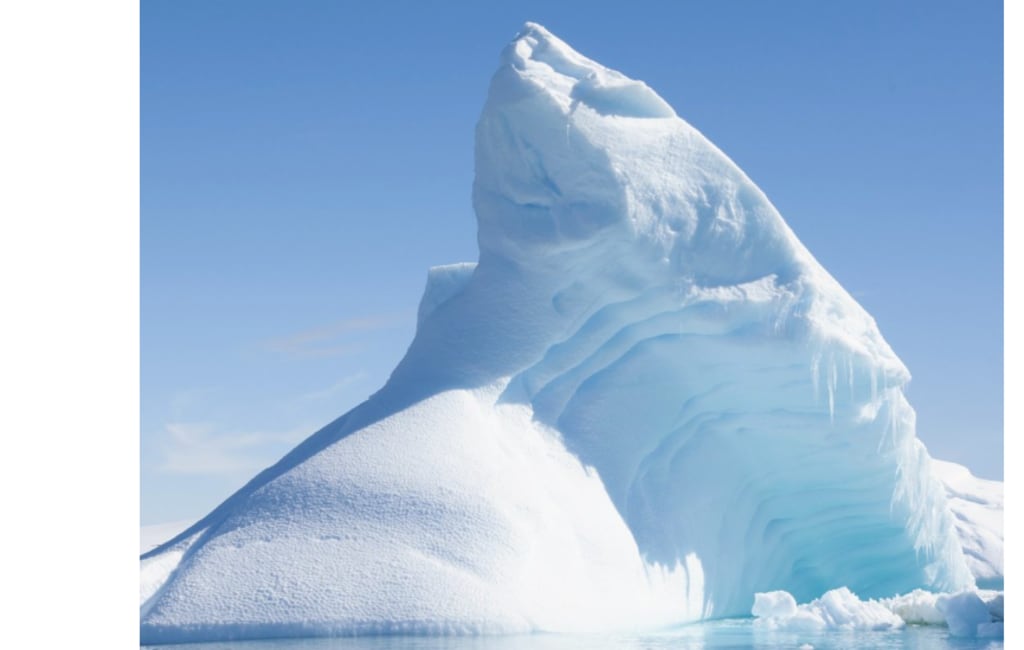
The ice sheet in Greenland has always somewhat melted throughout the summer. That is typical. The frequency of the most severe melt events and the amount of water they produce are no longer typical.
According to a recent study, Greenland's melting has not just increased due to climate change. The most acute bouts have become significantly more intense. The University of Barcelona led the study, which monitored major melt episodes from 1950 until 2023. It's difficult to overlook what the team discovered.
The ice melt footprint of Greenland grows
The region affected by severe melting has grown by over 1.08 million square miles (almost 2.8 million square km) every ten years since 1990. Concurrently, the volume of meltwater generated by these occurrences has more than doubled, rising from 12.7 gigatons per decade to 82.4 gigatons per decade.
Even more startling is the fact that seven of the ten most intense melt occurrences ever documented have occurred since 2000. This encompasses the significant occurrences in August 2012, July 2019, and July 2021. incidents so severe that historians claim no similar parallels can be found in the historical record.
Ice melts more intensely in warmer air.
It's not simply more common. It's more intense. The fact that each catastrophic storm today generates more water than it did decades ago is one of the main conclusions. The researchers reached a significant finding when they analysed melt occurrences under comparable air circulation patterns, or, to put it simply, comparable weather systems.
Water production during those events has risen by 25 percent after 1990 when compared to 1950–1975. The increase can reach 63 percent when considering all extreme occurrences together. This indicates that the warmer atmosphere of today extracts significantly more melting than it did in the past, even when the weather pattern appears familiar.
Unusual storms and shifting winds aren't the only factors here. It's about everything being amplified by a hotter background climate.
Northern Greenland is at the extremes.
Northern Greenland has long been one of the ice sheet's coldest and most stable regions. That is evolving. Northern Greenland is one of the new hotspots for extreme melting, according to the study. By the end of this century, extreme meltwater anomalies could triple under scenarios with high greenhouse gas emissions.
It's important to accelerate like that. Meltwater does more than just collect on the surface. Sea levels can rise as a result of its ability to seep downhill, lubricate glacier bases, and accelerate their discharge into the oceans.
Distinguishing weather from warming
The researchers employed a novel strategy to determine the factors influencing the trend. They integrated a regional climate model with cyclonic and anticyclonic air circulation patterns. They were able to differentiate between thermodynamic (increasing temperatures) and dynamic (weather patterns) aspects as a result.
They discovered that one of the main factors is warming itself. The increased temperatures of today exacerbate the melting even when comparable circulation patterns take place.
That's a crucial distinction. It demonstrates that the underlying warming of the earth is intensifying exceptional ice melt occurrences, such as those in Greenland, and that they are not solely caused by anomalous weather.
Greenland's worldwide repercussions
Although Greenland may seem far away, events there don't remain there. The study's lead author, Josep Bonsoms, stated that the Arctic is at the heart of new geopolitical, economic, and territorial dynamics due to the ice sheet's rapid transformation, which also has global environmental effects like sea level rise and potential changes in ocean circulation.
Globally, coastal cities are at danger due to rising sea levels. Weather patterns outside of the Arctic can be impacted by changes in ocean circulation. Additionally, geopolitical tensions in the Arctic are already rising as a result of the ice retreat.
An already-occurring turning point
The timing of this study is worrisome. Around 1990, the rapid acceleration started. It's clear that the most extreme incidents in the last 20 years have clustered together.
By 2100, the production of severe meltwater might triple if emissions continue along high-end projections. More frequent and dramatic ice melt events would become the rule rather than the exception, causing Greenland to undergo a fundamental change.
It has long been believed that Greenland's ice sheet is a giant that moves slowly. However, this study demonstrates that when it melts, it melts extremely hard, and those extremes are starting to become a part of the new normal.
The trajectory is still subject to change. However, the evidence is unmistakable: the ice sheet is directly reacting to warming, and the extremes get stronger as warming increases.
About the Creator
Keep reading
More stories from Francis Dami and writers in Earth and other communities.
Greenland's ice loss is being silently accelerated by airborne dust.
The warmer air isn't the only reason why Greenland's ice is melting. By feeding dark algae blooms that absorb sunlight and accelerate ice loss, tiny particles carried by the wind can subtly alter surface conditions.
By Francis Dami20 days ago in Earth



Comments
There are no comments for this story
Be the first to respond and start the conversation.