
The Geology of Your Inner World
The Hydrosphere - The Flow of Emotions

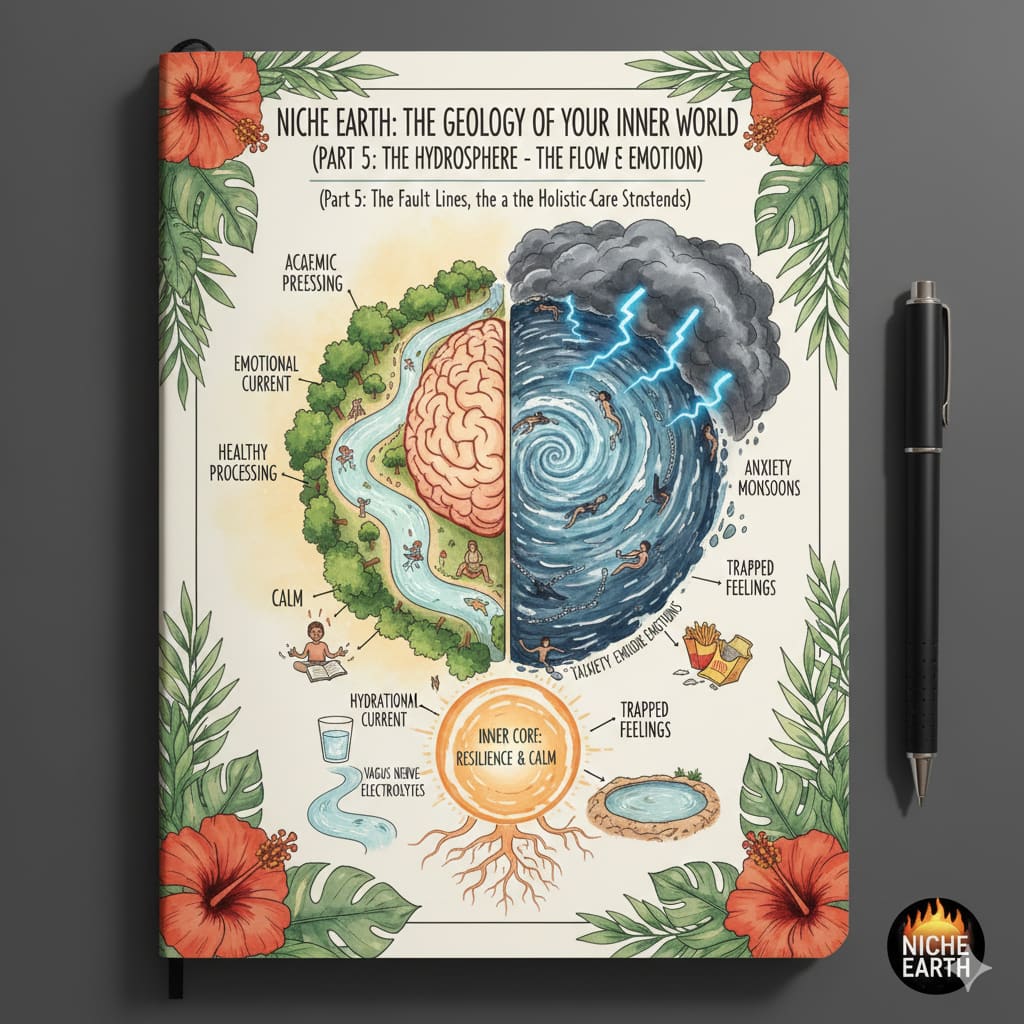
We've journeyed through the solid crust, the molten mantle, and the expansive atmosphere of our Niche Earth. Now, it's time to explore the element that covers most of our planet and profoundly shapes its landscape: the Hydrosphere. For an overthinking girl, the hydrosphere is our emotional world – the vast, deep, sometimes turbulent, and often beautiful realm of our feelings.
Just like the Earth’s oceans, rivers, and groundwater constantly move and transform, our emotions are meant to flow. But for those of us whose brains are always in overdrive, emotions can sometimes get trapped, stagnate, or even flood, creating internal "monsoons" of anxiety or "droughts" of numbness. As a Nutrition student, I’ve learned that the physical properties of water (its ability to carry, cleanse, and sustain life) have powerful parallels to how we process our inner world.
The Stagnant Pond vs. The Flowing River: Emotional Health
Imagine a stagnant pond. The water is still, murky, and can become a breeding ground for discomfort. This is what happens when we suppress or ignore our emotions. Each time we push down a feeling – whether it's frustration, sadness, or even joy that feels "too much" – it doesn't disappear. It becomes like trapped water, losing its clarity and energetic flow, contributing to that heavy, "stuck" feeling of chronic overthinking.
Conversely, a flowing river is vibrant, clear, and carries nutrients. This represents healthy emotional processing. When we allow our emotions to surface, acknowledge them, and express them in healthy ways, we maintain a clear, dynamic "emotional current." This active processing prevents buildup and allows new experiences and feelings to enter, enriching our inner landscape.
The Salinity of Stress: Electrolyte Imbalance
Our physical body is largely water, and the balance of that water is critical. Just like the ocean's salinity impacts its ecosystem, the electrolyte balance in our bodies (especially sodium, potassium, magnesium, and calcium) profoundly affects our emotional regulation. When we are under chronic stress from overthinking, our body can deplete these essential minerals.
Think of it like this: a high-stress "monsoon" can wash away vital electrolytes. This imbalance can lead to symptoms like irritability, brain fog, fatigue, and even muscle cramps – all of which make it harder to regulate our emotions and break free from overthinking loops. Properly balanced electrolytes ensure our nervous system's "electrical currents" (which transmit emotional signals) flow smoothly, preventing internal short-circuits.
Navigating Emotional Tides: The Science of Release
Conscious Hydration (Replenishing the Well): It sounds simple, but adequate hydration with proper electrolytes is foundational. Sipping water throughout the day, adding a pinch of sea salt, or a splash of electrolyte-rich coconut water isn't just for physical health; it literally helps maintain the fluid environment where your brain cells communicate and process emotions effectively. It's like ensuring your inner rivers never run dry.
The Ocean's Roar (Vagus Nerve Stimulation): The Vagus Nerve is often called the "wandering nerve" because it travels from your brainstem to many organs, including your gut and heart. It's a superhighway for the Parasympathetic Nervous System (our "rest and digest" mode). When we're overthinking, our "fight or flight" (Sympathetic) system is in overdrive. Stimulating the vagus nerve helps calm the emotional "ocean."
Cold Showers/Splashing Cold Water: A quick splash of cold water on your face or hands can instantly activate the vagus nerve, sending a powerful "chill out" signal to your brain.
Humming/Singing: The vibrations created by humming or singing can directly stimulate the vagus nerve, gently rocking your emotional boat.
Riding the Waves (Emotional Release): Allowing emotions to flow isn't about uncontrolled outbursts, but conscious release. This could be:
Journaling: Writing down feelings is like diverting a turbulent river onto paper, giving it a channel to flow through.
Movement: Physical activity, especially dynamic movement like dancing or intense walking, can literally help "shake out" stagnant emotional energy, allowing it to dissipate.
Talking it Out: Sharing your feelings with a trusted friend or therapist is like opening the floodgates, releasing built-up pressure.
The Bottom Line
Your "Niche Earth" is 70% emotion, just as our planet is 70% water. By understanding the flow of your feelings, maintaining your physical "salinity" with proper hydration and electrolytes, and actively engaging in techniques that stimulate your parasympathetic nervous system, you can transform periods of emotional stagnation or turbulence into a healthy, flowing, and life-sustaining hydrosphere. Your emotions are meant to move, just like the rivers to the sea.
About the Creator
Being Inquisitive
Blogging can provide a creative outlet for expressing your thoughts, feelings, and ideas. It can be a way to share your passion and interests with others and to engage with like-minded individuals.
Keep reading
More stories from Being Inquisitive and writers in Earth and other communities.
The Geology of Your Inner World
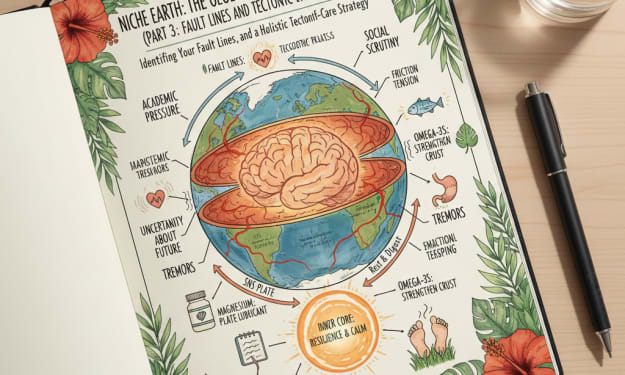
Just like the Earth’s surface is riddled with invisible cracks where tectonic plates meet, our minds have their own deep-seated fault lines. These aren't always obvious; they're the recurring triggers, the sensitive spots, the areas where stress can quickly build up, leading to a mental "tremor" or even a full-blown anxiety "earthquake." As an overthinking girl, my fault lines are often hidden under layers of forced calm and academic ambition. But as a Nutrition student, I'm learning to map them out, not just to avoid collapse, but to understand how to build stronger, more resilient structures.
By Being Inquisitiveabout 2 hours ago in Earth



Comments
There are no comments for this story
Be the first to respond and start the conversation.