
Doors of Dublin — The Untold Story of a Colorful Rebellion
There are many mysteries behind the colorful doors of Dublin
Have you ever heard a story told by a door? In Dublin — Ireland's magical capital — you can.
Imagine wandering through the cobbled streets of the city, where history whispers through the very architecture.
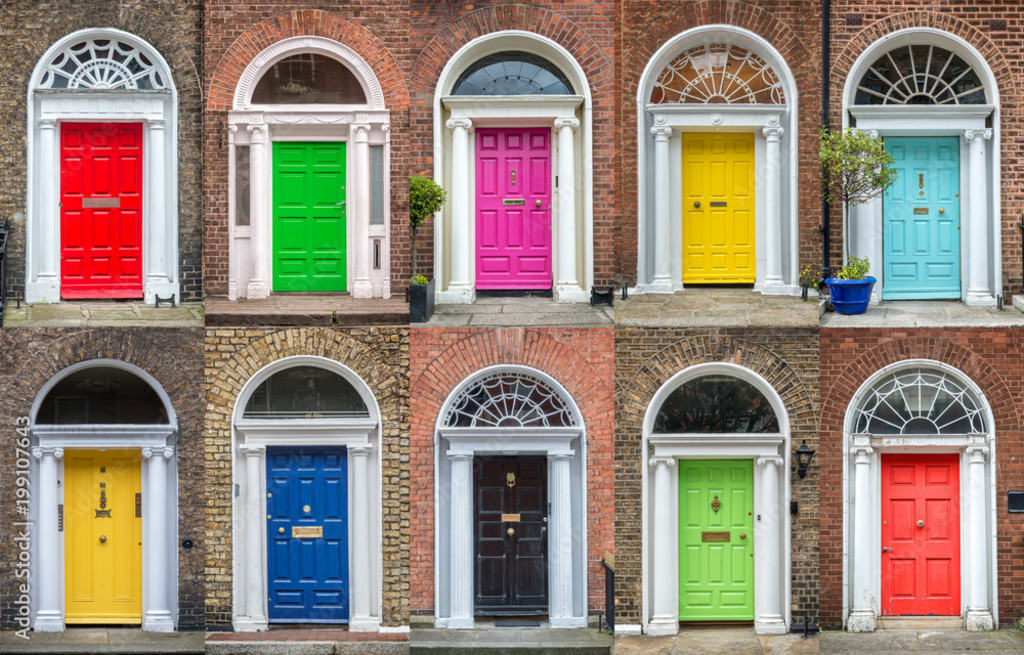
As you turn a corner, a vibrant spectacle unfolds before you: a legion of elegant, ornate doors that stand proudly, one after another, each one displaying their vivid colors, vying for your attention.
It's a charming sight, for sure, but the story behind it is one of rebellion and anger. One worth telling.
The Georgian Doors of Dublin
The tale of these Georgian doors traces back to the early 18th century, a time when Dublin was undergoing a transformation.
The city's elite, inspired by the architectural trends sweeping Europe at the time, decided to rebuild their homes with the utmost elegance.
It was the dawn of the Georgian era — named after the Hanoverian kings George I, George II, George III and George IV — and Dublin was to be its canvas.
The doors that emerged from this period are far from ordinary. Above these doors, you'll find fanlights, delicate as lace, adorned with intricate designs and symbolic motifs.
As you approach these doors, you can't help but be captivated by the polished brass fittings, the door knockers that seem to beckon with a gentle touch, and the knobs that gleam in the sun. They add an aura of elegance and grace to each doorway.

Yet, the obviously unique quality of Dublin's doors is their color. Shades of rich, deep red, glossy black, and sometimes daringly different hues like green, blue, and even sunny yellow.
Each door in Dublin seems to declare a statement, a personality, or perhaps a secret concealed within the dwelling.
But what are they telling us, really?
The Truth Behind the Doors of Dublin
There are many legends that seek to unlock the mystery behind why Dubliners decided to paint their doors in such vivid colors.
Sadly — or perhaps not — we don't know which ones are true. However, among the many stories, there's one I'm particularly curious about.
The year was 1901, and the Edwardian era was dawning upon the British Isles. Queen Victoria had just passed away.

The death of the long-reigning monarch marked the end of an era, and Dubliners were grappling with a shifting sense of identity.
But first, let's dive into what led to this moment.
During the 19th century, Great Britain and Ireland were united in a single political entity — the United Kingdom of Great Britain and Ireland. However, growing tensions between the two, mainly because their religious differences.
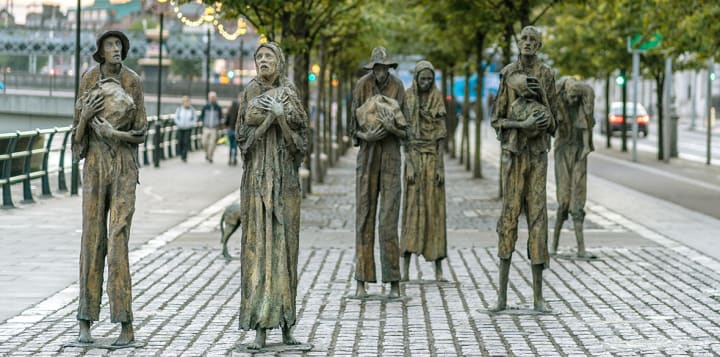
Their relationship deteriorated even more after one of the most devastating events in Ireland's history: the Great Famine, caused by a potato blight.
The British response to the famine remains, to this day, a topic of debate.
Many Irish people felt that the British government didn't do enough to alleviate the suffering, which led to bitterness and strained relations between Ireland and the United Kingdom.
As years passed, the people of Ireland cultivated a growing desire for more self-governance, leading to the growth of Irish nationalism and a desire for complete independence from British rule.
By the end of the 19th century, the relationship between Ireland and the United Kingdom was characterized by political struggle, divided aspirations, increasing friction, and growing calls for self-determination.
And then, Queen Victoria died.
The Queen Is Dead, Long Live the Queen
Queen Victoria had reigned for over six decades, and her death marked the end of the Victorian era.
As a country still finding its identity, Ireland experienced different reactions to the Queen's passing.
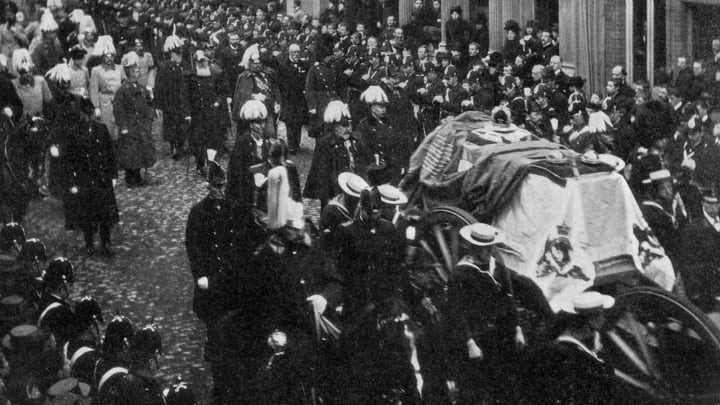
As a formal sign of respect and duty, the Irish government and institutions participated in the mourning period. Flags were flown at half-mast, memorial services were held, and expressions of grief were conveyed by political and religious leaders. This was the "official" response.
However, the people of Ireland's desire for independence and sovereignty had grown past the point of no return.
To them, Queen Victoria was a symbol of British colonialism and rule over Irealnd. With her death, Ireland could be free again.
So, when Britain commanded that all doors in Dublin were painted black as a sign of respect, the Irish had other ideas.
Thus began a colorful revolution, as residents decided to paint their front doors in bold and unconventional shades.
The intent was clear; these doors were not just being transformed with paint; they were being transformed with a spirit of individuality and rebellion.
Queen Victoria's death had cast a somber mood over the country. But the strict etiquette and mourning attire that characterized the Victorian era were now giving way to a renewed sense of optimism.
Dubliners, always known for their resilient spirit, were eager to embrace change and break free from the traditional constraints.
Doors turned brilliant yellows, vibrant blues, daring pinks, and other shades that defied tradition. They symbolized a break from the dark Victorian era, a celebration of life and the pursuit of happiness.
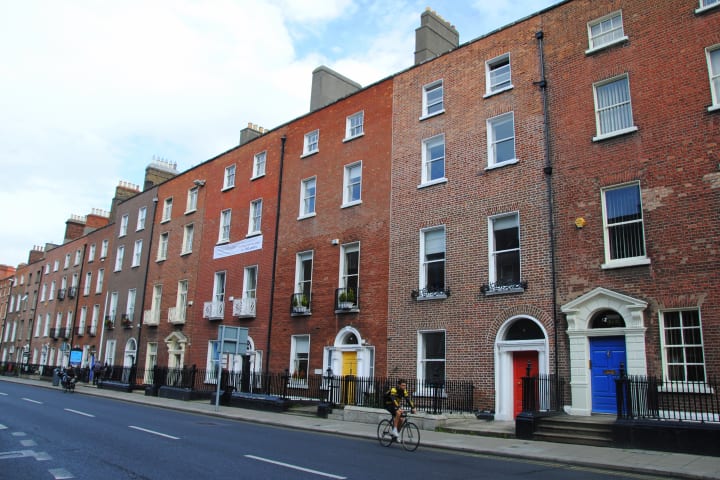
It was as if the city had collectively decided to throw off the heavy, black mourning attire and put on vibrant, celebratory clothing.
These vividly painted doors were a silent but powerful protest against the rigid norms of the past
They served as a declaration that Dublin would no longer be confined by London's orders.
The Aftermath
As the colorful revolution swept through the streets of Dublin, it not only changed the city's aesthetic but also its spirit.
These doors were more than just painted wood; they were symbols of a new beginning, a reflection of a city that refused to be held back by the past.
In a post-Victorian Dublin, these colorful Georgian doors stood as vibrant testaments to the city's resilience and its embrace of change. They remain a part of Dublin's identity, forever reminding us of the silent rebellion that painted the city in the hues of a hopeful, post-Victorian era.
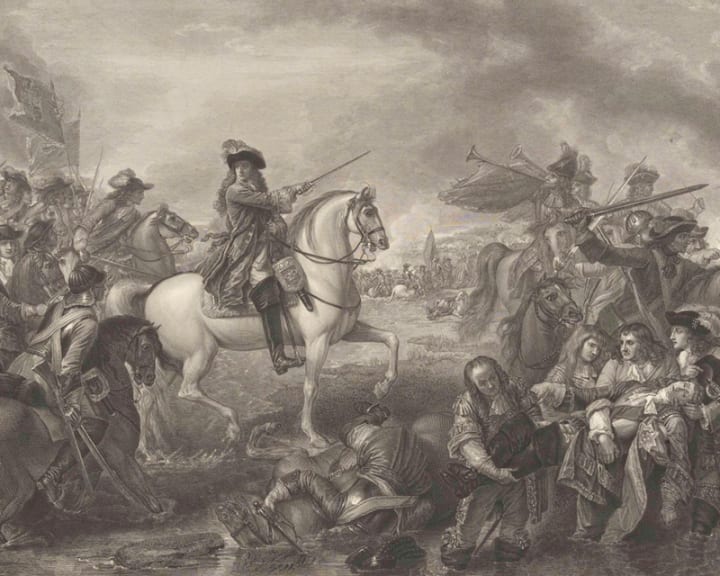
The 20th century would see Ireland's independent spirit rise, further challenging British authority.
Their pursuit ultimately came to fruition, leading to Irish independence and the partition of Ireland into Northern Ireland and the Irish Free State — which later became the Republic of Ireland.
Today, every time Dubliners leave or enter their homes, they go through a bit of history.
The colorful doors of Dublin remain a part of Ireland's identity, forever reminding us of the small, but powerful act of rebellion that gave birth to Irealnd's free spirit and painted the city in the hues of a hopeful new era.
About the Creator
Tales From Elsewhere
Legends, myths, and curiosities from the world's most beautiful and mysterious places. Telling the stories of our culture from a different perspective.
Keep reading
More stories from Tales From Elsewhere and writers in History and other communities.
Welcome to Tales From Elsewhere!
Do you ever wonder why are people interested in stuff? I personally believe it's a combination of three aspects. Firstly, as humans, we're a naturally curious species. We are hungry for knowledge and certainty of what we see.
By Tales From Elsewhere2 years ago in Writers
The "Demon of the Woods": The real-life historical origin of the Pied Piper.
The hollow clack of a wooden latch in an empty house is a sound that lingers. It is the sound of a period at the end of a sentence that no one wanted to read. In the town of Hamelin, on the twenty-sixth of June, 1284, that sound was repeated one hundred and thirty times. The morning air was likely thick with the scent of damp river-mud from the Weser and the yeasty tang of baking rye, but the kitchens stayed cold. No children laughed. No small feet kicked the dust of the Bungelosenstrasse. They were gone. Just like that. A whole generation of a small German village evaporated, leaving nothing behind but a jagged, visceral hole in the local history.
By The Chaos Cabinet7 days ago in History


Comments
There are no comments for this story
Be the first to respond and start the conversation.