Latest Stories
Most recently published stories in History.
The Legendary Breads of Samarkand
A return to history that has been lost. Uzbekistan, a Muslim nation that has been ignored. For many years, it served as both the Muslim world's lifeline and its capital. The pearl of the East is Samarkand, while the power of Islam is Bukhara. Along with al-Bukhari, Ibn Sina, al-Khwarizmi, Al-Farghani, Al-Tirmidhi, and others. Al-Bukhari's Sahih. a nation that experienced numerous monarchs and governments. In its most significant cities, its artifacts still serve as witnesses. Samarkand, Bukhara, and Tashkent. Bukhara. The history is odorized in the names of its cities. those in Central Asia that are the oldest. Greetings from Samarkand. Greetings from Tashkent, Uzbekistan. This region is in Asia. Today, we'll take tours of the three most significant cities. Here we are in Samarkand. Greetings from Samarkand. Read until the very end to witness the legendary bread of the world. He is deeply burying it. And the trick to this extraordinary knack for placing their bodies inside the Tandoor so they may put bread inside. When you first arrive in Tashkent, the capital, you'll find that 90% of the cars are Chevrolets. Look! Our vehicle is this. The Chevrolet! They have a facility where exclusively Chevrolet is produced. because of the high taxes. GM Motors acquired the automobile plant and began making Chevrolet there. High tariffs apply to all imported vehicles. Guys, you're looking at the biggest bazaar in all of Central Asia! How enormous is it? Observed the turtle's shell, perhaps? For the entire city to sell and buy, they constructed a circular area. Here we are in Tashkent, Uzbekistan. How gorgeous! Mashallah! as soon as you step foot in these mosque yards! It belongs to Transoxiana. Around Amu Daria. Qutayba ibn Muslim al-Bhil, a Muslim general, led the Muslims to victory over it during the Umayyad era. She was interred here, close to the Chinese border. Al-Bukhari, also known as Timur, ruled central Asia for several decades. It was a part of the Soviet Union from 1924 to 1991 when it gained independence and became the Republic of Uzbekistan. With a population of 35 million, the majority of the people are Muslims. The country's currency is the Sum, and its major crops are cotton and wheat. Uzbekistan exports gas, oil, and gold. During the Soviet era and even after independence, the country remained isolated until 2016 when it started to open up again, reconnecting with the old Silk Road. We traveled on the Silk Road by train from Tashkent to Samarkand, one of the most beautiful cities in the world. The journey took only two and a half hours. Timur, a renowned leader, played a significant role in Central Asia's history by saving the region from Mongolian invasion and establishing the first Uzbek country. The Timurid Empire spanned from China to the Mediterranean Sea, and its tomb, along with the Timurians', can be found in the city of Samarkand. In Samarkand, you'll discover ancient mosques and shrines dating back to the 15th century, as well as one of the oldest doors. During Prince Timur's reign, Samarkand served as the Islamic capital of Asia. Take a look around, the view here is remarkable! Samarkand is brimming with historical significance. The mosque dedicated to Prince Timur's wife is also located here. Prince Timur ruled over all of Central Asia. Now, we find ourselves in Registan Square, the most breathtaking square in Central Asia. Did the Mongolians reach this place? Absolutely. They launched attacks, invaded, and devastated Samarkand, resulting in the loss of many lives. This is Registan, the heart of Samarkand. Look around, you're surrounded by three schools. Six hundred years ago, these were prestigious centers of knowledge. This place attracts visitors from all over the world, akin to Al-Andalus in central Asia. Take a look at this school, known as "Madrasah" in Uzbek. We are currently in Al Dar. Yes, this is Al Dar, and we have reached the most exquisite part of this school adorned with golden tiles. It's truly an amazing place we have visited, with schools, mosques, and shrines scattered everywhere. UNESCO has recognized it as the first Islamic site built in central Asia. The dominant color here is blue! Look! We then proceeded to Shah-i-Zinda, a significant location in Samarkand symbolizing the arrival of Islam in central Asia. This is the resting place of Quthum ibn Al-Abbas, the cousin of our beloved Prophet Muhammad (peace be upon him). The Quranic verses and Hadiths were often inscribed here. Come and experience the essence of success in this remarkable place. From Samarkand, we took a two-hour train ride to Bukhara, the city of Imam al-Bukhari, located in Zarafshan Oasis. Bukhara, the third city on the ancient Silk Road, houses one of the largest and oldest lighthouses, Kalon Minaret, constructed in 1127. This minaret dates back to the 12th century before it was destroyed by the Mongolians. Bukhara is renowned for its carpet production and is home to the largest school in Uzbekistan, which was established approximately 500 years ago. While it used to serve as a school for students, it now functions as a Bazaar. The city is most famous for its esteemed scholars, including al-Bukhari, Ibn Sina, Narshakhi, and Abdullah Al Yamani. Al-Bukhari, who hailed from Bukhara, compiled the Hadith in Sahih al-Bukhari, the second most significant book in the Islamic world after the Quran. Imam al-Bukhari, born in Bukhara, earned his name, which means "from Bukhara," as a result. He journeyed to the Arab world to learn Arabic and collect the Hadith of the Prophet PBUH. Additionally, there are seven ovens in this location, showcasing the abundance of bread, a notable feature of Samarkand. Unique and unparalleled, their bread-making technique remains unmatched worldwide. With astonishing proficiency, he plunges into the process. Witness the mastery as he dives inside, executing mind-blowing maneuvers to deliver the most exquisite and delectable bread. The quantity produced is immense, reaching thousands in number. A legendary figure, his diving act captivates onlookers. Certification is required to attain such a remarkable level of expertise. Astoundingly, he ventures into the depths of the Tandoor oven, showcasing an incredible move. Behold the result: fresh bread, prepared with the blessings of Bismillah, skillfully handled with the right hand. Come and marvel at this spectacle! The bread can be savored as is, without any additional adornments. May Allah bless those who toil in the bakery. It is said that this bread was carried to battlefields due to its satiating and long-lasting properties, remaining unspoiled for a month. Observe the sheer magnitude of this creation! Not everyone possesses the ability to accomplish such a feat. Exclusive to Samarkand, this distinctive style and enormous bread sizes epitomize a skill that transcends ordinary levels—it truly represents an advanced level of mastery.
By Jayden Cambarihan3 years ago in History
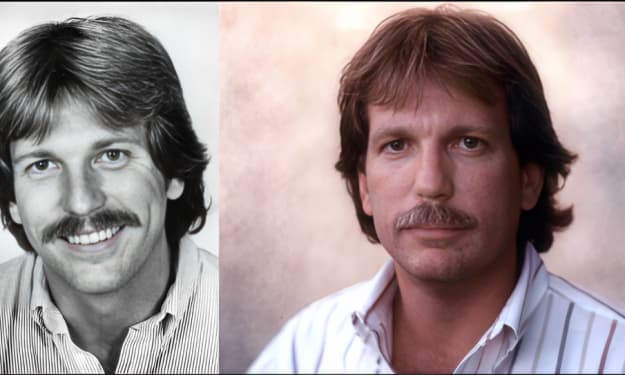
Gary Webb: The Fearless Investigative Journalist
Gary Stephen Webb, born on August 31, 1955, was a renowned investigative journalist from the United States. He kickstarted his professional journey by working for newspapers in Kentucky and Ohio, where he gained recognition for his exceptional investigative writing skills and was honored with several awards.
By Rare Stories3 years ago in History
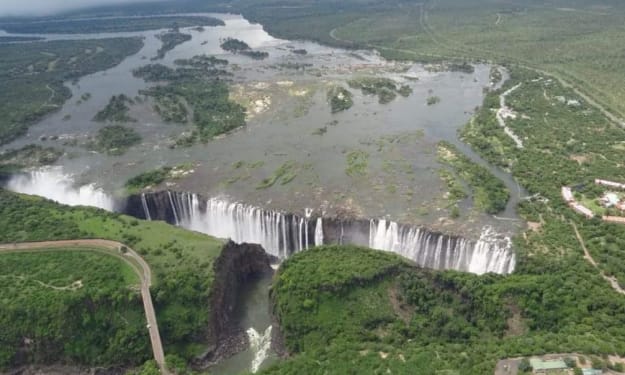
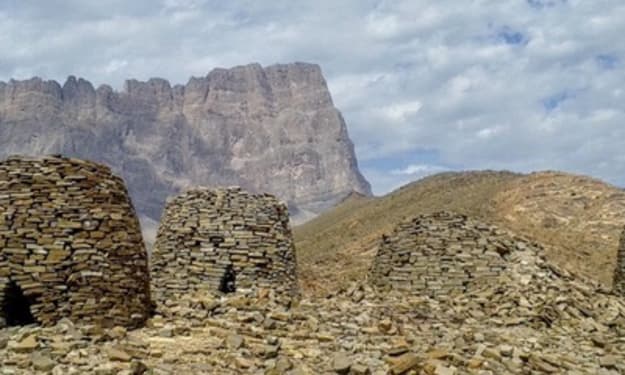
natural wonders of Africa
01 Discovering the seven natural wonders of Africa Africa, one of the most naturally diverse continents, has stretches of untouched nature and landscape brimming with rich wildlife and beautiful cultures. The land of beauty, Africa is home to some amazing natural wonders. Africa has the world’s largest free roaming wild animals and the largest collection of carnivores. The continent is home to the Big 7: lion, leopard, crocodile, elephant, rhinoceros, hippopotamus, and the lowland gorilla.
By Alhassan Friday3 years ago in History
The battle for the land
Once upon a time, in the early 19th century, a historic conflict known as the Anglo-Nepal War took place between the British East India Company and the Kingdom of Nepal. It was a battle that would shape the destiny of both nations and leave a lasting impact on the region.
By Aryan Koirala3 years ago in History
Collision of Black Holes: Experts Explain Luminous Cosmic Burst
Collision of Black Holes: Experts Explain Luminous Cosmic Burst Imagine a cosmic event so cataclysmic that it can release more energy in a split second than millions of stars combined. Such is the awe-inspiring collision of black holes, a phenomenon that has fascinated scientists and astronomers alike. In this article, we will delve into the intriguing world of black hole collisions, exploring their causes, effects, and the mind-boggling bursts of luminosity they produce. Get ready to embark on a journey through the cosmos as we unravel the mysteries behind these extraordinary celestial events.
By Owais Creation3 years ago in History
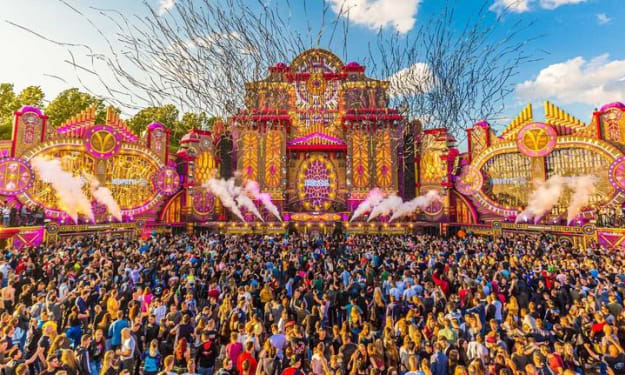
festivals
The history of festivals dates back thousands of years and varies across different cultures and regions. Festivals have been an integral part of human civilization, serving various purposes and evolving over time. Here's a brief overview of festival history:
By Romana Vrolijk3 years ago in History
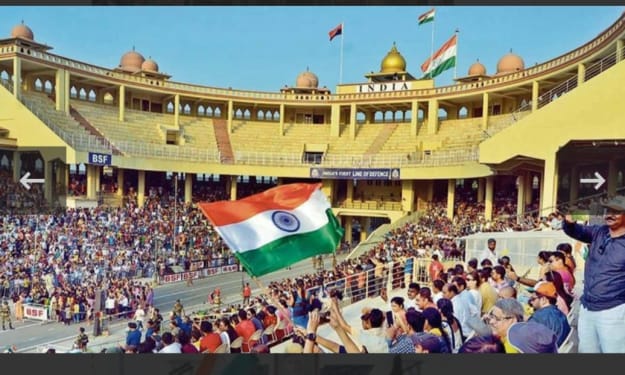
Historical places of Panjab
Punjab, a region in South Asia, has a rich historical and cultural heritage. It is divided between two countries, India and Pakistan, with both sides having significant historical places. Here are some of the notable historical places in Punjab:
By Irafan khan 3 years ago in History
"Trailblazers of History: Amelia, Rosa, and Marie"
In the annals of history there are countless tales of remarkable women who defied societal expectations and left an indelible mark on the world One such story unfolds in the early 20th century amidst a time of great change and shifting norms It is the story of three extraordinary women whose lives intersected and shaped the course of history
By shahaab imran3 years ago in History