


I was stationed in Binga, the administrative town in Matabeleland North province of Rhodesia, during the bush war from 1977 until 1980, when the war ended. Binga was situated on the banks of Lake Kariba. The local population was made up of the Batonka tribe, also called Batonga, who were so isolated and primitive that they had never seen a white skinned European and during my patrols deep into the rural areas of the district young boys would come up to me and touch me and stroke my hair in amazement at my color of skin. for centuries they had lived in this region and were subsistence farmers and fishermen, when there was just the Zambezi River running through the land they inhabited, not the giant Lake that was created recently. Lake Kariba. Because Arab slave raids sailed up the Zambezi River from Mozambique and Zanzibar, stealing the children or any able bodies they could find, the Batonka would scar their faces with three vertical scars on both Cher’s and remove their three front teeth on the upper and lower jaw in an effort to look unattractive to the Arab raiders.when the British came and colonized the region in the 1890’s they stopped the slave raids by the Arabs, but the Binga region was so isolated that the practice of facial scarring was still in use in 1977/1978 when I was there. Mostly old men and women had the scars and missing teeth, but some of my 30 and 40 year old soldiers had them too. They also pierced their earlobes, stretched them until the lobes dangled almost to their shoulders, but because they were soldiers they they hung them over the tops of their ears so they wouldn’t catch on anything. Also nose piercing was common , with bones worn through the hole. Once I saw an old woman with a tooth brush through her nose piercing. I never saw young children with the facial scarring, so already the practice had started to disappear, as the memory of slave raiding disappeared.

The above photo show some local Batonka women with bones through their noses, but I was never able to get a portrait photo of the facial scarring As I never carried a camera in the bush when on foot patrol. The practice has disappeared totally now.
when I returned to Zimbabwe with my American wife in 1993, we encountered some young men in my home town of Bulawayo, several hundred miles from Binga, and they were very handsome, unscarred, no missing teeth, no pierced noses, no stretch earlobes, and they told us they were from Binga, and were of the Batonga tribe. I immediately called them out, as I had personal knowledge of what Batonga people looked like. They laughed, and said that was their grandparent’s generation, no one does that anymore. I realized then that I had lived a National Geographic moment back then without realizing it, a moment that has disappeared. I was so glad that I had seen it first hand.
Another cultural tradition that the Batonga people practiced was a circumcision ceremony for young 14 year old boys when they came of age and became men in the tribe. Masks of small tree limbs and sacking material were used to make masks, and then painted or dyed black and red, and were worn or held while dancing in the ceremony. The young men I met in Bulawayo were selling them at the craft market.

These masks are also not used in a circumcision ceremony anymore, but are made for sale to tourists.
Rhodesia changed to Zimbabwe in 1980 when the war ended.
About the Creator
Guy lynn
born and raised in Southern Rhodesia, a British colony in Southern CentralAfrica.I lived in South Africa during the 1970’s, on the south coast,Natal .Emigrated to the U.S.A. In 1980, specifically The San Francisco Bay Area, California.
The Lost City of Dreams
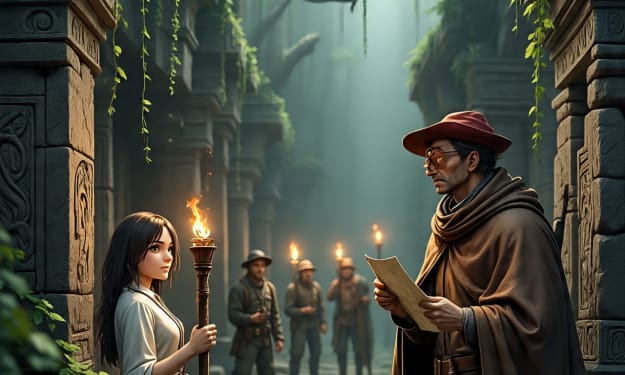
The Lost City of Dreams Aisha, Max, and Leo had always been the kind of friends who thrived on adventure. Growing up in the bustling city of Mumbai, they'd explored every nook and cranny, from the crowded streets of Old Delhi to the serene beaches of Goa. But nothing could have prepared them for the discovery that would change their lives forever.
By Talhamuhammad7 days ago in History



Comments
There are no comments for this story
Be the first to respond and start the conversation.