Analysis
Prophet Mohammad-the great man of all time.
Introduction: Prophet Muhammad is one of the most influential figures in human history. Born in the sixth century CE in the Arabian city of Mecca, he would go on to become the founder of Islam and the last prophet in the Abrahamic tradition. Muhammad's teachings, actions, and character have left an indelible mark on the world, shaping the lives of millions of people for over 1,400 years. In this blog post, we will explore the life and legacy of Prophet Muhammad, shedding light on his remarkable qualities and profound impact on society.
By emad afsary3 years ago in History
Virgil's Aeneid: The Revolutionary Epic that Shaped an Empire
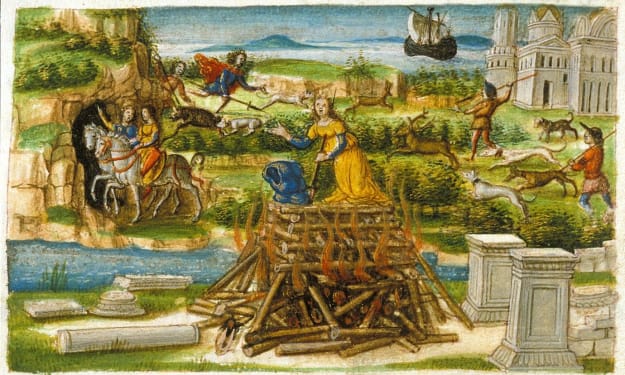
In the rich tapestry of literary history, certain works stand out as revolutionary masterpieces that transcend their time and place. Virgil's "Aeneid" is one such work. With its ambitious scope, political allegory, and poetic brilliance, the "Aeneid" revolutionized Roman literature, reshaped cultural identity, and left an indelible mark on Western literature. In this article, we will delve into the multifaceted ways in which Virgil's epic poem was truly revolutionary, both in its historical context and in its enduring legacy.
By James Henry3 years ago in History
The Enchanted Forest
Once upon a time, in a quaint village nestled at the edge of a dense forest, there lived a young girl named Amelia. With her curious spirit and insatiable love for adventure, she often found herself wandering into the woods, despite the warnings of the villagers. Legends spoke of an enchanted forest, a place where magic came alive and mythical creatures roamed freely.
By Mannu Singh 3 years ago in History
A Writer in a Different Time
In the event that I were brought into the world in an alternate verifiable period, I couldn't want anything more than to be an essayist. I love to compose stories and sonnets, and I believe having the option to do that as a job would stun.
By MANSHI KUMARI3 years ago in History
The Controversial Debate: Should Drugs be Legalized?
The question of whether drugs should be legalized has sparked heated debates across the globe. Proponents argue that legalization would mitigate the harmful consequences of the war on drugs, promote personal freedom, and generate significant economic benefits. However, opponents raise concerns about potential increases in addiction rates, public health risks, and the overall social impact. This essay explores both perspectives, aiming to shed light on the complex issue and contribute to the ongoing discussion.
By Christopher Harvey3 years ago in History
Risk Management in River Recreation:
The river was a sanctuary—a place of tranquility and adventure. Its sparkling waters weaved through the lush landscape, promising moments of exhilaration and serenity to those who dared to embrace its embrace. For Emily, the river held a special place in her heart. It was a sanctuary where she sought solace and found her truest self.
By Sakyi Enoch3 years ago in History
Juneteenth in Modern Times. Content Warning.
Once a modest commemoration held primarily in African American communities, Juneteenth has experienced a remarkable evolution in modern times, gaining increasing significance and national recognition as a holiday. Its journey from a local observance to a celebrated day of remembrance and reflection for all Americans reflects the ongoing struggle for racial equality and justice in the United States.
By Ahmad Hassan3 years ago in History
Pioneering Path: The Inspiring Journey of Kamala Sohonie, India's First Female Biochemist. Content Warning.
Kamala Sohonie was an Indian biochemist who made significant contributions to the field of science and paved the way for future generations of women scientists. Born on March 14, 1912, in Bombay, India, Sohonie overcame numerous obstacles and achieved many notable milestones throughout her life.
By Praful Patil3 years ago in History
No One Talks About the Shipwreck More Tragic Than the Titanic
Introduction: The Titanic disaster of 1912, renowned for its technological advancements and unsinkable reputation, captivated the world's attention and inspired a famous movie. However, history holds accounts of even more devastating shipwrecks that surpass the tragedy of the Titanic. One such calamity occurred on April 27, 1865, involving the Sultana Steamboat. This large wooden vessel, spanning 260 feet in length and 70 feet in width, embarked on a routine voyage from New Orleans to St. Louis. Despite inherent risks, the ship's captain, James Cass Mason, succumbed to the allure of financial gain, resulting in a catastrophic event.
By Himanshu Singh3 years ago in History