
The Egyptian Discovery That Terrified Scientists
Unearthing Ancient Secrets: The Gruesome Rituals and Mysterious Artifacts of Egypt's Dark Past
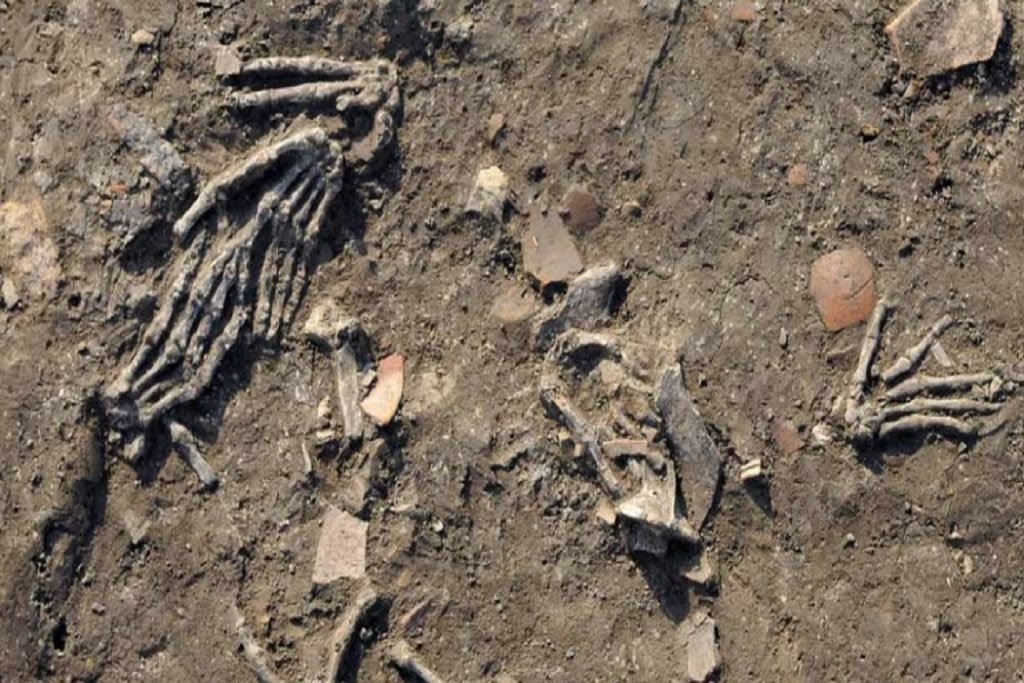
Years ago, a gruesome discovery was made in Egypt that startled scientists. 16 human hands, all right hands, carefully buried in four eerie pits. These hands were abnormally large, making them look less human at first, but they were indeed human hands. Curiously, no left hands were found. This discovery points to an ancient dark ritual, as depicted in old Egyptian art and tales. It was believed that warriors would present the right hand of their defeated adversaries as proof of victory in exchange for gold. The Egyptians believed in the afterlife, so cutting off someone's hand was thought to cut off their power forever, ensuring a complete and eternal defeat for their enemies. This practice is thought to have occurred during battles between the Egyptians and the Hyksos, who lived in what was once known as Canaan.
Egypt has always been a focal point for significant historical discoveries. Some time ago, a papyrus was found that, when unrolled, would be as tall as the world's smallest skyscraper in Wichita Falls, Texas. This ancient manuscript, written on papyrus made from the medulla of a papyrus plant about 2,000 years ago, is a text that describes many of Egypt's funerary traditions and their visions of the afterlife. It's considered one of the most important texts from ancient Egypt and is still sold in bookstores today.
The manuscript was unearthed from a chamber south of the Pyramid of Djoser in Saqqara. The Pyramid of Djoser is the oldest pyramid in Egypt, predating the more famous Pyramids of Giza. Recently, archaeologists at the Saqqara site were excited to discover one of Egypt's oldest complete mummies. They believe this well-preserved mummy belonged to a wealthy man, found in a deep shaft covered in layers of gold leaf. The symbols on the mummy, such as a headband, a bracelet on the chest, and a tunic reserved for Egypt's elite, indicate his high status. The most thrilling part of the discovery was that the resting place was sealed with mortar, just as the ancient Egyptians had left it 4,300 years ago.
Back in 2008, archaeologists made another fascinating discovery: a "missing" pyramid. Over 4,000 years, this pyramid deteriorated to the point that only its base was visible. The pyramid, initially found by a German archaeologist in the 1800s, was nicknamed the "Headless Pyramid" due to its condition. After years of being covered by desert sand, systematic excavations uncovered the pyramid's base, buried under a 25-foot mound of sand. This site was important in ancient times, with ceremonies involving high priests carrying mummified remains of sacred bulls. The Egyptians believed these bulls were the earthly incarnations of the city deity of Memphis and were connected to fertility rites. These bulls, specifically the Apis bulls, were selected for their unique characteristics by local priests and were mummified and buried in underground galleries after they died.
Meanwhile, American archaeologists are currently excavating a cemetery in Egypt that might contain over a million mummified bodies. So far, they have uncovered around 1,700 mummies, which differ from classic Egyptian mummies as these people were likely commoners who lived around 1,500 years ago when Egypt was under Roman and Byzantine control. The cemetery has an intriguing name, "The Way of the Water Buffalo," which might be worth a visit on your next trip.
In addition to bulls and buffalo, ancient Egyptians also revered baboons. In the early 20th century, archaeologists discovered a site filled with mummified baboons in the "Valley of the Monkeys." These animals were mummified because they were considered important, often linked to specific deities. Jackals were connected to Anubis, the god of the afterlife, while cats were associated with Bastet, the female deity. Baboons were linked to Thoth, the deity of wisdom and advisor to Ra, one of Egypt's supreme deities. However, archaeologists studying these baboons were disheartened to find that they likely suffered from vitamin D deficiencies and were poorly fed, possibly due to being kept indoors and deprived of sunlight. Perhaps Thoth was displeased with their treatment.
In another discovery, archaeologists found human mummies with golden tongues, believed to help the deceased speak in the afterlife. These mummies were placed in wooden coffins alongside goods like necklaces, pottery, golden lotus flowers, and scarab beetles.
Recently, a new temple was unearthed in Egypt, believed to be dedicated to Zeus Kasios, a deity that combined Zeus, the almighty Greek sky god, with Mount Kasios. Archaeologists found two pink granite columns, thought to be the temple's front gate, which collapsed during an earthquake centuries ago. Speaking of deities, not all were serious—scientists recently unearthed a golden ring south of Cairo depicting Bes, the deity of fun, who is often described as a joyful, chubby dwarf.
Ancient Egyptian tattoos were more meaningful than today's aesthetic designs. Women in ancient Egypt would get tattoos for protection during childbirth. In the Nile region, scientists found mummies with well-preserved tattoos, which is rare due to skin deterioration. Two women had tattoos on their lower backs, depicting the same chubby dwarf, Bes, the protector of women during childbirth.
Now, while it might sound incredible, some scientists believe that ancient Egyptians invented an early form of automation. They created a wooden statue, now in the Metropolitan Museum of Art, with a hidden mechanical system inside. An X-ray revealed a pulley-like mechanism extending from the statue's shoulder to its left leg, allowing the statue to raise and lower its hand when activated. This statue, known as Hathor, showcases the ancient Egyptians' ingenuity, blending their expertise in astronomy, mathematics, engineering, and even eccentric inventions.
About the Creator
Eunice Fasoranti
I am a passionate writer who crafts compelling stories that explore the depths of human emotion and creates narratives that linger in the reader's mind long after the last word.
Keep reading
More stories from Eunice Fasoranti and writers in History and other communities.
How the reputation of pit bulls emerged
The first dog to provoke a public uproar in America was The Spits, a breed that we would most likely now refer to as Pomeranians. America has a long history of condemning particular canines. They gained a reputation as women's dogs because a doctor basically declared that women should bear the repercussions of owning dogs rather than children. While pit bulls were originally regarded as wonderful family dogs and were compared to the Honda Civic of dogs, articles on these dogs described them as lethal and vicious creatures. For more than seven years, Bronwin Dicki studied and wrote a book about pit bulls. A cute sidekick of "The Little Rascals," pitbulls were even included in military advertisements to promote patriotism.
By Eunice Fasoranti2 years ago in Petlife
The Tunguska Event: The morning the sky exploded in Siberia, knocking down 80 million trees with no impact crater.
The silver heat hit S.B. Semenov before the sound even arrived. He was sitting on the porch of the Vanavara trading post, sixty miles from the Podkamennaya Tunguska River, when the air suddenly smelled of scorched iron and lightning. It felt like his shirt had caught fire. The sky split in two—a jagged, vertical gash of blue-white light that made the morning sun look like a dull copper coin. Then came the punch. A massive, invisible hand of air slammed into the post, lifting Semenov off his bench and tossing him three yards across the dirt. The windows shattered in a single, synchronized scream of glass. He looked up, and the northern horizon was gone, replaced by a wall of smoke that reached toward the stars.
By The Chaos Cabineta day ago in History




Comments (3)
So so amazing .i love your content and subscribed. Kindly reciprocate by subscribing to me also . thank you and keep it up
Thanks for sharing
Nice history