
The Fall of Constantinople (1453)
The Fall of Constantinople (1453)

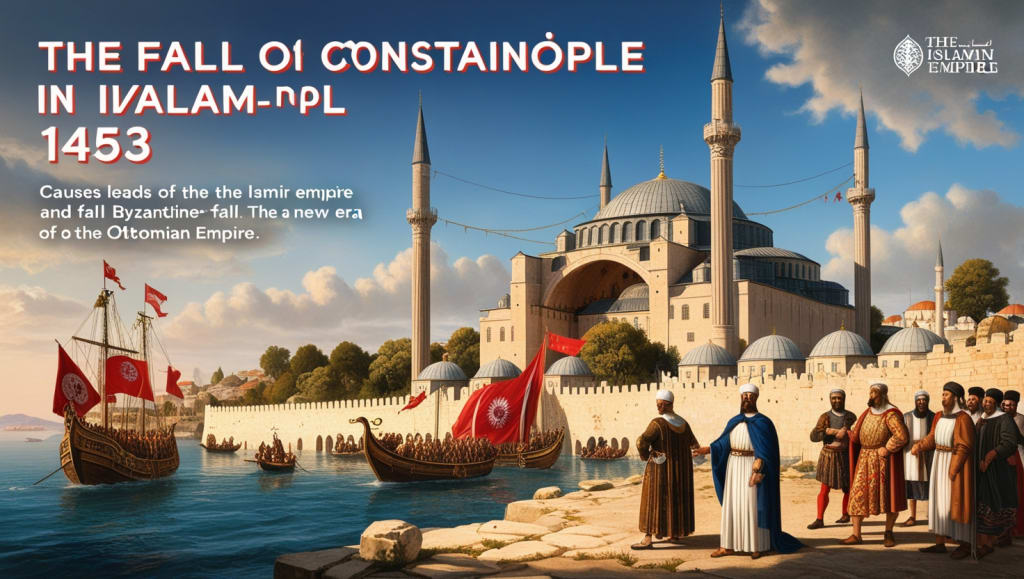
The Fall of Constantinople (1453)
Introduction to the Fall of Constantinople
The Fall of Constantinople in 1453 stands as one of the most significant events in Islamic and world history. This event marked the end of the Byzantine Empire and the beginning of a new era for the Ottoman Empire. In this article, we will delve into the causes leading to the fall, the events surrounding it, and the key figures who played pivotal roles in achieving this monumental victory.
Constantinople: A City of Strategic Importance
1. Geographic Location
Constantinople (modern-day Istanbul) was strategically located at the crossroads of Asia and Europe, making it a crucial hub for trade and military operations.
2. The Byzantine Capital
Constantinople had been the capital of the Byzantine Empire for over a thousand years and was renowned for its formidable fortifications and massive walls that made it nearly impregnable for centuries.
Causes Leading to the Fall of Constantinople
1. Ottoman Ambition
Sultan Mehmed II, known as Mehmed the Conqueror, was highly ambitious and aimed to expand the Ottoman Empire. He viewed the conquest of Constantinople as a fulfillment of the prophecy of the Prophet Muhammad (peace be upon him), who said: "You will conquer Constantinople. What a wonderful leader its leader will be, and what a wonderful army that army will be."
2. Byzantine Weakness
By the 15th century, the Byzantine Empire had significantly declined in military and economic strength, making it a relatively easy target for the Ottomans.
3. Control of Trade Routes
The conquest of Constantinople was key to controlling the trade routes between East and West, making the city economically indispensable.
Preparations for the Conquest
1. Building Giant Cannons
Sultan Mehmed II collaborated with a Hungarian engineer named Orban to construct massive cannons capable of breaking through Constantinople’s walls. The Great Turkish Bombard was one of these formidable weapons.
2. Mobilizing the Army
Mehmed II assembled an army of approximately 100,000 soldiers, including the elite Janissaries, who were the backbone of the Ottoman military.
3. Assembling a Naval Fleet
The Sultan also built a powerful naval fleet to blockade the city from the sea, tightening the siege on the Byzantines.
Events of the Fall
1. The Siege of Constantinople
On April 6, 1453, the Ottomans began their siege of Constantinople. They used massive cannons to bombard the walls and launched continuous attacks by land and sea.
2. The Ship Transport Plan
Mehmed II devised an ingenious plan to transport ships overland using greased wooden logs to bypass the heavy chain laid by the Byzantines across the Golden Horn harbor.
3. The Final Assault
On the morning of May 29, 1453, the Ottomans launched a decisive attack on the city. After intense fighting, the Ottoman forces breached the walls and entered Constantinople.
Key Figures in the Conquest
1. Sultan Mehmed II
Mehmed II, known as "The Conqueror," was a young, visionary leader aged only 21 when he achieved this historic victory.
2. Byzantine Emperor Constantine XI
Constantine XI, the last emperor of the Byzantine Empire, fought valiantly to defend his city but ultimately fell during the final battle.
Outcomes and Impact
1. The Fall of the Byzantine Empire
The conquest marked the end of the Byzantine Empire, which had lasted for over a millennium.
2. Constantinople Becomes the Ottoman Capital
Constantinople was transformed into the capital of the Ottoman Empire and renamed Istanbul, meaning "City of Islam."
3. Cultural and Economic Exchange
The conquest fostered cultural and economic exchange between East and West, turning Istanbul into a center for art, science, and commerce.
The Significance of the Fall of Constantinople in Islamic History
1. Fulfillment of Prophecy
The conquest was seen as the fulfillment of the Prophet Muhammad’s prophecy, elevating Sultan Mehmed II’s status in Islamic history.
2. Beginning of the Ottoman Golden Age
Following the fall, the Ottoman Empire entered a period of significant expansion and prosperity, becoming one of history’s most powerful empires.
Lessons from the Fall of Constantinople
1. The Importance of Visionary Leadership
The fall highlights how visionary and determined leadership can achieve extraordinary feats.
2. The Value of Planning and Innovation
The innovative plan to transport ships overland serves as a reminder of the power of creative problem-solving in overcoming challenges.
Conclusion
The Fall of Constantinople remains a momentous event in world history, showcasing the power of planning, determination, and unity. This conquest not only reshaped the map of Europe and Asia but also marked the dawn of a new era of Ottoman dominance. By studying these events, we can draw valuable lessons and find inspiration to overcome challenges in our own lives.
About the Creator
💓 Pulse of Stories 💓
The world of short and inspiring stories! Here you will find stories that touch hearts, ignite the imagination, and take you on quick yet deep journeys.
Keep reading
More stories from 💓 Pulse of Stories 💓 and writers in History and other communities.
The Siege of Troy (circa 1184 BC)
The Siege of Troy (circa 1184 BC) Introduction to the Siege of Troy The Siege of Troy is one of the most renowned events in Greek history and mythology. This epic conflict, believed to have occurred around 1184 BC, is filled with tales of bravery, betrayal, and love. In this article, we will explore everything you need to know about the Siege of Troy, from its causes to its outcomes and its impact on history and mythology.
By 💓 Pulse of Stories 💓about a year ago in History
Evolution Of Human
Human Evolution: The Long Journey from Primate Ancestors to Modern Humans Human evolution is one of the most fascinating and complex stories in the history of life on Earth. It explains how modern humans, Homo sapiens, emerged through millions of years of biological, environmental, and cultural change. This journey is not a straight line of progress but a branching tree filled with experiments, adaptations, extinctions, and remarkable survival strategies. By studying fossils, genetics, archaeology, and comparative anatomy, scientists have pieced together a detailed narrative of how humans evolved physically, cognitively, and socially.
By Ibrahim Shah 7 days ago in History
The Rise and Fall of Samson
Once, a young man walked the earth, and the earth itself seemed to listen when he did. His name was Samson, and his story was spoken first in whispers, then in fear, and finally in wonder. Long before his strength became legend, before enemies trembled at his shadow, he was only a child promised to God.
By Kelly Munala Brookes5 days ago in History


Comments
There are no comments for this story
Be the first to respond and start the conversation.