
Twilight of the Crown
The Fall of the British Empire and the End of Global Rule

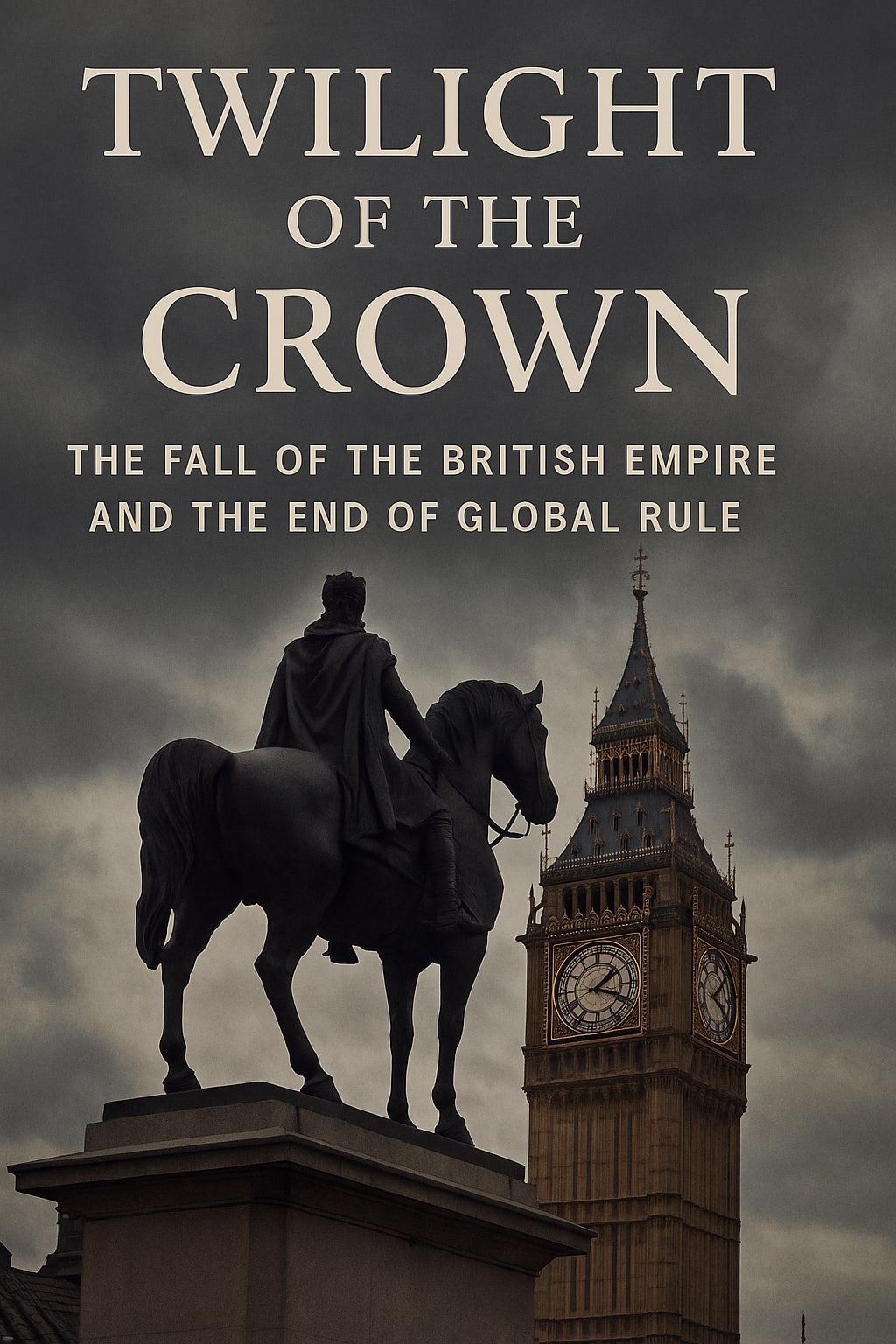
Once the sun never set on the British Empire. Its crimson hue stretched from the windswept highlands of Scotland to the golden sands of India, from African jungles to the vast Australian outback. But empires, like the tides, rise and fall. And the fall of the British Empire was not a single event, but a slow, dramatic unraveling of control, identity, and power.
The seeds of decline were sown at the very height of Britain’s dominance. The 19th century was a time of immense industrial and colonial power for Britain. It led the world in technology, commerce, and warfare. Yet this same period also began to expose cracks in the imperial foundation. Resistance simmered in the colonies. New powers like the United States and Germany emerged. And, beneath the pride of empire, exhaustion quietly spread.
The first true blow came with the First World War. Though victorious, Britain emerged deeply scarred. Economically drained and socially shaken, the empire could no longer afford to govern as before. But it was the Second World War that truly shattered Britain’s global standing. Fighting across continents, Britain had to rely heavily on allies—especially the United States. By 1945, it was clear that while Britain had won the war, it had lost its empire.
In India, the jewel in the crown, independence was no longer a distant dream but an unstoppable demand. The Indian National Congress and figures like Mahatma Gandhi had already begun peaceful resistance decades earlier, but the war had intensified the urgency. Britain’s inability to maintain control was laid bare, and in 1947, India and Pakistan gained independence. The event triggered the end of the British Raj and inspired movements across the empire.
The 1950s and 1960s became an era of decolonization. In Africa, nations like Ghana, Kenya, and Nigeria cast off the imperial yoke. Some transitions were peaceful, others violent. The Mau Mau Uprising in Kenya, for instance, forced the British to confront the brutality of its colonial rule. The costs—both moral and material—grew too heavy to bear.
Meanwhile, at home, Britain struggled with its own identity. The empire had once been a source of pride and power, but now it was a reminder of a world that no longer existed. The economy faltered. Cities scarred by bombings struggled to rebuild. Rationing continued into the 1950s, and many Britons began to question the purpose of maintaining distant territories they would never see, and that no longer wanted them.
In 1956, the Suez Crisis delivered a fatal blow to Britain’s illusion of power. When Egypt’s president nationalized the Suez Canal, Britain—along with France and Israel—launched a military intervention. But international backlash, particularly pressure from the United States and the United Nations, forced a humiliating withdrawal. The message was clear: Britain could no longer act alone on the world stage.
Throughout the next two decades, the empire continued to fade. Hong Kong, once a symbol of British prestige in Asia, was handed back to China in 1997. It marked the last major colonial holding. What was once an empire of conquest and control had become the Commonwealth—a voluntary association of former colonies, some still honoring the monarch, others having moved on.
But even in its fall, the empire left behind a complicated legacy. English became a global language. British systems of law, governance, and education took root across continents. Railways, universities, and parliaments built under British rule endured. At the same time, the empire left deep wounds: partition and war, cultural erasure, economic disparity, and racial tensions.
In Britain, debates about the empire continue. Statues of imperial figures have been toppled or defended. School curricula wrestle with how to teach the darker chapters of colonial history. Immigrants from former colonies became part of Britain’s social fabric, changing its culture and challenging old notions of Britishness.
The British Empire did not collapse in fire and rebellion alone. It faded, piece by piece, undone by war, resistance, economics, and time. Its fall was both a tragedy and a transformation—an end, but also a beginning for many new nations.
Today, Britain is no longer the ruler of the waves. It is a nation with a rich, complicated past and a quieter, more modest role in global affairs. The empire is gone, but its echoes remain in every corner of the world it once claimed.
The crown still shines, but only in memory does it glow as it once did—at the height of empire. In the twilight that followed, the world changed forever.
About the Creator
Raza Ullah
Raza Ullah writes heartfelt stories about family, education, history, and human values. His work reflects real-life struggles, love, and culture—aiming to inspire, teach, and connect people through meaningful storytelling.
Keep reading
More stories from Raza Ullah and writers in History and other communities.
Empire of the Isles
Long before it painted the globe red, the British Empire was a patchwork of islands battered by wind and war. Nestled off the coast of continental Europe, England, Scotland, and Wales were once little more than feuding kingdoms, often fighting among themselves and occasionally uniting only to fend off invaders. But over the course of a few centuries, something extraordinary happened: this modest cluster of isles rose to dominate the oceans, reshape global trade, and influence cultures across continents.
By Raza Ullah8 months ago in History
Future Wars in the Age of Artificial Intelli
Future Wars in the Age of Artificial Intelligence If the new battlefield is hidden inside a nation’s systems, then Artificial Intelligence is becoming the most powerful weapon within it. Future wars will not begin with tanks crossing borders or fighter jets in the sky. They will begin with algorithms, data, and decisions made at machine speed. AI is changing not only how wars are fought, but also who controls power and how quickly conflicts can spiral out of control.
By Wings of Time 6 days ago in History
Augustus Caesar — The Silent Victor
Augustus Caesar did not conquer Rome with thunder and spectacle. He conquered it with silence, patience, and restraint. Where others seized power through open violence, Augustus mastered something far rarer: the ability to win without appearing to rule. In doing so, he ended a century of civil war and founded an empire that would endure for centuries. His genius was not in dramatic battlefield heroics, but in knowing when *not* to act—and when to let others believe nothing had changed.
By Fred Bradford4 days ago in History
The Devil's Triangle
The sails ruffled in the breeze as we cruised along. The Sea Breeze was a mid-size catamaran that sailed out of Royal Naval Dockyard in Bermuda. We had booked this trip weeks in advance and were now looking at our Captain, Spike and two boat hands. Paddy and Wilson seemed like nice guys, joking around with the passengers and telling us some stories about Bermuda that only locals would know. Their island accents sounded almost British but they were pleasant to listen to.
By Barbara Gode Wiles6 days ago in Fiction


Comments (1)
Fall of BE.