
Gambling Isn’t About Money — It’s About Control
Why the urge to gamble says more about the mind than the wallet

Most people think gambling is about money.
Winning money. Losing money. Chasing money. Needing money.
But if you look closely, money is rarely the real reason people gamble.
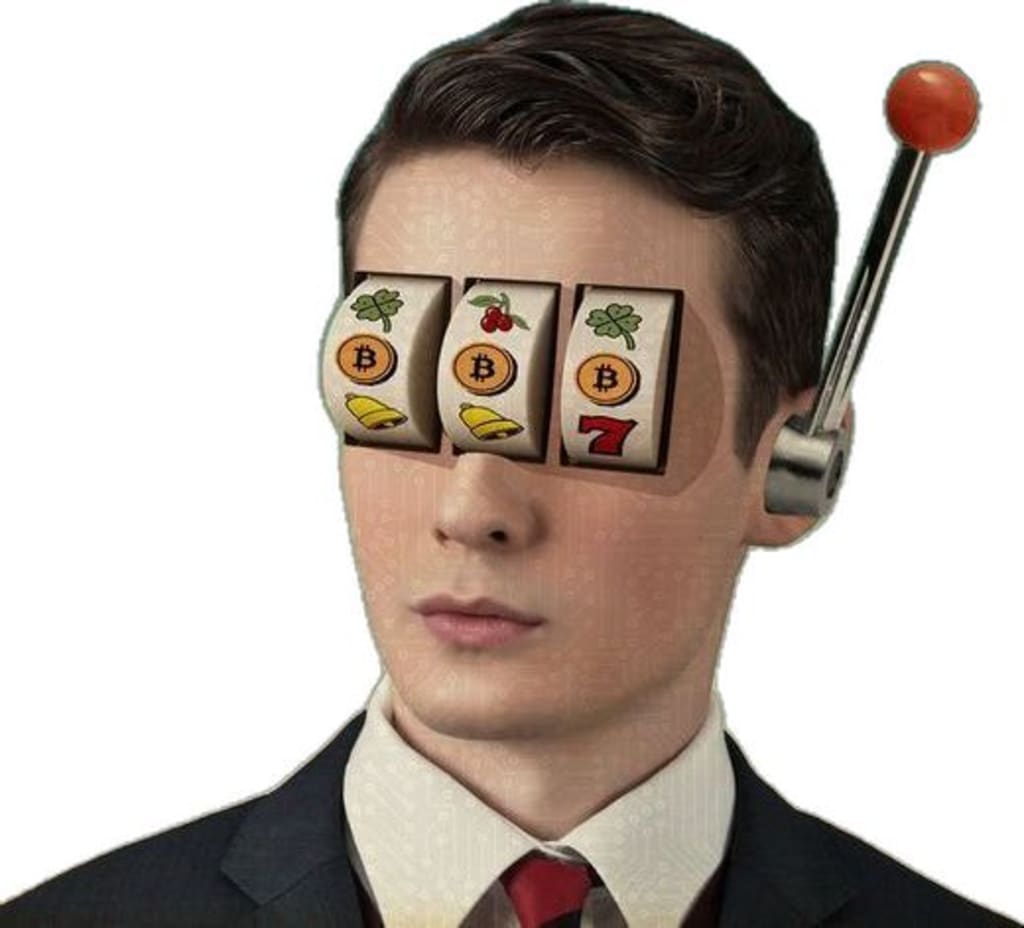
Gambling is about control — or more accurately, the illusion of it.
When someone gambles, they’re not just placing a bet. They’re placing hope into uncertainty. They’re handing randomness a question and waiting for an answer that feels personal.
Will it work this time?
Did I figure it out?
Am I lucky today?
That moment — right before the outcome — is where gambling lives.
Not in the win.
Not in the loss.
But in the suspension between the two.
That suspension gives the mind something it craves: intensity.
Life, for many people, feels slow, predictable, or emotionally flat. Gambling injects adrenaline into that flatness. It creates stakes where none existed. Suddenly, a button press, a card flip, or a number matters.
Your heart speeds up.
Your attention sharpens.
Your thoughts narrow.
For a moment, nothing else exists.
That focus can feel relieving.
This is why gambling is so seductive. It doesn’t just promise reward — it promises escape. Escape from boredom. From stress. From feeling stuck. From feeling powerless.
Ironically, people gamble most when they feel least in control of their lives.
Gambling creates the feeling that something is happening because of you. You chose this bet. You made this move. You took this risk. Even though the outcome is random, the action feels intentional.
That illusion is powerful.
Another misunderstood part of gambling is the role of near-wins. Losing by a small margin often feels worse — and more motivating — than losing completely. The mind interprets near-wins as evidence that success is close.
I almost had it.
I was one step away.
But “almost” is a trap. It keeps you engaged without rewarding you. It fuels persistence without resolution.
This is not accidental. Gambling systems are designed to exploit how the brain processes reward and anticipation. Dopamine doesn’t peak when you win — it peaks when you expect to win.
That’s why the urge grows stronger before the outcome, not after it.
And once the brain learns that pattern, it starts craving the cycle itself — not the result.
Another layer of gambling is identity. Some people start seeing themselves as “risk-takers,” “strategic players,” or “unlucky but due.” The behavior becomes part of how they explain their story.
I’m just someone who takes chances.
One day it’ll turn around.
But the longer the cycle continues, the less honest the story becomes. Losses get minimized. Wins get exaggerated. Time and money distort in memory.
And slowly, gambling stops being entertainment and starts being regulation — a way to manage emotions.
Stress? Gamble.
Boredom? Gamble.
Frustration? Gamble.
Hope? Gamble.
At that point, gambling isn’t a choice anymore. It’s a reflex.
The hardest part is that gambling often hides behind rationalization. People tell themselves they’re just “testing luck,” “playing small,” or “having fun.” And sometimes, that’s true — at first.
But problems don’t begin with extremes. They begin with repetition.
The real danger isn’t losing money once.
It’s losing awareness.
When gambling becomes automatic, it bypasses reflection. You stop asking why you’re doing it. You stop checking in with how it affects you emotionally. You focus only on the next outcome.
That tunnel vision disconnects you from reality.
Another painful truth: gambling often feeds shame. Losses hurt — not just financially, but personally. People feel stupid, weak, or out of control. That shame then fuels more gambling, because the mind wants redemption.
I’ll fix it with one good win.
But redemption through randomness rarely works.
The win doesn’t heal the pattern — it reinforces it.
So what actually breaks the cycle?
Not fear.
Not guilt.
Not lectures.
Awareness.
Understanding what gambling is doing for you emotionally is more important than understanding odds. When you see gambling as a coping mechanism rather than a flaw, you can start addressing the real need underneath.
Is it stimulation?
Is it escape?
Is it control?
Is it hope?
Once you identify that, alternatives become possible. Not perfect replacements — but healthier ones. Movement. Creation. Challenge. Skill-building. Anything that gives agency without randomness.
Another key step is slowing down the impulse. Gambling thrives on speed. Pausing disrupts the cycle. Even a few minutes of delay allows the emotional wave to pass.
Urges peak and fall — they don’t stay forever.
And finally, honesty matters. Not public confession — internal honesty. Admitting when something no longer serves you. Admitting when control has slipped. Admitting when the cost outweighs the feeling.
That honesty isn’t weakness.
It’s clarity.
Gambling isn’t evil. It’s not proof of moral failure. It’s a human response to uncertainty, desire, and emotion.
But when it stops being a game and starts being a need, it’s time to listen.
Because the real risk isn’t losing money.
It’s losing yourself inside the illusion that the next outcome will fix what randomness never can.
About the Creator
At My Wits’ End
Life is about taking out the trash and calling it trash because you have every reason to. It wasn't meant to be linear, they say. But the times you tried to make it straight led to problems, and you didn’t have the tools to put any of it to use. You don't put your right shoes on the right feet; you put the left shoes on the left feet. The grey hardened slab will trip you up anyway.
By Caitlin Charlton5 days ago in Humans
How Psychology Helps Singles Decode Dating Patterns And Intentions
Attachment theory is the theory defining the role of childhood experiences in the relationships behaviour of adults. Secured individuals develop open communication and healthy relationship with others whilst those with anxious or avoidant attachment may have difficulties with trust or intimacy. Knowing what your attachment style is like assists in identifying the possible pattern, i.e., fear of commitment, clinginess, or withdrawal. Understanding such tendencies enables the singles to modify behaviors, establish constraints, and select mates whose styles of attachment will be complementary to theirs. Psychology can explain the reason behind certain repetitive patterns hence equipping the singles with the means to react in a conscious manner instead of reactive manner when in dating scenarios.
By Grace Smith7 days ago in Humans
Boundless
A geographical map could take you there. To the places I've been, to the sights I've seen, to the landscapes I've climbed. But no compass could point you in the direction of my memories. To the experiences I've lived, to the happiness I've felt, to the wonder I've held so close to my heart.
By Alyssa Musso2 days ago in Writers




Comments
There are no comments for this story
Be the first to respond and start the conversation.