Latest Stories
Most recently published stories on Vocal.
The Message I Deleted Too Many Times
I typed her name into my phone more times than I care to admit. Not to call. Not to text. Just to stare at it. Her contact sat there like a quiet reminder of everything I never said. Every night, I opened our chat, watched the blinking cursor, and closed it again. Words formed in my head but died on the screen.
By Salman Writes18 days ago in Critique
Single Dad
I’m a single dad. I live in a big city. Big deal. My girlfriend Joan left me, and now I have our son, Marcus, who is three and very adamant that he will become the world’s first toddler circus acrobat. He seems to want to climb everything, everywhere we go, and seems to have it in to give me a heart attack before he turns four.
By Melissa Ingoldsby18 days ago in Fiction
Keir Starmer and the Heavy Calm of Modern British Leadership
Politics today feels loud, sharp, and exhausting. Many people listen less and argue more. In the middle of this noise stands Keir Starmer, a figure who does not raise his voice to be heard. He moves carefully, speaks with restraint, and often frustrates those who want emotion before explanation. Yet his presence reflects something deeper than style. It reflects a country tired of chaos but unsure how to rebuild trust. Keir Starmer did not arrive as a hero or a rebel. He arrived as a worker of systems, a believer in rules, and a man shaped by responsibility more than ambition. To understand him is to understand a Britain wrestling with patience, doubt, and the quiet hope that steady hands still matter.
By Muqadas khan18 days ago in The Swamp
Tommaso Cioni: The Quiet Rise of a Modern Italian Footballer
Italian football has always been loud in its legends. Names like Maldini, Pirlo, and Del Piero echo through history with thunder. Yet between those roars, Italy has often produced a different kind of player—one who rises quietly, patiently, and with discipline rather than spectacle. Tommaso Cioni belongs to that quieter tradition.
By Story Prism18 days ago in Cleats
Giant Phantom Jelly Sighting. AI-Generated.
The deep ocean remains one of Earth’s least understood frontiers, a vast and shadowy realm where strange life forms drift far beyond human reach. Every so often, however, technology allows us a fleeting glimpse into this hidden world. Such was the case when marine researchers captured rare footage of a giant phantom jelly, a creature so elusive that fewer than 150 confirmed sightings have been recorded worldwide. The encounter reignited public fascination and reminded scientists just how much remains unknown beneath the waves. The giant phantom jelly, scientifically known as Stygiomedusa gigantea, is among the largest jellyfish species ever documented. Unlike the translucent, bell-shaped jellyfish commonly seen near shorelines, this deep-sea dweller has a dark, almost velvety appearance. Its body can reach over three feet in diameter, while its four ribbon-like oral arms can stretch more than thirty feet, trailing through the water like living streamers. What makes recent sightings remarkable is not just the creature’s size, but its rarity. The deep ocean is vast, and the phantom jelly tends to inhabit depths between 3,000 and 6,500 feet, where sunlight never reaches. Traditional fishing equipment rarely encounters it, and even advanced research vessels equipped with remotely operated vehicles (ROVs) can go years without seeing one. In the latest documented sighting, researchers were conducting a routine deep-sea survey when the dark silhouette of the jellyfish drifted into view. Its slow, deliberate movements appeared almost hypnotic as its massive arms flowed gently in the surrounding water. For scientists observing from the surface, the moment was both thrilling and humbling. Encounters like these are unpredictable, and there is often no second chance to observe such a rare organism in its natural environment. Marine biologists believe the giant phantom jelly relies on stealth rather than speed. Instead of stinging prey aggressively like shallow-water jellyfish, it likely uses its long oral arms to ensnare fish, crustaceans, and plankton drifting through the deep. The darkness of its body may serve as camouflage in the lightless depths, helping it remain invisible to both prey and predators. Despite its intimidating size, Stygiomedusa gigantea poses no known threat to humans. Its habitat lies far below the reach of swimmers or divers, and it has never been linked to human injuries. Still, its ghostly appearance has fueled online speculation and comparisons to mythical sea creatures. Each new video tends to spark viral discussions, with viewers marveling at how something so large could remain largely unseen for so long. Scientists caution against sensationalism, emphasizing that the giant phantom jelly is a natural part of the deep-sea ecosystem. Its scarcity in recorded observations does not necessarily mean it is endangered, but it does highlight the limits of human exploration. According to oceanographers, more than 80 percent of the world’s oceans remain unmapped and unobserved, making it entirely possible that many large species exist beyond our current awareness. The sighting also underscores the importance of deep-sea research. Advances in underwater robotics, high-definition cameras, and long-duration expeditions have expanded our ability to explore extreme environments. Each new encounter provides valuable data, from movement patterns to habitat preferences, helping scientists build a clearer picture of life in the abyss. Climate change adds another layer of urgency to these discoveries. As ocean temperatures rise and deep-sea mining and exploration increase, scientists worry about how fragile ecosystems may be affected. Creatures like the giant phantom jelly could serve as indicators of broader environmental changes occurring far below the surface. Yet without consistent observation, understanding those impacts becomes difficult. Public interest plays a key role in supporting such research. Viral footage of rare species often leads to renewed funding discussions and educational outreach. When people see firsthand how strange and beautiful deep-sea life can be, it fosters curiosity and concern for ocean conservation. The giant phantom jelly, once known only through a handful of scientific papers, has become a symbol of the mysteries that still lie hidden in Earth’s oceans. For researchers, each sighting is a reminder that discovery does not always require distant planets or advanced telescopes. Sometimes, the unknown exists right here, beneath miles of water, quietly drifting through darkness. The giant phantom jelly challenges assumptions about visibility and exploration, proving that even in an age of satellites and sensors, nature still holds surprises. As technology continues to improve, scientists hope to encounter Stygiomedusa gigantea more frequently and study it in greater detail. Until then, each brief appearance remains a rare gift—a glimpse into a world few humans will ever see. The giant phantom jelly does not roar or attack, but its silent presence leaves a lasting impression, reinforcing a simple truth: the ocean is far deeper, stranger, and more alive than we often imagine.
By Saboor Brohi 18 days ago in 01
How to Create a Video-Based Patient Support Service
Introduction Video-based patient support services are becoming an essential component of modern healthcare delivery. These services allow providers to engage patients remotely, offering education, follow-up support, care coordination, and emotional guidance through secure video interactions. When implemented correctly, video-based support enhances access, improves patient satisfaction, and strengthens continuity of care. However, creating an effective service requires careful planning across clinical, technical, operational, and regulatory areas. A structured approach ensures that video support complements existing care models while maintaining privacy, safety, and quality standards expected in healthcare settings.
By Abdul Mueed18 days ago in Journal
Mickey Lolich. AI-Generated.
In the long, storied history of Major League Baseball, certain players become inseparable from the identity of the teams they served. Mickey Lolich is one of those rare figures. For Detroit Tigers fans, his name still carries the weight of endurance, toughness, and unwavering loyalty. While he never chased the spotlight or personal branding, Lolich built a legacy rooted in resilience, competitive fire, and one of the most iconic postseason performances in baseball history. Born on September 12, 1940, in Portland, Oregon, Michael Stephen Lolich grew up in a working-class family where discipline and hard work were everyday expectations. His path to professional baseball was not glamorous. Lolich did not arrive with national hype or early stardom. Instead, he developed steadily, relying on durability and a powerful left arm that would later make him one of the most dependable pitchers of his generation. Lolich made his Major League debut with the Detroit Tigers in 1963, joining a team that was still searching for consistency. Early in his career, he showed flashes of promise but struggled with control and command. Walks were an issue, and his ERA fluctuated. Yet the Tigers saw something others might have overlooked: a pitcher who could absorb innings, battle through adversity, and never shy away from pressure. That faith would soon be rewarded. The 1968 season marked a turning point not just for Lolich, but for the Tigers franchise. Baseball historians often refer to it as the “Year of the Pitcher,” and Lolich stood at the heart of it. He finished the regular season with a 17–9 record and a strong ERA, but numbers alone cannot explain his impact. His defining moment came during the 1968 World Series against the St. Louis Cardinals. In one of the most legendary performances in World Series history, Lolich started three games and won all three. In an era where pitchers were used far more aggressively than today, his workload was astonishing. He outdueled Bob Gibson twice—no small feat, given Gibson’s dominance that season. Lolich’s Game 7 complete-game victory secured Detroit’s first World Series championship since 1945. His efforts earned him the World Series Most Valuable Player award, a rare honor for a pitcher and a testament to his competitive brilliance. What made Lolich especially compelling was his consistency over time. From 1967 through 1976, he led the American League in complete games more than any other pitcher. He threw more than 300 innings in three separate seasons, a workload almost unimaginable by modern standards. While his win-loss record varied year to year, his availability never did. Managers knew they could count on him every fourth day, regardless of fatigue or previous performance. Unlike many stars of his era, Lolich spent his entire Major League career with one team. Over 16 seasons, all with the Tigers, he became a symbol of loyalty in a sport increasingly defined by movement and negotiation. His durability came at a cost, however. The heavy workloads eventually took a toll on his arm and overall health. By the late 1970s, his effectiveness declined, and he retired after the 1979 season. Statistically, Lolich finished his career with 217 wins, 255 complete games, and over 2,800 strikeouts. While these numbers are impressive, they do not fully capture his significance. He was never a flashy pitcher. His physique was unconventional, and his pitching style relied more on grit than finesse. Yet teammates respected him deeply, and opponents knew they were in for a long, punishing game whenever he took the mound. After retiring from baseball, Lolich stepped away from the public eye. He chose a quieter life, running a doughnut shop in Michigan for a time and avoiding the celebrity culture that often surrounds former sports heroes. This decision only strengthened his reputation among fans as an authentic, grounded figure who never let fame define him. In recent years, conversations around baseball history have increasingly emphasized advanced analytics and modern metrics. While these tools offer valuable insights, they sometimes struggle to measure qualities like endurance, mental toughness, and leadership—areas where Lolich excelled. His career serves as a reminder that baseball greatness is not always sleek or polished. Sometimes, it is forged through persistence, pain tolerance, and an unyielding commitment to the team. Mickey Lolich may not dominate highlight reels or social media debates, but his place in baseball history is secure. He represents an era when pitchers were expected to finish what they started and when loyalty to one franchise could define an entire career. For Detroit fans, he remains more than a former player. He is a symbol of blue-collar excellence, a reminder that greatness often comes from showing up, throwing hard, and refusing to back down. Decades after his final pitch, Mickey Lolich’s legacy still echoes through Comerica Park and the memories of those who witnessed his quiet brilliance. His story proves that in baseball—and in life—true impact is often built not on flash, but on fortitude.
By Saboor Brohi 18 days ago in Unbalanced
Word of the Day: 郵便番号
I am helping this woman Nancy with Japanese, which is interesting, I mean obviously she is having a hard time converting to Japanese, which is fine, it isn't for everyone. I love Japanese but, I refuse to like, limit myself to that, you know? I mean, I have studied it for like 20+ years, never been to Japan or anything so, I feel I haven't been adequately compensated.
By Kayla McIntosh18 days ago in Confessions
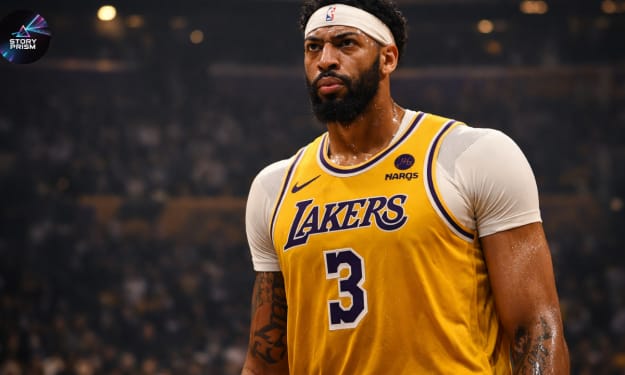
Anthony Davis: Built of Talent, Tested by Time
Anthony Davis has always looked like a contradiction in motion. Too skilled to be boxed into one position, too fluid to be reduced to size alone, too dominant to ever be ignored. From the moment he entered the NBA, it was clear he wasn’t just another highly drafted big man. He was a blueprint for what basketball was becoming—and a mirror reflecting the pressure that comes with greatness.
By Story Prism18 days ago in Humans
Washington Post. AI-Generated.
For more than a century, The Washington Post has stood as one of the most influential newspapers in the United States, shaping public debate, holding power to account, and chronicling history as it unfolds. From its groundbreaking reporting during the Watergate era to its modern-day digital investigations, the paper has long symbolized rigorous journalism. Yet in recent years, the Washington Post has found itself navigating a challenging landscape marked by financial pressures, newsroom changes, and difficult decisions — including widely discussed Washington Post layoffs — under the ownership of Jeff Bezos. A Legacy Built on Trust and Impact Founded in 1877, The Washington Post earned its global reputation through investigative reporting and deep political coverage. Its motto, “Democracy Dies in Darkness,” reflects a mission that goes beyond daily headlines. Readers have traditionally turned to the paper for fact-based reporting, thoughtful analysis, and accountability journalism, especially in times of political turbulence. However, like many legacy news organizations, the Post has had to adapt to a rapidly changing media ecosystem. Print circulation has steadily declined across the industry, while digital subscriptions have become the primary engine for growth. This shift has forced even the most respected outlets to rethink their business models. Jeff Bezos and a New Vision In 2013, Jeff Bezos, founder of Amazon, purchased The Washington Post for $250 million through his private investment company, Nash Holdings. At the time, the acquisition surprised many observers, but it was largely welcomed within journalistic circles. Bezos brought financial stability, long-term thinking, and a willingness to invest in technology — something traditional media companies often lacked. Under Bezos’ ownership, the Washington Post expanded its digital reach significantly. Investments in engineering, data analytics, and global distribution helped the paper attract millions of online readers. The Post developed its own publishing technology, Arc XP, which later became a revenue source by licensing it to other media outlets. For several years, subscriber numbers grew, and the newsroom expanded. Bezos was careful to maintain a distance from editorial decision-making, repeatedly emphasizing the importance of independence. This approach helped preserve trust among journalists and readers alike, reinforcing the idea that the Post could innovate without compromising its core values. The Reality of Washington Post Layoffs Despite early growth under Bezos, the last few years have brought sobering realities. The digital subscription boom that accelerated during the COVID-19 pandemic began to slow, while advertising revenue remained unpredictable. As a result, the Washington Post faced mounting financial pressure — a challenge not unique to the organization but deeply felt nonetheless. Washington Post layoffs became a symbol of these struggles. Staff reductions affected journalists, editors, and business-side employees, prompting concern across the media industry. For a newsroom built on the idea of expansive coverage, layoffs were painful and unsettling. Many reporters worried about increased workloads, reduced beats, and the long-term impact on the quality of journalism. Leadership framed the layoffs as necessary steps toward sustainability rather than a retreat from journalism. Executives argued that resizing the organization was essential to align costs with realistic revenue expectations in a competitive digital market. Still, for employees and readers, the cuts raised difficult questions about how much more the newsroom could absorb without diminishing its mission. Industry-Wide Challenges, Not an Isolated Case It is important to understand that the Washington Post layoffs did not occur in isolation. Across the media industry, even well-known outlets have faced similar decisions. The rise of social media platforms as primary news distributors, changes in advertising models, and audience fragmentation have all eroded traditional revenue streams. What makes the Post’s situation particularly notable is its ownership by one of the world’s wealthiest individuals. Critics often ask why layoffs are necessary when Jeff Bezos has the personal resources to sustain losses. Supporters counter that Bezos has consistently viewed the Post as a long-term institution that must ultimately stand on a viable business foundation rather than rely indefinitely on subsidies. This tension highlights a broader debate about the future of journalism: should news organizations prioritize financial independence, even if it means shrinking, or should they seek alternative models that protect newsroom jobs at all costs? Editorial Integrity in a Time of Change Despite staffing cuts and financial concerns, The Washington Post continues to produce impactful journalism. Its reporting on U.S. politics, international conflicts, climate change, and social justice remains influential. Investigations published by the Post frequently drive national conversations and prompt official responses. Maintaining editorial integrity during periods of contraction is not easy. Fewer reporters can mean fewer stories, and morale can suffer. Yet many journalists at the Post have emphasized that the core commitment to truth and accountability remains intact. Leadership has repeatedly stated that quality, not sheer volume, will define the paper’s future. Looking Ahead: Reinvention or Reinforcement? The future of The Washington Post will likely depend on how successfully it balances innovation with tradition. Digital-first strategies, audience engagement, and diversified revenue streams are no longer optional — they are essential. At the same time, the paper’s reputation was built on deep reporting, experienced journalists, and editorial courage, elements that cannot be easily replaced by technology alone. Jeff Bezos’ role will continue to be closely watched. While he has stepped back from day-to-day involvement, his long-term vision still shapes the Post’s direction. Whether through continued investment, strategic restraint, or new leadership approaches, his influence remains a defining factor in the paper’s evolution. Conclusion The Washington Post stands at a pivotal moment in its long history. The challenges symbolized by Washington Post layoffs reflect broader shifts reshaping journalism worldwide. Under Jeff Bezos’ ownership, the paper has achieved remarkable digital growth but now faces the harder task of sustaining that success in a cooling market. What remains clear is that the Post’s importance extends far beyond its balance sheets. As long as it continues to inform the public, challenge authority, and uphold journalistic standards, it will remain a vital institution — even as it adapts to a future that demands both resilience and reinvention.
By Saboor Brohi 18 days ago in Geeks