
The Art of Morning Routines: How Small Habits Shape Big Success
Tiny Morning Habits That Shape Your Day—and Your Life


Introduction: Why Mornings Matter
Picture the following: the alarm goes off, you reach over and slap the snooze button, roll onto your side, and the next thing you know—you're rushing out the door with a half-toasted slice of bread in one hand and your phone in the other. The day already feels like it's getting away from you.
Now imagine a different start. The alarm wakes you with a soft chime. You stretch, breathe deeply, drink a glass of water, maybe jot down a few notes in your journal, and start your first hour with a feeling of calm purpose. Instead of chasing the day, you're leading it.
That is what a morning routine accomplishes. It is not simply a question of waking up early or being active for its own sake—it is a question of setting the tone for the hours to come, getting your body and mind in alignment, and creating a foundation for long-term success. Mornings are like the first brushstrokes on a painting: whatever you put down influences the entire picture.
And the best news? You don't need to turn your life upside down overnight. Little, intentional habits—stacked and repeated—can completely transform your mornings, and by proxy, your life.
The Science of Mornings
Biologically, mornings are powerful. Our bodies run on circadian rhythms, natural cycles that are regulated by light, temperature, and hormones. Cortisol, often called the "stress hormone," actually peaks in the morning to rouse us and make us alert. If you can get your routine to work in harmony with these rhythms—exposing yourself to light, moving your body, feeding it properly—you set yourself up for clearer focus and more balanced energy.
Science also tells us that willpower is highest in the morning. Decision fatigue kicks in later in the day, which is why a 7 p.m. gym trip is harder to do than a 7 a.m. one. Those early morning hours are best spent making decisions that matter—before obligations and distractions pile up.
But science also informs us that every individual's "ideal morning" is different. Some are true early birds, performing well before sunrise. Others hit their creative stride mid-morning or even later in the day. The key is not to mimic someone else's schedule but to create one that fits your natural biorhythm and goals.
Examples of Successful Morning Routines
History and modern life are full of people who credit their mornings with their success.
• Benjamin Franklin woke up at 5 a.m. and asked himself, "What good shall I do this day?" before submerging himself in reading, writing, and designing.
• Maya Angelou would wake up early, rent a hotel room, and write longhand for hours before the world could intrude.
• Steve Jobs started each day looking in the mirror and asking: "If today were the last day of my life, would I want to do what I'm about to do?"
• Oprah Winfrey starts with meditation, a gratitude journal, and movement.
• LeBron James, even during the thick of rigorous seasons, prioritizes sleep and a morning recovery routine to maximize performance.
Look at how varied these are—some spiritual, some physical, some creative. The lesson is not to copy Oprah or Franklin. It's that mornings magnify what you value most.
If you value creativity, leave space for writing, painting, or problem-solving before emails pull you away. If you value health, start with movement and fueling. If you value peace, meditation and slow rituals may center you best.
Daily Rituals for a Grounded Morning
What constitutes a good morning routine? The following are practical building blocks, which you can tailor to your needs.
1. Hydration and Nourishment
Your body dehydrates during the night. A glass of water before coffee gets your system going. Some include lemon for a refreshing sensation. Breakfast doesn't have to be huge—fruit, oats, or eggs can give you sustained energy with no crash.
2. Movement
This does not need to be a full workout (if you don't want). This can be five minutes of yoga, a walk, or stretches that loosen up your shoulders and back. Movement sends the message to your body: "Time to be awake."
3. Mindfulness
Meditation, breathing, or writing clears out mental debris. Writing down three intentions or things you're grateful for can change your thinking. Texture is key here—smooth pen on paper, the gentle scritch of ink, the quiet of your breath.
4. Planning
Instead of diving right into work, take a few minutes to choose your priorities. Write down your three main objectives for the day. This keeps you from responding to other people's agendas all day.
5. Inspiration
Read a few pages of a book, listen to uplifting music, or spend time outside noticing the world—the cool morning air, the light softening against walls, the smell of dew or brewing coffee. Feeding your spirit matters as much as feeding your body.
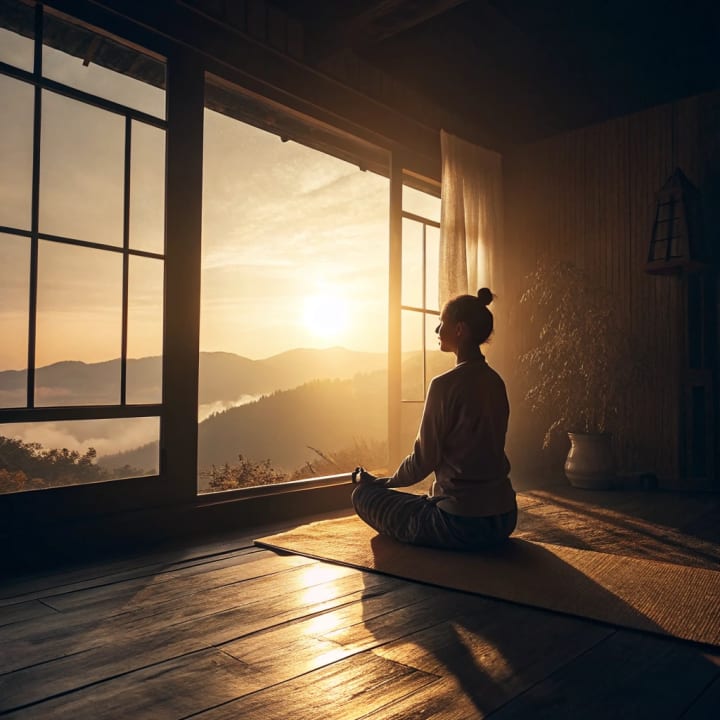
Slowing Down Technology Use
For many of us, mornings start with a phone screen. Emails, notifications, news—before we’ve even stood up. The result? A hijacked mind.
Creating tech-free zones in your morning routine is one of the simplest and most life-altering things you can do. Keep the phone out of the bedroom. Use an alarm clock, not your phone. Give yourself at least the first 30 minutes scroll-free.
Replace that reflex with something intentional: stretching, journaling, brewing tea. Let your senses wake up before your screen does. You’ll notice less anxiety, more clarity, and deeper focus throughout the day.
Creating Intentional Spaces at Home
Environment shapes behavior. If your mornings feel chaotic, it may not be your willpower—it may be your space.
• A clean nightstand with a book and journal invites reading and reflection instead of doomscrolling.
• A pre-planned coffee or tea ritual corner turns mornings into more of a ceremony than a scramble.
• Natural light, calm colors, even a scented candle can prepare your senses for a softer start.
Think of your home as your routine partner. Set up little "stations" that influence your behavior subconsciously: yoga mat unrolled, water glass beside the counter, notebook open.
Overcoming Common Obstacles
No schedule is perfect, and mornings collide with real life. Problem-solve like this:
• Snoozing: Place your alarm on the opposite side of the room. Pair waking up with something you enjoy—music, sunlight, or your favorite drink.
• Not enough time: You don't need two hours. Even ten conscious minutes can change your day. Select one practice and repeat it daily.
• Children or household demands: Involve them. A moment of gratitude or family stretch together turns routine into connection.
• Travel or schedule disruptions: Establish a "minimum routine"—two or three core habits you can do anywhere, like hydration, stretching, and intention-setting.
Reminder: consistency beats perfection. It's not failure to miss a day—it's feedback. Resume tomorrow.
Real-Life Stories of Transformation
• Maria, a single mother, began waking 20 minutes earlier to journal and stretch. She was calmer and more patient with her kids, no longer screaming during morning mayhem.
• Dev, a software engineer, swapped morning doomscrolling for a brief meditation and bike ride. His anxiety decreased within weeks, and he was more concentrated during coding sprints.
• Evelyn, a retired school teacher, spends her mornings painting in watercolors. What began as a mini habit became her daily anchor, providing retirement joy and purpose.
Each story teaches the same lesson: the smallest habits—stacked day upon day—reshape not just mornings, but entire lives.
Actionable Tips for Work-Life Balance
Morning routines don't exist in isolation—they overflow into the rest of your day. Here's how to connect them to greater balance:
• Batch your decisions: Choose outfits, prep meals, and lay out essentials the night before to free up mental space in the morning.
• Set boundaries: If you're starting the day relaxed, you'll be less reactive to after-work creep or late-night emails.
• Anchor evenings to mornings: A relaxing night allows for a good morning. Wind down with books, not screens.
• Treat mornings as self-leadership: When you invest in yourself first, you have more to give to others—your work, your family, your passions.

Conclusion: Small Wins, Big Growth
At its most basic, a morning routine is less about discipline than intention. It's about choosing to lead your day rather than letting the day lead you.
The habits themselves are tiny—water, three sentences, back stretch—but cumulatively they're enormous. In the long run, they determine who you are.
Here's how to think about it: each morning is a vote for the life you want to have. Some days the vote is weak, some days it's strong—but with enough votes, your future is certain.
So tomorrow, when the alarm rings, pause before reaching for your phone. Take a breath. Choose one small habit that honors your values. Repeat it the next day, and the next.
Soon, you’ll realize success isn’t built in giant leaps—it’s woven quietly into the fabric of your mornings.
About the Creator
The Chaos Cabinet
A collection of fragments—stories, essays, and ideas stitched together like constellations. A little of everything, for the curious mind.
Keep reading
More stories from The Chaos Cabinet and writers in Lifehack and other communities.
The Man with the Bottomless Stomach: Tarrare, the 18th-century Frenchman who could eat cats, stones, and silverware.
The wet, rhythmic sound of a cat’s skull cracking between a man’s molars is something the French military surgeons didn't quite know how to record in their ledgers. It was 1792. The air in the mobile hospital unit smelled of gangrene, scorched gunpowder, and the visceral, overwhelming stench of the man himself—a vapor so foul it was said to be visible, a shimmering miasma of rot that rose from his skin in waves. Tarrare didn't look like a monster. He was thin. He was pale. His cheeks were a deranged expanse of loose, folded skin that hung like curtains around a mouth that could open wide enough to swallow a basket of apples whole. He picked up a live eel, bit through its spine, and slid the thrashing length of it down his throat as if it were a noodle.
By The Chaos Cabinetabout 22 hours ago in History
Aroma vs Oster Rice Cooker: Which One Is Better for Small Kitchens?
Choosing between an Aroma vs Oster Rice Cooker can feel harder than it should be. I’ve compared both because I wanted rice that turns out right without extra steps. Here’s what I’ve learned about how they cook, how they last, and which one may fit your kitchen best. If you’re stuck between the two, this will help you decide fast.
By Mohammed mamun7 days ago in Lifehack
Microplastic buildup in human brains, mostly in dementia patients, is shown by a disturbing study.
Microplastics are tiny pieces of plastic that have been found in food, water, and the air. These microplastics can now cross the blood-brain barrier and gather in deep brain regions, according to a study done on 52 donated human brains.
By Francis Dami3 days ago in Lifehack




Comments
There are no comments for this story
Be the first to respond and start the conversation.