
Cultural Norms in the Exam Room
When medicine carries its culture

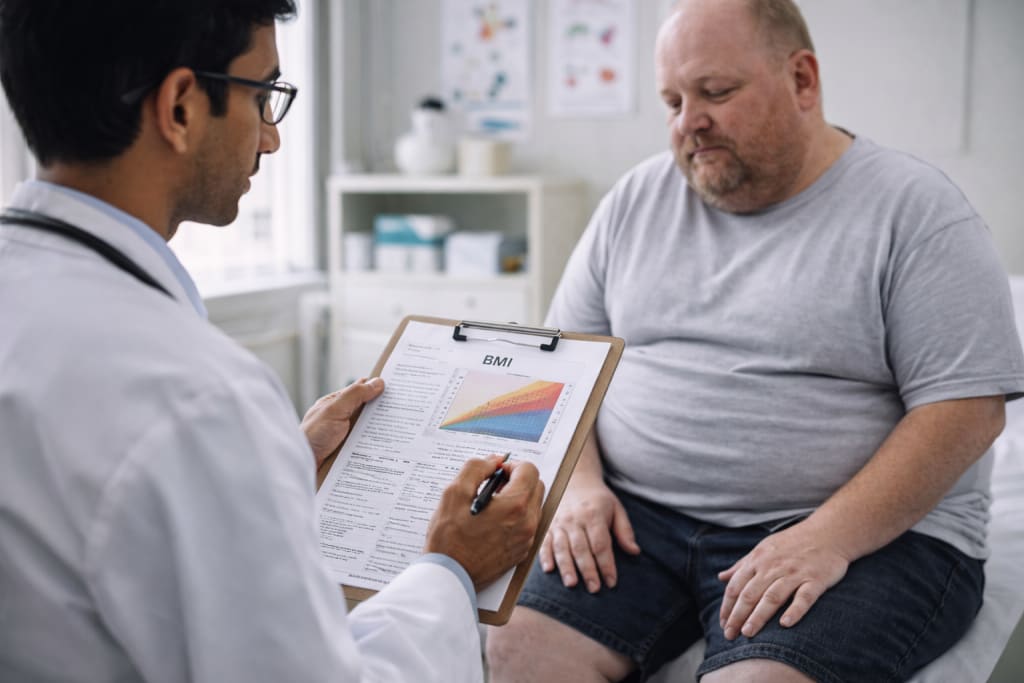
The exam room was quiet except for the paper on the table shifting under movement. The chart was open. Lab values were normal. Blood pressure stable. Glucose controlled. The conversation turned anyway.
“You should try losing weight.”
I have heard that sentence delivered in different tones. Sometimes soft. Sometimes brisk. Sometimes framed as preventive care. Sometimes framed as certainty.
What interests me is not the suggestion itself. Weight can matter in health. What interests me is the reflex.
Why does size become the first explanatory lens even when the data does not point there?
Medicine presents itself as objective. Imaging findings are visible. Laboratory values are numeric. Risk is expressed in percentages. Yet physicians are trained inside cultures before they enter clinical practice. Cultural norms do not disappear when training begins. They shape perception long before clinical algorithms are applied.
The pattern can be organized into identifiable categories:
• Cultural Baselines
• Medical Training Environments
• Risk Stratification
• Implicit Bias
• Patient Consequence
Each operates differently. Together they shape expectation.
Cultural Baselines
Body size norms vary across geography and time. In some historical periods, fuller bodies signaled fertility and economic stability. In other eras, thinness became associated with discipline and status. Anthropological research documents these shifts across societies. They follow food access, labor patterns, and media influence.
When a physician grows up in a region where average BMI is lower, the visual baseline for “normal” is narrower. When a physician grows up in a region where body size varies widely, the baseline expands. Human perception is anchored to familiarity. What looks typical in one setting may look excessive in another.
This is not accusation. It is cognitive science.
Humans rely on pattern recognition. Deviation from a perceived norm draws attention. Attention influences interpretation.
Medical Training Environments
Medical education emphasizes population-level risk. Higher BMI is associated with increased incidence of type 2 diabetes, hypertension, and certain surgical complications. These associations are statistically supported.
The complication arises when population statistics are applied without contextual nuance to individual patients. A BMI value does not describe muscle mass, cardiorespiratory fitness, metabolic markers, or strength. It is a screening measure, not a comprehensive diagnostic instrument.
Training environments can influence how heavily that screening measure weighs in clinical reasoning. If educational culture emphasizes weight as primary risk variable, the habit can persist in practice.
Habits are not always examined.
Risk Stratification
In surgical disciplines, BMI thresholds are often used to reduce postoperative complication rates. Higher BMI correlates with increased risk of wound infection, delayed healing, and prosthetic stress. These are actuarial calculations. They are not aesthetic opinions.
Risk stratification does have a place.
The tension emerges when risk communication shifts in tone. “Your infection risk increases by X percent” is transparent data. “You need to be thinner” moves into identity territory.
- The first invites informed decision-making.
- The second implies moral deficiency.
Patients can process risk percentages. They resist character framing.
Implicit Bias
Research in healthcare psychology demonstrates that implicit bias operates even among well-intentioned clinicians.
Higher-weight patients are more likely to be perceived as noncompliant or lacking discipline, even when objective evidence contradicts that assumption.
These perceptions can influence consultation length, diagnostic depth, and tone.
Bias does not require hostility.
It requires unexamined association.
Associations form through culture, media, and repeated messaging. If thinness is equated with control and success in broader society, those associations can enter clinical reasoning unconsciously.
Bias influences subtle decisions.
Patient Consequence
When weight becomes the dominant lens, other variables may be minimized. Structural injury may be attributed to size alone. Pain complaints may be simplified. Patients may delay care to avoid dismissal. Trust erodes incrementally.
Health outcomes are shaped not only by pathology but by relational context. Communication quality affects adherence, follow-up, and transparency. When patients perceive moral tone, they may disengage.
Weight is one variable among many.
Fitness, smoking status, blood pressure, glycemic control, genetics, prior injury, and occupational load all influence outcome. Size does not operate in isolation.
Thinness is also not synonymous with good health.
Individuals with low BMI may carry cardiovascular risk, substance misuse, autoimmune disease, or metabolic instability.
Mortality risk is multifactorial.
Epidemiological data confirm that fitness level and metabolic markers significantly modify outcome independent of body size.
Health cannot be read visually.
A Necessary Distinction
- Cultural norms shape perception.
- Medical training shapes interpretation.
- Statistical risk shapes decision-making.
These forces interact inside the exam room.
The responsibility of clinical practice is to separate evidence-based thresholds from inherited aesthetic expectations. That separation requires self-awareness and precision in language. It requires clarity about what the data actually show and what culture prefers.
Body size can influence risk. It is not a personality trait. It is not a moral grade.
When cultural assumptions enter medical dialogue unexamined, care quality shifts. When data remain central and tone remains neutral, trust stabilizes.
Medicine cannot operate outside culture. It can acknowledge where culture ends and evidence begins.
That distinction protects both physician and patient.
Sources That Don’t Suck
Chapman, E. N., Kaatz, A., & Carnes, M. (2013). Physicians and implicit bias: How doctors may unwittingly perpetuate health care disparities. Journal of General Internal Medicine, 28(11), 1504–1510.
Gudzune, K. A., Bennett, W. L., Cooper, L. A., & Bleich, S. N. (2014). Perceived judgment about weight can negatively influence weight loss: A cross-sectional study of overweight and obese patients. Preventive Medicine, 62, 103–107.
Flegal, K. M., Kit, B. K., Orpana, H., & Graubard, B. I. (2013). Association of all-cause mortality with overweight and obesity using standard body mass index categories. JAMA, 309(1), 71–82.
Phelan, S. M., Burgess, D. J., Yeazel, M. W., et al. (2015). Impact of weight bias and stigma on quality of care and outcomes for patients with obesity. Obesity Reviews, 16(4), 319–326.
World Health Organization. (2000). Obesity: Preventing and managing the global epidemic. WHO Technical Report Series 894.
About the Creator
Dr. Mozelle Martin
Behavioral analyst and investigative writer examining how people, institutions, and narratives behave under pressure—and what remains when systems fail.
Keep reading
More stories from Dr. Mozelle Martin and writers in Longevity and other communities.
The Era of Repair:
This question is often asked of older couples: how did you manage to stay together so long? The answers tend to sound deceptively simple, but they reflect a set of values that no longer dominate cultural norms. The truth is that long-term relationships were rarely sustained because everything was easy or people were perfectly compatible. They endured because repair was valued over replacement. In past generations, when something was broken, people fixed it. They did not discard it at the first sign of wear.
By Dr. Mozelle Martin6 months ago in Longevity
Measles Exposure Reported at Philadelphia International Airport, Health Officials Warn
Health officials in Philadelphia have issued a public alert after confirming that a person infected with measles traveled through Philadelphia International Airport’s Terminal E, raising concerns about potential exposure to one of the most contagious viral diseases. Even though authorities emphasize that there is no immediate threat to the general public, the incident demonstrates the ongoing difficulties associated with vaccine-preventable diseases in locations with a high number of travelers. According to the Philadelphia Department of Public Health, a traveler known to have measles passed through Terminal E of the airport on Thursday, February 12, 2026, between 1:35 p.m. and 4:30 p.m.
By Raviha Imran5 days ago in Longevity
What Happens to Your Blood Sugar When You Walk Every Day
KEY POINTS Walking improves insulin sensitivity, helping muscles use glucose for energy and lowering blood sugar. A short walk after meals, even 10-15 minutes, can reduce post-meal blood sugar spikes. Regular walking supports weight management, reduces stress and boosts overall health.
By Good health to everyoneabout 12 hours ago in Longevity
At My Wits’ End
Life is about taking out the trash and calling it trash because you have every reason to. It wasn't meant to be linear, they say. But the times you tried to make it straight led to problems, and you didn’t have the tools to put any of it to use. You don't put your right shoes on the right feet; you put the left shoes on the left feet. The grey hardened slab will trip you up anyway.
By Caitlin Charlton3 days ago in Humans




Comments
There are no comments for this story
Be the first to respond and start the conversation.