
In Breakthrough, Israeli Scientists Use Deep-Brain Stimulation to Counter Schizophrenia
🔹 Formal / News Style Experimental brain implants show promise for patients resistant to medication Researchers report reduced hallucinations through targeted neural stimulation 🔹 Neutral & Informative Clinical trial targets brain circuits responsible for psychosis New neuromodulation therapy opens path for advanced psychiatric treatment 🔹 Impactful A new frontier in treating severe mental illness emerges in Israel

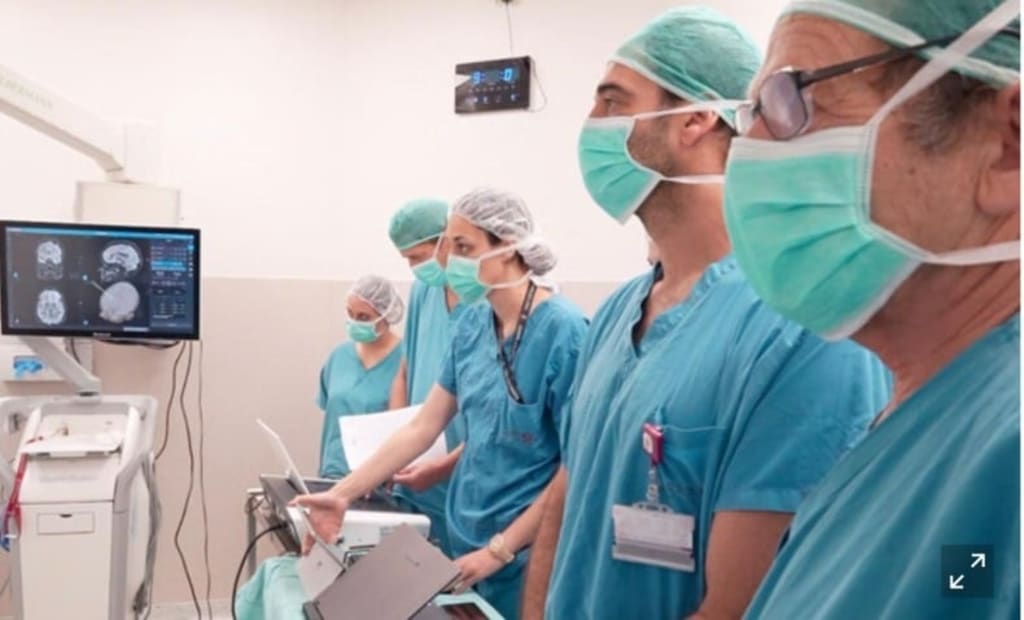
Israeli researchers have announced a medical breakthrough that could transform the treatment of schizophrenia, using deep-brain stimulation (DBS) to significantly reduce severe symptoms in patients who had not responded to conventional therapies. The development marks one of the first successful demonstrations of DBS targeting brain circuits linked directly to psychosis rather than movement disorders such as Parkinson’s disease.
The study, conducted by neuroscientists at Hebrew University of Jerusalem in collaboration with clinicians from Hadassah Medical Center, involved a small group of patients suffering from treatment-resistant schizophrenia. Researchers implanted ultra-thin electrodes into precise areas of the brain associated with hallucinations, disorganized thinking, and emotional regulation.
Targeting the Roots of Psychosis
Deep-brain stimulation works by delivering controlled electrical impulses to specific neural circuits, helping rebalance abnormal brain activity. While DBS has been widely used for years in neurological disorders such as Parkinson’s disease and epilepsy, its application in psychiatric illnesses has remained experimental.
According to the research team, patients who received the stimulation showed a marked reduction in auditory hallucinations and paranoia within weeks of activation. Several participants also demonstrated improved cognitive focus and emotional stability, allowing them to resume daily activities that had previously been impossible.
“This is the first time we’ve been able to directly modulate the brain networks that drive schizophrenic symptoms,” said the study’s lead neurologist. “Instead of suppressing symptoms chemically, we are correcting faulty electrical signaling at its source.”
A New Option for Resistant Cases
Schizophrenia affects nearly 24 million people worldwide, according to the World Health Organization, and is commonly treated with antipsychotic medications. While drugs are effective for many patients, about 30 percent suffer from treatment-resistant schizophrenia, experiencing persistent hallucinations and delusions despite multiple medication trials.
For these patients, options are limited, often involving long-term hospitalization and heavy sedation. The Israeli team believes DBS could offer a new path for those who have exhausted existing therapies.
One patient involved in the trial described the change as “life-altering.” “The voices that controlled my life became quieter,” he said through a hospital statement. “For the first time in years, I felt like myself again.”
Safety and Ethical Questions
Despite promising results, researchers stress that the technique remains experimental. Implanting electrodes in the brain carries surgical risks, and long-term effects are still unknown. Ethical questions also surround the use of neuromodulation to influence thought patterns and behavior.
Medical ethicists have urged caution, emphasizing the need for strict consent protocols and transparent oversight. “This technology touches the very core of identity and autonomy,” said one independent psychiatrist not involved in the study. “We must ensure that patient rights remain central.”
The research team has stated that all participants volunteered after extensive psychological evaluation and that stimulation levels were carefully adjusted to avoid personality changes or cognitive impairment.
Global Implications
If validated in larger clinical trials, the breakthrough could reshape psychiatric medicine worldwide. Experts believe DBS could eventually be customized for different mental disorders, including severe depression, obsessive-compulsive disorder, and post-traumatic stress disorder.
International interest in the findings has been swift. Medical institutions in Europe and North America have requested access to the study’s methodology, and discussions are underway for a multinational clinical trial involving dozens of patients.
The Israeli government has also expressed support for expanding neuroscience funding, calling the research a milestone for mental health innovation.
Looking Ahead
The next phase of the project will involve testing DBS on a larger group of patients over longer periods to assess durability, side effects, and overall quality-of-life improvements. Researchers are also exploring non-invasive stimulation techniques that could replicate some of the benefits without surgery.
While DBS will not replace medication for most patients, scientists believe it could become a specialized therapy for the most severe and resistant forms of schizophrenia.
“This is not a cure,” the lead researcher cautioned, “but it is the strongest evidence yet that schizophrenia can be treated at the level of brain circuitry rather than just symptoms.”
For millions living with the disorder and their families, the breakthrough offers new hope that science is moving closer to understanding—and controlling—the biological roots of mental illness.
About the Creator
Fiaz Ahmed
I am Fiaz Ahmed. I am a passionate writer. I love covering trending topics and breaking news. With a sharp eye for what’s happening around the world, and crafts timely and engaging stories that keep readers informed and updated.
Keep reading
More stories from Fiaz Ahmed and writers in Longevity and other communities.
INTERVIEW: China must surrender know‑how for EU access, says critical mineral CEO
Brussels – Europe’s vulnerability in the global critical minerals market is laid bare by the CEO of a major mining and processing firm, who tells Euractiv that China must surrender proprietary know‑how as a precondition for accessing the EU market. The stark prescription comes amid mounting tensions over rare earths and other essential inputs for clean technology, defence and advanced manufacturing — sectors where Europe remains heavily dependent on imports from Beijing. “China’s dominance is not just about raw materials — it’s about the technologies and processes that turn those resources into usable products,” the CEO said in an interview. “If Chinese companies want to sell into the EU, they should be required to share that know‑how with European partners as part of joint ventures. Otherwise we are simply feeding the machine that marginalises our industry.” His comments reflect deep frustration inside European industry and government that recent Chinese export controls on critical minerals and processing technologies have given Beijing a veto over European supply chains. In late 2025, Chinese authorities tightened licensing for exports of rare earth elements and other critical inputs, demanding detailed information about products, customers and production processes before approving foreign shipments. The effect has been to give Chinese regulators a strategic window into foreign industrial networks while prolonging Europe’s reliance on Beijing for essential inputs. BusinessMirror Why the concern? Critical minerals — such as lithium, cobalt, gallium, germanium, and rare earth elements (REEs) — are central to Europe’s climate, digital and defence strategies. They feed into electric vehicles, renewable energy infrastructure, semiconductors, and high‑precision military equipment. Yet China currently dominates processing and refining capacity for many of these materials, accounting for roughly 98% of rare earth processing and high shares of other strategic inputs. This imbalance has prompted Brussels to adopt a range of new policies, notably the EU’s Critical Raw Materials Act, which aims to boost domestic extraction, processing and recycling, and reduce reliance on external suppliers by setting milestones for European production by 2030. Despite such measures, European industry insiders often describe the current situation as untenable. One senior executive told Euractiv that licensing requirements imposed by Beijing have forced German firms to divulge commercial data that could be exploited for leverage, effectively revealing vulnerabilities in Europe’s supply chains and defence industrial base. BusinessMirror “It’s one thing to sell raw materials — it’s another to expose your competitive strategies, your customer lists, your future plans,” the executive said. “We are being asked to trade strategic information for a licence. That’s not a market; it’s coercion.” A radical proposal In this context, the CEO argued for market access reciprocity — similar to policies once employed by Beijing itself — whereby foreign firms must enter joint ventures with local companies and share technology as a condition of access. “Europe should require this not just for equity, but for the exchange of technical expertise that raises our own capabilities,” he said. This approach echoes recommendations from European economic analysts who argue that Brussels has historically undervalued its leverage as one of China’s largest export markets. Such commentators contend that attached conditions — including joint ventures with technology transfer provisions — could help balance decades of asymmetrical integration. PubAffairs Bruxelles Critics of the proposal caution that forcing technology sharing may backfire if it drives Chinese investment away or triggers retaliation. “China is unlikely to agree to this voluntarily,” said one European diplomat, speaking on condition of anonymity. “This would effectively mean we are shaping industrial policy on Beijing’s terms, rather than ours.” They argue that multilateral negotiation and diversified sourcing should remain the priority. EU policy responses In recent months, EU policymakers have accelerated efforts to build alternative supply chains. In addition to the Critical Raw Materials Act, Brussels has expanded partnerships with countries such as Canada, Australia and Ukraine to diversify sourcing, while also investing in domestic research and processing capacity. European Commission officials have signalled that a coordinated response to Chinese export curbs is being formulated, although details remain under negotiation. President Ursula von der Leyen has publicly called for “smoother, predictable supply chains” and emphasised the importance of reduced dependencies. Some analysts say the EU should contemplate deeper strategic tools — including using trade defence mechanisms or anti‑coercion instruments — if diplomatic engagement fails to yield results. Others warn that protectionist responses could escalate tensions and disrupt global markets. Industry concerns For European manufacturers, unstable access to critical minerals has tangible consequences. Delays in obtaining REEs or gallium, for example, can stall production of electric motors or semiconductor components, affecting competitiveness in future industries. It also complicates long‑term green and defence planning. “In Europe, we have the demand and the industrial capacities — but we lack secure, affordable access to the materials that enable innovation,” said the CEO. “China has used its dominance to its advantage for too long. We need a level playing field, not one tilted in Beijing’s favour.” As the EU grapples with how to balance engagement with strategic autonomy, the debate over reciprocity and technology sharing is likely to intensify — underscoring the complex geopolitics at the heart of critical mineral supply chains.
By Fiaz Ahmed about 20 hours ago in Longevity
How Robots Are Changing Healthcare
How Robots Are Changing Healthcare One of the most transformative periods in healthcare's history is currently underway. Robotics, which was once mostly associated with manufacturing plants and science fiction, is at the center of this evolution. Today, robots assist surgeons, disinfect hospital rooms, deliver medications, support rehabilitation, and even provide companionship to patients.
By Farida Kabir5 days ago in Longevity
Presidents Day
Every February, Americans pause to reflect on leadership, history, and the evolving meaning of public service. Presidents Day, observed on the third Monday of February, is more than just a long weekend or retail event. At its core, it is a federal holiday rooted in remembrance, civic identity, and the enduring influence of presidential leadership on the United States.
By Saboor Brohi 4 days ago in Longevity
The Cave Part 6
If you have ever heard a tale about yourself that you cannot remember and doubtless think is made up, you will know how I felt when Tharkin related all that the eagle had seen of me before my memories were scattered. Of far distances and traveling companions that I did not recall, camping out under the stars and making our way to the mountains with deliberate purpose. The great bird had lost contact with my party once we entered the forests, and the seven other members were not seen again by him or his brethren since.
By Jamye Sharp4 days ago in Chapters



Comments
There are no comments for this story
Be the first to respond and start the conversation.