
Information on the Mediterranean diet,
which has been voted as the greatest diet for the eighth year in a row
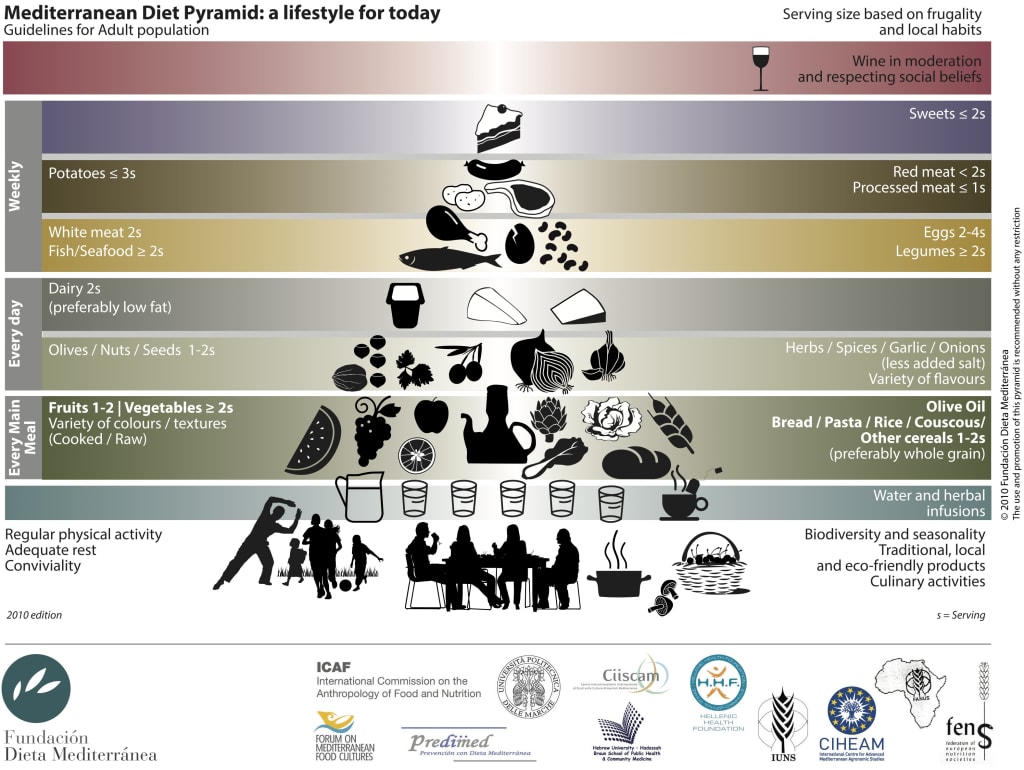
According to the annual ranking of the best diets presented by U.S. News & World Report, the Mediterranean diet, which places an emphasis on fruits, vegetables, lean meats, and whole grains, has once again attained the top spot.
Friday was the day when the newspaper announced that the diet had been awarded the greatest diet overall for the seventh year in a row.
According to U.S. News & World Report, the Mediterranean diet received a score of 4.8 out of 5 based on an examination of numerous aspects, including the nutritional completeness, health risks and benefits, long-term sustainability, and evidence-based efficacy of the diet.
According to the publication's yearly rankings, the diet also achieved the highest rating in eleven more categories, including the areas of being the simplest to follow, intestinal health, weight reduction, and mental health.
The Dietary Approaches to Stop Hypertension (DASH) diet, which places an emphasis on eating whole foods and maintains a low salt intake, came in at number two on the list of the best diets, followed by the Flexitarian diet, the MIND diet, and the Mayo diet. Instead of imposing stringent regulations or excluding whole food categories, each of the top five diets adheres to a plant-based philosophy that emphasizes reducing consumption of foods that are rich in sugar, processed foods, inflammatory fats, red meats, and processed foods.
If you are interested in beginning the Mediterranean diet, the following information is essential for you to know.
Do you know what the Mediterranean diet is?
The Mediterranean diet is not one style of eating but a general word used to describe the eating patterns favored in the nations surrounding the Mediterranean Sea, including Italy, Greece, Morocco, Spain, and Lebanon.
The approach of eating emphasizes the quality of foods ingested rather than concentrating on a specific vitamin or food type, according to U.S. News & World Report.
Nutrition experts believe there's no one diet that will work for everyone. Certain diets may be more healthy based on your circumstances, while others may be hazardous depending on your health concerns. Anyone contemplating changes to their diet should contact their doctor.
What sorts of foods are consumed on the Mediterranean diet?
Overall, the diet is largely plant-based and concentrates on healthy fats.
Healthy fats highlighted in the Mediterranean diet include extra virgin olive oil, avocados, almonds, salmon, and sardines, according to the American Heart Association.
All varieties of vegetables and fruits are recommended on the diet, as are non-meat sources of protein, such as beans and other legumes.
Fish is advised at least twice weekly, and other animal proteins, including chicken, eggs, cheese, and yogurt, are encouraged in lesser doses. Red meat eating is to be restricted to a few times a month.
The major source of hydration should be water.

Are any foods prohibited?
No, the Mediterranean diet does not fully remove any foods or dietary categories.
However, it is advisable to minimize items such as butter, processed foods like frozen dinners and confectionery, and refined grains and oils. Fruits are suggested for dessert over sugary sweets.
U.S. News & World Report described the diet as leaving "little room for the saturated fat, added sugars, and sodium that inundate the standard American diet."
What are the health benefits?
According to U.S. News and World Report, "People who eat a Mediterranean-style diet have longer lifespans, report a higher quality of life, and are less likely to suffer from chronic diseases such as cancer and heart disease."
In a study of nearly 60,000 participants, those who followed the Mediterranean diet more strictly had a decreased incidence of dementia, independent of genetic risk.
The American Heart Association claims the Mediterranean diet may "play a big role" in avoiding heart disease and stroke and decreasing risk factors including diabetes, high cholesterol, and high blood pressure. Consuming virgin olive oil, in particular, may help the body "remove excess cholesterol from arteries and keep blood vessels open," according to the AHA.
Citing studies, the Mayo Clinic advocates the Mediterranean diet as a means to help maintain a healthy weight, boost brain function, increase lifespan, support a healthy gut, and lessen the risk of some malignancies.

About the Creator
Keep reading
More stories from Karam Abd Elgaid and writers in Longevity and other communities.
7 Proven Habits to Keep Your Body Fat Low Naturally
Have you ever wondered why some people seem to maintain low body fat effortlessly while others struggle despite their best efforts? I used to ask myself the same question until I discovered the power of consistent, sustainable lifestyle habits. This isn’t about quick fixes or extreme diets—it’s about creating a life that supports your health naturally. Let me take you on a journey through the habits that have transformed my body and mindset, and how you can apply them to your own life.
By Karam Abd Elgaidabout a year ago in Longevity
How Were 500 Patients Evacuated from a Hospital?
When emergency alarms rang through the corridors of a major regional hospital late one evening, few could have imagined the scale of the operation that would follow. Within hours, more than 500 patients — including those in intensive care, newborn infants, and elderly residents — were safely evacuated after a sudden infrastructure failure threatened the facility’s ability to function. Hospital officials later described the evacuation as one of the largest and most complex medical relocations in recent years, requiring precise coordination between doctors, nurses, firefighters, police, and ambulance crews. The Trigger for Evacuation The emergency began with a critical failure in the hospital’s power and ventilation systems after flooding from heavy rain entered a key utility area. Backup generators activated but soon became unstable, raising fears that life-support equipment and operating theaters could shut down. Hospital leadership made the decision to evacuate when engineers confirmed the damage could not be repaired quickly. The priority was clear: protect the most vulnerable patients first. “This was not a drill,” said one senior nurse involved in the response. “We had minutes to organize teams and hours to move hundreds of people safely.” A Carefully Ordered Process The evacuation followed a strict medical triage plan. Patients were categorized based on their condition: Critical care patients were transferred first, including those on ventilators and cardiac monitors. Maternity and neonatal units followed, with premature babies transported in portable incubators. Surgical and general ward patients were moved next. Stable patients who could walk were guided out with staff assistance. Each patient was tagged with medical records and destination details to prevent confusion during transport. A Citywide Response More than 100 ambulances were dispatched from surrounding districts, along with fire engines and police escorts. Roads near the hospital were temporarily closed to allow emergency vehicles to move quickly and safely. Nearby hospitals were alerted in advance and cleared beds for incoming patients. Temporary treatment centers were set up in sports halls and community clinics for less critical cases. Inside the hospital, staff formed human chains to move equipment, oxygen tanks, and essential medication. Elevators were reserved for patients who could not be moved by stairs, while stairwells were turned into carefully controlled transport routes. “It felt like a military operation,” said a paramedic. “Everyone knew their role.” Challenges and Risks Moving critically ill patients always carries risk. Doctors had to stabilize individuals before transport and monitor them constantly during the journey. Portable power supplies and oxygen systems were checked repeatedly to ensure no interruptions. Communication also posed a challenge. With hundreds of patients heading to different facilities, command centers were established to track every transfer in real time. Family members were informed through emergency hotlines and social media updates. Volunteers and hospital social workers helped reunite relatives with patients at receiving hospitals. Staff Endurance and Teamwork Many nurses and doctors worked more than 18 hours without rest. Some staff accompanied patients in ambulances, continuing care even after arrival at new hospitals. “There was no panic,” said a hospital administrator. “There was fear, but it was controlled. The professionalism was extraordinary.” Medical students and retired healthcare workers were called in to assist with paperwork, logistics, and basic patient support. Outcome and Investigation By dawn, all 500 patients had been relocated without any reported fatalities linked directly to the evacuation. A small number required additional treatment due to stress or transport-related complications, but authorities described the operation as a success. An investigation has since been launched to determine why flood defenses failed and whether safety systems were adequate. Engineers are assessing whether the hospital can reopen fully or if major repairs are required. Health officials have promised to review emergency preparedness plans nationwide, using the evacuation as a case study for future crises. Lessons Learned Experts say the operation highlights the importance of disaster planning in healthcare facilities. Hospitals are among the most complex environments to evacuate, and success depends on training, communication, and infrastructure resilience. “This incident shows what can be achieved when preparation meets teamwork,” said a public health analyst. “But it also reminds us that climate-related risks and aging facilities make such events more likely.” For the patients involved, the evacuation was frightening but ultimately life-saving. For the staff, it was a test of endurance and commitment. As one nurse reflected, “We didn’t just move people. We protected lives under pressure. That’s what healthcare is about.”
By Fiaz Ahmed 6 days ago in Longevity



Comments
There are no comments for this story
Be the first to respond and start the conversation.