
Vietnam’s Aging Population: When Society Grows Old Faster Than Its Care System
Why Is Vietnam Aging So Fast?

Introduction
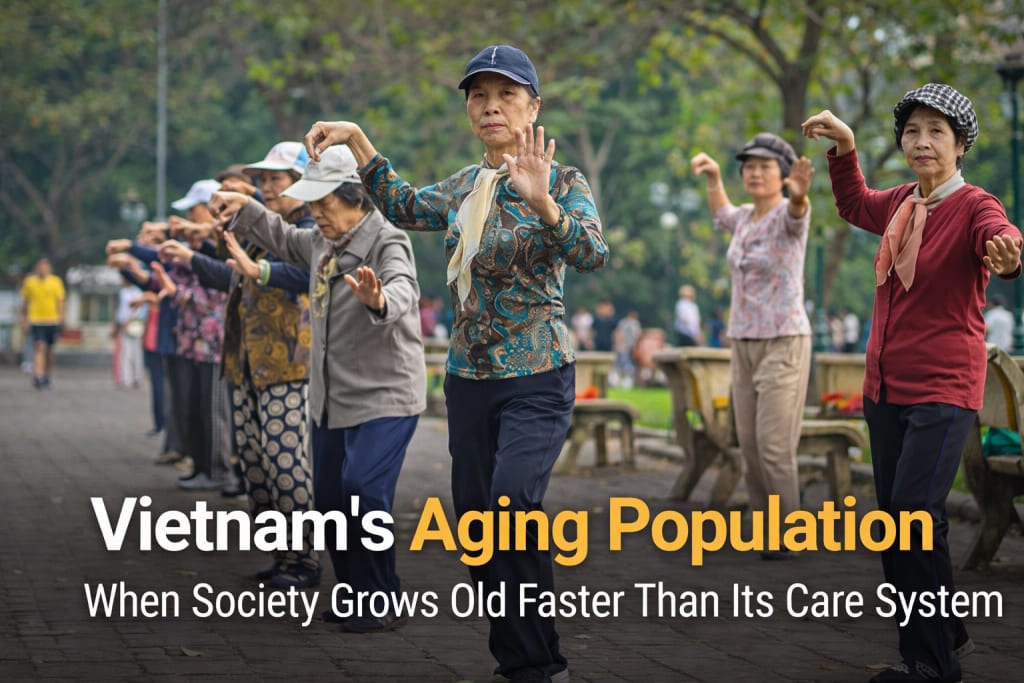
Vietnam is changing very fast. Cities are growing, young people are moving for work, and life expectancy is rising. But there is one big change that many people are not talking about enough: Vietnam is getting old.
According to the United Nations (UN) and the World Health Organization (WHO), Vietnam is one of the fastest-aging countries in Asia. This means the number of elderly people is increasing very quickly.
The problem is not aging itself. The real problem is that Vietnam is aging before it becomes rich and before it builds a strong elderly care system. Many older people now need care, but the country is not fully ready to support them.
🔹 Why Is Vietnam Aging So Fast? (Explained)
- People live longer
People in Vietnam now live longer because hospitals, medicines, and healthcare services have improved. Vaccines and better food also help people stay healthy for more years. This means more people reach old age than before.
- Fewer babies are born
Families today choose to have fewer children because life is expensive and parents focus more on work. Education and career goals also delay marriage and childbirth. This reduces the number of young people in the population.
- Young people move away
Many young adults leave villages to work in cities or factories. They go far from their parents and cannot visit often. This leaves many elderly people alone in rural areas.
🔹 Why Traditional Family Care Is Breaking Down
- Urban migration
Young people move to cities for better jobs and salaries. Living far away makes daily care of parents very difficult. Visits become rare and support becomes limited.
- High living costs
Rent, food, healthcare, and education are expensive in cities. Families spend most of their income on survival. They often do not have extra money for elderly care.
- Long working hours
Many workers spend long hours in factories or offices. They return home tired and stressed. This makes full-time elderly care almost impossible.
- Smaller homes
Modern city homes are small and crowded. There is often no space for elderly parents to live comfortably. This creates physical and emotional stress for families.
🔹 Limited Options for Elderly Care
- Government care centers
State-run centers mainly help elderly people who have no family at all. These centers have limited beds and resources. Many elderly people cannot get a place.
- Private nursing homes
Private care homes offer better facilities and trained staff. However, their fees are very high. Only rich families can afford them.
- Care gap for the poor
Many elderly people fall between these two systems. They are not poor enough for government help but too poor for private care. These people are often left without proper support.
🔹 How Catholic Religious Orders Help
- Provide shelter and food
Religious communities give elderly people a safe place to live. They provide daily meals and basic comfort. This helps elders live with dignity.
- Offer basic medical care
Nuns and volunteers help elderly people with medicine and doctor visits. They manage daily health needs. This is very important for weak and sick elders.
- Accept everyone
- Home visits
- Food and medical help
- Social connection
- No proper care centers
- Elders taken into convents
- Rotating home care
- Mostly done by women
- Physically and emotionally tiring
- Ignored by policy makers
- Government role
- Private sector role
- NGOs and religious groups
- No single solution works
- Shared responsibility
These care homes do not ask about religion or background. Anyone who is poor or alone is welcomed. This creates a sense of equality and humanity.
🔹 Community Care Through Caritas Vietnam
Volunteers regularly visit elderly people in their homes. They check on health and living conditions. These visits reduce loneliness.
Caritas provides food, medicine, and sometimes financial support. This helps elderly people survive basic daily life. It is especially helpful in poor rural areas.
Talking and spending time with elders improves mental health. Many elderly people feel forgotten. Simple human contact makes a big difference.
🔹 Challenges in Northern Vietnam
Many poor regions do not have nursing homes or care buildings. The elderly have nowhere to go. Communities must find creative solutions.
Some elderly people live inside convents with nuns. Space and comfort are limited. Still, it is better than being alone.
Volunteers visit elderly people one by one. Care is shared among few helpers. This system works but is very tiring.
🔹 Invisible Unpaid Care Work
Women carry most caregiving duties at home and in communities. This work is unpaid and unrecognized. Yet it is essential.
Caregiving involves lifting, cleaning, feeding, and emotional support. It causes stress and exhaustion. Many caregivers suffer silently.
This care work is not counted in national plans. Governments often overlook it. This makes support systems weaker.
🔹 Multiple Actors Supporting Elderly Care
The government provides social centers and small financial aid. These services help the poorest elders. However, capacity is limited.
Private nursing homes serve families with money. They provide professional care. But they are not accessible to most people.
NGOs and faith-based organizations fill important gaps. They reach people others cannot. Their work keeps the system running.
🔹 Why Cooperation Is Necessary
Elderly care is complex and expensive. One organization cannot handle it alone. Teamwork is necessary.
Families, communities, government, and charities must work together. Each has a role. This balance creates a stronger care system.
Preparing for the future
Vietnam’s elderly population will continue to grow. Planning now can prevent crisis later. Cooperation is the key.
About the Creator
Adil Khan
Hi i am Adil Khan and i am writing articles on different niches.
Day 4 of Quitting
If this is how sobriety feels, maybe it’s better to go through life a little buzzed… this, along with other hits like, I want to kill myself, I wish I was dead, and I’m going to throw myself off a bridge have been the only thoughts on rotation these past few days. I promise myself that if, in a month, I still feel like this (‘this’ meaning despondent, full of rage, and simultaneously numb) I can go back to smoking. Until mid-February though? Nicotine is off the table.
By sleepy drafts25 days ago in Longevity
How a Cut on the Foot Led to a Dangerous Infection While Pregnant
Small injuries can become serious health risks during pregnancy Pregnancy is a time when even minor injuries can have significant consequences. A simple cut on the foot, often seen as trivial, can sometimes lead to dangerous infections, particularly during pregnancy. The combination of changes in the immune system, circulation, and hormonal shifts can make pregnant individuals more vulnerable to complications. Medical professionals emphasize that prompt attention to cuts, scrapes, and wounds is essential to prevent infections that could threaten both the mother and the baby. The Case of a Cut That Escalated Consider the story of Emma, a 28-year-old pregnant woman. While gardening, she accidentally cut her foot on a thorn. Initially, she cleaned the wound, applied a bandage, and thought little of it. However, within a few days, she noticed: Redness spreading around the cut Swelling and warmth Increasing pain Mild fever By the time she sought medical care, the infection had progressed significantly. Tests revealed a bacterial infection that required immediate treatment to prevent more severe complications. Why Pregnancy Increases Risk During pregnancy, the body undergoes several changes that make infections more dangerous: Weakened Immune Response The immune system adapts to support the developing fetus, which can reduce the body’s ability to fight off bacteria effectively. Changes in Blood Circulation Increased blood volume and changes in circulation can sometimes slow the healing process and allow infections to spread more easily. Hormonal Shifts Hormones like progesterone affect skin elasticity and tissue repair, which may make cuts more susceptible to bacteria. These factors combined mean that a small cut can quickly escalate into a serious infection if not treated promptly. Signs of Infection to Watch For Medical experts recommend that pregnant individuals pay close attention to any wound, even if it seems minor. Common warning signs include: Redness and swelling beyond the cut itself Pus or unusual discharge Warmth or throbbing pain Fever or chills Rapid spreading of the affected area If any of these symptoms appear, seeking immediate medical attention is critical to prevent further complications. Potential Complications Left untreated, infections during pregnancy can lead to serious issues for both mother and baby, including: Sepsis: A life-threatening systemic infection that can spread through the body Preterm labor: Infections can trigger early contractions Low birth weight: Maternal infections may affect fetal growth Necrotizing infections: Severe bacterial infections that destroy tissue These risks underscore the importance of treating even small injuries seriously. Steps to Prevent Infection Pregnant individuals can take practical steps to reduce the risk of infection from minor cuts: Clean the Wound Immediately Use mild soap and water to remove dirt and debris. Avoid harsh chemicals that can irritate the skin. Apply an Appropriate Dressing Cover the wound with a clean bandage and change it regularly to keep the area protected. Monitor Closely Check the cut daily for redness, swelling, or discharge. Seek Prompt Medical Advice If signs of infection appear, consult a healthcare provider immediately. Antibiotics may be prescribed, and certain medications are safe to use during pregnancy under medical supervision. Maintain General Health A balanced diet, good hydration, and proper prenatal care strengthen the immune system and support wound healing. When to Contact a Doctor Even if a cut seems minor, pregnant individuals should contact a healthcare provider if: The wound does not start healing within a couple of days Redness or swelling spreads quickly There is pus, foul odor, or discharge Fever or chills develop Early treatment can prevent serious complications and ensure both mother and baby remain safe. Lessons From Real Cases Emma’s story is not unique. Healthcare providers report numerous cases where minor injuries escalated during pregnancy due to delayed care or underestimating the risks. These examples highlight the importance of awareness and taking even small injuries seriously. Pregnancy requires extra caution because the body’s natural defenses are temporarily altered, and infections can progress more rapidly than in non-pregnant individuals. Conclusion A cut on the foot may seem minor, but during pregnancy, even small wounds can lead to dangerous infections. Changes in the immune system, circulation, and hormones increase susceptibility and can make complications more severe. Pregnant individuals should treat every cut seriously, monitor for warning signs, and seek medical attention promptly. Early action can prevent serious health risks and ensure the safety of both mother and baby. This case serves as a reminder that vigilance, care, and prompt medical consultation are essential during pregnancy—even for seemingly small injuries.
By Fiaz Ahmed 4 days ago in Longevity



Comments
There are no comments for this story
Be the first to respond and start the conversation.