treatments
The past, present and future of psychiatric diagnosis and beliefs about treatment in every culture and pocket of society.
A Headache, New Medication, and a Happy Outcome
As of Saturday, I had a headache. Again. Or maybe still? I had a new prescription that was finally approved that I was really hoping would help with my headache, but was a headache to be approved for in and of itself. The paperwork had been delayed by a week. The paperwork had been completed - and then rejected because one item wasn't "clearly" marked.
By The Schizophrenic Momabout 12 hours ago in Psyche
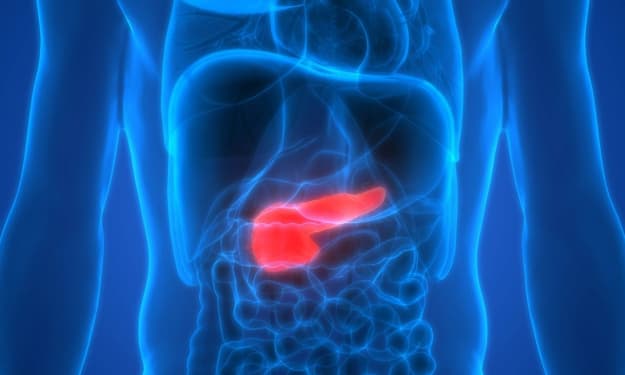
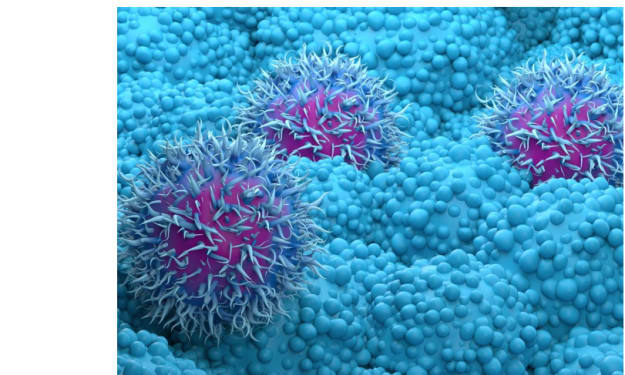
Pancreatic Cancer Cure: Truth, Hope, and Hard Questions
When people search for a pancreatic cancer cure, they are rarely just browsing. They are often scared, awake late at night, reading quietly while the house sleeps. This disease carries a heavy reputation, and the words around it feel sharp and final. But the full picture is more complex than the fear suggests. Outcomes are changing. Treatments are improving. Some patients do reach long-term survival, and in certain cases, doctors can remove the disease completely. Hope exists, but it lives beside realism, not fantasy. This article explains what a pancreatic cancer cure really means today, how treatment works, when cure is possible, and why research still matters deeply. Clear information does not remove fear, but it replaces confusion with understanding.
By Muqadas khan4 days ago in Psyche
Essence, Embodiment, and Relational Reality
The Failure of Reduction and the Need for Synthesis There is a persistent failure in many modern attempts to explain what a human being is. Some frameworks reduce the person entirely to matter, insisting that identity, consciousness, morality, and meaning are nothing more than emergent properties of physical processes. Other frameworks move in the opposite direction, detaching spirit from reason and grounding belief in intuition alone, often at the cost of coherence or accountability. Both approaches fail because both misunderstand essence. One denies that essence exists at all. The other treats it as something vague and undefinable.
By Peter Thwing - Host of the FST Podcast7 days ago in Psyche
Resistance Is Not the Enemy
Iron sharpens iron. Brakes save lives. Friction preserves form. Modern culture treats resistance as failure. Anything that slows momentum is framed as obstruction, anything that introduces friction is assumed to be opposition, and anything that interrupts progress is labeled a setback. But this instinct misunderstands how both physical systems and human growth actually work. Resistance is not inherently hostile. In many cases, it is the only thing preventing collapse.
By Peter Thwing - Host of the FST Podcast7 days ago in Psyche
The Refiner’s Fire Is Not the Whetstone
There is a difference between being sharpened and being transformed, and confusing the two leads to frustration when growth does not feel productive. Sharpening implies refinement of existing form. Fire implies change in composition. Both processes are uncomfortable, but they operate on different levels and for different purposes. When people expect sharpening and receive fire instead, they often assume something has gone wrong, when in reality something deeper is taking place.
By Peter Thwing - Host of the FST Podcast7 days ago in Psyche
You See From Where You Stand
"The room remains full whether you can see it or not." One of the most persistent misunderstandings about perception is the assumption that seeing is the same as knowing. People often believe that if something feels clear, it must be complete, and if something feels obscure, it must be absent. But awareness does not work that way. What you perceive at any moment is not a measure of what exists. It is a measure of what your current position allows to pass through.
By Peter Thwing - Host of the FST Podcast7 days ago in Psyche
You Are Not Empty, You Are Overloaded
You are not empty. You are not broken. You are not dull. - You are overloaded. - People often describe certain mental states as “having nothing in their head,” but that description is almost always inaccurate. What feels like emptiness is usually saturation. The mind has not stopped producing content. It has lost spare capacity. The system is busy allocating energy toward coping, regulating, or enduring, and there is little left over for reflection, synthesis, or creativity. This distinction matters, because mistaking overload for emptiness leads people to judge themselves harshly for conditions that are largely structural and biological.
By Peter Thwing - Host of the FST Podcast7 days ago in Psyche
Why Are Psychiatrists, Psychologists, Therapists, and Counselors Called “Shrinks”?
Most of us have heard someone say, “I’m going to see my shrink,” with a shrug or a half‑smile — but have you ever stopped to wonder where that slang word came from? It’s one of those cultural words we have heard, and we begin using them without knowing what they actually mean.
By Margaret Minnicks11 days ago in Psyche
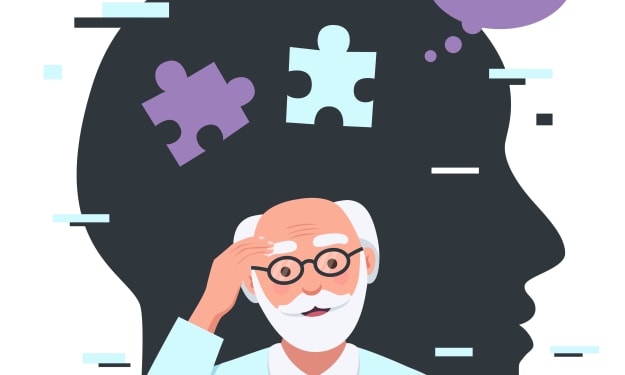
Alzheimer’s disease
According to Alzheimer’s Association (2014), dementia is an overall term for the diseases that have memory decline and other cognitive skills that will have impact on a person’s ability in performing daily activity in the life. The most common type of dementia is Alzheimer’s disease. Alzheimer’s disease is a condition that will bring abnormal changes in the brain that will have impact on someone’s memory and the mental abilities (“Family Caregiver Alliance,” n.d.). In addition, Alzheimer’s disease is an ordinary type of neurodegenerative disorder. It characterized by cognitive impairment with a decline in the ability to carry out living activities (Jellinger, 2015). For the patient with early-onset Alzheimer’s, it usually caused by genetic mutation whereas for the late-onset Alzheimer’s patient, it may cause by a complex series of brain changes. For an instance, the causes may include the combination of genetic problem, environmental problem and lifestyle factors (National Institute on Aging, n.d.).
By Ng Teck Sen11 days ago in Psyche
When Saying “No” Feels Strange
He did not plan to smoke that day. He was standing outside his school gate, bag on his back, waiting for the van. A boy from his class took out a vape. Another smiled and asked him to try. He refused at first. Everyone laughed, not loudly, not cruelly just enough to make him feel small.
By Muhammad Ayaan 15 days ago in Psyche