
Below is a 900‑word, blog‑style article written to meet Vocal Media publication standards on the keyword:
How Trump’s Relations with America’s Biggest Banking Boss Hit Rock Bottom

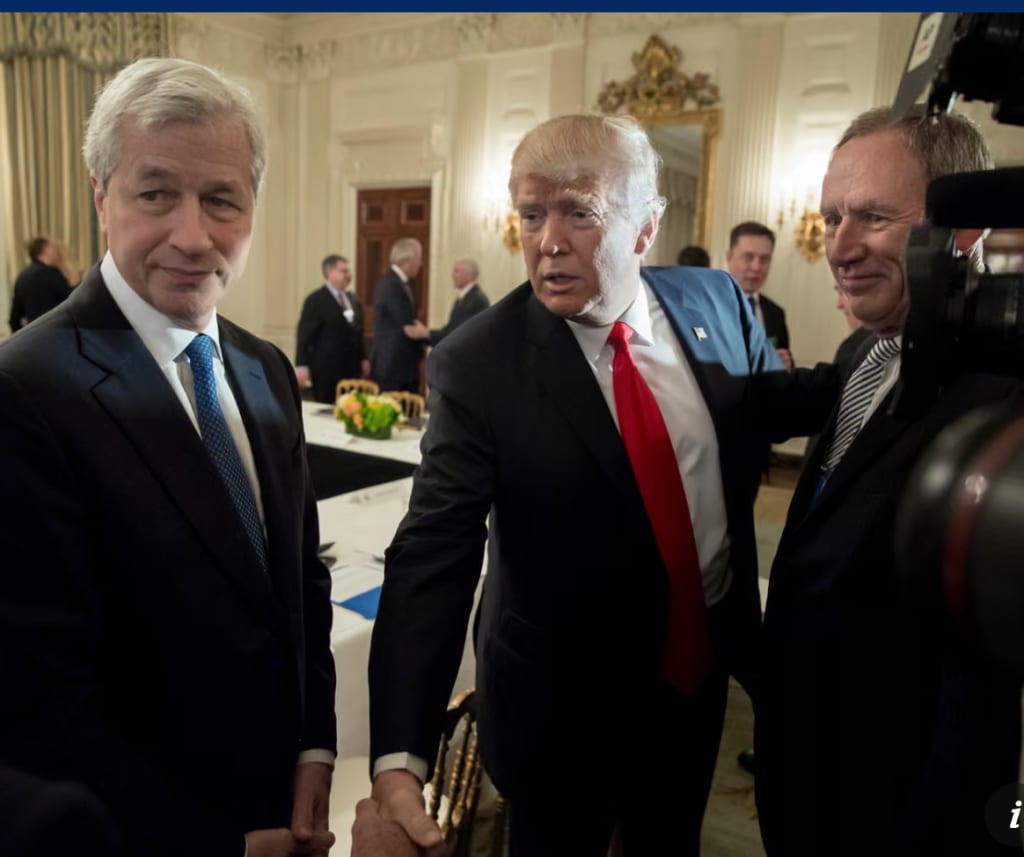
In the world of U.S. politics and finance, relationships matter. And rarely has a relationship between Washington and Wall Street been as turbulent as the one between Donald Trump and the leaders of America’s biggest banks. Once intertwined with power and influence, the dynamic between Trump and the financial elite — especially the heads of major banks like JPMorgan Chase — deteriorated sharply over time. What began as mutual benefit turned into mutual distrust, raising questions about political influence, regulatory power, and the future of U.S. economic leadership.
Understanding how this relationship hit rock bottom requires a look at both personalities, the political context, and the economic events that pushed them apart.
A Partnership at First — Influence Meets Ambition
In the early stages of Donald Trump’s rise to the presidency in 2016, executives from major banks — including Jamie Dimon, the CEO of JPMorgan Chase, widely regarded as one of America’s most powerful banking bosses — appeared cautiously supportive. Wall Street had reasons to engage with Trump:
Business Interests — Trump’s background was in real estate and finance, and many banking leaders saw potential alignment on deregulation and tax reform.
Political Access — Meeting with Trump and his team offered banks direct lines to influence economic policy.
In the early months of the Trump administration, bank leaders attended Mar‑a‑Lago events, advisory council meetings, and discussions on economic strategy. It seemed like a marriage of convenience: Trump needed business legitimacy, and Wall Street sought access to power.
For banking bosses, influence mattered. Policy decisions on taxes, deregulation, and trade could have massive effects on the economy — and on banks’ bottom lines.
Economic Realities Collide with Political Chaos
Despite early engagement, tensions soon emerged. Trump’s presidency was marked by unpredictability and conflict, which began to irk banking leaders. There were several key areas of friction:
1. Regulatory Pressure and Tweets
While Trump promised to roll back regulations that banks often viewed as burdensome, his public criticisms of banks — especially when expressed through social media — frustrated finance leaders. Tweets expressing distrust of financial institutions, remarks about “failing banks,” and criticism of rates or policy decisions put bank CEOs in an awkward position: publicly defending the economy while facing presidential skepticism.
For leaders used to stability and careful strategy, sudden public commentary from the White House was a new and unwelcome challenge.
2. Trade Wars and Market Turmoil
Trump’s tariff policies and trade disputes with countries like China sent shockwaves through global markets. Banks, which rely on a stable economic environment for investment, lending, and international operations, were forced into damage‑control mode.
Jamie Dimon and other bank chiefs publicly expressed concern over the impact of trade tensions on American business. Their frankness, however, invited criticism from Trump supporters who saw it as disloyalty — further deepening a divide between the president and Wall Street.
3. Pandemic Response and Economic Fallout
The relationship was tested even further during the COVID‑19 pandemic. As the U.S. economy shut down and unemployment surged, banks stepped into emergency roles, processing relief loans to small businesses under federal programs. The situation placed enormous pressure on financial institutions — and revealed cracks in coordination between the Trump administration and banking leadership.
While some bank executives supported relief efforts, disagreements over execution and public communication heightened tensions.
Public Criticism Becomes Personal
Over time, Trump’s public remarks about specific banks and their leaders became more direct. The president openly criticized institutions like JPMorgan Chase on social media and in press statements, accusing them of being out of touch or even hostile to American workers.
For a president whose communication style often comes through short, blunt messages, such statements resonated with his base — but alienated banking executives who viewed these comments as misinformed or unfounded.
Several moments defined this escalating rift:
Public Accusations: Trump continued to single out specific banks in tweets as being obstacles to economic goals.
Policy Disagreements: Trump’s priorities on issues like interest rates and fiscal stimulus frequently diverged from the views of banking leaders.
Blame for Economic Conditions: Some statements from Trump appeared to hold banks responsible for broader economic challenges, increasing distrust.
This evolution transformed the relationship from strategic engagement to open disagreement.
What “Rock Bottom” Looks Like
By the end of Trump’s presidency and in the years that followed, relations with major bank CEOs had deteriorated so significantly that participation in advisory councils and collaborative forums largely faded. Key characteristics of the breakdown included:
Decreasing Direct Communication: Meetings between the White House and banking chiefs became less frequent.
Public Disagreement: Economic policy debates were increasingly played out in the media rather than behind closed doors.
Erosion of Trust: Both sides expressed skepticism about the motives and competence of the other.
For banks that once sought presidential access as a way to secure influence, the relationship became more adversarial.
Why This Matters Beyond Politics
It’s easy to see the Trump–banking conflict as just another chapter in political drama, but its implications reach further:
1. Economic Policy Formation
Banks and financial institutions play major roles in shaping economic stability. A breakdown in dialogue between political leaders and these institutions can make collaborative economic policy more difficult.
2. Public Trust in Institutions
When leaders publicly criticize banks, and banks publicly express distrust of political leadership, the result can erode public confidence — not only in these institutions, but in the effectiveness of economic governance itself.
3. Market Stability
Political conflict that affects regulatory decisions, fiscal policy, and economic messaging can have tangible effects on markets, investment, and consumer behavior.
Looking Ahead: What Comes Next?
As politics continues to evolve, so do the relationships between political leaders and financial institutions. While Trump’s direct involvement in these dynamics is tied to his political career, the underlying issues — trust, communication, policy influence, and economic strategy — remain central to the relationship between government and Wall Street.
Bank leaders may choose to engage differently with future administrations, prioritizing consistency and clear policy goals. Conversely, political leaders may continue to challenge traditional financial power structures as part of broader efforts to reshape public perception of economic systems.
One thing is clear: the fallout between Trump and America’s biggest banking boss isn’t just a personal feud — it represents shifting power dynamics in U.S. economic life.
About the Creator
Muhammad Hassan
Muhammad Hassan | Content writer with 2 years of experience crafting engaging articles on world news, current affairs, and trending topics. I simplify complex stories to keep readers informed and connected.
Keep reading
More stories from Muhammad Hassan and writers in The Swamp and other communities.
Glenfarne Announces Major Phase One Alaska LNG Milestones
The Alaska LNG Project has long been on the horizon as one of the most ambitious energy infrastructure projects in North America. On January 23, 2026, Glenfarne Alaska LNG, LLC, the lead developer of the project, officially announced major milestones for Phase One of the project, signaling tangible progress after years of planning. This phase includes construction readiness, line pipe supply agreements, and in-state gas arrangements — all critical for delivering natural gas to Alaskans and eventually to global markets. Understanding the Alaska LNG Project Alaska’s North Slope is home to vast natural gas reserves, but bringing that gas to market is no small feat. The Alaska LNG Project aims to connect these reserves to both domestic and international consumers through a massive pipeline and liquefaction terminal. To manage risks and costs, Glenfarne has divided the project into two main phases: Phase One focuses on building a 739-mile, 42-inch pipeline stretching from the North Slope to Alaska’s domestic market. This phase prioritizes delivering natural gas to in-state consumers, including homes, businesses, and industrial users. Phase Two adds the liquefaction and export facilities, enabling Alaska to supply global markets with LNG. This phase targets delivering up to 20 million tonnes per year to international buyers. The company has set an ambitious timeline: mechanical completion of the pipeline is expected by 2028, with first gas deliveries starting in 2029. Key Milestones in Phase One Glenfarne’s announcement highlighted three major achievements: 1. Pipeline Construction Agreements A cornerstone of any mega-infrastructure project is securing reliable construction partners. Glenfarne has issued conditional awards to major construction contractors to build the pipeline. These awards follow a competitive bidding process and cover both the main pipeline and lateral lines, paving the way for physical construction once final agreements are signed. Locking in construction partners early is crucial for keeping schedules on track and mitigating cost risks. For Alaska LNG, it ensures that one of the biggest logistical challenges — building a pipeline across harsh and remote terrain — can move forward without delay. 2. Line Pipe Supply The pipeline will require about 700,000 metric tonnes of API 5L X70 steel pipe for the main route, with an additional 25,000 tonnes for lateral pipelines like the Point Thomson branch. Glenfarne has already secured two-thirds of these supply needs through preliminary agreements. Early procurement of line pipe is a major milestone because it reduces the risk of supply chain disruptions and keeps the project on schedule — especially important for a project of this scale that spans hundreds of miles in remote areas. 3. In-State Gas Supply Agreements A pipeline is only as valuable as the gas it delivers. Glenfarne has announced agreements with major North Slope producers, including ExxonMobil and Hilcorp Alaska LLC, to supply natural gas to the pipeline. Previous arrangements also include commitments from other local producers. These agreements ensure a steady supply of gas for Alaskan communities once Phase One is operational. Additionally, Glenfarne has signed a non-binding letter of intent with ENSTAR Natural Gas Company to deliver natural gas long-term to in-state consumers. This focus on local distribution addresses Alaska’s high energy costs and supports residential and industrial users alike. By prioritizing domestic energy delivery first, Alaska LNG demonstrates a commitment not just to profit, but to energy security and local benefits. Strategic Global Partnerships While Phase One focuses on in-state gas, Glenfarne is also preparing for future exports. Strategic partnerships have been formed to support Phase Two and eventual LNG shipments to international markets. Danaos Corporation, a Greek shipping company, has invested $50 million and will provide LNG carrier support for exports. Baker Hughes is providing critical equipment for the project. POSCO International is supplying steel and has signed initial LNG offtake commitments. These partnerships integrate construction, supply, and export logistics, demonstrating Glenfarne’s methodical approach to scaling Alaska LNG from a domestic infrastructure project to a global energy player. Why This Announcement Matters Glenfarne’s Phase One milestones represent real progress, not just planning or proposals. After years of delays in the global energy market and the complexities of building in Alaska’s remote regions, these milestones indicate that the project is moving from concept to execution. For Alaska, the impact could be transformative: Energy Security: Local communities will gain access to reliable natural gas, potentially lowering energy costs for homes and businesses. Economic Growth: Construction and operation of the pipeline will create thousands of jobs, boost local suppliers, and stimulate investment in the state. Global Market Position: While domestic supply is prioritized first, Phase Two will allow Alaska to compete in the global LNG market, diversifying revenue streams and increasing U.S. LNG exports. In essence, Phase One is both a critical step for Alaskan energy independence and a foundation for international market expansion. What’s Next for Phase One Looking ahead, Glenfarne will focus on several key objectives: Finalizing construction contracts with pipeline builders. Completing the procurement of line pipe and essential equipment. Securing regulatory and environmental approvals, including federal and state permits. Advancing gas supply agreements with additional producers and finalizing long-term in-state delivery contracts. Building strategic partnerships for exports, ensuring that Phase Two can follow smoothly once Phase One is operational. If these steps are successfully executed, Alaska LNG could become one of the most significant energy projects in North America, benefiting local communities while securing a place in the global LNG market. Conclusion Glenfarne’s announcement marks a pivotal moment for the Alaska LNG Project. The combination of construction readiness, line pipe agreements, and in-state gas supply deals shows that the project is no longer just an ambitious plan — it is actively moving toward execution. For Alaskans, this could mean cheaper, more reliable energy. For global markets, it signals future LNG supply from a stable, strategic source. And for Glenfarne, these milestones are the first step in realizing a multi-billion-dollar infrastructure vision that spans miles of pipeline, partnerships, and global ambitions. The next few years will be crucial as the project transitions from planning to action. But with these milestones, Alaska LNG has proven that ambitious energy projects can still succeed, even in the face of logistical, financial, and environmental challenges.
By Muhammad Hassan28 days ago in The Swamp
Why Black History Matters in America?
The United States of America is celebrating their 250th anniversary in 2026. I'm proud to be an American and as someone who was born here, I wouldn't imagine myself living anywhere else. This is a country where opportunities are possible. Where anyone can be successful in anything they desire to do. Equality, community, and togetherness are the backbones of what America is and should be about. However, we have an administration who wants to erase and disregard those who have made positive, meaningful impacts in our country, specifically Black figures, such as Martin Luther King, Jr., Rosa Parks, and Maya Angelou. President Trump and his administration have been constantly complaining and fighting against what they call the "Woke agenda". They use this excuse as a distraction from other issues they refuse to address, such as the high cost of living, climate change, and inflation. That equality is dividing America, when in reality, it's bringing us together. Being woke is not tied to a specific political party. No matter where you stand on the political spectrum, you can still care about other people and their plights. Compassion and empathy for others isn't tied to a political party, either. We were taught as children to treat others the way we want to be treated and not judge others because they're different from us. Caring about others isn't a personal attack on your beliefs. It doesn't make you any less of a person. People who are easily offended over African American figures, past or present, or anything related to it, are grasping at straws. Current and future generations need to know who people like Harriet Tubman and Shirley Chisholm were, especially in the classroom. Black History is part of American History. It should be recognized, not hidden or forgotten. Besides, you can't shield children from everything, just because your feelings are easily hurt.
By Mark Wesley Pritchard 19 days ago in The Swamp




Comments
There are no comments for this story
Be the first to respond and start the conversation.