
Britain Blocking Use of Air Bases Trump Says Would Be Needed for Strikes on Iran, UK Media Reports
🔹 Formal / News Style UK refuses U.S. request to stage potential military strikes from British territory London cites legal concerns in denying access to strategic RAF and Diego Garcia bases 🔹 Neutral & Informative British government blocks American use of bases for Iran operations amid diplomatic tensions Decision highlights balance between alliance obligations and sovereign legal responsibilities 🔹 Impactful London halts U.S. plans for Iran strikes, raising questions on alliance cooperation


The United Kingdom has refused requests from the Donald Trump administration to allow U.S. military aircraft to use key British air bases as staging points for potential strikes on Iran, according to multiple British media reports citing government sources. The decision has heightened diplomatic tensions between London and Washington just as relations are already strained over sovereignty arrangements for the Chagos Islands and other security issues.
UK Withholds Consent for Air Base Access
Under long‑standing defence agreements between the United States and the United Kingdom, American forces may operate from bases in Britain — including RAF Fairford in Gloucestershire and the joint US‑UK base on Diego Garcia in the Indian Ocean — for training and agreed missions with prior approval from the British government. However, London recently declined to authorise the use of these facilities for any potential U.S. air campaign against Iran.
The Times of London first reported that British Prime Minister Keir Starmer’s government has refused to grant permission for any offensive military operations, over concerns that participation in such strikes could violate international law and implicate the UK in actions it cannot legally endorse.
British authorities reportedly fear that allowing U.S. bombers to launch from their bases could be seen as complicity in a pre‑emptive attack, potentially exposing the UK to legal and diplomatic consequences. Legal rulings and government lawyers have emphasised that assisting or knowingly providing facilities for strikes lacking clear international legal justification might breach existing treaties and international law norms.
Strategic Bases at the Centre of Debate
The airfields highlighted in the reporting are among the most strategically important Western bases for operations in the wider Middle East and Indo‑Pacific theatre. RAF Fairford hosts American strategic bombers such as B‑52s and is seen as a key forward operating location for long‑range strikes. Diego Garcia — a remote island base — is equally crucial, enabling heavy aircraft to reach distant targets without refuelling from more distant continental U.S. bases.
The UK decision comes amid heightened U.S. military build‑up in the Gulf and neighbouring regions as Washington weighs its options over Iran’s nuclear ambitions and regional behaviour. Trump and senior U.S. officials have not ruled out military action should diplomatic negotiations fail to restrain Tehran’s nuclear programme and ballistic missile development.
Diplomatic Friction Over Chagos Sovereignty
Reports also link the base access issue to broader diplomatic disagreements over the proposed transfer of sovereignty of the Chagos Islands — including Boston‑Napoleon Diego Garcia — to Mauritius. Under an agreement backed by both London and Washington, the UK would retain use of the base through a long‑term lease. However, Trump publicly criticised the agreement after the UK signalled it would not automatically allow U.S. offensive operations from the territory.
White House social media posts from Trump reiterated concerns that Diego Garcia and RAF Fairford could be needed “to eradicate a potential attack by a highly unstable and dangerous regime,” signalling that U.S. planners see those bases as key to any contingency involving Iran. But British officials countered that authorising offensive operations from sovereign territory requires solid legal grounds and cannot be pre‑approved.
Broader Policy Considerations
British officials have emphasised their support for diplomatic efforts and de‑escalation, even as they work closely with the U.S. on shared security challenges. They have publicly supported negotiations with Iran on its nuclear programme and called for restraint while upholding international legal obligations.
Within the UK government, there is recognition that strategic cooperation with the U.S. remains vital. But ministers have made clear that any decision to permit offensive operations from UK territory will be judged on legal merits and domestic public support rather than broader political pressure.
Reaction in Washington
In Washington, the refusal has drawn criticism from some Republican lawmakers and Trump allies, who argue that limiting U.S. access to British bases hampers rapid deployment and long‑range strike capabilities. They maintain that closer cooperation is necessary to deter regional threats and protect Western interests.
Business Today
Despite the disagreement, U.S. officials and defence planners are exploring alternative basing options in allied countries closer to Iran, and have reiterated that military planning continues alongside diplomatic engagement.
Yahoo News UK
Conclusion
The UK’s position on air base use highlights the complex balance between alliance solidarity and sovereign legal obligations in matters of war and peace. As tensions between Tehran and Washington remain elevated, London’s stance could shape future military planning and influence how allies weigh legal, ethical and strategic factors before authorising offensive operations from sovereign soil.
About the Creator
Fiaz Ahmed
I am Fiaz Ahmed. I am a passionate writer. I love covering trending topics and breaking news. With a sharp eye for what’s happening around the world, and crafts timely and engaging stories that keep readers informed and updated.
Keep reading
More stories from Fiaz Ahmed and writers in The Swamp and other communities.
EDF Pushes Back Hinkley Point C Start‑Up by Another Year
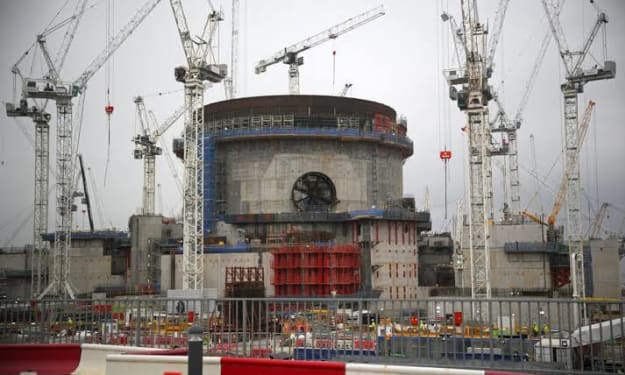
Construction of the Hinkley Point C nuclear power station, the United Kingdom’s largest and most high‑profile new nuclear power plant, has been delayed yet again. French energy giant EDF announced on 20 February 2026 that the first reactor of Hinkley Point C — originally expected to come online in 2025 — will now begin operations in 2030, reflecting a further one‑year postponement from the previously revised 2029 target. The updated timeline comes as EDF revealed that the complex electromechanical installation work — critical for delivering safe, reliable commissioning — has fallen behind schedule. The company described the new timeline as “more realistic” given the technical challenges and regulatory requirements, and offered a broader window from 2029 to 2031 for startup. Cost Escalation and Financial Impact The latest delay has significant financial implications. EDF has raised the estimated cost of the Hinkley Point C project to £35 billion (about $47 billion), well above earlier projections. That figure is expressed in 2015 prices, meaning the true inflation‑adjusted cost is even higher. BSS The repeated postponements and cost overruns have already taken a tangible toll on EDF’s finances. The company recorded a €2.5 billion impairment related to the Hinkley Point C project in its 2025 results, contributing to a 26 % drop in net profit compared with the previous year. Lower wholesale electricity prices and a reduced guaranteed power price from the UK government further strained results. EDF’s chief executive, Bernard Fontana, said that the new timeline and cost estimates reflect the company’s assessment of risks, regulatory scrutiny and ongoing construction complexities. The plant is designed to provide around 7 % of UK electricity demand once fully operational, making its timely completion vital to British energy strategy. Underlying Causes of Delay EDF attributed the latest delay largely to slower‑than‑expected electromechanical work — the stage when critical internal systems and components are installed and integrated. Project updates indicate that mechanical, electrical, heating and ventilation (MEH) installations have not kept pace with plans. In its annual report, EDF confirmed that delays in MEH work have been a key factor in pushing back the scheduled start date. constructionnews.co.uk Construction issues are not new for Hinkley Point C. Since work began in 2017, the UK’s first new nuclear plant in a generation has been plagued by delays related to complex engineering requirements, supply chain disruptions, and extended regulatory oversight. Previous projections had already moved the plant’s launch from 2025 to 2027, then to 2029–2031 before the latest revision to 2030. Industry and Government Reactions The repeated setbacks have reignited debate over the cost‑effectiveness and feasibility of new nuclear projects in the UK and Europe. Critics argue that large‑scale nuclear plants like Hinkley Point C carry inherent risks of delay and cost overrun, and question whether the long lead times justify the investment compared with renewable energy alternatives. Advocates counter that nuclear remains essential for meeting net‑zero emissions targets and ensuring baseload power reliability as fossil fuel plants retire. The Guardian The UK government has emphasised its continued support for Hinkley Point C as part of the country’s strategy to secure low‑carbon energy sources. Officials argue that delays — while frustrating — are not uncommon in megaprojects of this scale and underscore the rigorous safety and regulatory standards applied in nuclear construction. The Guardian Implications for Future Nuclear Projects EDF is also overseeing other major nuclear developments, including the Sizewell C nuclear power station project in Suffolk, which is expected to face its own timeline and budget pressures. Lessons learned from Hinkley Point C are intended to inform future builds, but stakeholders acknowledge that replicating such complex engineering work remains challenging. Analysts say the repeated delays at Hinkley Point C could complicate efforts to expand nuclear capacity in the UK and abroad, particularly if cost escalation and financing challenges persist. With construction extending over more than a decade, some industry observers question whether alternative energy investments might offer faster, more cost‑effective pathways to decarbonisation. Looking Ahead With civil construction largely complete on site, gravity remains on the installation and integration of key internal systems. If the 2030 operational date holds, Hinkley Point C will begin to supply carbon‑free power at least five years later than originally envisioned, underscoring the long road to bringing new nuclear capacity online in a timely and cost‑competitive manner. Financial Times
By Fiaz Ahmed a day ago in The Swamp
Why Black History Matters in America?
The United States of America is celebrating their 250th anniversary in 2026. I'm proud to be an American and as someone who was born here, I wouldn't imagine myself living anywhere else. This is a country where opportunities are possible. Where anyone can be successful in anything they desire to do. Equality, community, and togetherness are the backbones of what America is and should be about. However, we have an administration who wants to erase and disregard those who have made positive, meaningful impacts in our country, specifically Black figures, such as Martin Luther King, Jr., Rosa Parks, and Maya Angelou. President Trump and his administration have been constantly complaining and fighting against what they call the "Woke agenda". They use this excuse as a distraction from other issues they refuse to address, such as the high cost of living, climate change, and inflation. That equality is dividing America, when in reality, it's bringing us together. Being woke is not tied to a specific political party. No matter where you stand on the political spectrum, you can still care about other people and their plights. Compassion and empathy for others isn't tied to a political party, either. We were taught as children to treat others the way we want to be treated and not judge others because they're different from us. Caring about others isn't a personal attack on your beliefs. It doesn't make you any less of a person. People who are easily offended over African American figures, past or present, or anything related to it, are grasping at straws. Current and future generations need to know who people like Harriet Tubman and Shirley Chisholm were, especially in the classroom. Black History is part of American History. It should be recognized, not hidden or forgotten. Besides, you can't shield children from everything, just because your feelings are easily hurt.
By Mark Wesley Pritchard 20 days ago in The Swamp
The broken system of empty promises after gun violence
Each time there is a school shooting, gang or juvenile-related murder in America, the responses are always the same, but nothing changes. Local leaders, clergy, state, and federal officials all say, "This has to stop." They hold meetings, candlelight prayer vigils and have marches, but the shootings continue.
By Cheryl E Preston3 days ago in The Swamp
At My Wits’ End
Life is about taking out the trash and calling it trash because you have every reason to. It wasn't meant to be linear, they say. But the times you tried to make it straight led to problems, and you didn’t have the tools to put any of it to use. You don't put your right shoes on the right feet; you put the left shoes on the left feet. The grey hardened slab will trip you up anyway.
By Caitlin Charlton2 days ago in Humans



Comments
There are no comments for this story
Be the first to respond and start the conversation.