
China Is Said to Pause Panama Deals After Ports Operation Nulled
A strategic setback highlights rising geopolitical tensions, trade uncertainty, and global infrastructure politics
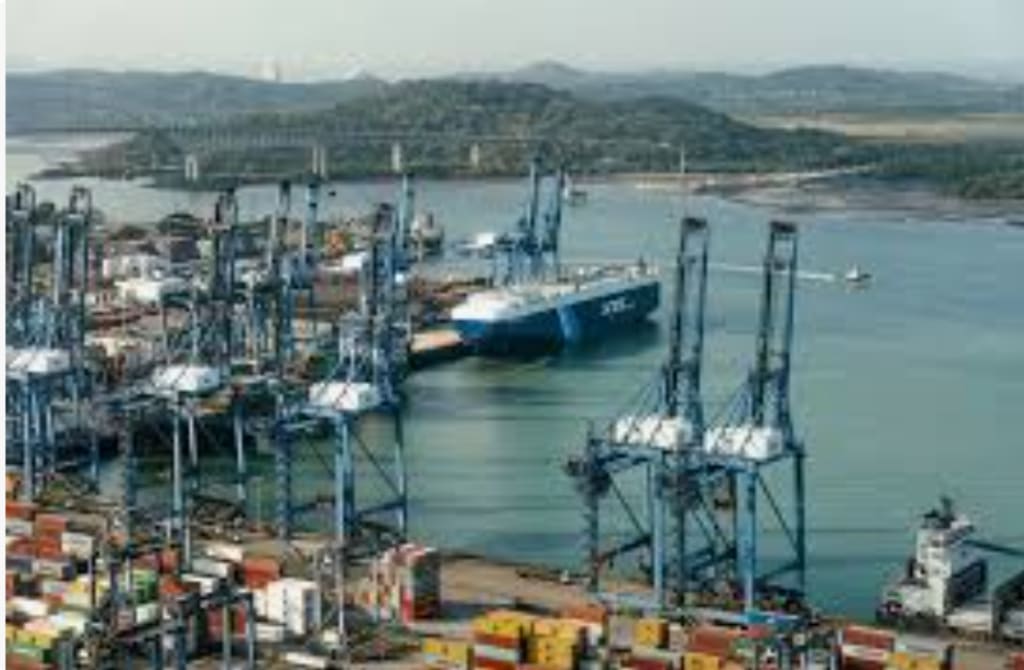
China is reportedly pausing its business and investment deals in Panama after a key ports operation agreement was nullified, signaling a major shift in diplomatic and economic relations between the two countries. This development comes amid growing global scrutiny of China’s overseas infrastructure projects and increasing geopolitical competition between major powers.
The cancellation of the ports operation deal is not just a commercial dispute—it reflects broader political, economic, and strategic tensions shaping global trade routes and international relations. As Panama holds a critical position in global shipping through the Panama Canal, any disruption in its partnerships can have far-reaching implications for global commerce and diplomacy.
Background: China and Panama’s Growing Relationship
Over the past decade, China has expanded its presence in Latin America through trade, infrastructure investments, and diplomatic outreach. Panama, which established diplomatic ties with China in 2017, has been an important partner in Beijing’s Belt and Road Initiative (BRI).
Chinese companies have invested in ports, logistics, construction, and telecommunications projects across Panama. These investments were seen as part of China’s strategy to strengthen its influence in global trade hubs and strategic maritime routes.
However, Panama’s strategic importance also makes it a focal point of international competition, especially between China and the United States.
The Ports Operation Deal: What Happened?
The recent cancellation of a ports operation agreement has reportedly prompted China to reconsider its business engagement in Panama. While details of the deal remain limited, the decision to nullify the agreement is believed to be linked to legal, political, or regulatory concerns within Panama.
Ports are critical infrastructure for global trade, and control over port operations carries significant economic and strategic value. The nullification of such a deal sends a strong signal about Panama’s shifting stance toward foreign investment and national security considerations.
Why China Is Pausing Deals
1. Geopolitical Pressure
Panama is located in a region traditionally influenced by the United States. As China increases its presence in Latin America, the U.S. has expressed concerns over security and strategic influence near the Panama Canal.
The nullification of the ports deal may reflect geopolitical pressure and Panama’s attempt to balance relations between major powers. China’s decision to pause deals could be a response to what it perceives as political interference.
2. Legal and Regulatory Uncertainty
Foreign investors require stable legal frameworks and regulatory certainty. The cancellation of a major agreement can create uncertainty and discourage future investments.
China’s pause suggests concerns about the reliability of Panama’s regulatory environment and the risk of future project disruptions.
3. Strategic Reassessment
China is increasingly reassessing its overseas investments due to economic pressures, debt concerns, and political risks. Pausing deals in Panama may be part of a broader strategy to focus on more secure and profitable projects.
Impact on Panama’s Economy
China has been one of Panama’s significant trading partners and investors. A pause in Chinese deals could affect infrastructure development, job creation, and economic growth.
Ports, logistics, and construction projects often bring foreign capital, technology, and employment opportunities. Losing or delaying such investments may slow Panama’s development plans and reduce its competitiveness as a global trade hub.
However, Panama may also see this as an opportunity to diversify its partnerships and strengthen ties with other countries and investors.
Global Trade and Shipping Implications
Panama plays a crucial role in global shipping due to the Panama Canal, which connects the Atlantic and Pacific Oceans. Any political or economic instability affecting ports and infrastructure could impact global trade flows.
If China reduces its involvement in Panama, it may shift its logistics strategies to other ports in Latin America, such as in Mexico, Peru, or Chile. This could reshape regional trade dynamics and competition among ports.
China’s Belt and Road Initiative Under Scrutiny
The Belt and Road Initiative aims to build infrastructure networks across Asia, Europe, Africa, and Latin America. While the initiative has expanded China’s global influence, it has also faced criticism for debt risks, transparency issues, and political influence.
The situation in Panama highlights the challenges China faces in implementing overseas projects. Political changes, legal disputes, and geopolitical tensions can disrupt long-term plans.
The Role of the United States
The United States has historically considered the Panama Canal a strategic asset and has closely monitored foreign involvement in the region. U.S. officials have raised concerns about Chinese investments in critical infrastructure near the canal.
Panama’s decision to nullify the ports operation deal may reflect its efforts to maintain balanced relations with the U.S. while engaging with China. This balancing act is common for countries caught between major global powers.
Diplomatic Consequences
China’s pause on deals could strain diplomatic relations with Panama. Economic cooperation often plays a key role in diplomatic ties, and reduced investment may lead to cooler political relations.
However, both countries may seek to avoid a full breakdown in relations, given the economic and strategic importance of cooperation.
Lessons for Developing Nations
The Panama case offers important lessons for developing countries engaging with major powers:
Diversify foreign investment partners to avoid overdependence on a single country.
Ensure transparent and stable legal frameworks to maintain investor confidence.
Balance geopolitical relationships to protect national interests and sovereignty.
What This Means for Global Infrastructure Politics
The situation underscores how infrastructure projects are no longer purely economic—they are deeply political. Ports, railways, and telecommunications networks are strategic assets that influence national security and global power dynamics.
Countries are increasingly scrutinizing foreign investments in critical infrastructure, leading to more cancellations, renegotiations, and regulatory restrictions.
Future Outlook
It remains uncertain whether China’s pause in Panama will be temporary or long-term. Negotiations, legal appeals, and diplomatic discussions could lead to a resolution.
China may seek alternative investment destinations, while Panama may adjust its policies to attract diverse investors. The outcome will depend on political decisions, economic priorities, and global power dynamics.
Conclusion
China’s reported decision to pause deals in Panama after the nullification of a ports operation agreement highlights the complex intersection of economics, politics, and global strategy. What began as a commercial dispute has evolved into a symbol of geopolitical competition and shifting alliances.
For Panama, the challenge is to balance foreign partnerships while protecting national interests. For China, the incident reflects the risks and uncertainties of global expansion. And for the world, it is a reminder that infrastructure and trade routes are now central arenas of global power politics.
As global tensions continue to rise, similar disputes may become more common, reshaping the future of international trade and diplomacy.
About the Creator
Why Black History Matters in America?
The United States of America is celebrating their 250th anniversary in 2026. I'm proud to be an American and as someone who was born here, I wouldn't imagine myself living anywhere else. This is a country where opportunities are possible. Where anyone can be successful in anything they desire to do. Equality, community, and togetherness are the backbones of what America is and should be about. However, we have an administration who wants to erase and disregard those who have made positive, meaningful impacts in our country, specifically Black figures, such as Martin Luther King, Jr., Rosa Parks, and Maya Angelou. President Trump and his administration have been constantly complaining and fighting against what they call the "Woke agenda". They use this excuse as a distraction from other issues they refuse to address, such as the high cost of living, climate change, and inflation. That equality is dividing America, when in reality, it's bringing us together. Being woke is not tied to a specific political party. No matter where you stand on the political spectrum, you can still care about other people and their plights. Compassion and empathy for others isn't tied to a political party, either. We were taught as children to treat others the way we want to be treated and not judge others because they're different from us. Caring about others isn't a personal attack on your beliefs. It doesn't make you any less of a person. People who are easily offended over African American figures, past or present, or anything related to it, are grasping at straws. Current and future generations need to know who people like Harriet Tubman and Shirley Chisholm were, especially in the classroom. Black History is part of American History. It should be recognized, not hidden or forgotten. Besides, you can't shield children from everything, just because your feelings are easily hurt.
By Mark Wesley Pritchard 15 days ago in The Swamp
Don Lemon Hires Federal Prosecutor Who Quit Over Immigration Crackdown
Former CNN anchor and longtime journalist Don Lemon has taken a striking new step in his legal defense by enlisting a veteran federal prosecutor who resigned from the U.S. Attorney’s Office in Minnesota amid mounting tensions over the Trump administration’s immigration enforcement policies and handling of high-profile investigations. The move underscores the high stakes of Lemon’s federal case, which has drawn national attention and raised questions about press freedom, prosecutorial discretion and political influence within the Justice Department. Lemon, who now works as an independent journalist, was indicted earlier this year along with eight others for his alleged role in a January 18 protest that disrupted a Sunday service at Cities Church in St. Paul, Minnesota. Federal prosecutors allege the group conspired to interfere with worship and intimidate congregants, invoking a 1994 civil rights statute typically used to protect access to reproductive health clinics but also applicable to places of worship. Lemon asserts he was present only in his journalistic capacity, livestreaming the event as part of his reporting work. Unexpected Legal Reinforcement In a notable twist, Lemon has added Joseph H. Thompson, a former interim U.S. Attorney for Minnesota, to his defense team. Thompson had served nearly 17 years in the Minnesota U.S. Attorney’s Office and held senior leadership positions, including acting U.S. Attorney, before resigning in January amid internal disagreements over how federal authorities were handling immigration-related cases and certain investigations. A court filing earlier this week confirmed that Thompson will appear as counsel of record for Lemon, joining powerhouse defense attorney Abbe Lowell in representing the journalist in federal court. Lowell is known for representing high-profile clients in politically charged cases and is expected to lead the defense strategy. Thompson’s decision to switch sides — from federal prosecutor to defense counsel — against the very office he once helped lead adds an unusual dynamic to the case. It pits Lemon’s defense team directly against seasoned federal attorneys with whom Thompson once worked, potentially reshaping legal tactics and courtroom dynamics. The Washington Post Why Thompson Resigned Thompson’s departure from the U.S. Attorney’s Office last month came amid a broader wave of resignations by senior prosecutors reportedly frustrated by directives from Justice Department leadership under the Trump administration. Several prosecutors, including Thompson and at least five colleagues, stepped down after disputes over the department’s immigration enforcement strategy and its approach to investigating the fatal shooting of Renee Nicole Good by an Immigration and Customs Enforcement (ICE) officer in Minneapolis. The Guardian Moody ideological differences reportedly emerged after Justice Department leaders overruled more experienced prosecutors who sought to pursue a legal inquiry into the killing of Good. Instead, the department directed focus toward other aspects of related matters, prompting Thompson and others to resign in protest, according to reporting from multiple outlets. The Guardian After leaving the U.S. Attorney’s Office, Thompson partnered with another former federal prosecutor, Harry Jacobs, to establish a private law firm — Thompson Jacobs PLLC — that focuses on complex litigation, white-collar defense and crisis management. His move into private practice and immediate involvement in Lemon’s defense marks a swift pivot from public service to high-stakes criminal defense. wfmd.com Charges Against Lemon Lemon faces federal civil rights charges, including conspiracy and violating the Freedom of Access to Clinic Entrances (FACE) Act, for his activities at the protest. Prosecutors allege that Lemon’s presence and actions during the event contributed to the disruption of religious services and intimidation of worshippers. The FACE Act has not commonly been applied in the context of religious gatherings, making its use in this case particularly noteworthy. FOX 9 Minneapolis-St. Paul Lemon has denied any wrongdoing, maintaining that he was acting as a journalist documenting events, not participating in them. “I went there to be a journalist,” Lemon said in previous statements, emphasizing his First Amendment rights and arguing that the charges represent an unprecedented attack on press freedom. The Guardian The defendant is scheduled to be arraigned on February 13 in federal court in St. Paul. Legal experts have suggested that the case could set significant precedent regarding the boundaries of journalistic activity and legal accountability when reporters cover volatile protests. The Washington Post Broader Implications The hiring of Thompson highlights broader concerns within elements of the legal community about the Justice Department’s prosecutorial priorities, particularly around immigration enforcement and civil liberties. Several former prosecutors have expressed unease about the department’s strategy, suggesting that Lemon’s case could be part of a larger pattern of federal attention on politically sensitive protests. As the case unfolds, Thompson’s insider perspective on the federal system — including knowledge of prosecutorial strategies and internal decision-making — is expected to be a valuable asset to Lemon’s defense. Observers note that Thompson’s participation could enhance Lemon’s ability to challenge the government’s legal approach and bolster arguments about constitutional protections for journalists. wfmd.com For Lemon, already a polarizing figure in media and politics, the move to bring in a former senior prosecutor underscores the seriousness of the legal battle ahead. With constitutional freedom of the press and civil liberties at the center of the dispute, the courtroom clash is likely to attract national scrutiny as one of the more closely watched legal fights of 2026.
By Fiaz Ahmed 5 days ago in The Swamp
Part 2 Interview With Joe Patterson, Author Of Melanin Memoirs
This is my second interview with Joe Patterson. His 4th anniversary writing on Vocal will be in March 2026. He has one achievement on Vocal, The Other Foot. He has over 17,000 reads on Vocal since he started on Vocal in 2022. Joe Patterson is very creative poet and rapper. Joe is deep thinker and I feel it is reflected in his latest published book, Melanin Memoirs.
By Mariann Carroll4 days ago in Interview



Comments
There are no comments for this story
Be the first to respond and start the conversation.