
Fifty Years After Its Creation, This Legendary Helicopter Will Still Dominate Battlefields for Decades
Formal / News Style Continuous modernization keeps the Apache at the forefront of modern warfare Defense experts say upgrades will extend the helicopter’s combat life into the 2040s 🔹 Neutral & Informative A half-century of innovation ensures continued relevance on future battlefields From Cold War origins to next-generation combat operations 🔹 Impactful Why this iconic combat helicopter refuses to fade from the skies

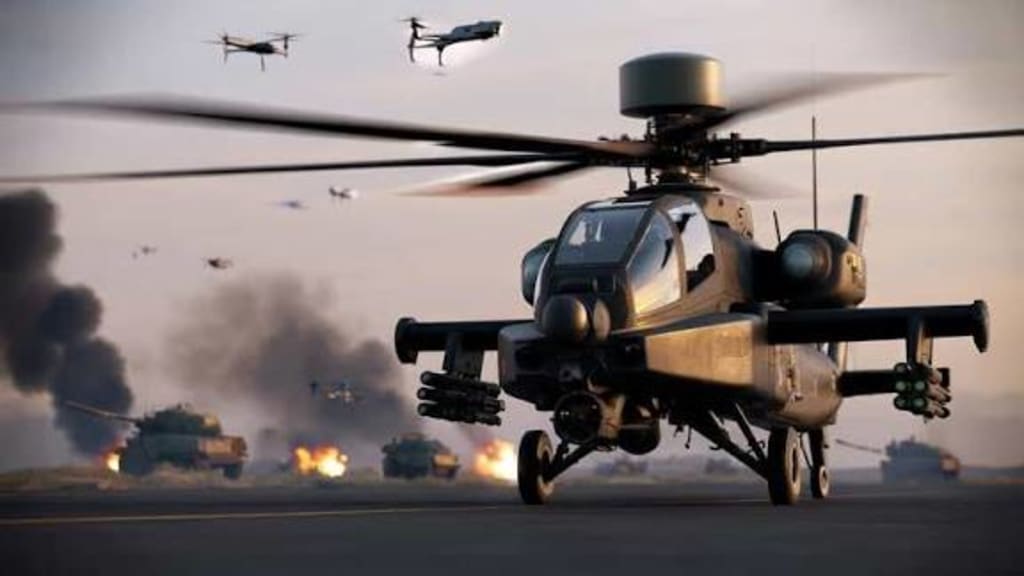
More than half a century after its original concept was born during the Cold War, the AH-64 Apache remains one of the most feared and effective combat helicopters in the world. First introduced into service in the 1980s, the Apache has continually evolved through modernization programs that have kept it at the cutting edge of modern warfare. Defense experts now say the aircraft is likely to remain a central pillar of battlefield operations well into the 2040s and beyond.
Designed by Boeing as a heavily armed, survivable platform capable of hunting tanks and supporting ground troops, the Apache was originally built to counter massive armored formations in Europe. Yet its adaptability has allowed it to thrive in every conflict environment since — from desert warfare in the Middle East to urban counterinsurgency operations and high-intensity conventional conflicts.
A Combat Record That Shaped Its Reputation
The Apache’s reputation was cemented during the 1991 Gulf War, when U.S. and allied forces used it to devastating effect against Iraqi armored units and air defense systems. Flying low and using advanced sensors to strike from standoff range, Apache crews destroyed hundreds of vehicles with minimal losses. Since then, the helicopter has seen continuous service in Afghanistan, Iraq, and Syria, proving equally effective against insurgent forces and irregular fighters.
What makes the Apache exceptional is its blend of firepower, survivability, and situational awareness. Armed with a 30mm chain gun, Hellfire missiles, and rockets, it can engage targets day or night and in nearly all weather conditions. Its composite armor and redundant flight systems allow it to absorb damage that would cripple other aircraft, giving crews confidence in the most hostile environments.
Constant Modernization Keeps It Relevant
Rather than replacing the Apache outright, military planners have chosen to upgrade it continuously. The newest AH-64E variant incorporates more powerful engines, improved rotor blades, digital cockpits, and advanced networking systems. These upgrades allow the helicopter to share data with drones, ground units, and fighter aircraft in real time.
One of the most significant innovations is the Apache’s ability to control unmanned aerial vehicles directly from the cockpit. This capability extends the helicopter’s reach far beyond the horizon, enabling crews to scout enemy positions using drones before engaging targets themselves. In modern warfare, where information dominance is critical, this manned-unmanned teaming gives the Apache a unique advantage.
Global Demand and Strategic Value
Today, more than a dozen countries operate Apache helicopters, including the United States, the United Kingdom, Israel, Saudi Arabia, and India. The aircraft’s export success reflects its reputation as a reliable and battle-tested platform. Many nations see the Apache not only as a weapon system but as a strategic deterrent — a visible symbol of advanced military capability.
Defense analysts note that replacing the Apache would require a new platform capable of matching its versatility while integrating next-generation technologies such as artificial intelligence and long-range precision weapons. So far, no alternative has demonstrated the same balance of maturity, performance, and survivability.
Adapting to New Threats
Modern battlefields are becoming more dangerous for helicopters due to the spread of portable air defense systems and advanced radar-guided missiles. Yet the Apache continues to adapt. New electronic warfare suites, radar warning receivers, and countermeasure systems are being installed to help crews detect and evade threats.
The helicopter’s upgraded radar and sensor package allows it to strike targets from longer distances, reducing exposure to enemy fire. In high-intensity conflict scenarios, Apaches are now envisioned as part of a networked strike force, working alongside drones, artillery, and fixed-wing aircraft rather than operating alone.
Why It Will Endure
The Apache’s endurance is rooted in a simple principle: it was designed with growth in mind. Its airframe can accept new sensors, weapons, and software without needing complete replacement. This modular approach makes it far more economical to modernize than to build an entirely new combat helicopter from scratch.
Military planners also point out that while future concepts such as autonomous attack drones and next-generation tilt-rotor aircraft are promising, they are still unproven in large-scale combat. Until those systems mature, the Apache remains a trusted and lethal option.
A Battlefield Icon for the Future
Fifty years after its creation, the Apache is no longer just a product of Cold War thinking. It has become a symbol of adaptability in military aviation. From tank-hunting missions to counterterrorism operations and now to integrated network warfare, the helicopter continues to evolve alongside the threats it faces.
As conflicts become more complex and technologically driven, the Apache’s combination of human judgment, precision firepower, and digital connectivity ensures it will remain a dominant force on battlefields for decades to come. Few weapons systems in history can claim such longevity — and fewer still can claim to remain relevant in every generation of war.
About the Creator
Fiaz Ahmed
I am Fiaz Ahmed. I am a passionate writer. I love covering trending topics and breaking news. With a sharp eye for what’s happening around the world, and crafts timely and engaging stories that keep readers informed and updated.
Keep reading
More stories from Fiaz Ahmed and writers in The Swamp and other communities.
Authoritarians, Strongmen and Dictators: Who Is on Trump’s “Board of Peace”?
As former U.S. president Donald Trump promotes what he calls a personal “Board of Peace,” critics and analysts are scrutinizing the unusual list of leaders he claims could help end major global conflicts. The group, according to Trump’s own statements and campaign rhetoric, consists largely of strongmen and authoritarian rulers — figures he says he can personally influence through direct relationships and deal-making instincts. Rather than relying on traditional multilateral institutions or long-standing diplomatic frameworks, Trump has repeatedly argued that peace can be achieved through one-on-one negotiations with leaders he considers “tough but practical.” This approach challenges decades of U.S. foreign policy doctrine that emphasizes alliances, human rights standards, and institutional diplomacy. A Circle of Strong Leaders Among the most prominent figures Trump has referenced is Vladimir Putin, whom he has described in the past as “smart” and “strong.” Trump claims that a direct line of communication with Moscow could bring rapid de-escalation in the Russia-Ukraine war. However, critics argue that relying on personal rapport with a leader accused of war crimes risks legitimizing aggression rather than curbing it. Another central figure in Trump’s vision is Kim Jong-un. Trump famously met Kim three times during his presidency, the first sitting U.S. leader to do so. He continues to point to these meetings as proof that dialogue with isolated regimes is possible. Supporters say the encounters reduced immediate tensions on the Korean Peninsula, while skeptics note that North Korea has since expanded its nuclear and missile programs. China’s president Xi Jinping is also often mentioned as someone Trump believes he can “work with” to stabilize global affairs. Trump argues that his prior relationship with Xi could help prevent further confrontation over Taiwan and trade. Analysts, however, caution that Beijing’s strategic ambitions and authoritarian governance style make personal diplomacy an unreliable tool for conflict prevention. Regional Power Brokers In Europe, Trump has shown admiration for Hungary’s prime minister Viktor Orbán, a nationalist leader criticized for weakening democratic institutions. Orbán has positioned himself as a mediator between Russia and the West, and Trump has praised his leadership style as decisive and patriotic. This has fueled concern among European officials that Trump’s peace vision aligns more with illiberal governments than democratic partners. In the Middle East, Saudi Arabia’s crown prince Mohammed bin Salman has also been cited by Trump as a key figure capable of stabilizing regional conflicts. Trump has defended the Saudi leadership despite international criticism over human rights and the war in Yemen, emphasizing economic ties and security cooperation instead. A Different Philosophy of Peace Trump’s “Board of Peace” reflects a worldview that prioritizes power politics over values-based diplomacy. His approach suggests that conflicts are best resolved through direct bargaining between dominant leaders rather than through institutions like the United Nations or NATO. In this model, personal trust and perceived strength replace formal agreements and legal frameworks. Supporters argue that this method can cut through bureaucracy and produce quick results. They cite Trump’s role in the Abraham Accords between Israel and several Arab states as evidence that unconventional diplomacy can succeed. They also claim that engaging authoritarian leaders does not mean endorsing them, but recognizing political realities. Opponents see serious risks. By centering peace efforts on authoritarian figures, they warn that Trump’s strategy could marginalize democratic allies and weaken international norms. Human rights groups fear that authoritarian leaders would gain legitimacy without being pressured to reform. Diplomats also question whether personal relationships can survive leadership changes or shifting geopolitical interests. Global Reaction International responses to the idea of a “Board of Peace” have been mixed. Some governments welcome any initiative that promises to reduce conflict, especially amid wars in Ukraine and Gaza. Others see it as a symbolic concept with little practical structure or accountability. European officials privately express concern that such a board would bypass NATO and EU mechanisms. Asian allies worry that informal diplomacy could lead to unpredictable shifts in policy toward China and North Korea. Meanwhile, authoritarian states appear open to the idea, viewing it as recognition of their central role in shaping global outcomes. Conclusion Trump’s proposed “Board of Peace” is less an institution than a reflection of his personal diplomatic style — one that favors strong leaders, direct negotiation, and transactional deals. Whether this approach could truly end major wars or instead empower authoritarianism remains one of the most contentious questions in contemporary global politics. What is clear is that it represents a sharp departure from traditional U.S. foreign policy and a redefinition of how peace might be pursued in an era of rising strongmen.
By Fiaz Ahmed about 16 hours ago in The Swamp
The Saddest Thing - The Billionaires Who Rule America Aren't Even Enjoying Themselves
This single post says more about our ruling class than a thousand policy papers. The saddest thing about today's system is that the men robbing the rest of us - sabotaging our economic prospects, our pensions, our access to affordable healthcare - are not even happy.
By Scott Christenson🌴13 days ago in The Swamp
Japan’s New Direction: Why Rare Earth Cooperation with the United States Matters
In a time when the world feels uncertain and divided, economic security has become as important as military strength. After being reelected as Japan’s leader, Sanae Takaichi has made it clear that her government wants stronger cooperation with the United States on rare earth development. This decision may sound technical, but its impact could shape the future of technology, global trade, and international relations.
By dua fatimaa day ago in The Swamp


Comments
There are no comments for this story
Be the first to respond and start the conversation.