
For an Immigration Trap on a Bridge to Canada, an Encouraging Sign
Formal / News Style Authorities and communities work to guide migrants toward safer, legal crossings Outreach and education aim to reduce risks at a historically dangerous border point 🔹 Neutral & Informative Efforts on both sides of the border highlight safer alternatives for asylum seekers Collaborative programs show promise in preventing irregular and hazardous crossings 🔹 Impactful New initiatives offer hope for migrants navigating perilous border routes

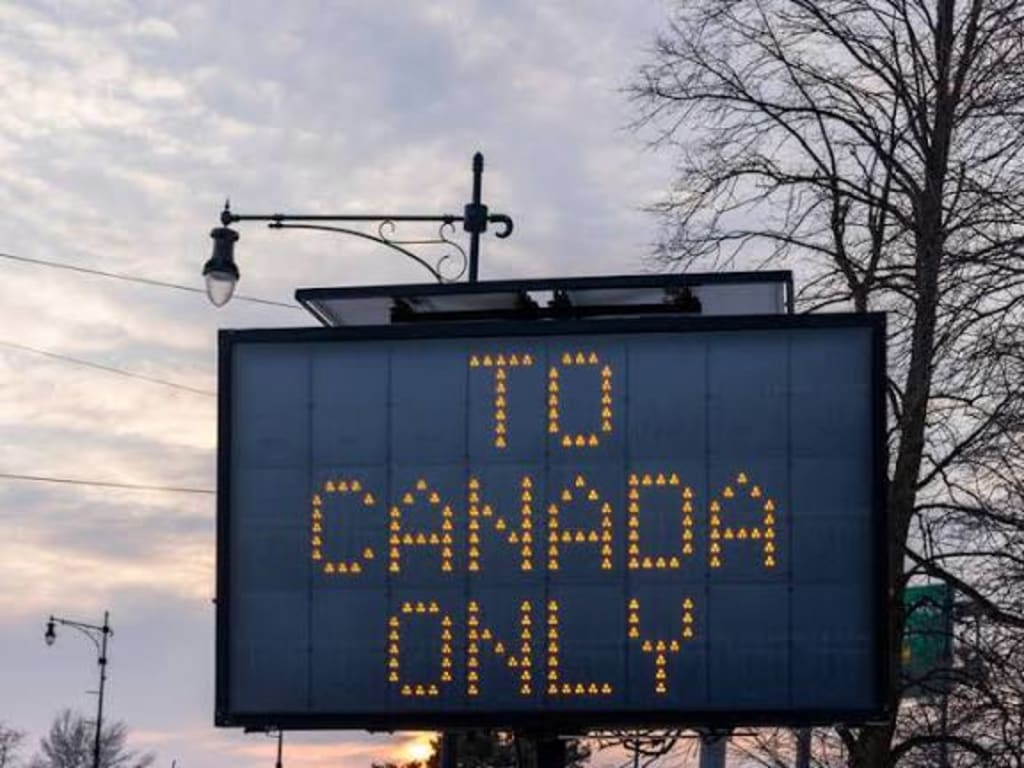
Authorities along the Canada–U.S. border are closely monitoring a section of the Rainbow Bridge that has long been associated with attempts at irregular migration. In recent months, officials and community groups have noticed developments that suggest a potential shift toward safer, more regulated crossings and improved support for vulnerable migrants.
The bridge, which connects Niagara Falls, New York with Niagara Falls, Ontario, has historically been a site where migrants seeking asylum in Canada attempted dangerous crossings, often in precarious conditions. In response, Canadian and U.S. authorities have increased surveillance, reinforced law enforcement presence, and introduced programs to educate potential migrants about safe, legal routes.
A Risky Journey
Migrants attempting to cross the bridge irregularly often face significant risks, including exposure to harsh weather, physical injury, and legal consequences. Many are fleeing conflict, persecution, or economic hardship in their home countries, driven by the hope of finding safety and opportunity in Canada.
Despite increased border enforcement, some continue to take dangerous paths, prompting concern from both law enforcement and humanitarian organizations. In recent years, incidents of arrests, injuries, and near-misses have highlighted the need for both stricter oversight and safer alternatives.
Encouraging Developments
Officials report that outreach efforts and new policies are showing promise. Canadian immigration authorities have expanded programs to inform potential asylum seekers about legitimate channels, such as pre-arrival registration, legal aid services, and temporary resident visas.
Community organizations, including refugee support networks in Ontario and New York, are collaborating to provide guidance, shelters, and legal resources. Their efforts aim to reduce the temptation of unsafe crossings and ensure that migrants understand the requirements and protections available through official channels.
“Education is a critical tool,” said a spokesperson for a local refugee support group. “When people know the legal pathways and the risks of irregular crossings, they are more likely to take safer steps toward seeking asylum.”
Law Enforcement Perspective
Authorities on both sides of the border continue to prioritize safety and deterrence. U.S. Customs and Border Protection (CBP) and the Canada Border Services Agency (CBSA) have enhanced patrols and surveillance technologies to monitor bridge approaches and detect irregular crossings.
“While enforcement is necessary, we also recognize the importance of outreach and information,” said a CBSA official. “We want migrants to understand that crossing safely through legal channels is the best way to protect themselves and their families.”
Regional Impact
The Niagara region has witnessed fluctuating migration patterns over the past decade, with local economies, emergency services, and law enforcement adapting to changing demands. Officials emphasize that coordinated efforts between U.S. and Canadian authorities, along with community organizations, are essential to managing the flow of people while minimizing risks and disruptions.
The presence of volunteers, legal counselors, and educational campaigns reflects a growing recognition that humane, well-informed approaches can be as effective as enforcement in reducing dangerous crossings.
Looking Forward
Experts suggest that continued collaboration between governments and community organizations could further reduce the risks associated with irregular migration at border points like the Rainbow Bridge. By combining legal guidance, outreach, and vigilant monitoring, authorities aim to create an environment where migrants are encouraged to use safe, regulated paths rather than resorting to hazardous crossings.
While challenges remain, the recent signs of improved coordination and outreach offer hope that the dangerous cycle of irregular border attempts can be mitigated, providing safer outcomes for those seeking refuge in Canada.A Symbol of Hope
For now, the Rainbow Bridge is showing what cooperation can achieve. By combining enforcement with education and humanitarian assistance, authorities are slowly transforming a dangerous crossing into a place of redirection rather than risk.
“It’s not perfect,” said a volunteer advocate, “but fewer people are putting their lives in danger. That alone is progress.”
The bridge that once symbolized an immigration trap may now stand as an example of how compassion and coordination can reshape border realities—offering hope that safer solutions are possible even in the most challenging migration corridors.
About the Creator
Fiaz Ahmed
I am Fiaz Ahmed. I am a passionate writer. I love covering trending topics and breaking news. With a sharp eye for what’s happening around the world, and crafts timely and engaging stories that keep readers informed and updated.
Keep reading
More stories from Fiaz Ahmed and writers in The Swamp and other communities.
US‑Iran Talks Live: Tehran Says Understanding on Main Principles Reached
Negotiators from the United States and the Iran concluded a second round of indirect diplomatic talks in Geneva on Tuesday, with Tehran announcing an “understanding on the main principles” of a possible agreement. While officials cautiously described the progress as a step forward, key disagreements remain and further work is required before any formal deal can be finalized. The discussions, mediated by representatives from Oman, brought together Iranian and U.S. envoys in a bid to ease longstanding tensions over Iran’s nuclear program. Talks resumed amid mounting international concern about regional security and the risk of escalation, particularly given recent military posturing in the Middle East. A Tentative Understanding Iranian Foreign Minister Abbas Araghchi told reporters after the Geneva session that Tehran and Washington had reached an understanding on core principles that could underpin future negotiations. According to Araghchi, the discussions were “very serious” and represented a meaningful step in a diplomatic process that has stalled on several occasions. Araghchi described the relative progress as laying the groundwork “for a deal,” though he emphasized that significant details remained unresolved. Iranian officials did not publicly disclose the specifics of the principles agreed, but said both sides were committed to continuing dialogue. The U.S. delegation, which participated in the negotiations through indirect channels, has not yet issued a detailed statement on the outcome. However, officials have previously stressed Washington’s insistence on limiting Tehran’s nuclear activities — in particular, curbing enrichment levels — in exchange for sanctions relief. The Guardian Regional Tensions and Diplomacy The talks in Geneva followed earlier rounds of indirect meetings in Muscat and Rome, which also sought to build trust between the two sides. Experts say these mediated discussions aim to narrow the gaps on contentious issues such as uranium enrichment, the scope of international inspections, and economic sanctions. The negotiations are unfolding against a backdrop of heightened military activity. In recent weeks, Iran conducted naval drills near the Strait of Hormuz, a critical artery for global oil shipping, and temporarily restricted transit through the waterway — moves that underscored Tehran’s ability to leverage its strategic geography. At the same time, the U.S. has maintained a strong military presence in the region, including deployments of carrier strike groups intended to deter any escalation. These deployments have added urgency to diplomatic efforts, which both sides say they hope will prevent conflict. Reuters Oil Markets and Economic Impact The diplomatic signals from Geneva had immediate repercussions in global markets. Crude oil futures fell after news of progress in the talks, as traders interpreted the developments as reducing the risk of major supply disruptions tied to geopolitical conflict. However, analysts caution that oil markets remain sensitive to both diplomatic and military activity in the Persian Gulf region, and that any breakdown in negotiations could quickly reverse the recent price movement. Remaining Obstacles Despite the reported understanding on guiding principles, major obstacles remain. Iranian officials continue to assert their right to uranium enrichment under the Non‑Proliferation Treaty, a point of contention for U.S. negotiators. Washington has also pushed for broader limitations on Iran’s ballistic missile program and support for allied militia groups — demands Tehran has been reluctant to accept. In addition, trust between the two nations is fragile. Iranian officials have repeatedly criticized what they describe as inconsistent messaging from U.S. political actors over the seriousness of Washington’s negotiating intentions, and some in Tehran warn that progress is conditional on the United States engaging in “fair, equitable” dialogue. What Comes Next Both sides indicated that their diplomatic teams will return to the drawing board to refine proposals and work on the technical language of a possible agreement. No date has yet been set for a third round of talks, underscoring the difficulty of translating an understanding of principles into a draft treaty text or framework. For now, the partial breakthrough offers a cautious note of optimism for diplomats and regional leaders who see negotiation as a path to stability. Yet analysts say the long road ahead will require compromise, patience, and careful management of both diplomatic and military pressures if the goal of a comprehensive agreement is to be realized.
By Fiaz Ahmed about 19 hours ago in The Swamp
Why Black History Matters in America?
The United States of America is celebrating their 250th anniversary in 2026. I'm proud to be an American and as someone who was born here, I wouldn't imagine myself living anywhere else. This is a country where opportunities are possible. Where anyone can be successful in anything they desire to do. Equality, community, and togetherness are the backbones of what America is and should be about. However, we have an administration who wants to erase and disregard those who have made positive, meaningful impacts in our country, specifically Black figures, such as Martin Luther King, Jr., Rosa Parks, and Maya Angelou. President Trump and his administration have been constantly complaining and fighting against what they call the "Woke agenda". They use this excuse as a distraction from other issues they refuse to address, such as the high cost of living, climate change, and inflation. That equality is dividing America, when in reality, it's bringing us together. Being woke is not tied to a specific political party. No matter where you stand on the political spectrum, you can still care about other people and their plights. Compassion and empathy for others isn't tied to a political party, either. We were taught as children to treat others the way we want to be treated and not judge others because they're different from us. Caring about others isn't a personal attack on your beliefs. It doesn't make you any less of a person. People who are easily offended over African American figures, past or present, or anything related to it, are grasping at straws. Current and future generations need to know who people like Harriet Tubman and Shirley Chisholm were, especially in the classroom. Black History is part of American History. It should be recognized, not hidden or forgotten. Besides, you can't shield children from everything, just because your feelings are easily hurt.
By Mark Wesley Pritchard 16 days ago in The Swamp
The Pride Flag and the Diversion
For nearly a decade, the LGBTQIA Pride Flag rippled in the wind at Christopher Park, a kaleidoscope of color staked into the soil of America’s first national monument to LGBTQIA+ liberation. That flag came down this week. Federal officials, citing new guidance from the Trump Administration, silently lowered the rainbow flag from its pole across the street from the Stonewall Inn. The birthplace of the modern gay rights movement now flies only the United States flag.
By Tim Carmichael7 days ago in Pride


Comments
There are no comments for this story
Be the first to respond and start the conversation.