
🇬🇳 Guinea Junta Chief Wins Presidential Election by Landslide — What It Means for the Country
From military ruler to elected leader, Mamady Doumbouya’s sweeping victory raises fresh questions about democracy, opposition rights, and Guinea’s political future

Guinea’s political landscape has undergone a dramatic shift as General Mamady Doumbouya, the country’s junta leader, has won the presidential election by a landslide, according to provisional results released on December 30, 2025. The election, held on December 28, marked the first presidential vote since Doumbouya led a military coup in 2021 that ousted then-President Alpha Condé. The outcome—endorsing Doumbouya with 86.72 % of the vote—raises important questions about democratic transition, political freedoms, and Guinea’s future direction. �
Wikipedia +1
🗳️ Record Victory in a Historic Vote
According to official figures from the General Directorate of Elections, General Doumbouya secured 86.72 % of the vote, far surpassing the threshold required to avoid a runoff and effectively confirming his presidency in the first round. The closest challenger, Yéro Baldé, from the Democratic Front of Guinea, received just 6.51 %. Turnout was reported around 80.95 % of the roughly 6.7 million registered voters—a high participation rate by official accounts, despite calls from some opposition factions to boycott the election. �
Wikipedia +1
This landslide triumph follows a controversial campaign in which major opposition leaders were barred from standing, and more than 50 political parties were dissolved. International observers and civil society groups have criticized the environment under which the vote took place. �
AP News
📜 From Coup Leader to Elected President
General Mamady Doumbouya first came to power on September 5, 2021, when he led a military faction that overthrew President Alpha Condé. At the time, Doumbouya positioned the coup as a necessary action against corruption, mismanagement, and poor governance, promising a swift return to constitutional order. He was sworn in as interim president and head of the military National Committee for Reconciliation and Development. �
Wikipedia
Originally, Doumbouya pledged not to run in future elections as part of a transition to civilian rule. He later backtracked on that promise after a constitutional referendum in September 2025 allowed military officials to contest elections and extended the presidential term from five to seven years. These changes were widely seen as tailored to favour his candidacy. �
Reuters
⚖️ Controversy and Criticism
While official authorities described the election as a legitimate step toward democracy, numerous critics have described the process as deeply flawed.
🚫 Barred Opposition and Limited Competition
Several prominent opposition figures, including former President Alpha Condé and other well-known political leaders, were excluded from competing due to residency, age, or technical disqualifications under the new electoral rules. Additionally, many opposition parties were dissolved, leaving Doumbouya facing only minor rivals. �
Wikipedia
🚨 Restrictions on Civil Society and Media
Human rights organizations and the United Nations have raised concerns about restrictions on freedoms, including limits on protests, media coverage, and freedom of assembly during the campaign period. Some opposition candidates have alleged the vote was marred by irregularities, including limited access for their representatives at counting centres and allegations of ballot manipulation in some areas. �
modernghana.com
📉 Boycotts and Skepticism
Groups like the National Front for the Defence of the Constitution characterized the election as an “electoral charade,” asserting that a large swath of the population could have actively refused to participate, contrary to official turnout figures. Some voters and civic groups expressed skepticism about the fairness and transparency of the process. �
modernghana.com
🎯 What Doumbouya’s Leadership Means for Guinea
🇬🇳 Consolidation of Control
Doumbouya’s victory effectively legitimizes his rule after four years of military-led governance, transitioning him from a coup leader to an elected president. Supporters argue that this brings political stability and continuity after years of uncertainty, and that Doumbouya’s leadership could help unify the country. �
Reuters
💰 Economic Prospects
Guinea is rich in natural resources—particularly bauxite and iron ore. The recently launched Simandou iron ore project, one of the world’s largest untapped deposits, is central to the junta’s economic agenda. Doumbouya’s government has also pursued resource nationalism, including reclaiming mining assets and exerting greater state control over critical sectors, moves some analysts view as asserting local economic benefit but also raising investor concerns. �
Reuters
🧑⚖️ Challenges Ahead
Despite economic potential, Guinea faces deep challenges: poverty, food insecurity, and political fractures persist. Civil liberties and democratic norms remain contentious topics, with domestic critics and international observers urging greater political openness and respect for human rights. How Doumbouya’s government approaches these issues will shape Guinea’s domestic and regional standing in the years ahead. �
Reuters
📌 Looking Forward
As the Supreme Court has up to eight days to validate the election results, there is still a procedural window for formal challenges. However, if validated, Doumbouya will begin a seven-year term with considerable authority over Guinea’s political and economic trajectory. �
Reuters
This election marks a pivotal moment for Guinea: a nation rich in resources yet grappling with governance challenges. The landslide victory of a former junta leader underscores persistent tensions between democratic aspirations and political realities on the African continent.
About the Creator
Keep reading
More stories from Aarif Lashari and writers in The Swamp and other communities.
Kosovo Prime Minister Wins Snap Election to End Political Deadlock
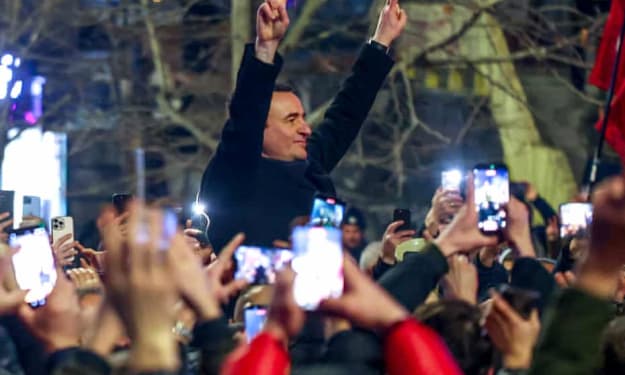
In a dramatic turn for one of Europe’s youngest nations, Kosovo’s Prime Minister Albin Kurti and his Vetevendosje (Self‑Determination) party have secured a decisive victory in the country’s snap parliamentary election, potentially ending a year‑long political deadlock that had paralyzed the government and stalled crucial reforms. The result marks a significant moment for Kosovo’s domestic politics and its aspirations on the European stage. �
By Aarif Lashari2 months ago in The Swamp
Why Black History Matters in America?
The United States of America is celebrating their 250th anniversary in 2026. I'm proud to be an American and as someone who was born here, I wouldn't imagine myself living anywhere else. This is a country where opportunities are possible. Where anyone can be successful in anything they desire to do. Equality, community, and togetherness are the backbones of what America is and should be about. However, we have an administration who wants to erase and disregard those who have made positive, meaningful impacts in our country, specifically Black figures, such as Martin Luther King, Jr., Rosa Parks, and Maya Angelou. President Trump and his administration have been constantly complaining and fighting against what they call the "Woke agenda". They use this excuse as a distraction from other issues they refuse to address, such as the high cost of living, climate change, and inflation. That equality is dividing America, when in reality, it's bringing us together. Being woke is not tied to a specific political party. No matter where you stand on the political spectrum, you can still care about other people and their plights. Compassion and empathy for others isn't tied to a political party, either. We were taught as children to treat others the way we want to be treated and not judge others because they're different from us. Caring about others isn't a personal attack on your beliefs. It doesn't make you any less of a person. People who are easily offended over African American figures, past or present, or anything related to it, are grasping at straws. Current and future generations need to know who people like Harriet Tubman and Shirley Chisholm were, especially in the classroom. Black History is part of American History. It should be recognized, not hidden or forgotten. Besides, you can't shield children from everything, just because your feelings are easily hurt.
By Mark Wesley Pritchard 17 days ago in The Swamp



Comments
There are no comments for this story
Be the first to respond and start the conversation.