
Nvidia to Sell Meta Millions of AI Chips in Landmark Multiyear Deal
Strategic partnership underscores intensifying AI race as tech giants double down on computing power
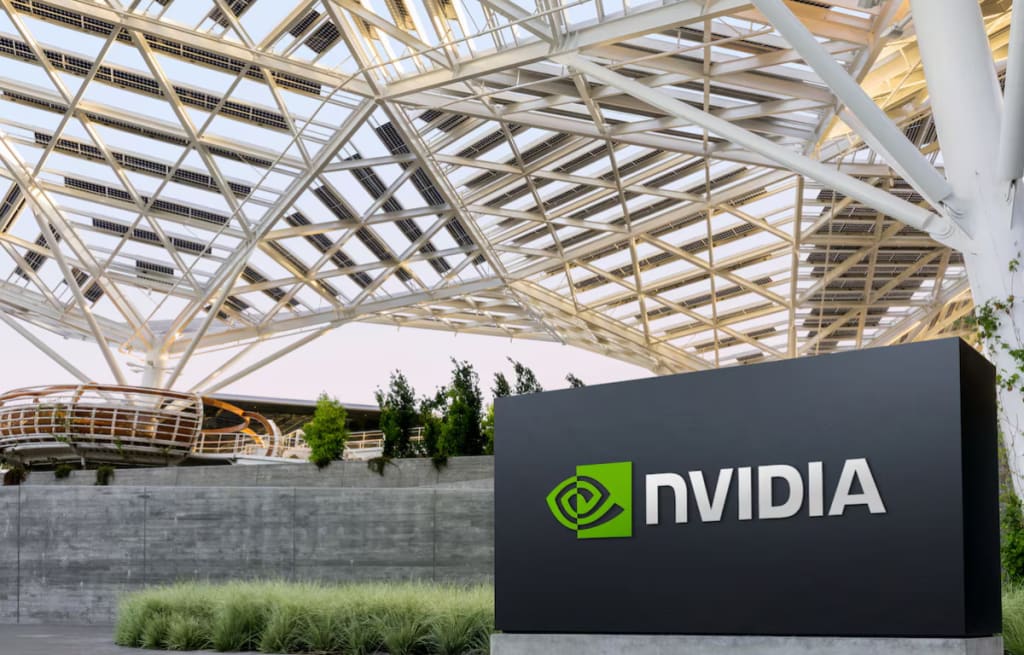
In a move that highlights the escalating race to dominate artificial intelligence, Nvidia is set to supply Meta with millions of advanced AI chips under a multiyear agreement. The deal marks one of the most significant hardware commitments in the ongoing AI boom and reflects how crucial computing power has become in shaping the future of technology.
As AI systems grow more sophisticated — powering chatbots, recommendation engines, image generation, and next-generation virtual worlds — the demand for specialized chips has surged dramatically. Nvidia, long known for its graphics processing units (GPUs), has positioned itself at the center of this transformation.
The Strategic Importance of AI Chips
Modern AI models require enormous computational resources. Training large-scale language models, recommendation systems, and generative AI tools demands vast clusters of GPUs operating in parallel.
Nvidia’s high-performance chips have become the gold standard for AI workloads. Their architecture allows massive data processing at speeds traditional CPUs cannot match.
For Meta, which operates platforms including Facebook, Instagram, WhatsApp, and invests heavily in AI-driven content ranking and immersive digital environments, securing long-term access to these chips is essential.
The multiyear structure of the deal signals something critical: AI infrastructure is no longer a short-term experiment. It is foundational.
Why Meta Needs Massive Computing Power
Meta has publicly committed to expanding its AI capabilities across multiple fronts:
Personalized content recommendations
Advanced advertising algorithms
AI-powered assistants
Generative content tools
Metaverse development
Each of these initiatives requires increasingly complex models that must be trained on massive datasets.
Additionally, AI competition has intensified among major technology firms. Companies are racing to build larger and more capable models to improve user engagement and develop new revenue streams.
Without sufficient computing capacity, innovation slows.
By securing millions of Nvidia chips over several years, Meta is effectively locking in the raw processing power needed to stay competitive.
Nvidia’s Expanding Dominance
Nvidia has emerged as one of the biggest winners of the AI revolution. Demand for its GPUs has outpaced supply, driving record revenues and surging investor interest.
Its dominance stems from:
Specialized GPU architecture optimized for AI
Mature software ecosystem
CUDA development platform integration
Long-standing relationships with hyperscale data center operators
As AI adoption accelerates across industries — from healthcare to finance to autonomous vehicles — Nvidia’s chips remain central to large-scale deployments.
The Meta agreement further strengthens Nvidia’s position as the backbone of global AI infrastructure.
Data Centers: The Physical Foundation of AI
Behind the headlines lies a massive expansion of data centers.
To house millions of GPUs, Meta must build or upgrade facilities capable of handling:
Enormous electricity demand
Advanced cooling systems
High-speed networking
Redundant power supplies
AI chips consume significant energy, especially when operating in large clusters. This has sparked broader discussions about sustainability and grid capacity.
Meta has pledged to power its operations with renewable energy where possible. However, the sheer scale of AI computing means infrastructure planning will play a central role in fulfilling environmental commitments.
Competitive Implications
This agreement sends a clear message to competitors.
Other technology giants are also securing long-term chip supply to avoid shortages. The global scramble for AI hardware has created supply bottlenecks, making advance procurement a strategic necessity.
Locking in a multiyear deal:
Reduces supply uncertainty
Stabilizes pricing structures
Provides roadmap clarity for AI deployment
Signals confidence in long-term AI growth
For Meta, the deal ensures it won’t be left behind in the next wave of AI breakthroughs.
For Nvidia, it guarantees sustained demand and revenue visibility.
Financial and Market Impact
Investors closely monitor AI-related capital expenditures. Large chip orders often signal aggressive growth strategies.
While exact financial details of the deal may not be fully disclosed, millions of AI chips represent billions of dollars in hardware investment over time.
Such commitments illustrate how AI spending is transitioning from experimentation to industrial-scale deployment.
This could have ripple effects:
Semiconductor supply chain expansion
Increased manufacturing capacity investments
New partnerships in chip fabrication
Greater geopolitical focus on semiconductor independence
Governments worldwide are already prioritizing semiconductor manufacturing as a matter of economic security.
The AI Arms Race Intensifies
Artificial intelligence is rapidly becoming the defining technological battleground of this decade.
Companies that control computing infrastructure gain advantages in:
Model training speed
Research innovation
Product iteration cycles
Market responsiveness
By securing a long-term pipeline of Nvidia chips, Meta strengthens its ability to innovate at scale.
The agreement also underscores how AI development now depends heavily on hardware partnerships. Software breakthroughs are increasingly tied to physical chip availability.
Challenges Ahead
Despite the optimism, challenges remain.
1. Energy Consumption
AI data centers require immense power. Managing costs and sustainability will be critical.
2. Supply Chain Risks
Global semiconductor production remains concentrated in specific regions, exposing companies to geopolitical tensions.
3. Rapid Technological Change
AI hardware evolves quickly. Companies must balance current investments with flexibility for future upgrades.
4. Regulatory Scrutiny
As AI systems grow more influential, regulators may impose new rules affecting deployment and infrastructure.
Meta and Nvidia must navigate these complexities while maintaining growth momentum.
A Defining Moment for Tech Infrastructure
The Nvidia–Meta multiyear chip deal reflects more than a supply agreement — it symbolizes the industrialization of AI.
Artificial intelligence is no longer confined to research labs. It is embedded in advertising systems, content moderation, search tools, enterprise software, and emerging virtual environments.
Massive hardware commitments indicate that tech giants are preparing for sustained AI expansion, not temporary hype.
As millions of Nvidia chips power Meta’s next generation of AI systems, the broader technology ecosystem will feel the impact — from data center construction to semiconductor manufacturing.
The race for AI supremacy is accelerating, and the companies that secure the infrastructure today may define the digital landscape tomorrow.
In the age of artificial intelligence, computing power is currency — and this deal ensures that both Nvidia and Meta remain among the wealthiest players in the game.
About the Creator
Why Black History Matters in America?
The United States of America is celebrating their 250th anniversary in 2026. I'm proud to be an American and as someone who was born here, I wouldn't imagine myself living anywhere else. This is a country where opportunities are possible. Where anyone can be successful in anything they desire to do. Equality, community, and togetherness are the backbones of what America is and should be about. However, we have an administration who wants to erase and disregard those who have made positive, meaningful impacts in our country, specifically Black figures, such as Martin Luther King, Jr., Rosa Parks, and Maya Angelou. President Trump and his administration have been constantly complaining and fighting against what they call the "Woke agenda". They use this excuse as a distraction from other issues they refuse to address, such as the high cost of living, climate change, and inflation. That equality is dividing America, when in reality, it's bringing us together. Being woke is not tied to a specific political party. No matter where you stand on the political spectrum, you can still care about other people and their plights. Compassion and empathy for others isn't tied to a political party, either. We were taught as children to treat others the way we want to be treated and not judge others because they're different from us. Caring about others isn't a personal attack on your beliefs. It doesn't make you any less of a person. People who are easily offended over African American figures, past or present, or anything related to it, are grasping at straws. Current and future generations need to know who people like Harriet Tubman and Shirley Chisholm were, especially in the classroom. Black History is part of American History. It should be recognized, not hidden or forgotten. Besides, you can't shield children from everything, just because your feelings are easily hurt.
By Mark Wesley Pritchard 17 days ago in The Swamp
FTC Warns Apple Over Alleged Suppression of Conservative News in Apple News App
The United States Federal Trade Commission (FTC) has issued a formal warning to Apple Inc., alleging that its widely used news aggregation platform, Apple News, may be systematically sidelining conservative news sources in favor of left‑leaning outlets. This could potentially violate federal consumer protection statutes.
By Ayesha Lashari6 days ago in The Swamp



Comments
There are no comments for this story
Be the first to respond and start the conversation.