
House Votes to End Government Shutdown, Buys Time for ICE Talks
Legislative Action Postpones a Government Shutdown and Paves the Way for Continued Debates Over Immigration and Enforcement Policies
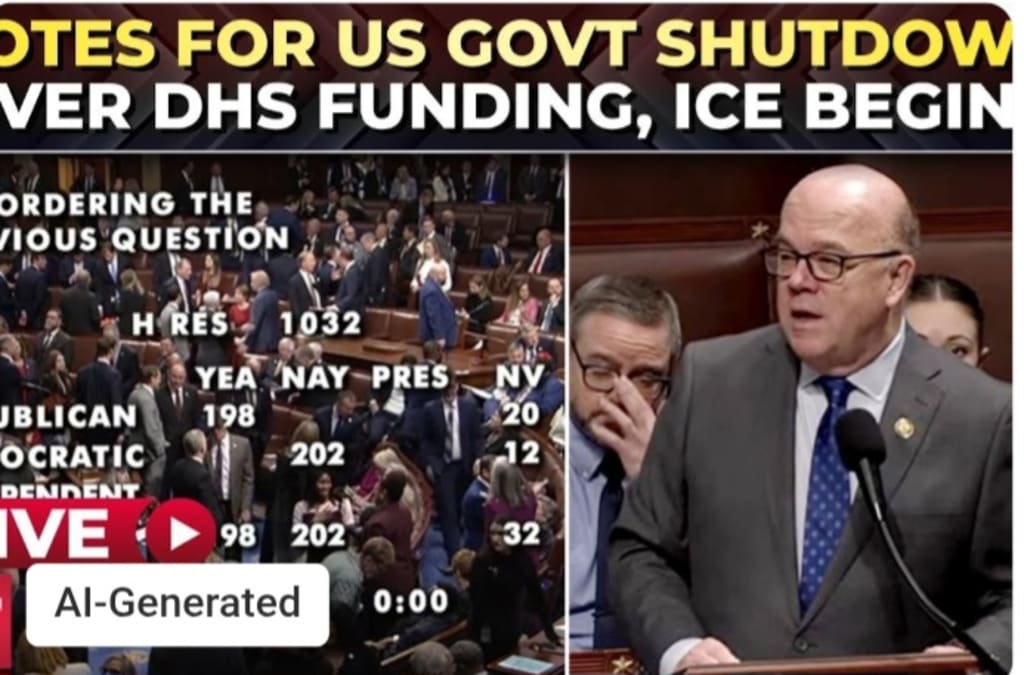
In a decisive move that has temporarily halted the threat of a government shutdown, the U.S. House of Representatives has voted to fund government operations through the next few weeks, ensuring that essential services remain operational while Congress grapples with deeper policy debates. The recent vote provides a temporary reprieve for both federal workers and the American public, buying crucial time for discussions about the controversial role of Immigration and Customs Enforcement (ICE) in the broader context of U.S. immigration and security policies.
The Immediate Impact of the Vote
The government shutdown, which had loomed large as a possibility, was averted when the House of Representatives passed a stopgap funding bill. This short-term solution, often referred to as a Continuing Resolution (CR), allows government operations to continue for a limited period. Without such legislation, federal agencies would have been forced to close down, causing widespread disruptions to services, government employees, and contractors.
The vote occurred in the context of mounting debates over how to handle border security, immigration reform, and the future of agencies like ICE. ICE has become a flashpoint in the national discussion surrounding immigration enforcement, particularly under the leadership of the current administration.
ICE and Its Role in the Debate
At the heart of the policy discussions that this vote has postponed lies the role of ICE. The agency, which was established in 2003 as part of the Department of Homeland Security (DHS), is responsible for enforcing immigration laws within the United States, including arresting individuals who are in the country illegally. However, the agency has been at the center of intense criticism due to its aggressive tactics, particularly under the Trump administration, which saw a surge in deportations and detentions.
Many advocates for immigrant rights view ICE as a symbol of the government's harsh approach to immigration. The agency’s practices, including the separation of families at the U.S.-Mexico border, have been widely condemned by civil rights organizations and some political leaders. Conversely, supporters of ICE argue that the agency’s work is essential to national security and the enforcement of the law, ensuring that individuals who violate immigration laws face legal consequences.
As the vote to avert a shutdown was passed, many observers noted that it provides a brief window of time to address the ongoing tensions surrounding immigration policy and ICE’s role. Congress will now have additional time to debate and negotiate potential reforms, possibly leading to changes in ICE's operations, oversight, or even funding.
A Divided Congress
Despite the temporary nature of the funding agreement, the vote highlights the deep divisions in Congress on issues related to immigration and border security. In particular, the debate over ICE funding has become increasingly polarized, with Democratic lawmakers often advocating for reform, including a reduction in ICE's budget or even a complete dismantling of the agency, while Republicans have continued to push for stronger enforcement mechanisms and increased funding for ICE.
In a deeply divided political landscape, finding common ground on such a contentious issue is challenging. The vote to fund the government was seen as a necessary compromise, but it only buys time for a larger, more complex debate that will unfold over the coming months.
What Comes Next?
Now that the immediate threat of a shutdown has been avoided, both political parties will be under increased pressure to resolve the issue of long-term immigration reform. The current funding measure does not address broader immigration issues, such as the status of DACA (Deferred Action for Childhood Arrivals) recipients or comprehensive immigration reform that would address the status of millions of undocumented immigrants currently residing in the U.S.
Lawmakers will likely have to negotiate over several contentious issues before a final, long-term funding bill is passed. These negotiations will likely include discussions on border security funding, the treatment of asylum seekers, the fate of unauthorized immigrants, and the future of ICE itself. The upcoming debates may also coincide with presidential election season, where immigration is expected to be a key issue for both Democratic and Republican candidates.
The results of these discussions will likely shape the direction of U.S. immigration policy for years to come. For now, however, the vote represents a short-term victory for those seeking to avoid the immediate disruptions of a government shutdown, and it offers a brief but important window for broader discussions on immigration reform.
Public Reactions and Future Challenges
Public reactions to the House vote were mixed, with many immigrant rights advocates celebrating the temporary postponement of a shutdown, while others expressed frustration that the underlying issues of immigration reform and ICE’s future remain unresolved. Some individuals and organizations argue that a more permanent solution is needed to address the systemic issues within U.S. immigration laws and enforcement mechanisms.
At the same time, conservative lawmakers and pro-border security groups have voiced concerns that the vote to fund the government without securing firm commitments on ICE funding could be seen as a concession to those who favor more lenient immigration policies.
As the U.S. Congress moves forward with negotiations, all eyes will be on how the debate over ICE and immigration reform evolves. Will the agency's budget be reduced or restructured? Will lawmakers find a way to address the concerns of both those advocating for stronger immigration enforcement and those seeking a more humane approach to border policy?
The outcome of these debates could have lasting implications for the country’s immigration system, as well as for the future of agencies like ICE, and the manner in which the U.S. handles immigration enforcement.
Conclusion
The House’s vote to end the government shutdown is a temporary but important step toward resolving some of the most pressing issues facing the nation today. It ensures that essential government functions continue, while also buying time for the crucial debates that lie ahead. As Congress continues to work through these challenging questions, the fate of agencies like ICE will remain a key point of contention—one that will require careful negotiation and compromise if a lasting solution is to be found.
About the Creator
Keep reading
More stories from Ayesha Lashari and writers in The Swamp and other communities.
TMZ Receives Alleged Ransom Note Linked to Savannah Guthrie’s Mother, Nancy: Unraveling the Mystery
Introduction In a shocking development that has stunned the public, TMZ has received an alleged ransom note supposedly tied to Nancy Guthrie, the mother of Today show anchor Savannah Guthrie. The note, which contains alarming and cryptic language, has sparked an intense media frenzy as both law enforcement and public figures work to understand the motives and origins of the threat. While the situation is still unfolding, the incident has raised questions about celebrity privacy, security, and the darker side of media attention.
By Ayesha Lashari11 days ago in The Swamp
Why Black History Matters in America?
The United States of America is celebrating their 250th anniversary in 2026. I'm proud to be an American and as someone who was born here, I wouldn't imagine myself living anywhere else. This is a country where opportunities are possible. Where anyone can be successful in anything they desire to do. Equality, community, and togetherness are the backbones of what America is and should be about. However, we have an administration who wants to erase and disregard those who have made positive, meaningful impacts in our country, specifically Black figures, such as Martin Luther King, Jr., Rosa Parks, and Maya Angelou. President Trump and his administration have been constantly complaining and fighting against what they call the "Woke agenda". They use this excuse as a distraction from other issues they refuse to address, such as the high cost of living, climate change, and inflation. That equality is dividing America, when in reality, it's bringing us together. Being woke is not tied to a specific political party. No matter where you stand on the political spectrum, you can still care about other people and their plights. Compassion and empathy for others isn't tied to a political party, either. We were taught as children to treat others the way we want to be treated and not judge others because they're different from us. Caring about others isn't a personal attack on your beliefs. It doesn't make you any less of a person. People who are easily offended over African American figures, past or present, or anything related to it, are grasping at straws. Current and future generations need to know who people like Harriet Tubman and Shirley Chisholm were, especially in the classroom. Black History is part of American History. It should be recognized, not hidden or forgotten. Besides, you can't shield children from everything, just because your feelings are easily hurt.
By Mark Wesley Pritchard 15 days ago in The Swamp
Woke Europe Not Facing Civilisational Erasure,’ Says EU’s Kallas After Rubio’s Munich Speech – As It Happened
In the wake of a provocative speech by U.S. Senator Marco Rubio at the Munich Security Conference, Estonia’s Prime Minister Kaja Kallas moved swiftly to reassure Europeans that fears of civilisational collapse are overblown, emphasizing resilience and cohesion within the European Union. Rubio’s address, which highlighted demographic trends, cultural shifts, and the perceived weakening of traditional European values, sparked intense debate among policymakers, analysts, and media outlets across the continent. Rubio’s Munich Speech: Key Points Rubio’s address at the conference outlined a scenario in which Europe, he argued, risks losing its cultural and strategic identity. He warned of declining birth rates, immigration pressures, and what he termed the rise of “woke policies” as threats to Europe’s traditional societal structures. His speech urged EU nations to adopt more assertive defense policies, reinforce cultural identity, and strengthen ties with the United States to counter perceived demographic and ideological shifts. While many attendees lauded Rubio’s remarks for drawing attention to strategic challenges, critics described the speech as alarmist and politically charged. Social media erupted with contrasting opinions, with hashtags debating Europe’s future trending for several hours. Kallas’ Response: Calm Amid Alarm Responding promptly to Rubio’s remarks, Prime Minister Kallas downplayed the notion that Europe is facing civilisational erasure. Speaking at a follow-up press briefing, she stressed that the EU is navigating global challenges with “resilience, unity, and adaptability.” “Europe faces challenges, but it is not on the brink of collapse,” Kallas said. “Our institutions, economies, and societies have endured far more difficult periods. We will continue to defend our values, innovate, and grow together.” She also highlighted the EU’s commitment to sustainability, education, and digital transformation, framing these priorities as tools that strengthen rather than weaken European identity. “Progressive policies do not erase heritage; they prepare us for a more inclusive and resilient future,” Kallas added. Reactions Across Europe The exchange between Rubio and Kallas sparked immediate discussion in Brussels, Berlin, and Paris. Analysts noted that Rubio’s framing tapped into anxieties among certain conservative circles regarding demographic changes and social liberalization. However, Kallas’ response was seen as a balancing act, seeking to reassure the public without dismissing legitimate concerns about defense and strategic autonomy. Several political commentators described the exchange as indicative of the broader transatlantic debate over identity, values, and security in an era of rapid global change. Some highlighted that Kallas’ measured tone reinforced the EU’s ability to respond to external critiques while maintaining internal cohesion. Strategic and Geopolitical Implications Beyond rhetoric, Rubio’s speech reflects deeper transatlantic discussions about Europe’s role in global security and its reliance on U.S. military and economic support. While the EU has increased defense spending and coordinated strategic initiatives, some U.S. policymakers continue to press European nations to adopt more assertive postures in NATO and in countering global adversaries. Kallas’ assurance that Europe is resilient signals a desire to maintain a steady course. By balancing reassurance with recognition of challenges, she reinforced the EU’s commitment to collaboration both within the continent and with key partners, including the United States. Looking Ahead As the Munich Security Conference concluded, debates over Europe’s cultural and strategic trajectory remained central. While Rubio’s warnings resonate with some policymakers and analysts, Kallas’ response underscores that Europe’s approach is multifaceted—addressing demographic trends, social policies, and security imperatives without succumbing to alarmism. Observers note that the exchange may shape upcoming policy discussions within the EU, particularly in areas such as defense funding, education initiatives, and migration management. For many Europeans, the conversation reflects not a crisis, but a critical moment to reaffirm values, strengthen institutions, and engage with global challenges thoughtfully. In the end, the dialogue between Rubio and Kallas illustrates the balance between caution and confidence, between critique and reassurance. Europe, according to Kallas, remains far from civilisational erasure—it is a continent capable of adaptation, unity, and enduring influence in a complex world.
By Fiaz Ahmed a day ago in The Swamp



Comments
There are no comments for this story
Be the first to respond and start the conversation.