
Woke Europe Not Facing Civilisational Erasure,’ Says EU’s Kallas After Rubio’s Munich Speech – As It Happened
Formal / News Style Kallas reassures Europe amid debates over culture, values, and security EU leader addresses concerns raised in Rubio’s provocative Munich remarks 🔹 Neutral & Informative Explaining the transatlantic debate on Europe’s identity and resilience How Europe responds to warnings about cultural and demographic shifts 🔹 Catchy & Impactful Europe stands firm: responding to alarms without fear Between critique and confidence: the EU’s message after Munich

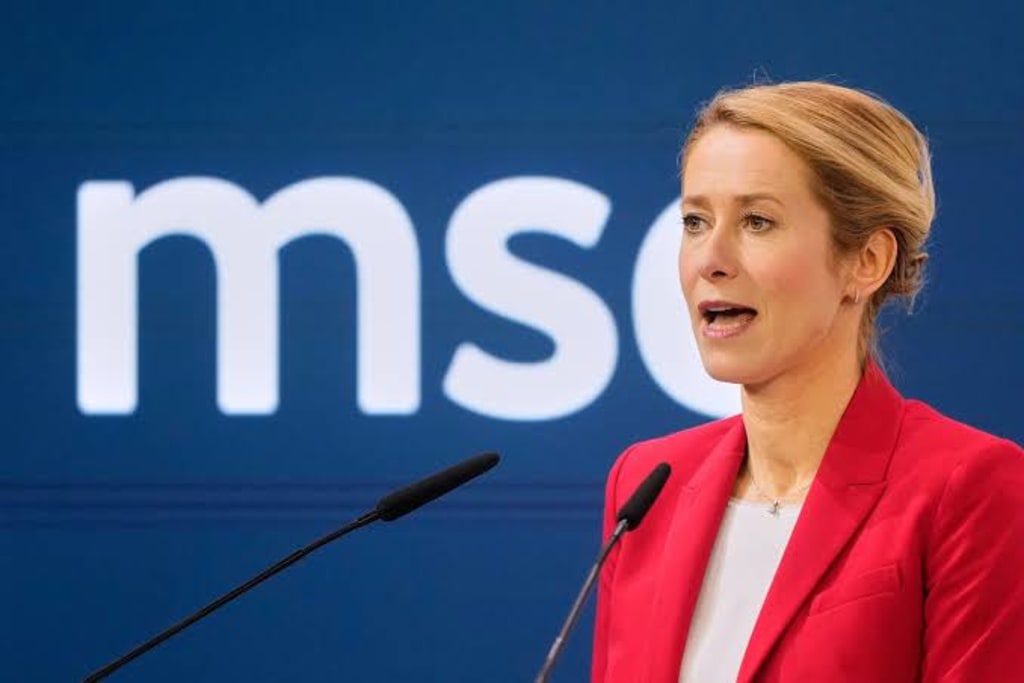
In the wake of a provocative speech by U.S. Senator Marco Rubio at the Munich Security Conference, Estonia’s Prime Minister Kaja Kallas moved swiftly to reassure Europeans that fears of civilisational collapse are overblown, emphasizing resilience and cohesion within the European Union. Rubio’s address, which highlighted demographic trends, cultural shifts, and the perceived weakening of traditional European values, sparked intense debate among policymakers, analysts, and media outlets across the continent.
Rubio’s Munich Speech: Key Points
Rubio’s address at the conference outlined a scenario in which Europe, he argued, risks losing its cultural and strategic identity. He warned of declining birth rates, immigration pressures, and what he termed the rise of “woke policies” as threats to Europe’s traditional societal structures. His speech urged EU nations to adopt more assertive defense policies, reinforce cultural identity, and strengthen ties with the United States to counter perceived demographic and ideological shifts.
While many attendees lauded Rubio’s remarks for drawing attention to strategic challenges, critics described the speech as alarmist and politically charged. Social media erupted with contrasting opinions, with hashtags debating Europe’s future trending for several hours.
Kallas’ Response: Calm Amid Alarm
Responding promptly to Rubio’s remarks, Prime Minister Kallas downplayed the notion that Europe is facing civilisational erasure. Speaking at a follow-up press briefing, she stressed that the EU is navigating global challenges with “resilience, unity, and adaptability.”
“Europe faces challenges, but it is not on the brink of collapse,” Kallas said. “Our institutions, economies, and societies have endured far more difficult periods. We will continue to defend our values, innovate, and grow together.”
She also highlighted the EU’s commitment to sustainability, education, and digital transformation, framing these priorities as tools that strengthen rather than weaken European identity. “Progressive policies do not erase heritage; they prepare us for a more inclusive and resilient future,” Kallas added.
Reactions Across Europe
The exchange between Rubio and Kallas sparked immediate discussion in Brussels, Berlin, and Paris. Analysts noted that Rubio’s framing tapped into anxieties among certain conservative circles regarding demographic changes and social liberalization. However, Kallas’ response was seen as a balancing act, seeking to reassure the public without dismissing legitimate concerns about defense and strategic autonomy.
Several political commentators described the exchange as indicative of the broader transatlantic debate over identity, values, and security in an era of rapid global change. Some highlighted that Kallas’ measured tone reinforced the EU’s ability to respond to external critiques while maintaining internal cohesion.
Strategic and Geopolitical Implications
Beyond rhetoric, Rubio’s speech reflects deeper transatlantic discussions about Europe’s role in global security and its reliance on U.S. military and economic support. While the EU has increased defense spending and coordinated strategic initiatives, some U.S. policymakers continue to press European nations to adopt more assertive postures in NATO and in countering global adversaries.
Kallas’ assurance that Europe is resilient signals a desire to maintain a steady course. By balancing reassurance with recognition of challenges, she reinforced the EU’s commitment to collaboration both within the continent and with key partners, including the United States.
Looking Ahead
As the Munich Security Conference concluded, debates over Europe’s cultural and strategic trajectory remained central. While Rubio’s warnings resonate with some policymakers and analysts, Kallas’ response underscores that Europe’s approach is multifaceted—addressing demographic trends, social policies, and security imperatives without succumbing to alarmism.
Observers note that the exchange may shape upcoming policy discussions within the EU, particularly in areas such as defense funding, education initiatives, and migration management. For many Europeans, the conversation reflects not a crisis, but a critical moment to reaffirm values, strengthen institutions, and engage with global challenges thoughtfully.
In the end, the dialogue between Rubio and Kallas illustrates the balance between caution and confidence, between critique and reassurance. Europe, according to Kallas, remains far from civilisational erasure—it is a continent capable of adaptation, unity, and enduring influence in a complex world.
About the Creator
Fiaz Ahmed
I am Fiaz Ahmed. I am a passionate writer. I love covering trending topics and breaking news. With a sharp eye for what’s happening around the world, and crafts timely and engaging stories that keep readers informed and updated.
Keep reading
More stories from Fiaz Ahmed and writers in The Swamp and other communities.
Reports: Israel’s ZIM to Be Sold to German Shipping Giant Hapag-Lloyd for Over $3 Billion
Reports circulating in global shipping and financial circles suggest that Israel’s largest container shipping company, ZIM, is set to be acquired by Germany’s maritime powerhouse Hapag-Lloyd in a deal valued at more than $3 billion. If finalized, the transaction would mark one of the most significant consolidations in the international shipping industry in recent years and signal a strategic shift in control over one of Israel’s most prominent commercial fleets. According to sources familiar with the negotiations, the talks have intensified over recent months as both companies seek to strengthen their positions in a volatile global shipping market. While neither company has officially confirmed the agreement, insiders describe the discussions as advanced and centered on a full acquisition rather than a partial partnership. ZIM, founded in 1945, has long been regarded as a symbol of Israel’s maritime independence and commercial resilience. The company expanded rapidly during the pandemic-era shipping boom, benefiting from soaring freight rates and strong demand for container transport. However, the post-pandemic slowdown in global trade, combined with falling shipping prices and rising operational costs, has put pressure on many mid-sized carriers to seek strategic alliances or buyers. Hapag-Lloyd, one of the world’s largest container shipping companies, has pursued an aggressive expansion strategy through mergers and acquisitions. Executives at the German firm see ZIM as a valuable asset due to its established trade routes in the Mediterranean, Asia, and North America, as well as its modern fleet and digital logistics systems. The acquisition would significantly enhance Hapag-Lloyd’s presence in Middle Eastern and Eastern Mediterranean shipping corridors. Industry analysts say the proposed price tag of more than $3 billion reflects ZIM’s remaining market strength despite recent financial headwinds. The company reported declining profits in the past year as shipping rates normalized, but it still maintains a strong customer base and strategic port access agreements. For Hapag-Lloyd, the deal would provide long-term growth potential once global trade volumes recover. Beyond commercial considerations, the sale carries political and strategic implications. ZIM has historically played a role in Israel’s national supply chain security, especially during periods of regional conflict or trade disruption. The prospect of foreign ownership has raised concerns among some policymakers about dependence on external operators for critical shipping capacity. However, proponents argue that global integration is unavoidable in modern shipping and that strong international partnerships can improve resilience rather than weaken it. German-Israeli economic relations have steadily expanded over the past decade, with cooperation in technology, defense, and infrastructure. Observers note that this deal could further deepen those ties, positioning Germany as a key stakeholder in Israel’s maritime commerce. Still, regulatory approvals from Israeli and European competition authorities would be required before any transaction could proceed. Labor unions within ZIM are also watching developments closely. Thousands of jobs could be affected depending on how the merger is structured. Past shipping consolidations have often resulted in fleet optimization and staff reductions, although Hapag-Lloyd has pledged in previous acquisitions to preserve core operational teams and regional offices. The timing of the reports is notable, coming amid heightened uncertainty in global shipping routes due to geopolitical tensions, climate disruptions, and security risks in major maritime corridors. Companies with diversified fleets and strong financial backing are better positioned to weather these challenges, which may be driving ZIM’s willingness to consider a sale at this stage. For Hapag-Lloyd, the acquisition would reinforce its standing among the top global container carriers, enabling it to compete more effectively with Asian and European rivals. For ZIM, the move could represent the end of an era as an independent Israeli shipping icon, but also the beginning of a new phase within a larger multinational structure. While official confirmation is still pending, the reported negotiations underline a broader trend of consolidation reshaping the shipping industry. As margins tighten and competition intensifies, only the largest and most integrated players may survive. If completed, the ZIM-Hapag-Lloyd deal will not only alter corporate ownership but also redraw key lines in global maritime trade.
By Fiaz Ahmed 4 days ago in The Swamp
The Saddest Thing - The Billionaires Who Rule America Aren't Even Enjoying Themselves
This single post says more about our ruling class than a thousand policy papers. The saddest thing about today's system is that the men robbing the rest of us - sabotaging our economic prospects, our pensions, our access to affordable healthcare - are not even happy.
By Scott Christenson🌴12 days ago in The Swamp
Japan’s New Direction: Why Rare Earth Cooperation with the United States Matters
In a time when the world feels uncertain and divided, economic security has become as important as military strength. After being reelected as Japan’s leader, Sanae Takaichi has made it clear that her government wants stronger cooperation with the United States on rare earth development. This decision may sound technical, but its impact could shape the future of technology, global trade, and international relations.
By dua fatimaabout 17 hours ago in The Swamp



Comments
There are no comments for this story
Be the first to respond and start the conversation.