
Hundred-Year Reveal: Catalonian Chalet Confirmed as Gaudí Work in Centenary Year
Formal / News Style Archival research and structural analysis confirm long-mysterious chalet as Gaudí masterpiece Discovery sheds new light on the architect’s early residential projects 🔹 Neutral & Informative Centenary revelation highlights Gaudí’s innovative designs beyond Barcelona landmarks Private chalet offers unique glimpse into the evolution of Catalan Modernism 🔹 Impactful A hidden gem emerges, linking a century-old home to Gaudí’s visionary style

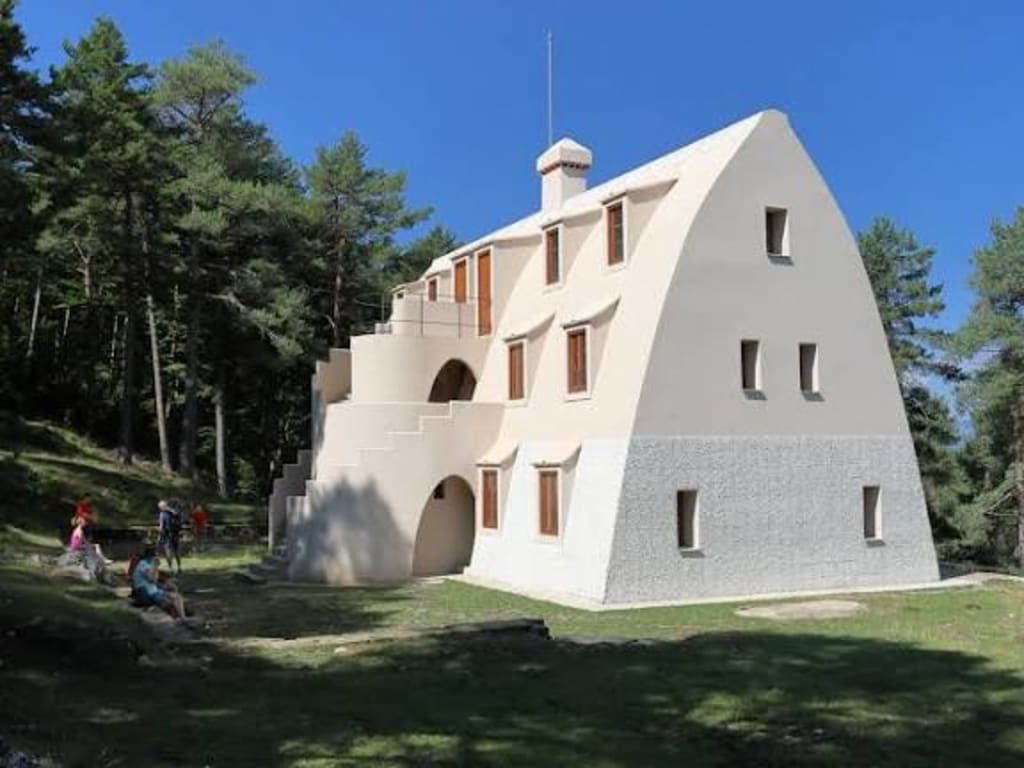
A Catalonian chalet long admired for its whimsical architecture has been officially confirmed as the work of legendary architect Antoni Gaudí, almost a century after it was first built. Experts announced the discovery in 2026, coinciding with the centenary of the architect’s death, offering a remarkable new insight into the early phases of Gaudí’s creative journey.
Architectural Confirmation
The chalet, located in a quiet corner of Catalonia, had been previously attributed to an anonymous designer, though its organic forms, curved lines, and intricate detailing suggested a Gaudí influence. After extensive archival research, structural analysis, and stylistic comparison, historians confirmed the chalet’s provenance as part of Gaudí’s oeuvre.
“The evidence is overwhelming,” said Dr. Marta Puig, a Gaudí scholar who led the investigation. “From the fluid forms in the roofline to the mosaic ornamentation, every element aligns with his early style. This chalet offers a unique window into the evolution of his architectural language.”
The structure features signature elements of Gaudí’s work, including undulating facades, intricate ironwork, and a playful integration of natural motifs. Unlike his more famous public works such as Sagrada Familia or Park Güell, this private residence reflects a period when Gaudí was experimenting with forms and materials, blending Catalan Modernism with organic inspiration drawn from the surrounding landscape.
Historical Context
Built in 1926, the chalet coincided with a period of intense experimentation for Gaudí, who was exploring residential design alongside his monumental projects in Barcelona. The discovery sheds light on his work outside the city, revealing how he adapted his visionary ideas to more intimate, domestic environments.
Local historians note that the chalet was commissioned by a wealthy Catalonian industrialist who had close ties to the Barcelona artistic community. Original sketches, recently uncovered in private archives, show Gaudí’s hand in every detail—from the distinctive roof curves to the sculptural chimneys.
“This finding allows us to trace the dialogue between Gaudí and his patrons,” said architectural historian Josep Riera. “It illustrates the degree of creative freedom he enjoyed and the boldness of his design choices even in private commissions.”
Cultural Significance
The confirmation has been met with excitement in Catalonia and beyond. Cultural authorities are considering the chalet for heritage protection, ensuring it is preserved as part of Gaudí’s legacy. Tours and educational programs may be developed to allow the public to experience a lesser-known facet of the architect’s work.
“This is more than a building,” said Puig. “It is a piece of living history that connects us to Gaudí’s imagination, almost a hundred years later.” The centenary year amplifies the significance, providing a symbolic moment for reflection on the breadth of his contributions to modern architecture.
Challenges and Preservation
Despite the jubilation, experts caution that the chalet requires careful conservation. Time and exposure to the elements have caused deterioration in some of the decorative elements. Conservationists recommend immediate stabilization measures, including restoration of mosaic tiles and reinforcement of structural elements, to protect it from further decay.
The revelation also raises questions about other overlooked Gaudí works in the region. Scholars hope that similar archival research could uncover additional early projects, further enriching the understanding of the architect’s development.
Legacy and Public Engagement
The chalet will likely become a focal point for cultural tourism in Catalonia, alongside Gaudí’s more famous landmarks. Local authorities emphasize that any public access will be carefully managed to balance tourism with preservation, ensuring the site remains intact for future generations.
“This centenary discovery reminds us that Gaudí’s influence extends far beyond his iconic city landmarks,” said Riera. “Every curve, every detail carries a story, and now we have a new story to share with the world.”
Conclusion
Almost a hundred years after its construction, the chalet’s confirmation as a Gaudí masterpiece represents a remarkable addition to the architect’s body of work. The centenary of his death provides a poignant backdrop for this revelation, highlighting both the enduring legacy of Gaudí and the continued fascination with his innovative, organic vision. Preservation efforts and public engagement will ensure that this newly recognized treasure continues to inspire architects, historians, and visitors for decades to come.
About the Creator
Fiaz Ahmed
I am Fiaz Ahmed. I am a passionate writer. I love covering trending topics and breaking news. With a sharp eye for what’s happening around the world, and crafts timely and engaging stories that keep readers informed and updated.
Keep reading
More stories from Fiaz Ahmed and writers in The Swamp and other communities.
Turkey’s President Rejects Israel’s Recognition of Somaliland
Turkish President Recep Tayyip Erdogan has strongly rejected Israel’s reported move toward recognizing Somaliland, calling it a violation of international law and a dangerous step that could destabilize the Horn of Africa. Ankara reaffirmed its commitment to Somalia’s territorial integrity, signaling that Turkey will oppose any actions that undermine the sovereignty of the Somali state. Firm Diplomatic Response In a statement issued following a high-level cabinet meeting, Erdogan said that any recognition of Somaliland as an independent state would be “unacceptable and illegitimate.” He stressed that such a move contradicts long-standing international consensus supporting Somalia’s unity and risks fueling new political and security tensions in the region. “Somalia’s territorial integrity is not negotiable,” Erdogan said. “Unilateral recognition of Somaliland would deepen instability in an already fragile region and damage efforts aimed at achieving lasting peace and development.” Turkey’s Foreign Ministry echoed the president’s remarks, urging all countries to respect Somalia’s sovereignty and warning that recognition of breakaway regions sets a troubling precedent in global diplomacy. Background on Somaliland Somaliland declared independence from Somalia in 1991 following the collapse of the central government. Despite maintaining relative stability and its own governing institutions, Somaliland has not been internationally recognized as a sovereign state. The international community, including the United Nations, continues to view it as part of Somalia. Reports that Israel may be considering recognition of Somaliland have sparked controversy across Africa and the Middle East. Somali authorities have condemned the idea, while regional actors fear it could encourage further fragmentation and complicate diplomatic relations in the Horn of Africa. Turkey’s Strategic Interests Turkey has invested heavily in Somalia over the past decade, becoming one of the country’s closest international partners. Ankara has funded infrastructure projects, humanitarian aid programs, and military training initiatives for Somali security forces. Turkey also operates a major military training base in Mogadishu and plays a key role in supporting the Somali government’s fight against militant groups. Analysts say Turkey’s reaction reflects both diplomatic principles and strategic interests. “Ankara sees Somalia as a key partner in Africa,” said a regional expert. “Any move that weakens the Somali state directly affects Turkey’s political influence and long-term investments in the region.” Regional and International Implications Israel’s potential recognition of Somaliland could reshape alliances in the Horn of Africa. Supporters of Somaliland argue that international recognition would strengthen its institutions and promote stability. Critics, however, warn that it would provoke tensions with Somalia and possibly inflame regional rivalries involving Ethiopia, Djibouti, and other neighboring states. Turkey’s rejection places it firmly on the side of Mogadishu and aligns it with the broader position of the African Union, which has consistently upheld Somalia’s territorial integrity. Diplomats fear that any unilateral recognition could undermine ongoing mediation efforts and complicate international peacekeeping missions in the area. Political Messaging Erdogan also used the issue to criticize what he described as double standards in international politics. He argued that recognition decisions should not be driven by short-term strategic interests but by respect for sovereignty and international law. “This is not just about Somaliland,” Erdogan said. “It is about whether global rules apply equally to all nations.” His remarks were widely interpreted as a broader critique of Western and Israeli foreign policy in the region. Conclusion Turkey’s rejection of Israel’s recognition of Somaliland underscores the sensitivity of territorial and sovereignty issues in the Horn of Africa. By taking a strong public stance, Ankara has reinforced its role as a key supporter of Somalia and a vocal advocate of territorial integrity under international law. As diplomatic tensions grow, the controversy is likely to test relations between Turkey and Israel while placing renewed focus on Somaliland’s unresolved status. Observers say the issue could become another flashpoint in an already complex regional landscape, where questions of recognition, security, and influence remain deeply intertwined.
By Fiaz Ahmed about 9 hours ago in The Swamp
Why Black History Matters in America?
The United States of America is celebrating their 250th anniversary in 2026. I'm proud to be an American and as someone who was born here, I wouldn't imagine myself living anywhere else. This is a country where opportunities are possible. Where anyone can be successful in anything they desire to do. Equality, community, and togetherness are the backbones of what America is and should be about. However, we have an administration who wants to erase and disregard those who have made positive, meaningful impacts in our country, specifically Black figures, such as Martin Luther King, Jr., Rosa Parks, and Maya Angelou. President Trump and his administration have been constantly complaining and fighting against what they call the "Woke agenda". They use this excuse as a distraction from other issues they refuse to address, such as the high cost of living, climate change, and inflation. That equality is dividing America, when in reality, it's bringing us together. Being woke is not tied to a specific political party. No matter where you stand on the political spectrum, you can still care about other people and their plights. Compassion and empathy for others isn't tied to a political party, either. We were taught as children to treat others the way we want to be treated and not judge others because they're different from us. Caring about others isn't a personal attack on your beliefs. It doesn't make you any less of a person. People who are easily offended over African American figures, past or present, or anything related to it, are grasping at straws. Current and future generations need to know who people like Harriet Tubman and Shirley Chisholm were, especially in the classroom. Black History is part of American History. It should be recognized, not hidden or forgotten. Besides, you can't shield children from everything, just because your feelings are easily hurt.
By Mark Wesley Pritchard 17 days ago in The Swamp
How the Epstein Files Became Public
The release of records connected to the Epstein investigation has unfolded over years through a complex blend of court proceedings, civil litigation, investigative journalism, and transparency laws. Rather than a single “file” being published at once, the public record grew piece by piece—each disclosure shaped by legal standards, media scrutiny, and pressure from victims seeking accountability.
By shaoor afridiabout 14 hours ago in The Swamp



Comments
There are no comments for this story
Be the first to respond and start the conversation.