
Justice for Sale?
The 8 Uncomfortable Truths Behind Family Court Corruption

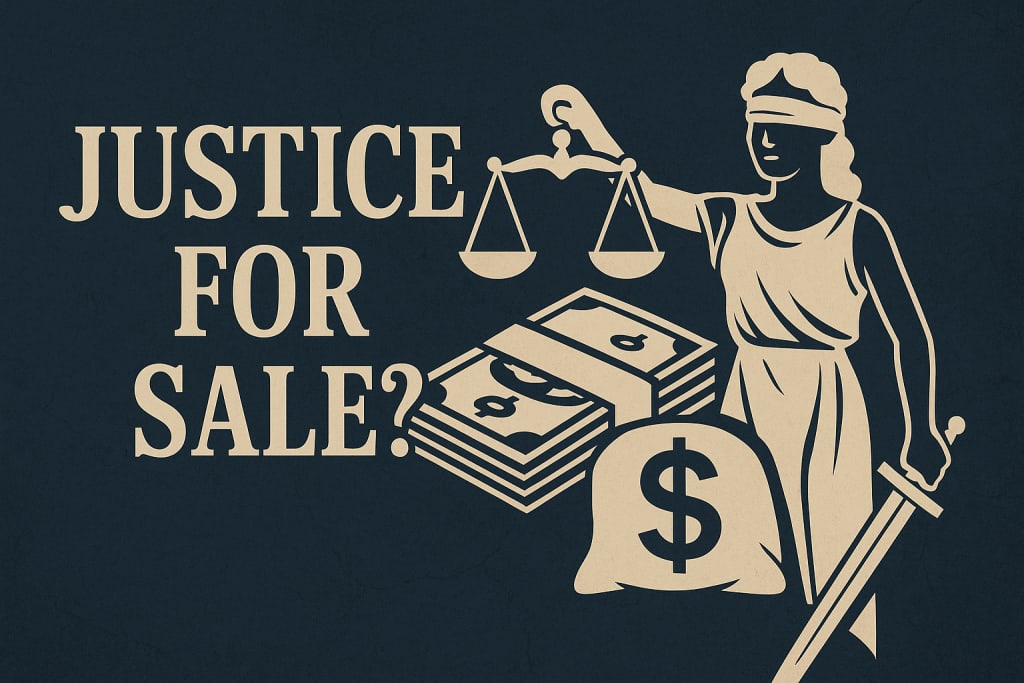
Family court was once seen as a sanctuary for the vulnerable—a place where children’s best interests reigned supreme and families could find resolution amidst conflict. But today, a growing chorus of parents, whistleblowers, and reform advocates are sounding the alarm: this system is broken. Worse, some say it's corrupt—not necessarily through envelopes stuffed with cash, but through something more insidious: institutionalized greed, judicial bias, and a profiteering machine hiding behind closed doors.
Let’s break down the reasons behind this rising distrust.
1. A Court Without an Audience: Secrecy Breeds Suspicion
Unlike criminal or civil trials, family court cases are usually sealed. The justification? Protecting the child. The result? Shielding misconduct. Judges operate with sweeping discretion and virtually no oversight. Immunity laws and sealed records prevent victims from challenging rulings or exposing systemic abuse. Transparency—the bedrock of any democratic institution—is glaringly absent.
"Sunlight is said to be the best of disinfectants." Yet family court operates in the shadows.
2. The $50 Billion Divorce Industry: Profits Over Peace
Litigation over children isn’t just painful—it’s profitable. Attorneys, custody evaluators, therapists, and "reunification camps" rake in enormous fees under the guise of “child welfare.” The longer the fight, the larger the bill. Critics call it a racket: court-appointed players extend conflict to keep paychecks flowing, while desperate parents drain retirement accounts just to see their kids.
One X user put it bluntly:
“They don’t want peace. Peace doesn’t pay.”
3. Justice for the Highest Bidder? Discretion and Bias Run Amok
With no jury and little standardization, judges hold near-absolute power in family court. This would be less alarming if not for repeated claims that judges favor wealthier litigants, connected attorneys, or even their own friends and relatives. Gender bias cuts both ways—some allege anti-father bias, while others claim the system punishes protective mothers who allege abuse.
Fairness shouldn't depend on who your lawyer golfs with.
4. Weaponized Psychology: The ‘Parental Alienation’ Trap
The court’s darling phrase—“parental alienation”—was coined by a discredited psychiatrist, Richard Gardner. Yet today, it's often weaponized to dismiss abuse claims and transfer custody to alleged abusers. Evaluators, some unlicensed or underqualified, produce reports that override evidence and testimonies. In many cases, protective parents are gaslit into silence while children suffer.
5. Outdated Science, Outdated Thinking
Despite groundbreaking research like the ACE (Adverse Childhood Experiences) and Saunders studies, family courts cling to outdated methods. Instead of prioritizing trauma-informed approaches or credible abuse investigations, they reward the appearance of cooperation—often punishing parents who speak up against dangerous co-parents. This isn’t just incompetence—it’s negligence.
6. The Nepotism Problem: A Family Affair in Family Court
From Alabama to New York, there are documented cases of judges appointing family members or cronies to paid roles in cases they oversee. One Alabama judge reportedly gave over 200 cases to his own son. Who’s watching the watchers? Apparently, no one.
7. Speak Out, Lose Your Kids
Parents who question court decisions or go public with concerns often face retaliation. Maryann Petri’s memoir, Dismantling Family Court Corruption, describes a nightmare of being punished for daring to self-represent. Whistleblowers are often smeared, sanctioned, or stripped of custody—all while court insiders remain untouchable.
8. Accountability? What Accountability?
Judicial conduct commissions are supposed to police judges. But most are run by—guess who?—judges. A Reuters investigation found that 90% of disciplined judges kept their jobs. Even in clear cases of misconduct, the system closes ranks instead of cleaning house.
A Note on Skepticism
To be clear, not every family court judge is corrupt, and not every litigant is innocent. Some outcomes are the result of messy facts or poor legal strategies. But the structural incentives—from unchecked discretion to profit-driven actors—create a climate where corruption, bias, and abuse can thrive with impunity.
The Real Tragedy: It’s the Children Who Pay
For every horror story of a wrongly-estranged father or a silenced mother, there's a child caught in the crossfire—often handed over to abusive parents, trapped in loyalty conflicts, or traumatized by the very system meant to protect them. When courts value conflict over closure, billing over bonding, and image over truth, children become the collateral damage.
What Needs to Happen Next?
Reform is not optional. Proposals gaining traction include:
- Mandatory 50/50 custody presumptions unless proven unfit
- Open courtrooms and public records with necessary redactions
- Abolishing judicial immunity in family law
- Independent oversight bodies not composed of judges
- Eliminating reunification camps and unregulated psychological evaluators
- Federal investigations into funding mechanisms like Title IV-D that may incentivize removing one parent
Final Thoughts
The family court system is not just broken—it’s bleeding. And the ones profiting from that wound have no incentive to heal it. It’s time for parents, policymakers, and the public to demand accountability, transparency, and reform. Because when justice becomes a business, children become the currency—and that’s a price too high for any society to pay.
About the Creator
Michael Phillips
Michael Phillips | Rebuilder & Truth Teller
Writing raw, real stories about fatherhood, family court, trauma, disabilities, technology, sports, politics, and starting over.
Keep reading
More stories from Michael Phillips and writers in The Swamp and other communities.
Ten Ways Governor Wes Moore Has Impoverished Marylanders
When Wes Moore was elected governor, many Marylanders bought into the soaring rhetoric of "Leave No One Behind." What they didn’t realize is that under Moore’s progressive policies, more Marylanders would be dragged behind — economically, socially, and financially. From crushing small businesses to inflating government bloat, Moore’s policies have functioned less like a ladder of opportunity and more like a wrecking ball aimed at the working and middle class.
By Michael Phillips7 months ago in The Swamp
Why Black History Matters in America?
The United States of America is celebrating their 250th anniversary in 2026. I'm proud to be an American and as someone who was born here, I wouldn't imagine myself living anywhere else. This is a country where opportunities are possible. Where anyone can be successful in anything they desire to do. Equality, community, and togetherness are the backbones of what America is and should be about. However, we have an administration who wants to erase and disregard those who have made positive, meaningful impacts in our country, specifically Black figures, such as Martin Luther King, Jr., Rosa Parks, and Maya Angelou. President Trump and his administration have been constantly complaining and fighting against what they call the "Woke agenda". They use this excuse as a distraction from other issues they refuse to address, such as the high cost of living, climate change, and inflation. That equality is dividing America, when in reality, it's bringing us together. Being woke is not tied to a specific political party. No matter where you stand on the political spectrum, you can still care about other people and their plights. Compassion and empathy for others isn't tied to a political party, either. We were taught as children to treat others the way we want to be treated and not judge others because they're different from us. Caring about others isn't a personal attack on your beliefs. It doesn't make you any less of a person. People who are easily offended over African American figures, past or present, or anything related to it, are grasping at straws. Current and future generations need to know who people like Harriet Tubman and Shirley Chisholm were, especially in the classroom. Black History is part of American History. It should be recognized, not hidden or forgotten. Besides, you can't shield children from everything, just because your feelings are easily hurt.
By Mark Wesley Pritchard 4 days ago in The Swamp


Comments
There are no comments for this story
Be the first to respond and start the conversation.