Latest Stories
Most recently published stories in The Swamp.
UN Human Rights Agency in ‘Survival Mode’, Chief Warns. AI-Generated.
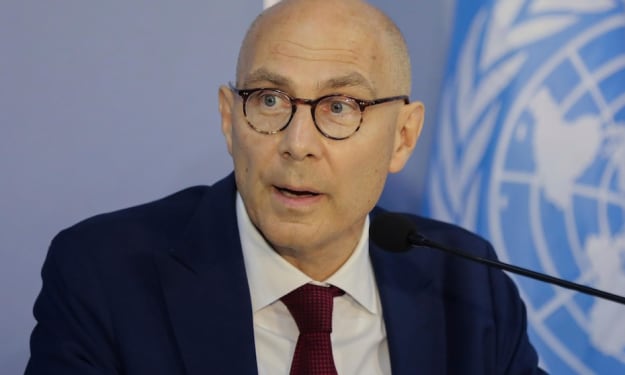
The United Nations’ top human rights body is operating in “survival mode” as financial shortfalls, political pressure, and rising global crises threaten its ability to function effectively, the agency’s chief has warned. Volker Türk, the UN High Commissioner for Human Rights, said the organization is facing one of the most difficult periods in its history as demand for its work increases while resources continue to shrink. Speaking to diplomats and journalists in Geneva, Türk described a widening gap between the expectations placed on the UN human rights office and the funding available to meet those responsibilities. “We are being asked to do more in more places with fewer resources,” he said. “At the moment, we are in survival mode.” Growing Demand, Shrinking Resources The Office of the High Commissioner for Human Rights (OHCHR) monitors abuses, supports investigations into war crimes, and assists countries in strengthening their legal and judicial systems. In recent years, it has been heavily involved in documenting violations in conflict zones such as Ukraine, Gaza, Sudan, and Myanmar, while also addressing long-standing crises in Afghanistan, Syria, and parts of Africa. Türk noted that global instability and armed conflicts have dramatically increased the need for independent human rights monitoring. Yet the agency’s core budget has not kept pace with this demand. Much of its funding relies on voluntary contributions from member states, which fluctuate depending on political priorities and economic conditions. “This is not a sustainable model,” Türk said. “Human rights cannot depend on charity. They require stable, predictable financing if we are to protect people effectively.” According to UN officials, the agency is currently facing a significant budget gap that could force staff reductions and limit its ability to carry out investigations and field operations. Offices in several regions are already operating with minimal personnel, reducing their capacity to respond quickly to emerging crises. Political Pressure and Criticism Beyond financial challenges, the UN human rights agency is also under increasing political pressure from governments that object to its scrutiny. Some states have accused the office of bias, interference in internal affairs, or exceeding its mandate. Türk acknowledged that criticism is part of the job but warned that attacks on the agency’s legitimacy threaten the broader international human rights system. “When the messenger is weakened, the message itself is weakened,” he said. Several countries have pushed back against reports documenting alleged abuses, particularly in situations involving powerful governments or sensitive conflicts. Diplomats say that disagreements over human rights have become more polarized, making it harder for the UN to build consensus and secure cooperation. Human rights groups argue that political resistance is one of the main reasons the agency’s work is so essential. “The fact that governments are uncomfortable is proof that the office is doing what it is supposed to do,” said a representative of an international rights organization. “Without it, victims would have no voice on the global stage.” Impact on Field Operations The financial and political strain is already affecting operations on the ground. UN human rights officers in conflict zones often work under dangerous conditions, documenting killings, forced displacement, and violations of international law. Reduced funding could mean fewer investigators, delayed reports, and less support for victims seeking justice. Türk warned that cuts would also undermine early warning systems designed to prevent atrocities before they escalate. “Prevention is far less costly than responding after mass violence has occurred,” he said. “But prevention requires investment.” In addition to conflict monitoring, the agency provides technical assistance to countries seeking to reform laws, improve prison conditions, and strengthen protections for women and minorities. These long-term projects are among the first to suffer when budgets tighten, despite their importance in addressing root causes of abuse. A System Under Strain The warning comes at a time when the entire UN system is under financial stress. Several agencies have reported funding shortfalls as donor countries face domestic economic pressures and competing global priorities, including climate change and humanitarian aid. The UN Secretary-General has repeatedly urged member states to increase support for human rights work, calling it one of the three pillars of the organization alongside peace and security and development. Yet human rights spending remains a small fraction of the overall UN budget. Türk emphasized that protecting human rights is not optional but central to preventing conflict and maintaining global stability. “If we allow this system to weaken, the consequences will be felt far beyond Geneva,” he said. Calls for Reform and Support To address the crisis, Türk has called for reforms to ensure more reliable funding, including increasing the share of the UN’s regular budget allocated to human rights. He also urged governments to resist politicizing the agency’s work and to respect its independence. Some diplomats have expressed support for these proposals, but progress has been slow. Negotiations over UN budgets are often contentious, with countries divided over priorities and spending levels. Civil society groups have launched campaigns urging governments to step up contributions and defend the agency from political attacks. “This is a moment of truth,” said one activist. “Either states invest in the protection of human dignity, or they accept a world where abuses go unchecked.” A Critical Juncture Türk concluded his remarks with a stark warning about the future of the global human rights system. “We are at a crossroads,” he said. “If the international community does not act now, we risk losing one of the most important mechanisms we have to uphold universal values.” As conflicts multiply and authoritarianism rises in many parts of the world, the role of the UN human rights agency has never been more crucial—or more fragile. Whether governments will respond to its plea for support may determine not only the agency’s survival but also the credibility of the international commitment to human rights itself. For victims of abuse and repression, the stakes could not be higher. The question now is whether the world’s nations will choose to strengthen the system designed to protect them, or allow it to erode under pressure.
By Fiaz Ahmed about 9 hours ago in The Swamp
The NATO Soldiers Training to Defend Europe Against Putin. AI-Generated.
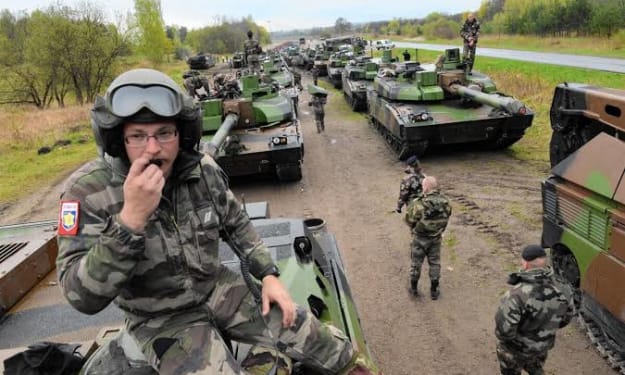
Across forests in Poland, frozen plains in the Baltics, and military bases in Germany and Romania, thousands of NATO soldiers are preparing for a scenario that until recently seemed unthinkable: a direct confrontation with Russia. Since Moscow’s invasion of Ukraine, the alliance has transformed its training programs to focus on defending Europe’s eastern flank against what it sees as a long-term and growing threat from President Vladimir Putin’s military ambitions. These exercises are no longer symbolic displays of unity. They are large-scale, realistic war games designed to test how NATO forces would respond if Russia attempted to expand the conflict beyond Ukraine. Tanks thunder across muddy fields, fighter jets practice coordinated strikes, and cyber units simulate attacks on communication networks. The message is clear: NATO is shifting from decades of crisis management to full territorial defense. A New Era of Training For years after the Cold War, NATO focused its military training on counterterrorism missions and overseas operations in places like Afghanistan and Iraq. That changed dramatically in 2022. Today, alliance planners are rebuilding skills needed for high-intensity warfare between powerful armies. In Poland, multinational battalions made up of troops from the United States, Britain, Germany, and other allies conduct joint drills near the border with Belarus. These soldiers practice rapid deployment, air defense coordination, and battlefield medicine under conditions meant to mirror real combat. Officers say the goal is to ensure that forces from different countries can fight as one unit if a crisis erupts. “This is about deterrence,” said a senior NATO commander overseeing exercises in Eastern Europe. “We want to make it absolutely clear that any attack on one ally will be met with a united and prepared response.” Learning From Ukraine Much of the training now draws lessons directly from the war in Ukraine. The widespread use of drones, electronic warfare, and long-range artillery has reshaped how soldiers prepare for combat. NATO troops are learning how to operate under constant surveillance and how to protect themselves from missile strikes and cyber disruptions. In Germany, training centers have introduced simulations that replicate urban combat similar to the battles seen in cities like Mariupol and Bakhmut. Soldiers practice moving through destroyed buildings, evacuating civilians, and coordinating with intelligence units that track enemy movements in real time. The emphasis is also on logistics. Ukraine’s war has shown that supply lines can determine the outcome of battles. NATO forces are now rehearsing how to move fuel, ammunition, and medical supplies quickly across borders, overcoming bureaucratic and infrastructure obstacles that once slowed deployments. Expanding the Eastern Front Since Russia’s invasion, NATO has increased its troop presence in Eastern Europe from about 40,000 to more than 100,000 at peak readiness. New battlegroups have been established in countries such as Slovakia, Hungary, Bulgaria, and Romania, in addition to existing deployments in the Baltic states and Poland. These units are not only defensive but also symbolic. They demonstrate that an attack on any one of these countries would immediately involve multiple NATO members. For soldiers from smaller nations, training alongside major military powers provides reassurance that they are not alone. A Lithuanian officer participating in joint exercises said the cooperation has transformed the region’s security outlook. “We used to worry about how fast help would arrive,” he said. “Now help is already here.” Psychological Readiness Beyond weapons and tactics, NATO is also focusing on the mental preparedness of its soldiers. The possibility of conflict with Russia carries enormous political and emotional weight. Commanders say troops must be ready for a long-term standoff, not just a short deployment. Many soldiers speak openly about the seriousness of their mission. A British infantryman stationed in Estonia said the training feels different from previous exercises. “You know this isn’t theoretical,” he said. “You’re training for something that could actually happen.” NATO has also increased cooperation with civilian authorities, rehearsing responses to hybrid threats such as sabotage, disinformation campaigns, and attacks on critical infrastructure like power grids and railways. Russia Watches Closely Moscow has repeatedly condemned NATO’s military buildup near its borders, calling it provocative and dangerous. Russian officials argue that the alliance’s expansion and exercises are proof that the West is preparing for confrontation. NATO leaders reject that accusation, insisting their actions are purely defensive. They point out that Russia’s invasion of Ukraine forced the alliance to reconsider its posture. Finland and Sweden’s decision to join NATO further underlines how security calculations across Europe have shifted. Military analysts warn that this new phase of deterrence carries risks. Large-scale exercises and troop movements increase the chances of misunderstandings or accidents. That makes communication channels between NATO and Russia more important than ever, even as political relations remain deeply strained. Preparing for the Long Term NATO’s training programs are expected to continue expanding in the coming years. Member states are increasing defense budgets and investing in modern equipment, including missile defense systems, advanced aircraft, and cyber capabilities. The alliance is also developing new response plans for different types of threats, from conventional invasions to cyberattacks and space-based warfare. For the soldiers on the ground, the focus remains practical: be ready, work together, and deter aggression before it starts. Exercises may end after a few weeks, but the message they send is constant. As one NATO general put it, “We train so we never have to fight. But if we must fight, we will not be unprepared.” The soldiers training across Europe today represent a continent reshaping its defenses for an uncertain future. Whether their presence prevents conflict or merely postpones it remains unknown. What is certain is that NATO is signaling its determination to defend every inch of its territory against any challenge from Moscow — and to ensure that the lessons of Ukraine are not ignored.
By Fiaz Ahmed about 9 hours ago in The Swamp
Henrique Capriles, Venezuelan Opposition Leader: What Comes Next for Venezuela?. AI-Generated.
Henrique Capriles Radonski, one of Venezuela’s most enduring opposition figures, stands at a crossroads as the country enters an unpredictable new chapter in its political life. Decades after rising to prominence as a challenger to Hugo Chávez and Nicolás Maduro, Capriles’s role is shifting in response to seismic developments — including the arrest of Maduro, the emergence of controversial amnesty laws, and ongoing fractures within the broader opposition movement. Capriles has long been a central voice in Venezuela’s struggle for democratic governance, even as the political landscape has fractured and shifted around him. Born in Caracas in 1972, Capriles entered politics in the 1990s and quickly rose through the ranks, becoming a member of Venezuela’s Congress and later governor of Miranda state. He gained national visibility in 2012 when he ran as the unified opposition candidate against President Hugo Chávez in a landmark election. Chávez won with about 55 percent of the vote, but Capriles’s challenge marked a significant moment in the country’s political polarization. Encyclopedia Britannica A Shift from Presidency to Legislative Politics Capriles later challenged Nicolás Maduro in the 2013 presidential election following Chávez’s death. The result was extremely close — Maduro was declared the winner with just over 50 percent of the vote, while Capriles secured nearly 49 percent. Capriles rejected the results and called for full recounts, alleging irregularities. Encyclopedia Britannica For many years, Capriles remained one of the most prominent opposition voices, advocating democratic reforms and criticizing what he described as authoritarian tendencies in the Maduro government. At times, he diverged from other opposition leaders, rejecting abstentionist strategies and arguing instead for active participation in elections as a means of challenging the ruling Socialist Party’s grip on power. Peoples Dispatch In 2025, Capriles regained his political eligibility after years of being barred from office — a ban that had prevented him from running for public office — and entered the National Assembly elections. Running under the banner of a new political grouping, Unión y Cambio (UNICA), Capriles was elected as a deputy, giving him a renewed platform within Venezuela’s legislative framework. Opposition Reconfiguration and Internal Strains Capriles’s political choices have sometimes placed him at odds with larger blocs of the opposition. In 2025, he was expelled from the opposition party Primero Justicia alongside other leaders who chose to contest elections rather than following calls to boycott them as part of an abstentionist strategy. This rupture underscored deeper divisions within the opposition about how best to confront the Maduro regime. The opposition landscape has also been shaped by the rise of other figures such as María Corina Machado, whose hardline stance and international profile have at times diverged from Capriles’s more institutional approach. El País reported in early 2026 that Capriles and Machado represent rival leadership currents within the opposition as various voices emerge in a political environment that some see as more plural but also more fractious. EL PAÍS English Capriles has criticized strategies that dismiss electoral participation, stressing that abstention — or refusing to contest contested processes — ultimately weakens the opposition’s influence and cedes ground to the ruling party. This reflects his longstanding belief that democracy must be defended not only in the streets but also through electoral and legal channels. Peoples Dispatch Maduro’s Arrest and the Political Shockwave The context for Capriles’s political next steps has been fundamentally altered by extraordinary events. In early 2026, former Venezuelan President Nicolás Maduro was captured by U.S. federal authorities on narcoterrorism and drug trafficking charges, creating a political vacuum in a country long dominated by the Maduro administration. This has triggered a turbulent transitional period, with acting President Delcy Rodríguez and the National Assembly pushing forward legislative changes including an expansive amnesty law aimed at releasing political prisoners — a move that could reshape political participation and reintegration for many opposition figures. Capriles has publicly advocated for fundamental conditions for any political transition, including the release of all political prisoners and clear guarantees for free and fair elections. In video statements to the press and social media, he has stressed that a credible transition must begin with restoring basic civil liberties and dismantling systems of repression before electoral contests can be meaningful. YouTube Amnesty, Reconciliation, and Political Calculus The amnesty bill proposed by Rodríguez and advancing through the legislature could benefit many imprisoned opposition leaders and activists, but critics warn that without clear guarantees and transparency, it could also be used to shape political allegiances or shield serious abuses from accountability. Human rights groups have cautiously welcomed parts of the law as a step toward reconciliation while underscoring the need for justice and rule of law. Financial Times Capriles’s position in this evolving context is nuanced. He supports measures that genuinely promote democratic participation and protect Venezuelans’ political freedoms, yet he remains wary of superficial reforms that fail to address systemic issues. This places him in a potential kingmaker role as the opposition negotiates unity, strategy, and objectives in the face of ongoing political flux. What Comes Next for Venezuela? Looking ahead, Venezuela’s trajectory will likely be shaped by several converging dynamics: Reconfiguration of Opposition Forces: Capriles and other leaders face the challenge of uniting a fragmented opposition behind a coherent strategy, balancing participation in electoral politics with demands for democratic guarantees and accountability. Transition Politics Post-Maduro: With Maduro detained and an amnesty package unfolding, the country may enter a transitional phase that could open space for new political actors but also create uncertainty about institutional legitimacy and power sharing. International Influence and Oversight: The involvement of international bodies — from the International Criminal Court’s expanded presence in Caracas to ongoing external diplomatic pressure — adds layers of complexity to domestic politics and could shape the pace and nature of political change. infobae Public Confidence and Economic Realities: Beyond politics, Venezuela grapples with profound economic and social challenges. Any meaningful political shift will need to address people’s urgent needs while rebuilding trust between citizens and institutions. Capriles’s future role will depend on his ability to navigate these fault lines — bridging divides within the opposition, anchoring democratic demands, and articulating a vision that resonates beyond narrow partisan bases. Whether he emerges as a unifying elder statesman, a pragmatic legislator, or a polarizing figure remains to be seen, but his influence on Venezuela’s path forward remains undeniable.
By Fiaz Ahmed about 9 hours ago in The Swamp
Michelle Yeoh. AI-Generated.
Michelle Yeoh’s journey through cinema is unlike any other. In an industry that often limits women to narrow roles, Yeoh has spent decades quietly expanding what is possible. From action-packed blockbusters to emotionally rich dramas, her career reflects discipline, adaptability, and a rare ability to move between cultures without losing authenticity. Today, Yeoh stands not just as a celebrated actor, but as a symbol of global storytelling. Born in Malaysia, Yeoh did not initially plan a career in acting. She trained in classical dance and studied abroad, developing a foundation built on precision and physical awareness. An injury redirected her path, but the discipline she learned through dance never left her. That training later became a defining element of her screen presence, especially in physically demanding roles that required control rather than spectacle. Breaking Into Action Cinema Yeoh’s early career in Hong Kong cinema set her apart almost immediately. At a time when action films relied heavily on stunt doubles, Yeoh performed many of her own stunts. This decision was not about proving toughness; it was about realism and respect for the craft. Her performances carried weight because they looked and felt authentic. Unlike many action stars, Yeoh brought emotional depth to physically intense roles. She wasn’t portrayed as invincible. Instead, her characters often showed vulnerability, fear, and determination, qualities that made her performances resonate with audiences beyond surface-level excitement. Her work in action cinema helped challenge long-standing stereotypes about women in the genre. Yeoh proved that strength could be expressed through skill and intelligence rather than exaggeration. This approach influenced a generation of filmmakers and performers who began to rethink how action heroes could be portrayed. Crossing Cultural Boundaries One of Yeoh’s most remarkable achievements is her ability to transition between film industries without losing credibility. Moving from Asian cinema to Hollywood is not easy, especially for actors who do not fit conventional molds. Yeoh navigated this transition with patience, choosing roles carefully rather than chasing visibility. Her international breakthrough came through films that valued restraint and emotional nuance. Instead of being reduced to background roles, she portrayed complex characters who shaped the narrative. This was a quiet but powerful shift, helping open doors for more inclusive casting in global cinema. Yeoh’s presence also challenged the idea that leading roles must conform to a single cultural standard. She brought her identity with her, allowing stories to feel richer rather than diluted. This balance made her performances relatable across borders while remaining deeply personal. A Late-Career Renaissance Many actors struggle to find meaningful roles as they age, especially women. Yeoh, however, experienced a creative resurgence later in her career. Rather than slowing down, she embraced projects that pushed boundaries and explored themes of identity, family, and resilience. This phase of her career demonstrated that artistic growth does not have an expiration date. Yeoh’s performances during this period were not defined by spectacle, but by emotional clarity. She brought maturity and depth that only experience can provide, reminding audiences that storytelling improves when it reflects real life in all its stages. Her success also sparked conversations within the industry about age representation and opportunity. Yeoh’s visibility proved that audiences are eager for stories led by experienced performers when those stories are told with honesty. Representation Without Noise What sets Michelle Yeoh apart is her approach to representation. She has never relied on loud statements or performative gestures. Instead, she allows her work to speak. By choosing roles that are thoughtful and well-written, she contributes to progress without reducing herself to a symbol. This approach has earned her respect across the industry. Directors value her professionalism, co-stars praise her generosity, and audiences trust her choices. Yeoh’s career is a reminder that impact does not always come from confrontation; sometimes it comes from consistency and excellence. Influence Beyond Film Yeoh’s influence extends beyond the screen. She has used her platform to support humanitarian causes and advocate for road safety and public health initiatives. These efforts reflect the same discipline and responsibility she brings to her craft. Rather than separating her public work from her artistic identity, Yeoh treats both as part of a larger commitment to meaningful contribution. This balance reinforces why she is admired not only as an actor, but as a public figure. A Legacy Still in Motion Michelle Yeoh’s story is not one of overnight success or constant reinvention. It is a story of steady growth, thoughtful risk-taking, and respect for the audience. She has built a career that feels intentional, shaped by values rather than trends. As cinema continues to evolve, Yeoh’s presence remains a grounding force. She represents a model of longevity that is rooted in skill, curiosity, and humility. Her work reminds viewers that powerful performances do not need excess—they need truth. In an industry often driven by noise, Michelle Yeoh’s legacy is defined by clarity. And as her career continues, that clarity only grows stronger
By Saboor Brohi about 11 hours ago in The Swamp
NASA to Allow Astronauts to Use Personal iPhones on Missions: A New Era in Space Communication. AI-Generated.
Introduction NASA’s space missions have always been synonymous with cutting-edge technology and high-level scientific experimentation. However, in an exciting and somewhat unexpected development, the space agency has announced that astronauts will now be allowed to bring and use their personal iPhones during missions. This groundbreaking move is not just about embracing a familiar piece of technology but also about enhancing communication, supporting mental well-being, and bridging the gap between astronauts and their loved ones on Earth.
By Ayesha Lashariabout 11 hours ago in The Swamp
The Crisis of Homeless Refugees in England: A Growing Challenge. AI-Generated.
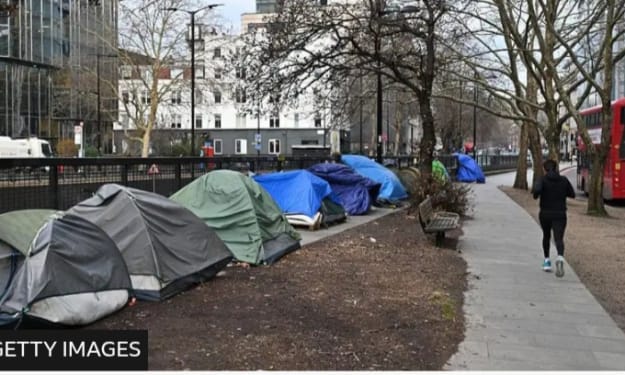
In recent years, the number of homeless refugees in England has surged at an alarming rate, a crisis that has been brought to light by the BBC’s investigative report. The report, which delves into the state of homelessness among refugees, paints a bleak picture of a growing problem that threatens to undermine the very foundations of the UK's welfare system. Despite the government's commitment to providing sanctuary to those fleeing war, persecution, and poverty, many refugees are finding themselves without a roof over their heads, struggling to survive on the streets.
By Ayesha Lashariabout 11 hours ago in The Swamp
What Trump’s Plans for the Arctic Mean for the Global Climate Crisis. AI-Generated.
Former U.S. President Donald Trump’s renewed focus on the Arctic has revived debate over one of the world’s most fragile and strategically important regions. His proposals to expand oil and gas drilling, strengthen military presence, and assert American influence in the far north have significant implications not only for U.S. policy but for the global climate crisis. The Arctic is warming nearly four times faster than the rest of the planet, according to scientific studies. Melting ice caps, thawing permafrost, and shrinking glaciers are already transforming ecosystems and indigenous livelihoods. Any decision to intensify industrial activity in the region risks accelerating these changes and undermining international efforts to limit global warming. Energy Expansion vs Climate Commitments Trump has long argued that the Arctic represents an untapped source of economic growth and energy independence. During his presidency, his administration opened large portions of Alaska’s Arctic National Wildlife Refuge (ANWR) and other federal lands to oil and gas exploration. He framed these moves as a way to reduce reliance on foreign energy and create jobs. Critics say this approach ignores the broader climate consequences. Extracting and burning Arctic fossil fuels would add millions of tons of carbon dioxide to the atmosphere. Environmental groups argue that expanding drilling in one of the most climate-sensitive regions of the world sends the wrong signal at a time when nations are trying to transition to renewable energy. Climate scientists warn that Arctic development carries higher risks than drilling elsewhere. Oil spills are harder to clean in icy waters, and infrastructure built on melting permafrost is more likely to fail. These hazards increase the chance of long-term environmental damage. Strategic and Geopolitical Stakes Trump’s Arctic ambitions are not limited to energy. The region is becoming a new arena of geopolitical competition as melting ice opens shipping routes and access to natural resources. Russia and China have invested heavily in Arctic infrastructure, ports, and military bases. Trump repeatedly emphasized the need for the U.S. to counter these moves. His administration sought to expand the U.S. Coast Guard fleet of icebreakers and increase military readiness in Alaska and the Arctic Ocean. Supporters argue this is necessary to protect national security and maintain freedom of navigation. However, environmental advocates worry that militarization could further disrupt fragile ecosystems and divert attention from climate cooperation. The Arctic Council, an international forum that includes the U.S., Russia, Canada, and Nordic countries, was created to promote scientific collaboration and environmental protection. Trump’s more confrontational stance raised concerns that climate diplomacy in the Arctic could be sidelined by strategic rivalry. Impact on Indigenous Communities Indigenous peoples living in the Arctic, including Alaska Native communities, are among the first to experience the consequences of warming temperatures. Coastal erosion, collapsing ice roads, and declining wildlife populations threaten traditional hunting and fishing practices. Some local leaders support limited development for economic reasons, including job creation and infrastructure investment. Others strongly oppose drilling, arguing it puts their culture and environment at risk. Trump’s plans have intensified these divisions, with critics saying decisions were often made without sufficient consultation with affected communities. Human rights groups note that indigenous voices are frequently marginalized in national debates about Arctic policy. They argue that sustainable development and climate adaptation should take priority over short-term resource extraction. Global Climate Consequences What happens in the Arctic does not stay in the Arctic. The region plays a critical role in regulating the Earth’s climate. Sea ice reflects sunlight back into space; when it melts, darker ocean water absorbs more heat, accelerating warming in a process known as the albedo effect. Thawing permafrost also releases methane, a greenhouse gas far more potent than carbon dioxide in the short term. Scientists warn that large-scale Arctic industrial activity could trigger feedback loops that make it much harder to meet global climate targets set under agreements like the Paris Accord. Trump withdrew the U.S. from the Paris Agreement during his presidency, arguing it unfairly restricted American industry. Although the U.S. later rejoined under President Joe Biden, Trump has signaled skepticism toward international climate commitments, raising fears that Arctic policy could once again shift toward aggressive exploitation if he returns to power. A Dividing Line in Climate Politics Trump’s Arctic vision reflects a broader divide in global climate politics: economic growth versus environmental protection. Supporters say America should use its natural resources to strengthen its economy and security. Opponents counter that the climate crisis demands restraint, innovation, and a move away from fossil fuels altogether. European nations and environmental organizations have called for the Arctic to be treated as a protected zone rather than a new frontier for extraction. Some have proposed moratoriums on Arctic drilling, citing the region’s vulnerability and global importance. Conclusion Trump’s plans for the Arctic carry consequences far beyond U.S. borders. They affect not only energy markets and geopolitics but also the future of the global climate system. As ice continues to melt and competition intensifies, the choices made by major powers will shape whether the Arctic becomes a symbol of cooperation and conservation or a battleground for resources. The debate underscores a central question of the climate era: will the world prioritize short-term economic gains, or recognize that protecting the Arctic is essential to protecting the planet itself?
By Fiaz Ahmed about 11 hours ago in The Swamp
US Expresses Solidarity After Balochistan Attacks, Says It Stands ‘Steadfast’ With Pakistan. AI-Generated.
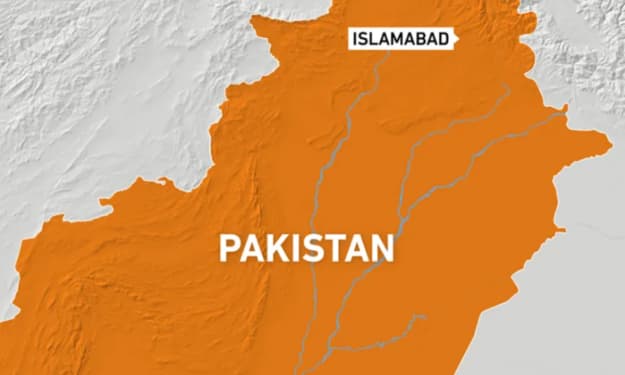
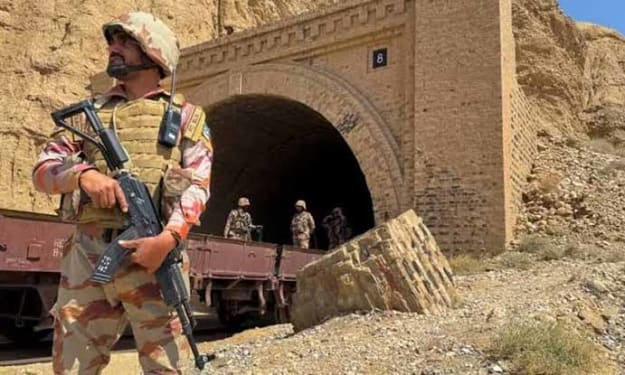
The United States has expressed strong solidarity with Pakistan following a series of deadly attacks in the southwestern province of Balochistan, reaffirming its commitment to stand “steadfast” with the country in its fight against terrorism and violent extremism. The statement comes amid heightened security concerns after coordinated assaults targeted civilians and security personnel, drawing widespread condemnation from the international community. In an official statement released by the US State Department, Washington conveyed its condolences to the families of the victims and emphasized its continued partnership with Pakistan to counter militant threats. “The United States stands steadfast with Pakistan and the Pakistani people during this difficult time,” the statement said, adding that acts of violence against innocent civilians are “unacceptable and must be confronted collectively.” Deadly Attacks in Balochistan The attacks occurred in multiple districts of Balochistan, a province that has long struggled with insurgency, separatist movements, and militant activity. According to Pakistani authorities, gunmen and suicide attackers targeted security checkpoints and public areas, killing several people and injuring dozens more. Emergency services were rushed to the scenes, while hospitals in nearby cities were placed on high alert. Security forces launched search operations to track down those responsible, sealing off affected areas and increasing patrols across major towns. Officials described the attacks as a deliberate attempt to destabilize the region and undermine development projects underway in the province. Balochistan, Pakistan’s largest province by area but least populated, has been at the center of security challenges for years. It is also a strategic region due to its mineral resources and its location along the Arabian Sea, including the Gwadar port, which is a key part of the China-Pakistan Economic Corridor (CPEC). International Condemnation The US response was among several messages of support from foreign governments and international organizations. American officials reiterated their opposition to terrorism in all its forms and stressed the importance of regional cooperation to prevent such attacks from recurring. A senior US official said Washington remains committed to working closely with Pakistan’s law enforcement and intelligence agencies. “We recognize the sacrifices Pakistan has made in combating terrorism, and we will continue to support efforts that promote peace and stability,” the official noted. The US embassy in Islamabad also issued a message of sympathy, expressing condolences to the victims’ families and wishing a swift recovery to those injured. It highlighted the long-standing security cooperation between the two countries, including joint counterterrorism initiatives and training programs. Pakistan’s Response Pakistan’s leadership strongly condemned the attacks, calling them an assault on national unity and public safety. The Prime Minister vowed that those responsible would be brought to justice and reaffirmed the government’s resolve to eliminate terrorism from the country. In a televised address, he said the violence would not deter Pakistan from pursuing economic development and regional connectivity. “Our enemies want to spread fear and chaos, but they will fail,” he stated. “The nation stands united with our security forces.” The Interior Ministry announced stricter security measures in sensitive districts of Balochistan, including increased checkpoints, intelligence-based operations, and coordination with provincial authorities. Officials also urged citizens to remain vigilant and report suspicious activity. Strategic Importance of Balochistan Analysts note that Balochistan’s security situation has broader regional implications. The province borders Iran and Afghanistan, making it vulnerable to cross-border militant movements and smuggling networks. Instability in the area also affects key infrastructure and investment projects, which are vital for Pakistan’s economic growth. The US statement of solidarity is seen as part of a broader effort to maintain stability in South Asia and prevent extremist groups from exploiting regional tensions. Washington has repeatedly emphasized that a secure and prosperous Pakistan is essential for peace in the wider region. Some observers say the renewed diplomatic support may also signal an attempt to strengthen bilateral relations after years of fluctuating ties. While cooperation between the two countries has faced challenges in the past, counterterrorism remains a shared priority. Human Cost and Community Impact Beyond the political and strategic implications, the attacks have left deep scars on local communities. Families mourned their loved ones as funeral prayers were held under heavy security. Survivors described scenes of chaos and fear, with many calling for stronger protection and justice. Human rights organizations have urged authorities to ensure that counterterrorism operations respect the rule of law and protect civilian lives. They stressed the importance of addressing not only security concerns but also the underlying social and economic grievances that fuel unrest in the province. Looking Ahead The US pledge to stand “steadfast” with Pakistan underscores the continued importance of international cooperation in addressing terrorism. Both countries have signaled that dialogue, intelligence sharing, and joint efforts will remain central to preventing future attacks. As Pakistan continues its operations in Balochistan, officials say they are determined to restore calm and ensure that development projects can proceed without disruption. For Washington, the latest statement reflects a recognition that long-term stability in Pakistan is closely linked to global security. While the investigations into the attacks continue, the message from both Islamabad and Washington is clear: violence will not be allowed to derail efforts toward peace, and those responsible will face justice.
By Fiaz Ahmed about 11 hours ago in The Swamp
US Navy Fires Commander Due to Loss of Confidence. AI-Generated.
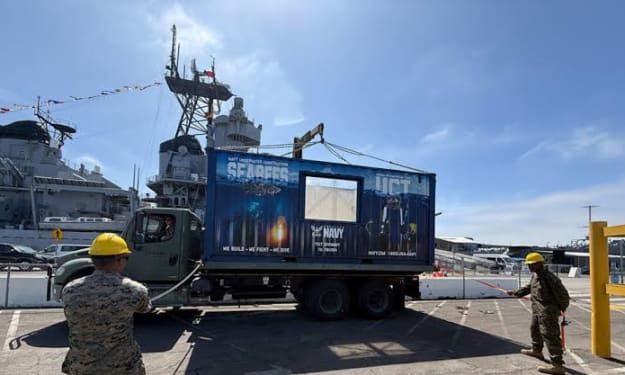
The United States Navy has removed a senior commander from duty, citing a “loss of confidence” in their ability to lead, a phrase commonly used by the military to describe serious concerns over performance or conduct. The decision highlights the Navy’s strict standards of leadership and accountability, particularly at a time of heightened global security challenges and operational demands. In a brief statement, Navy officials confirmed that the commander was relieved of duty following an internal review. While specific details were not immediately disclosed, the Navy emphasized that the action was taken to maintain good order and discipline within the force. “Commanders are held to the highest standards of responsibility, professionalism, and integrity,” the statement said. “When those standards are not met, decisive action is required.” Meaning of “Loss of Confidence” In military terminology, being removed for “loss of confidence” does not necessarily imply criminal wrongdoing. It can result from a range of issues, including leadership failures, poor judgment, operational mistakes, or behavior that undermines trust within the unit. The phrase allows the service to protect privacy while signaling that the individual can no longer effectively command. Defense analysts note that such removals, while not uncommon, are significant because command positions carry immense authority and responsibility. A commander is expected to ensure mission readiness, safeguard personnel, and uphold the Navy’s core values. The Navy did not release the commander’s name in initial statements, citing personnel privacy rules. An acting commander has been appointed to ensure continuity of operations, and the unit will continue its mission without disruption, officials said. Context of the Decision The firing comes at a time when the US Navy is facing increased operational pressures in multiple regions, including the Indo-Pacific, the Middle East, and Europe. Maintaining discipline and effective leadership is seen as essential as the service responds to rising tensions with rival powers and ongoing conflicts around the world. Sources familiar with the matter said the decision followed an investigation into issues related to command climate and leadership performance. While not classified, the findings reportedly raised concerns significant enough to justify removal. Military officials stressed that the move reflects the Navy’s commitment to accountability, regardless of rank. “No one is above the standards we set for leadership,” one senior official said on condition of anonymity. Impact on the Unit The affected unit, whose identity has not been fully disclosed, plays a key role in naval operations and training. The Navy said there is no immediate impact on readiness or mission execution. Sailors under the commander’s authority were informed of the decision through internal channels, and leadership transition procedures were implemented swiftly. For service members, such a change can be unsettling, but Navy leadership emphasized stability and continuity. Counseling and support services were made available to personnel who may be affected by the sudden shift in command. An acting commander with extensive experience has taken over, and a permanent replacement is expected to be announced following a formal selection process. Broader Pattern in the Military Relief of commanders for loss of confidence has occurred across all branches of the US military in recent years. The Department of Defense has increasingly emphasized ethical leadership, professional conduct, and respect in command environments. Recent cases have involved issues ranging from inappropriate relationships and misuse of resources to failures in operational judgment. In many instances, investigations reveal not a single event but a pattern of decisions that erode trust within a unit. Experts say this reflects a broader cultural shift toward transparency and accountability in the armed forces. “The military understands that leadership failures can have serious consequences for morale and mission success,” said a former Navy officer turned defense analyst. “Removing a commander is never taken lightly, but it sends a clear message about expectations.” Legal and Career Consequences Being relieved of command can have long-term consequences for an officer’s career. While not all cases result in disciplinary action or court-martial, removal often ends prospects for promotion and may lead to early retirement or reassignment to a non-command role. The Navy has not indicated whether further administrative or legal steps will follow in this case. Officials said the matter is being handled in accordance with established military procedures. Under Navy regulations, officers who are relieved of duty may be subject to performance evaluations and additional review by senior leadership. Depending on the findings, outcomes can range from counseling and retraining to formal disciplinary measures. Public and Political Reaction The announcement drew attention from defense watchers and lawmakers, who have increasingly scrutinized leadership standards in the armed forces. Some members of Congress have called for greater transparency in cases involving senior officers, particularly when public trust is at stake. However, military leaders argue that privacy protections and due process must be balanced with the public’s right to know. “We have to ensure fairness to the individual while maintaining confidence in the institution,” a Pentagon spokesperson said. Looking Ahead The Navy said it remains focused on its core mission of protecting national security and supporting allies around the world. The removal of the commander, officials stressed, should be seen as part of ongoing efforts to uphold discipline and professionalism. “This action demonstrates that leadership matters,” the Navy statement concluded. “Our sailors deserve commanders who embody our values and are fully capable of leading them in challenging times.” As investigations continue and a permanent replacement is appointed, the incident serves as a reminder of the high standards expected of those entrusted with command in the US military. While such decisions can be disruptive, they are also viewed as necessary to preserve the integrity and effectiveness of the armed forces.
By Fiaz Ahmed about 11 hours ago in The Swamp
Gulf Unity Cracks: Bahrain on the Frontline. AI-Generated.
For decades, the Gulf Cooperation Council (GCC) has presented itself as a united bloc bound by shared security concerns, economic interests, and political alliances. Yet recent developments suggest that this unity is under growing strain. Bahrain, a small island nation strategically located in the Persian Gulf, has increasingly found itself on the frontline of regional tensions, highlighting cracks in Gulf unity and exposing deeper divisions among Arab states. Bahrain’s position is unique. It hosts the United States Navy’s Fifth Fleet and lies just across the narrow waters from Iran, a regional power with which several Gulf states have long had uneasy relations. While Saudi Arabia and the United Arab Emirates remain Bahrain’s closest allies, shifting diplomatic priorities across the Gulf have placed Manama in a difficult balancing act between security dependence and political autonomy. A Changing Regional Landscape The Gulf region is undergoing a period of realignment. Saudi Arabia and Iran have recently taken steps to restore diplomatic relations after years of hostility, mediated by China. The UAE has also pursued cautious engagement with Tehran, prioritizing trade and regional stability over confrontation. These moves have softened tensions in some parts of the Gulf but have also created uncertainty for Bahrain, which continues to view Iran as its primary security threat. Bahrain’s leadership has consistently accused Tehran of interfering in its internal affairs, particularly during periods of unrest. These concerns remain central to Manama’s foreign policy outlook. While other Gulf states explore détente with Iran, Bahrain has maintained a more confrontational stance, reinforcing its reliance on Western allies and Saudi backing. This divergence in approaches has exposed fractures within the GCC, an organization originally formed to counter external threats and promote unity among its six members: Bahrain, Saudi Arabia, the UAE, Kuwait, Oman, and Qatar. Normalization and Its Consequences Another source of strain has been Bahrain’s normalization of relations with Israel under the Abraham Accords. While the UAE and Morocco also joined the agreement, the move remains controversial in the Arab world, especially amid continuing violence in Gaza and the broader Israeli-Palestinian conflict. For Bahrain, normalization was framed as a strategic decision to strengthen security cooperation and diversify diplomatic partnerships. However, it has also placed the country under increased scrutiny from regional actors and segments of its own population, many of whom strongly support the Palestinian cause. Some Gulf states have taken more cautious positions, emphasizing humanitarian concerns and calling for ceasefires rather than expanding ties with Israel. This divergence has further highlighted the lack of a unified Gulf stance on major geopolitical issues. Domestic Pressures and Regional Rivalries Bahrain’s internal dynamics add another layer of complexity. The country has experienced political unrest in the past, and authorities remain wary of external influence that could inflame domestic tensions. This has made security cooperation with allies such as Saudi Arabia and the United States a top priority. Yet this dependence also limits Bahrain’s diplomatic flexibility. While larger Gulf states can pursue multi-directional foreign policies, Bahrain’s smaller size and strategic vulnerabilities mean it must tread carefully. Any shift in regional alliances could leave it exposed if broader Gulf unity weakens. Analysts say Bahrain’s role as a frontline state makes it a barometer of wider regional tensions. “When relations among Gulf countries become strained, Bahrain feels it first,” said one regional expert. “Its security is closely tied to the political decisions of others.” The Future of GCC Unity The current moment raises questions about the future of the GCC as a cohesive bloc. While the organization remains intact and continues to coordinate on economic and security matters, differences in foreign policy priorities are becoming more visible. Kuwait and Oman traditionally maintain neutral stances and act as mediators, while Qatar has pursued an independent diplomatic path since the end of the 2017 blockade. Saudi Arabia and the UAE, once closely aligned, now show signs of strategic divergence in areas such as energy policy and regional diplomacy. Bahrain, firmly anchored to Saudi support, appears increasingly isolated in its hardline positions. Despite these challenges, Gulf leaders continue to stress the importance of cooperation. Recent summits have focused on economic integration, infrastructure development, and joint responses to security threats. However, behind closed doors, debates over Iran, Israel, and relations with major powers like China and the United States remain unresolved. A Region in Transition Bahrain’s situation illustrates the broader transformation underway in the Middle East. The era of rigid alliances is giving way to more fluid and pragmatic relationships driven by economic interests and national security calculations. For Bahrain, this transition is particularly delicate, as it must navigate between traditional alliances and emerging regional realities. Whether Gulf unity can adapt to these changes remains uncertain. What is clear is that Bahrain stands at the intersection of competing visions for the region’s future. Its choices, shaped by geography and history, will continue to reflect the shifting balance of power in the Gulf. As regional diplomacy evolves, Bahrain’s role on the frontline serves as a reminder that unity in the Gulf is no longer guaranteed. Instead, it is being tested by a new era of strategic competition, cautious reconciliation, and unresolved conflicts that continue to shape the Middle East.
By Fiaz Ahmed about 11 hours ago in The Swamp