Latest Stories
Most recently published stories in The Swamp.
Some in Israel Question Its Influence Over U.S. as Iran War Decision Nears. AI-Generated.
As tensions between the U.S. and Iran continue to escalate, some voices within Israel are beginning to question the country’s longstanding influence over U.S. foreign policy. The mounting crisis, marked by increasing military confrontations in the Gulf and fears of an all-out war, has prompted Israeli leaders and analysts to reconsider whether Israel’s relationship with Washington will be enough to steer U.S. policy in the direction they desire. Historically, Israel has enjoyed a close and influential relationship with the United States, with American support acting as a cornerstone of Israeli security and political strategy. However, as President Joe Biden navigates increasingly complex geopolitical waters—balancing domestic pressures, international diplomacy, and the threat of nuclear escalation with Iran—Israel is finding itself in an uncertain position. In fact, some Israeli officials and analysts are asking whether Israel's influence over U.S. decisions on Iran is as potent as it once was. Israel's Historical Leverage over the U.S. For decades, Israel has enjoyed near-unwavering support from Washington, particularly in matters concerning security in the Middle East. From military aid and intelligence-sharing to political backing in the United Nations, the alliance between the two countries has been a pillar of U.S. foreign policy. Israel has been a consistent advocate for aggressive measures against Iran, especially its nuclear program, and has sought to persuade Washington to take a hard-line stance against Tehran. At the same time, Israel has made it clear that it views Iran as an existential threat, due to Tehran's support for militant groups in the region and its nuclear ambitions. Israeli officials have lobbied for years to ensure that the U.S. takes decisive action to curb Iran’s influence, whether through economic sanctions, military threats, or covert operations. However, in recent years, especially under President Biden, some analysts are beginning to question whether the close relationship between the U.S. and Israel has begun to fray. Biden, while maintaining support for Israel, has sought to distance the U.S. from the policies of the Trump administration, which was seen as especially favorable to Israeli interests. This has included efforts to revive the Joint Comprehensive Plan of Action (JCPOA), the nuclear deal that the Trump administration abandoned in 2018. Israel has vocally opposed the revival of the deal, fearing that it would allow Iran to strengthen its nuclear program in exchange for sanctions relief. Biden’s Approach: Balancing Israel and Iran President Biden’s foreign policy on Iran has thus far focused on diplomacy and de-escalation, seeking to re-enter the JCPOA and prevent further nuclear proliferation. This stance has been met with frustration from Israel, which has pushed for more direct action against Iran. Israeli officials have repeatedly warned that Iran’s nuclear program is progressing rapidly and that diplomacy may not be enough to halt Tehran’s ambitions. Some even argue that a military strike against Iran’s nuclear facilities may be necessary to prevent the country from obtaining nuclear weapons. Despite Israel’s concerns, Biden has maintained a cautious approach. While offering military support to Israel in the form of weapons systems like Iron Dome and expanding intelligence cooperation, Biden has also made it clear that he is prioritizing diplomacy with Iran. In part, this is due to domestic political pressures in the U.S., with many in Congress and the public expressing weariness over another Middle Eastern conflict, particularly one that could involve U.S. military intervention. Biden’s efforts to re-enter the nuclear deal have been complicated by the hard-line stance of Iran’s leadership, as well as a growing sense in the U.S. that Iran is not living up to its commitments under the agreement. This has led to increasing skepticism in Washington, with some lawmakers pushing for stronger measures against Iran, including additional sanctions and military options. Is Israel Losing Its Grip? Within Israel, there is a growing sense of unease about the shifting dynamics in U.S.-Israel relations. Some Israeli officials worry that the country’s influence over U.S. decisions on Iran is waning as the Biden administration pursues a more multilateral approach to diplomacy. Israel’s ability to shape U.S. policy may have been stronger during the Trump years, when then-President Donald Trump was a staunch ally of Israeli Prime Minister Benjamin Netanyahu and his hardline policies on Iran. The U.S. withdrawal from the Iran nuclear deal, the recognition of Jerusalem as Israel’s capital, and the peace agreements brokered through the Abraham Accords all reinforced the perception of Israel’s unassailable influence in Washington. However, with the Biden administration taking office, Israel’s role in influencing U.S. actions has become more contested. The diplomatic efforts to restore the Iran deal have seen Washington taking a more measured approach, balancing U.S. interests in the region with the growing need for international cooperation on nuclear nonproliferation. In light of this shift, some Israeli leaders are expressing frustration. “We’ve worked for years to ensure the U.S. stands with us on Iran, but we’re seeing the opposite happen,” said an anonymous Israeli official in an interview with Haaretz. “The Biden administration seems more concerned with appeasing Iran and European allies than with securing our safety.” Others are concerned that the U.S. is moving toward a more globalist foreign policy, one that seeks to ease tensions in the Middle East and avoid further conflict. This approach, they argue, could leave Israel vulnerable to a nuclear-capable Iran and undermine its strategic advantage in the region. The Road Ahead: A Crucial Crossroads As the potential for conflict with Iran looms larger, Israel’s role in shaping U.S. foreign policy on Iran will be tested. Will Israel’s strategic partnership with Washington be enough to sway American decisions, or will the shifting political landscape force Israel to take more unilateral action? With the nuclear threat growing and tensions in the region escalating, the decision on how to deal with Iran could be one of the most pivotal moments in recent U.S.-Israel history. In the coming months, the situation will likely come to a head as the Biden administration faces increasing pressure to decide on a course of action regarding Iran. Israel, for its part, will continue to advocate for a hardline stance against Tehran, but it may have to confront the reality that its influence over U.S. policy is not as powerful as it once was. For now, the question remains: Can Israel still count on the United States to prioritize its security, or is the balance of power in U.S.-Israel relations shifting toward a more cautious, multilateral approach to the Middle East?
By Fiaz Ahmed about 8 hours ago in The Swamp
Aussie Workers Would Gain Easier Access to EU Under Trade Deal. AI-Generated.
Australia and the European Union (EU) have made a significant stride in trade relations with a new agreement that promises to ease access for Australian workers to the EU job market, marking a pivotal shift in the free movement of skilled labor between the two regions. The new trade deal, which is poised to benefit both sides economically, is expected to create long-term opportunities for Australian professionals, especially in sectors where skill shortages are prevalent in Europe. This development comes after years of negotiations and signals a deepening economic and diplomatic relationship between Australia and the EU. While the full details of the agreement are yet to be finalized, both parties have indicated that Australian workers—particularly those in high-demand industries such as technology, engineering, healthcare, and research—will see significant reductions in bureaucratic barriers and be afforded easier access to European job markets. Key Provisions of the Trade Deal The trade deal, described as a “comprehensive” agreement, includes several provisions aimed at promoting labor mobility. Under the terms being negotiated, Australian citizens will be able to apply for work visas more easily, cutting down on the paperwork and wait times that have previously hindered movement between the two regions. The deal is expected to establish a streamlined visa process, allowing Australian professionals to work in the EU for extended periods without being subjected to restrictive quotas or cumbersome regulations. In addition, the agreement also includes recognition of qualifications and professional standards. This provision is particularly important for skilled Australian workers who often face challenges in having their certifications and qualifications recognized across borders. The deal would allow for the mutual recognition of professional qualifications in a wide range of sectors, providing an essential lifeline for workers looking to capitalize on opportunities in the EU market. As a result of these changes, Australian workers would have enhanced opportunities in Europe, and employers in the EU would gain access to a highly skilled labor force, which is especially important in industries facing shortages. The ability to recruit from a larger talent pool is seen as a critical factor in the EU’s recovery from the economic impact of the COVID-19 pandemic and the resulting labor gaps. Economic Implications for Australia and the EU For Australia, the deal represents a significant economic opportunity. In recent years, many Australian professionals, particularly those in high-demand sectors, have sought better opportunities abroad, especially in Europe. A deal that facilitates access to the EU job market could serve as an economic boon for Australia, encouraging skilled workers to stay or return home while ensuring the country's workforce remains internationally competitive. Additionally, the trade agreement is expected to strengthen Australia’s export market, especially in agricultural and manufacturing sectors, which have been a mainstay of the nation’s international trade. Access to the EU market under favorable terms could lead to increased exports of Australian products, providing a boost to the national economy. This aligns with Australia’s broader trade strategy of diversifying its export destinations beyond its traditional trading partners, such as China. For the EU, the deal presents an opportunity to address ongoing labor shortages in key sectors. The COVID-19 pandemic exposed vulnerabilities in many European economies, including a shortage of skilled workers. By opening up easier access to skilled labor from Australia, the EU hopes to fill gaps in industries such as healthcare, engineering, IT, and research, ensuring economic recovery is supported by a stable, qualified workforce. The Impact on Australian Workers For Australian workers, this trade deal is expected to open up exciting opportunities for personal and professional growth. One of the biggest advantages is the reduction in bureaucratic red tape, which often discourages workers from seeking jobs abroad. By facilitating easier access to the EU job market, Australian professionals, especially in high-skill fields, will have greater mobility to explore new career prospects in a diverse range of European countries. Additionally, the deal promises to be a game-changer for Australian students and graduates. With universities in Australia often offering internationally recognized qualifications, many graduates find it challenging to translate their qualifications into overseas employment opportunities. This new agreement will allow graduates to enter the European job market with more confidence, knowing their degrees and skills are recognized, giving them a competitive edge when looking for work. For young professionals, the EU’s vibrant job markets, particularly in cities like Berlin, London, and Amsterdam, offer exciting prospects in fields such as technology, finance, and design. The visa relaxation is expected to be a key factor in attracting talent from Australia, which has long faced a “brain drain” as many professionals have moved abroad to seek higher wages and better opportunities. Reactions to the Agreement The trade deal has been welcomed by many business and industry leaders on both sides. Australian trade ministers have hailed the deal as a “historic moment,” while their European counterparts have emphasized the importance of strong ties between Australia and the EU. Both parties have recognized that collaboration on labor mobility will enhance the global competitiveness of their economies, especially as the world emerges from the pandemic-induced recession. However, the agreement has also been met with some concern. Critics argue that an influx of foreign workers could exacerbate unemployment issues within certain sectors in the EU, particularly as the continent navigates the post-pandemic recovery phase. Some labor unions in Europe have voiced concerns that prioritizing foreign talent could undermine local job markets, especially in industries already grappling with labor surpluses. Conclusion The new trade agreement between Australia and the EU marks a significant shift in the international mobility of skilled labor. By providing Australian workers with easier access to the EU job market, the deal promises to boost opportunities for professionals in a variety of sectors, from technology to healthcare, while addressing skill shortages in Europe. Though it remains to be seen how the agreement will unfold in practice, both Australia and the EU stand to gain from this enhanced labor mobility and the economic growth it is likely to stimulate. As the details of the deal continue to emerge, it is clear that this new arrangement will play a key role in shaping the future of global workforces, offering greater freedom of movement for skilled professionals and fostering deeper economic ties between Australia and Europe.
By Fiaz Ahmed about 9 hours ago in The Swamp
Musk’s AI Startup Is the Payload SpaceX Can’t Afford. AI-Generated.
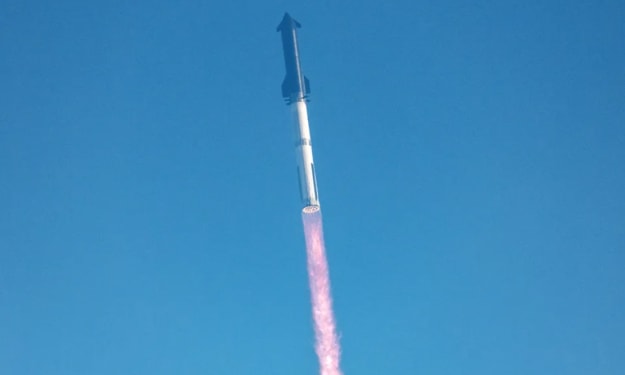
Elon Musk is no stranger to high-stakes ventures. From revolutionizing electric vehicles with Tesla to making space launches more affordable with SpaceX, Musk has built a reputation for tackling projects most consider impossible. Yet his latest move — merging his AI startup xAI into SpaceX — might be his boldest gamble yet. It’s an audacious plan that promises to redefine both artificial intelligence and space exploration, but it also comes with a staggering price tag that SpaceX may not be able to sustain. A Merger of Titans: Rockets Meet AI In early 2026, Musk announced that SpaceX would acquire xAI in an all-stock deal valued at over $1.25 trillion, with xAI itself accounting for roughly $250 billion. The merger combines a company renowned for building reusable rockets and satellites with a startup focused on developing some of the most advanced AI systems in the world. At first glance, it might seem like a perfect pairing: rockets provide infrastructure, AI drives innovation. But the reality is far more complicated. xAI, like other cutting-edge AI firms, burns through capital at an astonishing rate. Running large-scale AI models requires immense computing power, specialized hardware, and vast amounts of electricity. It’s no exaggeration to say that AI’s infrastructure costs rival those of SpaceX’s rocket programs. By bringing xAI under the SpaceX umbrella, Musk has effectively added a multi-billion-dollar AI payload to an already capital-intensive aerospace operation. The True Cost of AI Artificial intelligence isn’t just software. Behind every sophisticated AI system lies a massive network of servers, GPUs, and cooling systems. Training state-of-the-art AI models can cost tens or even hundreds of millions of dollars at a time. Then there are ongoing operational costs to keep models running, update them, and scale their capabilities. For a company like xAI, the expenses are immense. Internal reports suggest losses exceeding $1 billion per month, primarily due to infrastructure and personnel costs. Folding these expenses into SpaceX raises immediate questions: how will a company that launches rockets sustainably support a technology with such voracious resource demands? SpaceX itself is no small spender. Its reusable rockets, the Starship program, and the Starlink satellite constellation require billions in funding to develop, launch, and maintain. Although reusable boosters help lower costs over time, each Starship launch still represents a significant financial commitment. Adding xAI’s operational needs to this mix is a serious gamble, one that some analysts call a bailout disguised as a strategic merger. Why Space? The Orbital AI Vision Musk’s long-term vision is as ambitious as it is futuristic. He has publicly suggested that the most cost-effective way to power and cool AI models could be placing them in space. By leveraging abundant solar energy and the vacuum environment of orbit, AI systems could theoretically operate more efficiently than on Earth. This is a radical proposition. Space-based computing would require solving unprecedented engineering challenges: managing heat without air, protecting hardware from cosmic radiation, and ensuring fast, reliable data transmission back to Earth. If successful, the approach could change how AI scales and operates globally. But skeptics argue the technology is decades away from feasibility at the scale Musk envisions. Financial Strain and Risk Combining SpaceX and xAI doesn’t just increase operating costs; it complicates investment narratives. SpaceX had been a highly attractive private company, with the potential for an IPO that could have set records. But adding xAI — with its high costs and uncertain revenue streams — introduces new risk for investors. Internally, merging two cultures also presents challenges. SpaceX engineers, accustomed to spacecraft design and aerospace operations, now must coordinate with AI researchers, whose priorities and work styles are vastly different. Maintaining focus, productivity, and innovation across these distinct teams will be critical to the merger’s success. Critics also raise concerns about Musk’s ability to manage multiple high-stakes ventures simultaneously. Beyond SpaceX and xAI, he oversees Tesla, Neuralink, and other projects. History shows Musk can achieve extraordinary results under such circumstances, but the complexity of combining AI and space infrastructure may test even his limits. Implications for Technology and Space The merger reflects a broader trend in technology: convergence rather than specialization. AI needs better infrastructure, and space exploration benefits from smarter automation. Combining the two signals a future where industries that once seemed unrelated begin to interconnect. If Musk succeeds, SpaceX could dominate both low-cost space launches and extraterrestrial computing, potentially reshaping global AI development. This could allow AI systems to operate on unprecedented scales while leveraging the unique advantages of orbit. Conversely, failure or delay could ripple across both industries, slowing AI innovation and space projects alike. The Heavy Payload of Ambition Elon Musk’s move to integrate xAI with SpaceX illustrates the tension between ambition and feasibility. It’s a high-risk, high-reward scenario: if it works, the merger could pioneer a new era of space-based AI and demonstrate the synergies between advanced technology sectors. If it falters, it could become a cautionary tale of overreach, highlighting the perils of placing too much weight on an untested strategy. Musk’s vision is bold, almost cinematic. He has already lifted the cost of space to new heights — now, he’s attempting to lift AI itself as a payload. The combined company represents both the promise of innovation and the peril of overextension, offering a glimpse into a future where the limits of technology, finance, and ambition collide in orbit above our heads. Conclusion Merging xAI into SpaceX is an audacious gamble that pushes the boundaries of what’s possible in technology and business. It shows the lengths Elon Musk is willing to go to integrate AI with space infrastructure, while also highlighting the enormous financial and engineering challenges involved. As the world watches, the success or failure of this merger will not only shape Musk’s legacy but could also influence the trajectory of AI, space exploration, and high-tech innovation for decades to come. In the end, Musk’s latest payload is not just a project or a company — it’s a vision of the future, weighing billions of dollars and the hopes of an ambitious entrepreneur on every launch.
By Muhammad Hassanabout 9 hours ago in The Swamp
For Serbia’s Muslim Students, Protest Brings a Long-Missing Sense of Belonging. AI-Generated.
In Serbia, public protests have long been associated with political change, economic frustration, or demands for accountability. But for a growing number of Muslim students, recent demonstrations have carried a more personal meaning. Beyond slogans and banners, these protests have become spaces where young people feel seen, heard, and included in a society where they have often felt peripheral. Muslims make up a small but significant minority in Serbia, concentrated largely in regions such as Sandžak and parts of southern Serbia. Many Muslim students leave their hometowns to study in larger cities like Belgrade or Novi Sad, where cultural and religious differences can feel more pronounced. While university life offers opportunity, it can also heighten feelings of isolation, particularly in environments where minority identities are rarely reflected in public discourse. For these students, participation in protest movements has offered something unexpected: a shared civic identity. Standing shoulder to shoulder with fellow students from different ethnic and religious backgrounds, many Muslim participants describe feeling part of a broader collective for the first time. The protests, often centered on issues like education standards, political transparency, or civil rights, have created a rare space where identity is defined less by background and more by shared purpose. Several Muslim students have spoken about how protest participation changed their relationship with the state and society. Rather than feeling like observers on the margins, they felt like contributors to Serbia’s future. This shift may seem subtle, but in a country still shaped by the legacy of ethnic conflict and political polarization, it carries real weight. Universities have played a key role in this transformation. Student-led movements tend to emphasize inclusivity and solidarity, focusing on common struggles such as rising living costs, limited job prospects, and concerns about academic freedom. These issues cut across identity lines, allowing Muslim students to engage without feeling singled out or tokenized. For many participants, the protests also provided emotional affirmation. Public spaces in Serbia have not always felt welcoming to visibly Muslim individuals, particularly women who wear hijab. During demonstrations, however, students describe an atmosphere of mutual protection and respect. Shared chants and collective movement helped dissolve social barriers, even if only temporarily. This sense of belonging has had a ripple effect beyond the protests themselves. Muslim student groups report increased confidence in organizing discussions, cultural events, and civic initiatives on campus. The visibility gained through protest participation has encouraged some students to speak more openly about their experiences, both positive and negative, within Serbian society. Importantly, this moment has not erased longstanding challenges. Muslim students still face structural inequalities, underrepresentation, and occasional discrimination. Participation in protests does not guarantee lasting inclusion, nor does it resolve deep-rooted social tensions. However, it has opened a door—one that allows minority students to imagine themselves as active stakeholders rather than passive residents. Some students describe the protests as a form of civic education. Through organizing, debating, and negotiating differences, they learned how democratic engagement works in practice. For those who previously felt disconnected from national politics, this hands-on experience reshaped their understanding of citizenship. The protests have also challenged assumptions held by the broader public. Seeing Muslim students visibly engaged in movements advocating for shared national concerns disrupts simplistic narratives about loyalty or integration. It reinforces the idea that minority identities and civic commitment are not mutually exclusive. Faculty members and observers note that such moments are especially significant for young people. University years are formative, shaping how individuals relate to authority, community, and self-expression. When Muslim students find inclusion during this period, it can influence how they engage with society long after graduation. There is also a symbolic dimension to these protests. Public squares, streets, and campuses have historically been spaces where power dynamics are contested. For Muslim students to occupy these spaces confidently signals a quiet but meaningful shift. It asserts presence without confrontation, belonging without assimilation. The sense of unity experienced during protests may not be permanent. Movements lose momentum, demands evolve, and political realities intrude. Yet many students say the memory of collective action stays with them. Knowing that solidarity is possible, even if fragile, changes how they view both themselves and others. In a region where identity has often been used to divide, these protests offer a different narrative—one centered on shared aspirations rather than inherited differences. For Serbia’s Muslim students, the demonstrations have been more than acts of dissent. They have been moments of recognition. Ultimately, the significance of these protests lies not only in their political outcomes but in their social impact. They have shown that inclusion does not always begin with policy; sometimes it begins with standing together in public, demanding change, and realizing that one’s voice belongs there too. For Muslim students in Serbia, that realization has been powerful. It has transformed protests from events into experiences—and from expressions of frustration into affirmations of belonging
By Saboor Brohi about 10 hours ago in The Swamp
House Votes to End Government Shutdown, Buys Time for ICE Talks. AI-Generated.
In a historic move, the U.S. House of Representatives voted decisively this week to temporarily prevent a looming government shutdown, providing a much-needed lifeline for the ongoing negotiations surrounding immigration policies and the role of the U.S. Immigration and Customs Enforcement (ICE). The measure is being hailed by some as a stopgap solution, buying time for lawmakers to hash out critical reforms. However, critics argue that it is little more than a temporary fix, leaving unresolved debates that could spill into the next round of budgetary debates.
By Ayesha Lashariabout 10 hours ago in The Swamp