
Necropolitics
The United States in the 21st Century

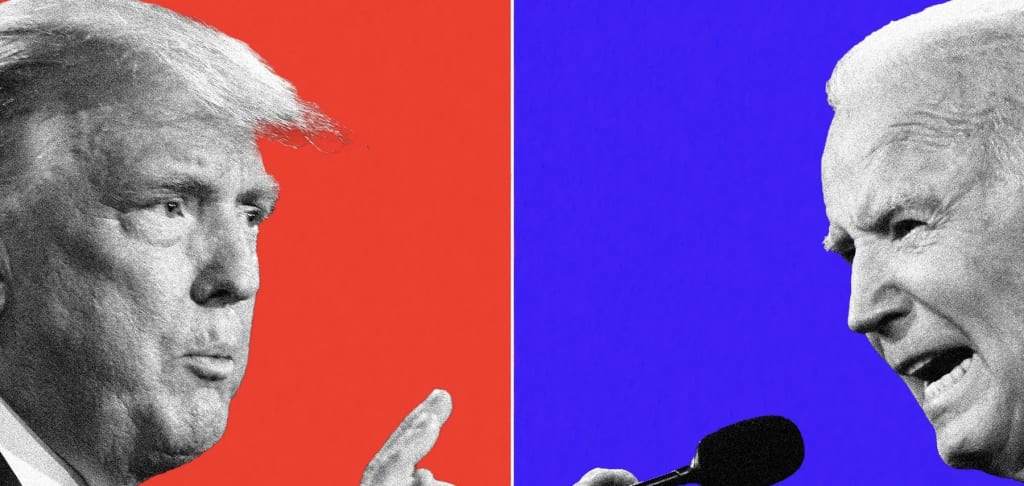
It’s 2024. It's been twenty years since I was in high school. It's been twenty-one years since the invasion of Iraq, and 23 years since the September 11, 2001 attacks.
Why do I bring up this timeline?
This timeline is important because, watching the coverage and fallout of the attempted assassination of Donald Trump last Saturday, June 13, I came to a profound and troubling conclusion about the state of American politics and how they have changed in the previous two decades.
That conclusion is that the United States has become locked in a state of necropolitics. A state in which death dominates our national political discourse. Death of our enemies, both real and perceived. The death of children in places where they should be safe. And the death of Americans from a myriad of other actions that used to not happen with the frequency that they have over the last two decades.
Where did this all begin?
It all began on the morning of September 11, 2001. The attacks of that morning are not the sole reason for our current situation. However, the chain of events and decisions that they led to is a major component of United States politics in the 21st century, because following the attacks, Americans wanted revenge. They wanted the deaths of those 3,000 Americans atoned for.
From then on, we began to see this system develop, where scoring political points depended on how many deaths one could cause. Or on which deaths one could prevent.
We see this in the public execution of Saddam Hussein. While something like this would always be publicized the way it was, it was also used to justify the war in Iraq. And in turn, to wash away the shame from President George W. Bush’s premature “Mission Accomplished” speech.
The process of politicizing the death of an enemy combatant was repeated in May 2011, when Special Operations forces from the United States raided Osama bin Laden’s compound in Pakistan. While at the time it was seen as the culmination of a decade-long effort to capture or kill the terrorist leader, it was also used to bolster the campaign of then-President Barack Obama in the 2012 Presidential Race.
But what about politics, violence, and death when it’s not such a clearly defined enemy?
This is where we see the issue of this political scorekeeping come home. Over the last two decades, we have seen an increase in political violence in the United States. In particular, this violence has been directed at those who are seen as oppositional to the system in place in the United States. We have seen an increase in violence directed at protesters by non-state actors. This is a marked change from the past, as while such protests have happened many times in US history, they were normally put down by forces of the state, not private citizens.
This has changed in the last two decades. The opposition is becoming less and less defined, and therefore, able to be seen as anyone that one may dislike. It has become more popular for the average citizen to take action into their own hands.
The temptation to take action into one’s hands has also increased over the last two decades due to domestic politics becoming more directed at individuals and groups, rather than society as a whole. This increase in politics directed at groups and individuals is both real and perceived. This, in turn, has created an atmosphere of reactionary violence.
Over the last two decades, we have seen an increase in what the Right sees as attacks on some of its core values. In particular, they have felt attacked over gun rights, support for law enforcement, free speech, and their religious beliefs. These “attacks” have come in multiple forms. For some, restrictions on firearms, demands for reform and reduction of law enforcement, holding people accountable for things that they say, and reducing the role of religion in public institutions feel like attacks on these values.
This has generated backlash from the American Right in the form of loosened gun laws in some states, increased spending and expansion of law enforcement in some areas, laws enacted to ban books and make it illegal for certain communities to express who they are, and an increased demand for state-sanctioned religious activities.
These would usually fall under the umbrella of politics, as they relate to how a state and its people should be governed. However, these issues and how they are enforced have increasingly become the purview of average citizens. Thus, this has increased the amount of political violence between citizens of the US.
This increased desire by citizens to take action can be linked to several key events over the last two decades. Some of these events include the 9/11 attack, the Sandy Hook Shooting, the 2016 elections, and COVID-19.
These events in particular have sparked the phenomenon of more and more citizens “investigating” such events, which in turn has led to the spread of conspiracy theories. Conspiracy theories are not a new aspect of society. However, what is new is how widespread they are.
Conspiracy theories were once relegated to dark corners of bookshops and late-night radio. But now they enjoy a brand new light with personalities like Alex Jones and Joe Rogan mainstreaming them.
The mainstreaming of conspiracy theories has led to an increase in political violence associated with such theories. This has combined with a culture that has become siloed due to the majority of American society spending too much time online, and streaming services that allow people to curate their reality.
And that is where we are in 2024. Leading to Saturday, when we saw the culmination of this increase in political violence. The country watched as a boy tried to assassinate a former president and current candidate for president. The fact that he recently graduated with his associates, and therefore was making something of his life, that he had a mix of political views, and committed this act while wearing a shirt from a firearms based YouTube creator, is the culmination of the last two decades of increased violence. It is also the result of an increasingly despondent generation of Americans that is growing up in a world where their economic viability is less certain, that has been fed a mix of political views that they can pick and choose from, and where violence has become a normal means to solve problems.
This is the United States of America in the 21st century. A country ripping itself apart with the mechanisms that it has exported for so long. A country that has become so entrenched in death that it has now become an inescapable reality of daily life.
Thank you for reading my work. If you enjoyed this story, there’s more below. Please hit the like and subscribe button, you can follow me on Facebook, Twitter, and Instagram @AtomicHistorian. To help me create more content, leave a tip or become a pledged subscriber. I also make stickers, t-shirts, etc here.
More from this author:
About the Creator
Keep reading
More stories from Atomic Historian and writers in The Swamp and other communities.
Two Birds, One Stone
Before I begin this article, I must emphasize a few things. One, this is not a defense, nor condemnation of the actions these sailors have taken. Two, I in no way have any knowledge of their cases beyond what is publicly available. Three, this article is not intended to be your sole source of information on this case. It is but a start for more critical thinking about these cases, and others like it.
By Atomic Historian3 years ago in The Swamp
Scientists Study ‘Rivers in the Sky’ Over Atlantic to Improve Rain and Flood Forecasts
Scientists are intensifying their study of “atmospheric rivers”—vast streams of moisture in the sky that carry enormous amounts of water across continents—over the Atlantic Ocean. These invisible rivers in the atmosphere are critical in delivering rainfall, replenishing water supplies, and sometimes causing devastating floods. Understanding their behavior could help improve weather prediction models and disaster preparedness worldwide.
By Aarif Lashari2 days ago in The Swamp



Comments (1)
Well said! I fear for what's to come. People in general seem so much more angry these days. Here in Canada too.