
No Fuel, No Tourists, No Cash – This Was the Week the Cuban Crisis Got Real
Formal / News Style Widespread shortages expose Cuba’s economic vulnerabilities Fuel, tourism, and cash crises converge to disrupt daily life Citizens face mounting hardship as essential services falter 🔹 Neutral & Informative Cuba grapples with fuel scarcity, collapsing tourism, and cash shortages Daily life strained amid deepening economic crisis 🔹 Impactful & Catchy The week Cuba felt the crisis in every corner From pumps to ATMs: Cubans confront a perfect storm


Cuba, long accustomed to navigating economic pressures and international isolation, reached a new level of crisis this week as a perfect storm of shortages, logistical breakdowns, and dwindling revenue brought daily life on the island into sharp focus. From fuel scarcity to the collapse of tourist inflows and the evaporation of cash liquidity, ordinary Cubans faced mounting uncertainty and frustration.
Fuel Shortages Bring Daily Life to a Halt
At the center of the crisis is a persistent fuel shortage, which has left transportation networks severely disrupted. Gas stations across Havana and provincial cities reported near-empty pumps, forcing commuters to walk long distances or rely on limited public transport options.
Local residents described chaotic scenes as long lines of private car owners and state vehicles vied for dwindling fuel supplies. “We have to plan our trips carefully,” said a taxi driver in Havana. “Some days there’s no diesel for buses, so people can’t even get to work or school.”
The shortage also affected essential services, including emergency medical transport and deliveries of food and medicine. Hospitals reported rationing of generators and fuel for ambulances, raising concerns about patient safety in both urban and rural areas.
Tourism Collapse Worsens Economic Strain
Once a cornerstone of Cuba’s fragile economy, the tourism sector has taken a heavy hit in recent weeks. International travelers have been deterred by reports of fuel scarcity, logistical chaos, and limited services in hotels and resorts. Flights have been reduced, and many bookings were canceled as foreign tour operators reassessed their itineraries.
The impact on local businesses has been immediate. Hotels, restaurants, and small tourist enterprises are reporting dramatic revenue losses, with layoffs and unpaid wages increasingly common. For a country where tourism brings vital hard currency into the economy, this downturn has sent ripple effects across every sector.
“It’s devastating,” said a hotel manager in Varadero. “We depend on tourists to keep our staff employed and to buy supplies. Now, there’s nothing coming in.”
Cash Shortages Amplify Daily Hardship
Compounding the crisis is a severe shortage of cash, which has left markets, street vendors, and even state-run stores unable to operate smoothly. Cubans attempting to withdraw money from ATMs faced long queues, machine outages, and daily limits that barely cover basic needs.
Local economists warn that the cash crunch could worsen social tensions, particularly as prices rise in parallel with shortages of fuel and imported goods. Informal markets have flourished, but often at rates far above official pricing, increasing inequality and hardship for ordinary citizens.
Government Responses and Public Sentiment
Cuban authorities have acknowledged the severity of the situation, issuing statements urging calm and promising measures to stabilize fuel distribution and banking services. Reports indicate that emergency shipments of diesel have been ordered from allied countries, and temporary controls on fuel allocation have been implemented.
However, the measures have done little to ease public frustration. Residents expressed skepticism over official announcements, citing repeated promises in previous months that failed to materialize. Social media platforms are filled with posts highlighting daily struggles and rising anxiety over an uncertain future.
“This week has shown us how fragile our daily lives are,” said a Havana resident. “Without fuel, without cash, without tourists, it feels like everything can stop at any moment.”
International and Economic Context
The crisis comes amid broader challenges for Cuba, including long-standing U.S. sanctions, rising global oil prices, and reduced support from traditional allies. Analysts note that the combination of internal mismanagement, external pressures, and a collapsing tourism sector has created a situation that is both immediate and deeply structural.
Economists warn that if fuel shortages continue into the coming months, industries beyond tourism—such as agriculture, transportation, and manufacturing—will face severe disruption. Essential goods, including food and medicine, could see shortages exacerbate already high inflation and widespread public dissatisfaction.
Looking Ahead
As Cuba grapples with this multifaceted crisis, observers say that the country is entering a particularly perilous period. Solutions will require not only emergency measures to stabilize fuel, tourism, and cash flow but also longer-term strategies to strengthen the economy and diversify revenue sources.
For now, ordinary Cubans continue to navigate a week that has starkly exposed the vulnerabilities of life on the island. Lines for fuel, empty ATMs, and shuttered hotels have become a daily reality, painting a picture of a nation under pressure.
The coming weeks will be critical in determining whether the government can restore basic services and confidence, or whether social and economic strains will deepen further. For many residents, this is no longer a distant warning—it is the week the Cuban crisis got undeniably real.
About the Creator
Fiaz Ahmed
I am Fiaz Ahmed. I am a passionate writer. I love covering trending topics and breaking news. With a sharp eye for what’s happening around the world, and crafts timely and engaging stories that keep readers informed and updated.
Keep reading
More stories from Fiaz Ahmed and writers in The Swamp and other communities.
How Highways Are Becoming Emergency Air Strips in India
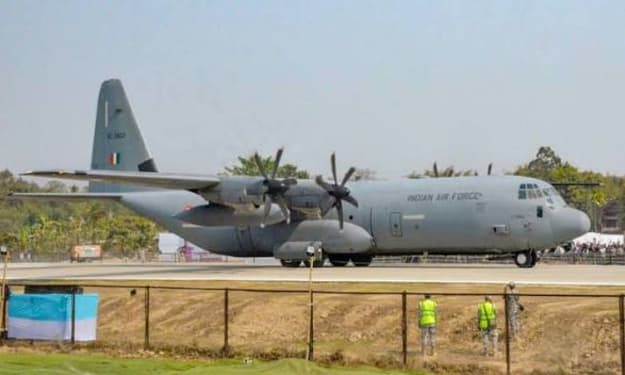
India has quietly been transforming stretches of its national highways into emergency airstrips — dual‑use roadways capable of serving both normal vehicular traffic and aircraft landings during crises. What began as a defence preparedness initiative over the last decade has gained momentum, with the latest milestone marked by Prime Minister Narendra Modi’s historic landing on a converted highway runway in Assam’s Dibrugarh district in February 2026. The Times of India The concept, known officially as Emergency Landing Facilities (ELFs), involves reinforcing and preparing straight, long stretches of highway so they can double as temporary runways for military aircraft — including fighter jets, transport planes, and even heavy turboprops — in situations where regular airbases may be unavailable, vulnerable, or unsuitable. tribuneindia.com A Strategic Shift in Infrastructure On National Highway 37 near Moran, Assam, a 4.2‑kilometre stretch was upgraded into one such ELF, with the surface strengthened and expanded so that aircraft can safely land and take off. The project, costing around Rs 100 crore, was completed in 2025 and inaugurated in early Feb. 2026, when PM Modi landed aboard an Indian Air Force C‑130J — the first time such a landing took place in the northeastern region. This development is part of a broader push by the Indian Air Force (IAF) and the National Highways Authority of India (NHAI) to identify and prepare suitable highway segments as alternate runways. Over the past few years, the Defence Ministry has identified at least 28 sites across 11 states and union territories where highways have been designated as ELFs. These include locations in Assam, West Bengal, Andhra Pradesh, Gujarat, Rajasthan, Jammu & Kashmir, Bihar, Haryana, Tamil Nadu, Punjab, and Uttar Pradesh. Comparable initiatives have already been demonstrated: fighter jets and transport aircraft have conducted trial landings and “touch‑and‑go” operations on highways in Uttar Pradesh, Jaipur area, and Andhra Pradesh as part of broader readiness exercises — underscoring both the feasibility and tactical value of such road runways. The Times of India +1 Why Highway Airstrips Matter There are several strategic and practical reasons behind this programme: 1. Enhanced Defence Preparedness: Highways converted into ELFs provide redundancy for air operations if traditional airbases are threatened during a conflict. Since bases can be predictable targets in wartime or hostile scenarios, having alternate landing zones distributed across the country enhances operational flexibility and resilience. 2. Rapid Mobilisation and Supply: In a crisis, the ability to evacuate personnel, deliver supplies, or redeploy forces quickly becomes crucial. ELFs enable transport aircraft to land closer to operational theatres or disaster zones without relying on busy or compromised airports. 3. Humanitarian and Disaster Response: India’s varied geography is prone to natural disasters — from floods to cyclones — which can make airfields inaccessible. Highway runways can serve as critical entry points for relief flights when conventional airports cannot be used. The New Indian Express 4. Symbolic Signal of Deterrence: Choosing locations such as Northeast India — near the disputed border with China — for these ELFs not only delivers functional value but also conveys a strategic message of preparedness and deterrence. The Times of India How It Works on the Ground To serve as an airstrip, a highway must meet specific engineering criteria: a long, straight stretch free from median dividers; reinforced pavements built to withstand the weight and stress of fast‑moving aircraft; and cleared shoulders free of obstacles like overhead signs or lighting poles. When needed, local authorities can temporarily halt road traffic, close off the section, and secure the perimeter. Aircraft crews then treat it as a makeshift runway, landing and taking off much like at a conventional airfield. In peacetime, these stretches function as ordinary highways. Internationally, this dual‑use model is not unique to India; countries such as Finland, Sweden, Germany, Poland, and others have long used highway strips as part of Cold War‑era contingency plans. Challenges and Future Prospects While the ELF programme has gained traction, implementing and maintaining these installations poses challenges. Construction delays and logistical hurdles have slowed progress at some sites, such as an emergency strip on NH‑16, which faced setbacks due to infrastructure issues. Deccan Chronicle Moreover, coordinating between civil traffic authorities and defence planners to ensure seamless activation when needed requires sophisticated planning and communication. Despite these hurdles, the strategy has become an integral part of India’s broader defence infrastructure roadmap. The New Indian Express As the model continues to expand, and with high‑profile occasions like PM Modi’s historic landing in Assam bringing public attention to dual‑use highways, India’s highways‑turned‑airstrips are likely to remain a key component of the country’s readiness for emergencies — whether military, strategic, or humanitarian. The Times of India
By Fiaz Ahmed 3 days ago in The Swamp
Why Black History Matters in America?
The United States of America is celebrating their 250th anniversary in 2026. I'm proud to be an American and as someone who was born here, I wouldn't imagine myself living anywhere else. This is a country where opportunities are possible. Where anyone can be successful in anything they desire to do. Equality, community, and togetherness are the backbones of what America is and should be about. However, we have an administration who wants to erase and disregard those who have made positive, meaningful impacts in our country, specifically Black figures, such as Martin Luther King, Jr., Rosa Parks, and Maya Angelou. President Trump and his administration have been constantly complaining and fighting against what they call the "Woke agenda". They use this excuse as a distraction from other issues they refuse to address, such as the high cost of living, climate change, and inflation. That equality is dividing America, when in reality, it's bringing us together. Being woke is not tied to a specific political party. No matter where you stand on the political spectrum, you can still care about other people and their plights. Compassion and empathy for others isn't tied to a political party, either. We were taught as children to treat others the way we want to be treated and not judge others because they're different from us. Caring about others isn't a personal attack on your beliefs. It doesn't make you any less of a person. People who are easily offended over African American figures, past or present, or anything related to it, are grasping at straws. Current and future generations need to know who people like Harriet Tubman and Shirley Chisholm were, especially in the classroom. Black History is part of American History. It should be recognized, not hidden or forgotten. Besides, you can't shield children from everything, just because your feelings are easily hurt.
By Mark Wesley Pritchard 16 days ago in The Swamp


Comments
There are no comments for this story
Be the first to respond and start the conversation.