
Rubio Says Cuba’s Only Path Forward Is to Open Its Economy
Rubio warns that Cuba’s future depends on economic liberalization, arguing that only by opening markets and allowing private initiative can the island achieve prosperity and greater freedom for its people.

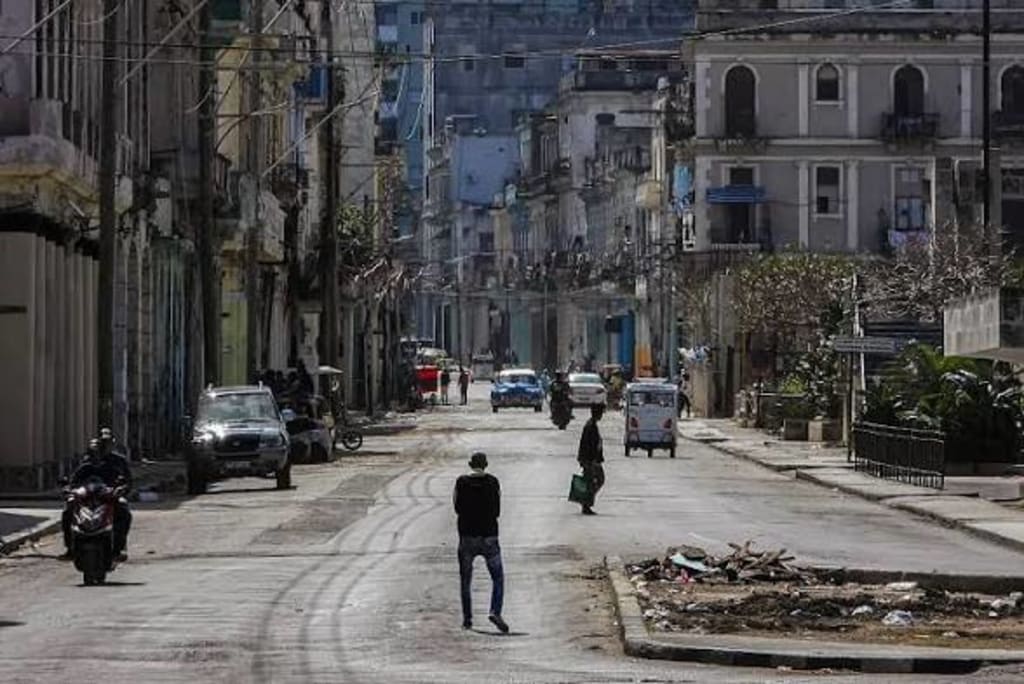
In a stark critique of the Cuban system, U.S. Secretary of State Marco Rubio said Cuba’s “only path forward” out of its deepening economic crisis is a fundamental opening of its tightly controlled economy — a shift he tied to greater freedom for the Cuban people and a possible easing of U.S. pressure. Rubio’s remarks, delivered in an interview on the sidelines of the Munich Security Conference, underscore a hardening Washington stance toward Havana even as the island faces severe shortages and political isolation.
Rubio, a Cuban‑American whose family fled Cuba’s revolutionary government decades ago, described the island’s economic model as a historic failure. “The fundamental problem in Cuba is that it has no economy,” he told Bloomberg News, arguing that without substantial reforms, the regime’s insistence on controlling all major sectors guarantees stagnation. He blamed the leadership’s reluctance to cede control even of economic decision‑making, asserting that this unwillingness is at the heart of Cuba’s collapse.
“For decades, Havana has maintained a rigid system that suppresses economic freedom, forbids genuine private enterprise, and keeps its citizens dependent on a state apparatus that doesn’t know how to improve everyday life,” Rubio said. “You can’t have a viable country without a functioning economy, and that means giving people freedom — not just political freedom but economic freedom.”
Cuba’s Dire Economic Situation
Rubio’s comments come amid one of the worst economic crises Cuba has faced in decades. A U.S. decision earlier this year to capture Venezuelan President Nicolás Maduro and disrupt oil shipments from Cuba’s most reliable ally has cut off Havana’s main source of fuel and revenue, leaving the island grappling with prolonged blackouts, fuel shortages and collapses in basic services. As international airlines have suspended flights due to jet fuel scarcity, ordinary Cubans have faced daily hardships.
While U.S. sanctions themselves date back to the early 1960s and have long shaped Cuban‑American relations, Rubio’s framing shifts the debate from sanctions alone to questions of structural reform. He argued that even without the embargo, Cuba’s economy would struggle because of the state’s complete dominance of production, investment and trade. “They want to control everything,” Rubio said of the current regime’s leadership. “They don’t want the people of Cuba to control anything.”
Economic Opening as the "Only Path Forward"
Rubio avoided strict specifics on how the United States might incentivize or enforce such an economic opening, but he hinted that Washington might consider easing some forms of pressure if meaningful reforms are enacted. “Their willingness to begin to make openings in this regard is one potential way forward,” he said, suggesting that if Cuba allowed private initiative or foreign investment, Washington could look at what he described as “constructive engagement.”
This proposal aligns with a broader U.S. policy goal of pressing authoritarian regimes through combined economic leverage and conditional incentives. However, Rubio indicated that such a path would have to be carefully calibrated and gradual. “These matters require space and time to be done correctly,” he said when pressed about concrete policy changes.
CiberCuba
Political Realities and Havana’s Reluctance
The Cuban government in Havana has been cautious in its response to U.S. pressure. While Cuban officials have publicly expressed openness to dialogue, they have also reiterated that their political and constitutional systems are not negotiable. A recent foreign ministry statement conveyed a desire for “respectful and reciprocal dialogue” but made no concessions on internal governance.
TRT World
Iran Rubio’s critics argue that Washington’s approach risks deepening suffering among ordinary Cubans without offering a viable alternative blueprint. Some outside analysts say that lifting sanctions incrementally or allowing humanitarian engagement could alleviate hardship, but Rubio has thus far emphasized structural economic reform as the core requirement before any major relief.
Despite the administration’s strong rhetoric, there is no indication that Cuba is ready to undertake the sweeping economic liberalization Rubio describes. Cuban leaders have historically feared that opening the economy risks undermining political control — a fear Rubio says explains their resistance. “They would much rather be in charge of the country than allow it to prosper,” he told reporters, a comment that drew both agreement from anti‑communist policymakers and criticism from those who view it as oversimplified.
Mirage News
Broader Implications
Rubio’s statements reflect a broader debate within U.S. foreign policy over how best to address authoritarian states with entrenched economic models. While sanctions have long been a tool of Washington policy toward Cuba, Rubio’s framing emphasizes internal transformation over external coercion alone. Whether such a strategy can succeed where others have failed remains uncertain, particularly as ordinary Cubans face ongoing hardship.
For now, Rubio’s message is clear: without economic liberalization and expanded freedoms for the Cuban people, Havana’s current trajectory will likely continue to produce instability and stagnation. And in his view, opening the economy is the only path forward that offers hope for a more prosperous and free Cuba.
About the Creator
Fiaz Ahmed
I am Fiaz Ahmed. I am a passionate writer. I love covering trending topics and breaking news. With a sharp eye for what’s happening around the world, and crafts timely and engaging stories that keep readers informed and updated.
Keep reading
More stories from Fiaz Ahmed and writers in The Swamp and other communities.
Iran ready to discuss compromises to reach nuclear deal, minister tells BBC in Tehran
Iran signalled on Sunday that it is prepared to consider “compromises” in long‑running nuclear negotiations with the United States — but only on the condition that Washington engages seriously on the issue of sanctions relief, a senior Iranian official told the BBC in Tehran. The comments, made by Deputy Foreign Minister Majid Takht‑Ravanchi, come as indirect talks between Tehran and Washington are set to resume this week in Geneva, raising cautious hopes of progress after years of stalemate. “We are ready to discuss this and other issues related to our programme if they are ready to talk about sanctions,” Takht‑Ravanchi said in the BBC interview, stressing that Tehran’s willingness to compromise hinges on reciprocal engagement by the United States. “The ball is in America’s court to prove that they want to do a deal,” he added, underscoring his government’s emphasis on U.S. concessions as part of any negotiated settlement. The Business Standard Context of the Talks The comments follow a first round of indirect negotiations between U.S. and Iranian officials that took place earlier this month in Oman, under the auspices of several regional mediators. With the next round scheduled to begin in Geneva, both sides are under pressure to find common ground after years of complex diplomacy. The Business Standard Iran’s position, as outlined by Takht‑Ravanchi and other officials, combines a readiness to discuss curbs on its nuclear programme with firm insistence that sanctions relief must be part of the equation. Tehran has also reiterated that core elements of its programme, including uranium enrichment, remain non‑negotiable — although it has offered potential adjustments, such as diluting highly enriched material, if sanctions are lifted. The Business Standard That position reflects a longstanding sticking point in negotiations: the United States and its allies want strict limits on Iran’s nuclear activities to ensure the programme remains peaceful, while Tehran seeks economic relief and political leverage in return for any constraints. The negotiators hope to revive aspects of the 2015 Joint Comprehensive Plan of Action (JCPOA), which eased Western sanctions in exchange for nuclear limits, though both sides have diverged sharply over how to reconstruct a mutually acceptable framework. The Sanctions Issue at the Forefront Sanctions remain the central issue for Iranian negotiators. Decades of punitive measures — reimposed on Tehran after the United States withdrew from the JCPOA in 2018 — have crippled Iran’s economy, and officials in Tehran have insisted that any credible deal must meaningfully ease those restrictions. Takht‑Ravanchi’s comments make clear that Iran is not prepared to concede nuclear limitations in isolation from broader economic relief. For Iran, sanctions touch ordinary citizens as well as government revenue streams, and easing them could help stabilize its currency and oil exports. But U.S. policymakers — mindful of domestic political dynamics and strategic concerns — have been cautious about how much relief to offer, especially without verifiable limits on Tehran’s nuclear programme. Iran’s readiness to discuss compromises also indicates a nuanced diplomatic posture. While its leaders repeatedly deny seeking nuclear weapons, Western capitals remain sceptical about Tehran’s intentions, given its enrichment of uranium to 60 percent purity — a level close to weapons‑grade — in recent years. Tehran argues such enrichment is for peaceful purposes, but the capability has been a core concern for U.S. negotiators. The Business Standard Scope and Limitations of Negotiations Takht‑Ravanchi made clear that Iran does not intend to link nuclear discussions to other contentious issues, such as its ballistic missile programme or regional activities — areas Washington and some U.S. allies, particularly Israel, want included in broader negotiations. By limiting the talks strictly to the nuclear file and sanctions, Tehran aims to focus diplomacy on achievable goals while deflecting demands it views as outside the scope of the nuclear agreement. The scheduled Geneva talks will bring together Iranian negotiators and U.S. envoys, including special representatives from Washington, with Oman playing a continuing mediating role. Officials in both capitals have described the process as cautious but constructive, though neither side has guaranteed a breakthrough. Broader Implications The renewed talks come at a time of heightened regional tensions. Iran has faced pressure over its nuclear programme from several angles, including regional adversaries and international sanctions, while domestic political considerations shape Tehran’s negotiating strategy. For U.S. and allied policymakers, the risk of an unconstrained nuclear programme remains a top security concern. If successful, renewed diplomacy could ease one of the most persistent flashpoints in U.S.–Iran relations. But as Takht‑Ravanchi’s remarks suggest, significant gaps remain over sanctions and nuclear limits, and both sides will need to demonstrate political will and flexibility in the coming talks.
By Fiaz Ahmed a day ago in The Swamp
Why Black History Matters in America?
The United States of America is celebrating their 250th anniversary in 2026. I'm proud to be an American and as someone who was born here, I wouldn't imagine myself living anywhere else. This is a country where opportunities are possible. Where anyone can be successful in anything they desire to do. Equality, community, and togetherness are the backbones of what America is and should be about. However, we have an administration who wants to erase and disregard those who have made positive, meaningful impacts in our country, specifically Black figures, such as Martin Luther King, Jr., Rosa Parks, and Maya Angelou. President Trump and his administration have been constantly complaining and fighting against what they call the "Woke agenda". They use this excuse as a distraction from other issues they refuse to address, such as the high cost of living, climate change, and inflation. That equality is dividing America, when in reality, it's bringing us together. Being woke is not tied to a specific political party. No matter where you stand on the political spectrum, you can still care about other people and their plights. Compassion and empathy for others isn't tied to a political party, either. We were taught as children to treat others the way we want to be treated and not judge others because they're different from us. Caring about others isn't a personal attack on your beliefs. It doesn't make you any less of a person. People who are easily offended over African American figures, past or present, or anything related to it, are grasping at straws. Current and future generations need to know who people like Harriet Tubman and Shirley Chisholm were, especially in the classroom. Black History is part of American History. It should be recognized, not hidden or forgotten. Besides, you can't shield children from everything, just because your feelings are easily hurt.
By Mark Wesley Pritchard 14 days ago in The Swamp



Comments
There are no comments for this story
Be the first to respond and start the conversation.