
Shehbaz Sharif Attends Trump’s ‘Board of Peace’ Inaugural Meeting as Europe Stays Away
Pakistan joins 20 nations at the US-hosted forum, highlighting diplomatic outreach amid global skepticism

Introduction
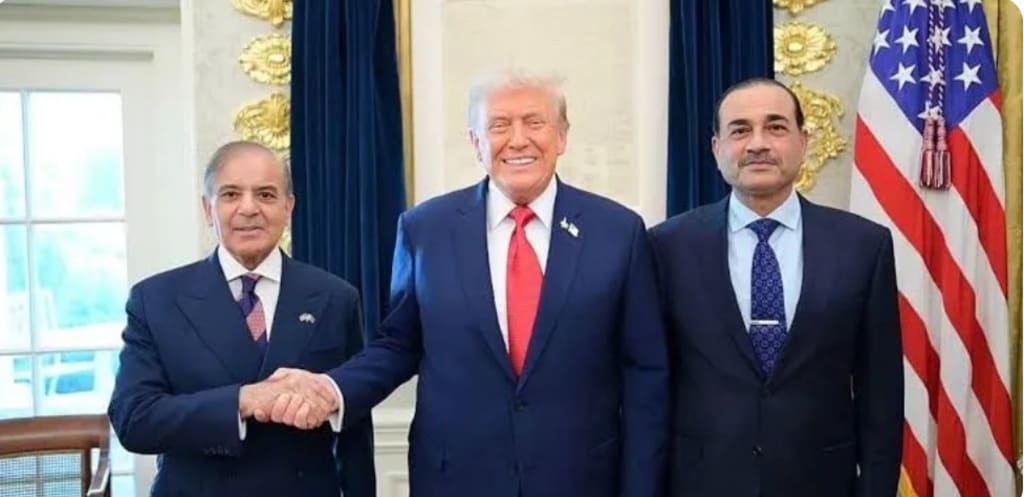
Pakistani Prime Minister Shehbaz Sharif participated in the inaugural meeting of former US President Donald Trump’s newly formed “Board of Peace.” The event brought together representatives from 20 countries to discuss strategies for promoting global stability.
While the initiative attracted participation from several nations, European countries largely abstained from attending, raising questions about the forum’s credibility and influence. For Pakistan, the meeting provided an opportunity to strengthen diplomatic engagement with the United States and other like-minded nations.
Background: The ‘Board of Peace’ Initiative
The Board of Peace is a US-led forum announced by Donald Trump after his tenure in the White House. Its stated objective is to create a platform for nations to collaborate on conflict resolution, peacekeeping strategies, and international cooperation on security challenges.
Trump has framed the initiative as an alternative to existing multilateral organizations, focusing on actionable steps rather than long-standing diplomatic processes. Critics argue that the forum’s political neutrality and legitimacy remain unclear, particularly due to the absence of major European powers.
Pakistan’s Decision to Participate
For Pakistan, joining the Board of Peace reflects a broader diplomatic strategy of engagement with global partners. Shehbaz Sharif emphasized the importance of multilateral collaboration in addressing conflicts, terrorism, and economic instability.
Participation allows Pakistan to showcase its willingness to contribute to international peace efforts. It also provides an avenue to discuss regional security concerns, particularly those related to South Asia and neighboring Afghanistan.
Sharif’s attendance signals continuity in Pakistan’s foreign policy approach, balancing relations with major powers while maintaining regional influence.
European Absence and Global Response
Several European nations, including key members of the European Union, opted not to attend the inaugural meeting. Their absence has been interpreted as skepticism toward the forum’s structure, objectives, and political alignment.
Observers suggest that European countries may prefer established international institutions such as the United Nations or NATO for peace and security dialogue. The lack of European participation underscores potential challenges for the Board of Peace in achieving broad legitimacy.
Meanwhile, countries like Pakistan, India, and several Middle Eastern nations took the opportunity to participate, signaling support for an alternative platform to discuss urgent security and economic issues.
Diplomatic Significance for Pakistan
Shehbaz Sharif’s engagement at the Board of Peace has multiple implications:
1. Strengthened US-Pakistan Relations: Attendance allows direct interaction with US officials and former leadership, providing a channel for dialogue beyond formal government-to-government diplomacy.
2. Regional Strategy: Pakistan can raise issues related to regional conflicts, border security, and cooperation with neighboring countries.
3. International Visibility: Participating in high-profile global initiatives reinforces Pakistan’s image as an active player in international diplomacy.
Meeting Agenda and Key Discussions
The inaugural meeting included discussions on:
Conflict resolution strategies in high-risk regions
Counterterrorism collaboration
Economic stability initiatives in developing nations
Humanitarian and refugee management
Delegates shared insights on practical steps for fostering cooperation. While no binding agreements were announced, the forum aimed to establish networks for ongoing dialogue.
For Pakistan, these discussions offered opportunities to voice regional priorities and explore collaborative solutions in South and Central Asia.
Criticism and Controversy
The Board of Peace has faced scrutiny from multiple quarters:
Political Alignment: Critics argue that the forum may reflect the political priorities of former US President Trump rather than neutral multilateral objectives.
European Skepticism: The absence of major European nations raises concerns about credibility and influence.
Media Commentary: Some observers question whether the forum will have measurable outcomes beyond symbolic participation.
Despite these criticisms, supporters highlight the forum’s potential to encourage direct interaction among participating countries.
Reactions from Pakistan
Within Pakistan, media coverage framed Sharif’s attendance as an opportunity to enhance diplomatic engagement. Analysts noted that active participation in global forums helps Pakistan balance international relationships while promoting its policy priorities.
Political commentators emphasized that, while the forum’s long-term impact remains uncertain, participation demonstrates Pakistan’s commitment to multilateral engagement and peace-building initiatives.
Potential Impact on Regional Relations
Participation in the Board of Peace could influence Pakistan’s regional diplomacy in several ways:
South Asia: Discussions could include Pakistan’s interests in Afghanistan, India-Pakistan relations, and cross-border security initiatives.
Middle East Cooperation: The forum provides a platform to collaborate with countries facing similar security and economic challenges.
Global Reputation: Active engagement signals Pakistan’s readiness to contribute constructively to international peace efforts.
Looking Ahead
The Board of Peace is positioned as an ongoing initiative, with future meetings and working groups planned. Participating countries, including Pakistan, will likely continue discussions on implementing strategies discussed at the inaugural session.
For Pakistan, the next steps involve translating participation into actionable diplomatic engagement, both bilaterally with the US and multilaterally with other member nations.
Observers will also watch how the forum develops in the absence of key European participants and whether it gains broader legitimacy in global diplomacy.
Conclusion
Shehbaz Sharif’s attendance at the first Board of Peace meeting underscores Pakistan’s proactive approach to international engagement. By joining 20 other nations, Pakistan signaled its willingness to participate in new diplomatic platforms aimed at conflict resolution and global stability.
While European nations abstained, the meeting offered an opportunity for dialogue on regional security, counterterrorism, and economic stability. The forum’s long-term impact remains to be seen, but Pakistan’s engagement reflects continuity in its foreign policy priorities.
Participation also highlights the delicate balance smaller and middle-power nations maintain in pursuing strategic relationships while navigating global political dynamics. For now, Pakistan’s presence at the Board of Peace represents a step toward active participation in shaping international discussions on peace and security.
About the Creator
Saad
I’m Saad. I’m a passionate writer who loves exploring trending news topics, sharing insights, and keeping readers updated on what’s happening around the world.
Why Black History Matters in America?
The United States of America is celebrating their 250th anniversary in 2026. I'm proud to be an American and as someone who was born here, I wouldn't imagine myself living anywhere else. This is a country where opportunities are possible. Where anyone can be successful in anything they desire to do. Equality, community, and togetherness are the backbones of what America is and should be about. However, we have an administration who wants to erase and disregard those who have made positive, meaningful impacts in our country, specifically Black figures, such as Martin Luther King, Jr., Rosa Parks, and Maya Angelou. President Trump and his administration have been constantly complaining and fighting against what they call the "Woke agenda". They use this excuse as a distraction from other issues they refuse to address, such as the high cost of living, climate change, and inflation. That equality is dividing America, when in reality, it's bringing us together. Being woke is not tied to a specific political party. No matter where you stand on the political spectrum, you can still care about other people and their plights. Compassion and empathy for others isn't tied to a political party, either. We were taught as children to treat others the way we want to be treated and not judge others because they're different from us. Caring about others isn't a personal attack on your beliefs. It doesn't make you any less of a person. People who are easily offended over African American figures, past or present, or anything related to it, are grasping at straws. Current and future generations need to know who people like Harriet Tubman and Shirley Chisholm were, especially in the classroom. Black History is part of American History. It should be recognized, not hidden or forgotten. Besides, you can't shield children from everything, just because your feelings are easily hurt.
By Mark Wesley Pritchard 18 days ago in The Swamp
Mini Missiles Used to Shoot Down Incoming Missiles Eyed for USAF Tanker Fleet
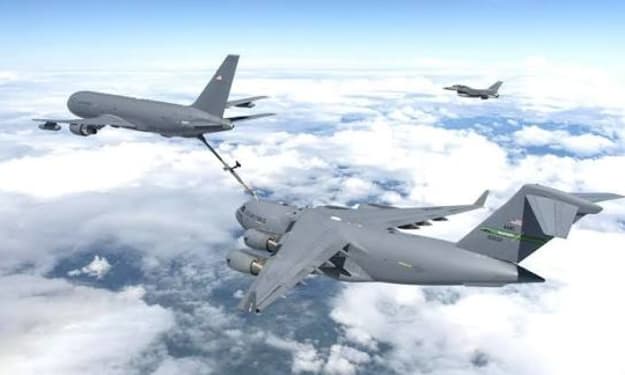
The United States Air Force is exploring the deployment of compact defensive missiles designed to intercept and destroy incoming threats, as part of a new effort to protect its vital aerial refueling fleet from modern missile attacks. The initiative reflects growing concern that U.S. tanker aircraft — which provide fuel to fighter jets and bombers during long missions — are increasingly vulnerable in contested airspace. Military planners now believe future conflicts will require tankers to defend themselves rather than rely solely on escort aircraft. A New Layer of Defense According to defense officials familiar with the program, the Air Force is evaluating so-called “mini interceptors” capable of launching from aircraft-mounted pods. These small missiles would detect, track, and destroy enemy air-to-air or surface-to-air missiles before they reach their target. Unlike traditional countermeasures such as flares or electronic jamming, the mini missiles would physically intercept the threat mid-air, offering a more reliable shield against advanced weapons that can resist electronic interference. “This is about survivability,” one official said. “Tankers are too important to lose in the early stages of a conflict.” Why Tankers Matter Aerial refueling aircraft are the backbone of U.S. global air operations. Without them, fighter jets and bombers would be limited in range and unable to sustain long missions over distant regions. The Air Force operates a fleet that includes the KC-135 Stratotanker and the newer KC-46 Pegasus. These aircraft are large, slow, and difficult to maneuver, making them prime targets for enemy missiles. Recent war games and intelligence assessments have shown that adversaries are developing longer-range air-to-air missiles specifically designed to strike high-value aircraft such as tankers and surveillance planes. Inspired by Missile Defense Technology The concept borrows from ground-based missile defense systems but adapts them for airborne use. Engineers aim to build interceptors that are light, fast, and capable of rapid launch in response to an incoming threat detected by onboard sensors. Defense contractors are reportedly working with the U.S. Air Force to test whether these miniature interceptors can be integrated with existing radar and warning systems already installed on tanker aircraft. If successful, the system would represent a major shift in how large support aircraft defend themselves. Strategic Competition Drives Innovation The move comes amid rising competition with major powers that have invested heavily in advanced missile technology. Military analysts say nations such as China and Russia have prioritized weapons capable of targeting support aircraft far from the battlefield. “Tanker aircraft are the Achilles’ heel of air power,” said a defense analyst at a Washington-based research institute. “If you can knock out the tankers, you cripple the entire operation.” This has pushed the Pentagon to consider more aggressive defensive options beyond traditional countermeasures. Challenges and Risks While promising, the mini-missile concept faces technical and operational hurdles. Integrating interceptors onto aircraft not originally designed to carry them raises questions about weight, power requirements, and maintenance. There are also safety concerns. Firing interceptors close to a large fuel-laden aircraft requires extreme precision to avoid accidental damage from debris or blast effects. Cost is another factor. Outfitting the entire tanker fleet with missile interceptors would require billions of dollars in research, testing, and production. Future Testing and Deployment The Air Force is expected to conduct flight demonstrations over the next two years to determine whether the technology is viable for real-world operations. Initial deployment would likely focus on tankers assigned to high-risk regions where missile threats are most severe. If approved, the system could later be adapted for other vulnerable aircraft, such as reconnaissance planes and airborne command centers. Defense officials stress that the project is still in its early stages and no final decision has been made on full-scale adoption. However, interest within military leadership appears strong. A Shift in Air Warfare Doctrine The idea of aircraft shooting down incoming missiles with their own missiles marks a new phase in aerial defense doctrine. It blurs the line between offensive and defensive weapons and reflects how modern warfare increasingly depends on layered protection systems. As missile technology continues to evolve, so too must the aircraft that operate in contested skies. For the U.S. tanker fleet, the addition of mini interceptors could mean the difference between vulnerability and survivability in future conflicts. What was once considered a rear-area support aircraft may soon become a frontline survivor, armed with its own shield against the deadliest threats in the air.
By Fiaz Ahmed 6 days ago in The Swamp



Comments
There are no comments for this story
Be the first to respond and start the conversation.