politics
Politics does not dictate our collective cultural mindset as much as it simply reflects it; We've got to look in the mirror sometimes, and we've got one.
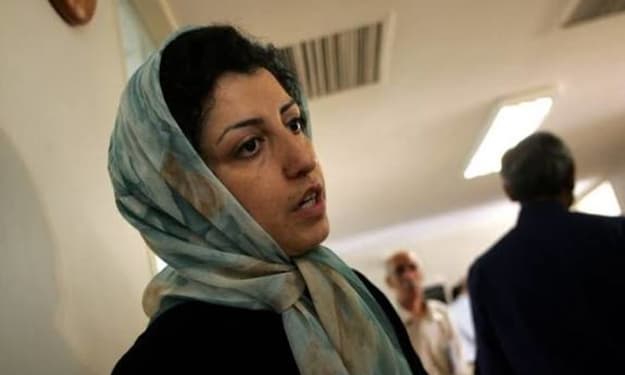
Iran Sentences Nobel Laureate Mohammadi to Seven More Years in Prison. AI-Generated.
Iran has handed down a new prison sentence of more than seven years to Narges Mohammadi, the Iranian human rights activist and 2023 Nobel Peace Prize laureate, in a move that has drawn sharp international criticism and raised further concerns about the country’s crackdown on dissent. Reuters Supporters and legal representatives say the sentence was issued on February 8, 2026, by a Revolutionary Court in the northeastern city of Mashhad, where Mohammadi has been held since her arrest in December. It comes amid a broader government effort to silence critics and activists at a time of heightened political sensitivity in Iran. A New Sentence and Its Conditions According to Mohammadi’s lawyer, Mostafa Nili, Mohammadi was sentenced to: 6 years in prison on charges of “assembly and collusion against national security” 1.5 years for “propaganda against the government” A two-year ban on travel Two years of internal exile to the city of Khusf in South Khorasan province Reuters The combined sentence amounts to approximately 7½ years of additional imprisonment, on top of a previous sentence that has kept Mohammadi behind bars for extensive periods over the past decade. Iran’s foreign ministry has not publicly acknowledged the new sentencing. Geo News Detention and Hunger Strike Mohammadi, who is now 53, was arrested on December 12, 2025 after speaking out at a memorial ceremony for human rights lawyer Khosrow Alikordi, whose death under unclear circumstances earlier in the year had sparked protests among activists. The authorities accused her of encouraging “norm-breaking slogans” at the event — allegations her supporters describe as politically motivated. Reuters In early February, Mohammadi launched a week-long hunger strike to protest prison conditions and her inability to contact her lawyers and family. Her health deteriorated significantly during the hunger strike, prompting concerns among rights advocates about her safety. Al Jazeera A Life of Activism and Imprisonment Narges Mohammadi has long been a prominent figure in Iran’s human rights movement. She has campaigned tirelessly against the death penalty, for women’s rights, and in opposition to state repression. Mohammadi is deputy director of the Defenders of Human Rights Center (DHRC) and has been detained repeatedly since the late 1990s for her activism. AIPDHE She was awarded the Nobel Peace Prize in 2023 in recognition of her decades-long struggle for human rights under challenging and often dangerous conditions. When the prize was announced, Mohammadi was already in prison, and her children accepted the award on her behalf. Geo News Despite her international recognition, Mohammadi has spent much of the past decade in and out of prison. Even during previous periods of ill health, including after surgeries and hunger strikes, authorities have either returned her to detention or denied requests for extended medical leave. hrw.org Domestic and International Reaction The latest sentence has drawn sharp reactions from rights groups and foreign governments. Human rights organizations describe the ruling as part of a systematic crackdown on dissent in Iran, especially following nationwide protests that began in late December 2025. These demonstrations were fuelled by public anger over political repression and the suspicious death of activists like Alikordi. International figures have called for Mohammadi’s release and urged Iran to respect its obligations under international human rights law, including freedom of expression and fair trial standards. Critics argue that the additional prison term exemplifies how authorities use national security laws to stifle peaceful activism. hrw.org Legal Context in Iran The sentence was issued by a Revolutionary Court, a parallel judicial system in Iran that handles cases involving “national security” and political charges. These courts have been criticised by rights groups for opaque procedures, limited defence rights, and close alignment with security agencies. PBS Revolutionary Courts often try political activists, journalists, and dissidents on charges such as “collusion against national security” and “propaganda against the system,” both of which carry heavy sentences. The new sentence against Mohammadi follows this pattern of legal practice, which critics assert is used to suppress dissenting voices. Geo News Health and Human Rights Concerns Mohammadi’s health has been a subject of ongoing concern. During her imprisonment, she has suffered serious medical issues and has at times been denied adequate treatment, rights groups say. The hunger strike in early February further aggravated those concerns, with supporters warning that continued detention in harsh conditions could be life-threatening. Al Jazeera Human rights advocates have urged that she be granted medical parole or transferred to proper care facilities, arguing that her deteriorating condition underscores the humanitarian dimensions of her case. hrw.org The Broader Climate of Repression Mohammadi’s sentencing comes amid an intensifying pattern of suppression targeting critics and reformists in Iran. Authorities have detained other political figures and activists in recent weeks, tightening restrictions on civil society and political expression while negotiating with the United States over sensitive issues like Iran’s nuclear programme. The sentencing highlights the complex and often conflicting dynamics in Iranian politics: on one hand, Tehran seeks to project strength on the international stage; on the other, it continues a robust internal crackdown against voices calling for greater rights and accountability. As the legal avenues narrow for activists within Iran, international attention and pressure are likely to remain focused on cases like Mohammadi’s, where issues of human rights, national security, and political dissent intersect in a highly contentious environment.
By Fiaz Ahmed 15 days ago in The Swamp
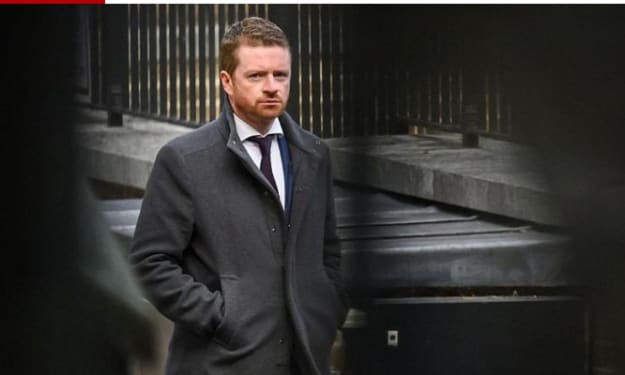
Starmer to Meet Labour MPs After McSweeney Quits as Chief of Staff Over Mandelson Appointment. AI-Generated.
Keir Starmer is facing one of the most delicate internal moments of his leadership after his chief of staff, Morgan McSweeney, resigned following the controversial appointment of Peter Mandelson to a senior advisory role. The move has triggered unease across Labour’s parliamentary party, prompting Starmer to convene a meeting with MPs in an effort to steady nerves, reassert authority, and prevent the situation from escalating into a broader crisis. While Labour remains strong in the polls and firmly positioned as a government-in-waiting, this episode exposes the persistent tension between the party’s modern leadership and the unresolved legacy of New Labour-era power brokers. Who Is Morgan McSweeney — and Why His Exit Matters Morgan McSweeney was not just another senior aide. He was widely viewed as: One of Starmer’s closest political strategists A key architect of Labour’s electoral discipline A central figure in rebuilding Labour’s credibility after years of internal chaos McSweeney’s role went beyond logistics. He helped shape messaging, manage internal dissent, and enforce the “no distractions” approach that has defined Starmer’s leadership style. His resignation, therefore, is not merely administrative — it is symbolic. When a chief of staff walks out, it usually signals a serious breakdown in trust at the very top. The Mandelson Factor: Why This Appointment Is So Divisive Peter Mandelson remains one of the most polarizing figures in Labour politics. To supporters, he is: A master strategist A proven election winner A figure with global political experience To critics, he represents: The excesses of New Labour An era associated with spin, elite politics, and corporate closeness A step backward rather than forward Mandelson’s appointment — particularly without broader consultation — reignited old anxieties within Labour ranks about who truly holds influence around Starmer. For McSweeney, the issue was reportedly not personal animosity, but direction: what Mandelson’s return signaled about Labour’s future power structure. Why Timing Makes This Worse This dispute comes at a particularly sensitive time. Labour is: Leading in national polls Preparing for the realities of government Under increased media scrutiny At this stage, unity is not just desirable — it is essential. Voters who are open to Labour are looking for stability, professionalism, and reassurance. Internal resignations risk reviving memories of Labour’s past disunity — something Starmer has spent years trying to bury. Starmer’s Meeting With MPs: Damage Control or Reset? Starmer’s decision to meet Labour MPs directly is a calculated move. The objectives are clear: Contain the fallout before speculation grows Reassure MPs that decision-making remains disciplined Demonstrate leadership, not defensiveness Such meetings are rarely about policy. They are about tone, confidence, and trust. Starmer will need to explain: Why Mandelson was brought in What boundaries exist around his role How internal voices will continue to be respected Failure to address these concerns openly could deepen internal skepticism. A Clash of Political Cultures At the heart of this episode is a deeper cultural clash within Labour. On one side: A modernized party focused on discipline and electability Younger strategists shaped by post-Brexit politics A leadership trying to appear technocratic and steady On the other: Veterans of New Labour who believe experience wins elections A comfort with centralized power A belief that politics is ultimately about hard-nosed strategy McSweeney’s resignation suggests that these two cultures are colliding — and not quietly. What This Means for Starmer’s Authority Leadership is often tested not during elections, but during internal conflict. Starmer now faces a choice: Reassert control and clarify the chain of command Or risk appearing overly influenced by political heavyweights Even if Mandelson’s role is limited, perception matters. If MPs believe that decisions are being shaped behind closed doors by figures associated with the past, confidence in leadership cohesion may erode. That erosion doesn’t need to be dramatic to be dangerous — it can be slow and subtle. Reaction Inside the Parliamentary Party Initial reactions among Labour MPs have reportedly been mixed. Some argue: Mandelson’s experience could be valuable Labour cannot afford amateurism if it wants to govern Elections are won by strategy, not sentiment Others worry: This move undermines the “new politics” image It alienates younger voters and activists It sends the wrong signal about accountability Starmer’s meeting will likely expose how deep these divisions run. Public Perception: Does the Voter Care? For most voters, the names McSweeney and Mandelson mean little. But what voters do notice is: Headlines about resignations Stories about internal tension Suggestions of behind-the-scenes power struggles These narratives matter because they shape emotional impressions — competence, unity, readiness. If Labour looks distracted by internal drama, even briefly, it risks weakening its core pitch: that it is ready to govern responsibly. Lessons From Labour’s Past Labour history is filled with cautionary tales. Internal battles have: Derailed campaigns Undermined leaders Distracted from public-facing priorities Starmer’s leadership was built in reaction to that history. His promise was simple: no more chaos. McSweeney’s resignation challenges that promise — not fatally, but visibly. What Happens Next Several outcomes are possible: Containment The issue fades after clarification and reassurance. Structural Change Starmer tightens advisory roles and formalizes boundaries. Lingering Unease MPs remain uneasy, even if publicly silent. Which path emerges depends on how convincingly Starmer handles the next few days. Conclusion: A Warning, Not a Crisis — Yet This episode is not a catastrophe for Labour. But it is a warning light. McSweeney’s resignation highlights unresolved questions about: Influence Direction The balance between experience and renewal Starmer’s response will matter more than the resignation itself. If he can reassure MPs, clarify leadership structure, and keep Labour focused outward rather than inward, the party will move on quickly. If not, this moment may be remembered as the first visible crack in Labour’s carefully constructed image of unity.
By Zahid Hussain15 days ago in The Swamp
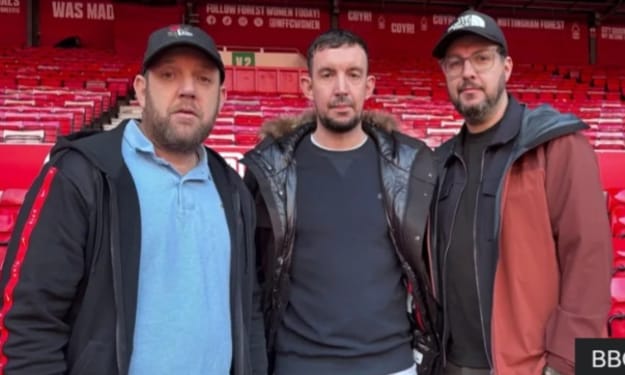
“We’re Unable to Grieve for Dad”. AI-Generated.
Grief is meant to follow its own fragile rhythm. It arrives in waves, recedes into silence, and slowly reshapes a person’s understanding of life. But for some families, grief is interrupted—paused by procedures, postponed by investigations, and overshadowed by public scrutiny. For the family of a man killed in the Nottingham attacks, mourning has not been a private journey of remembrance. Instead, it has become a prolonged waiting room, where sorrow is suspended by the looming presence of an official inquiry.
By Ayesha Lashari15 days ago in The Swamp
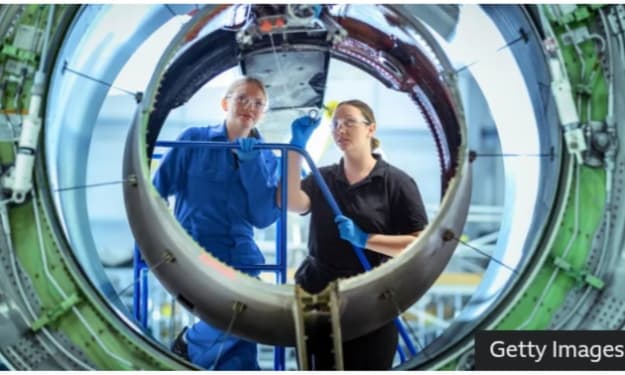
Apprenticeship Clearing System to Be Introduced. AI-Generated.
In an era where traditional education no longer guarantees employment, governments and educational bodies around the world are being forced to rethink how young people transition from learning to earning. One such reform gaining attention is the introduction of an Apprenticeship Clearing System, a centralized platform designed to match aspiring apprentices with available opportunities in a transparent and efficient way. This system has the potential to reshape vocational education, reduce unemployment, and bridge the growing skills gap in modern economies.
By Ayesha Lashari15 days ago in The Swamp
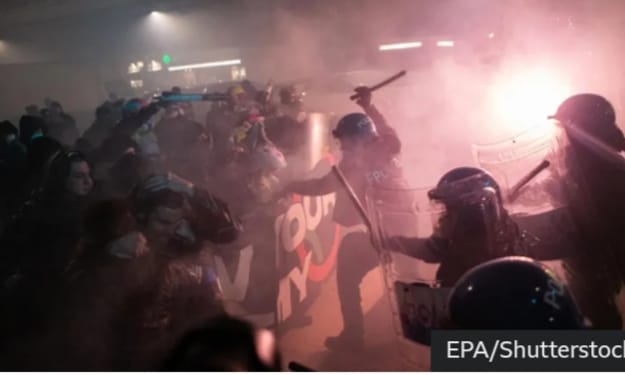
Violent Protests Shake Milan Amid Winter Olympics: Police Arrest Demonstrators. AI-Generated.
Milan is witnessing tense moments as protests against the Milano-Cortina 2026 Winter Olympics escalated into violent clashes this weekend. On February 7, 2026, several protesters were arrested after confrontations with Italian police, marking one of the most intense demonstrations during Italy’s Olympic hosting in recent years.
By Ayesha Lashari15 days ago in The Swamp
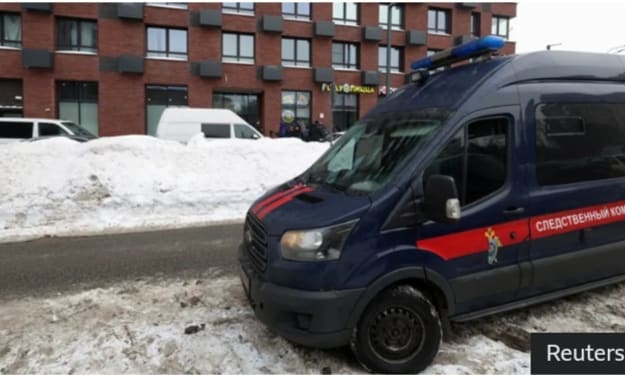
Russia Names Three Suspects Over Shooting of Senior General. AI-Generated.
Russia has named three suspects in connection with the shooting of a senior military general, an incident that has sent shockwaves through the country’s security establishment and reignited debate over internal stability during wartime. The attack, which reportedly took place in a residential area, marks one of the most serious assaults on a high-ranking Russian military figure in recent years.
By Ayesha Lashari15 days ago in The Swamp