
Two Hours, Scores of Questions, 23,000 Words: Our Interview With President Trump
A wide-ranging conversation reveals Donald Trump’s priorities, grievances, and vision for America’s future

Introduction
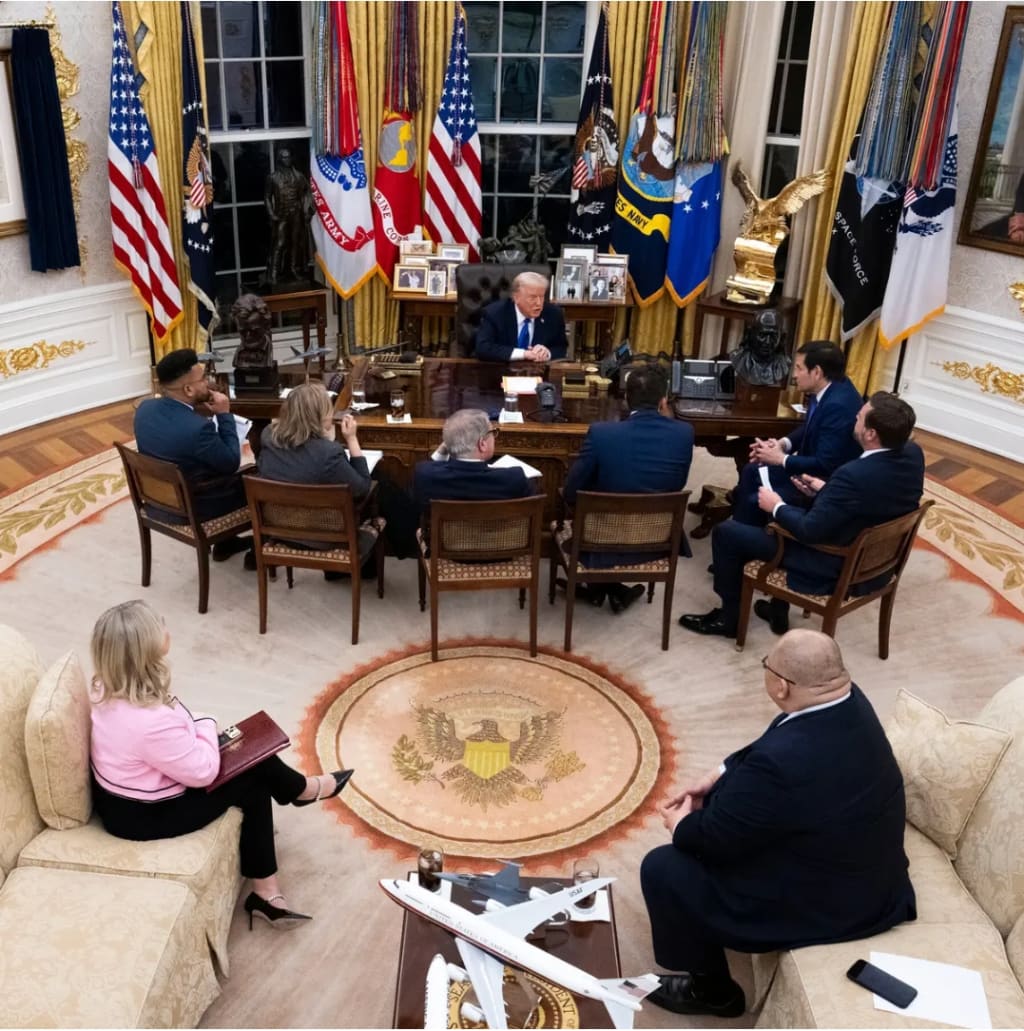
In a marathon interview lasting nearly two hours and producing more than 23,000 words, former President Donald Trump offered one of his most detailed and unfiltered accounts of his political worldview, leadership philosophy, and plans for the future. The discussion spanned domestic policy, global affairs, the U.S. economy, immigration, elections, and his enduring influence over American politics.
Rare in its length and depth, the interview provided a revealing look at a leader who continues to shape national debate long after leaving the White House—and who shows no sign of retreating from the political spotlight.
A President Still at the Center of Power
From the outset, Trump framed himself not as a former president, but as a continuing force in American political life. He spoke confidently about his enduring support base, arguing that millions of Americans remain aligned with his “America First” agenda.
Trump repeatedly emphasized what he described as the successes of his presidency, citing economic growth prior to the pandemic, judicial appointments, tax cuts, and a tougher stance on China. He portrayed his administration as one that challenged entrenched political systems and global norms, often at significant political cost.
The Economy and Inflation
A major focus of the interview was the U.S. economy. Trump criticized current economic leadership, pointing to inflation, rising interest rates, and household costs as evidence of policy failure. He argued that under his administration, energy independence and deregulation helped keep prices low and boosted employment.
Trump reiterated his belief that strong borders, domestic manufacturing, and reduced reliance on foreign supply chains are essential to long-term economic stability. He framed inflation not merely as a financial issue, but as a threat to middle- and working-class Americans.
Immigration and Border Security
Immigration emerged as one of Trump’s most forceful talking points. He described border security as a national emergency and defended the policies implemented during his presidency, including stricter enforcement and construction of border barriers.
Trump warned that unchecked migration strains public services, wages, and national security. He criticized what he sees as weak enforcement, arguing that border control is inseparable from sovereignty. His remarks reinforced immigration as a central pillar of his political identity and future platform.
Foreign Policy and Global Power
On foreign affairs, Trump presented himself as a dealmaker who prioritized strength and unpredictability. He defended his approach to NATO, arguing that pressuring allies to increase defense spending made the alliance stronger.
Trump also revisited his stance on China, claiming his trade policies confronted unfair practices that previous administrations ignored. He criticized ongoing global conflicts, asserting that his leadership style deterred adversaries and reduced the likelihood of war.
Throughout the interview, Trump emphasized nationalism over multilateralism, framing global cooperation as beneficial only when it serves U.S. interests first.
Elections, Institutions, and Accountability
The interview did not avoid controversy. Trump revisited claims about election integrity, expressing continued skepticism about U.S. electoral systems. While acknowledging the importance of democratic institutions, he argued that transparency and reform are necessary to restore public trust.
He also criticized federal agencies, the media, and what he described as a political establishment resistant to outsider leadership. These themes reflected his long-standing belief that institutional power has become disconnected from everyday Americans.
Leadership Style and Personal Reflection
Beyond policy, the interview offered insight into Trump’s leadership style. He described decision-making as instinctive and fast-paced, valuing loyalty and directness. Trump acknowledged the personal toll of political life but framed adversity as motivation rather than deterrence.
Despite moments of reflection, the tone remained defiant. Trump portrayed himself as resilient, energized, and prepared for future political battles, insisting that criticism only strengthens his resolve.
Why the Interview Matters
At 23,000 words, the interview stands as more than a media event—it is a political document. It captures how Trump views the nation, his role within it, and the challenges he believes America faces.
For supporters, the interview reinforces familiar themes of strength, independence, and disruption. For critics, it underscores ongoing concerns about polarization and institutional trust. Either way, the conversation highlights Trump’s continued ability to dominate political discourse.
Conclusion
This extensive interview offers a rare, comprehensive window into Donald Trump’s thinking at a pivotal moment in American politics. Whether viewed as a defense of past leadership or a blueprint for future ambitions, the conversation confirms that Trump remains deeply invested in shaping the nation’s direction.
As political divisions persist and the U.S. navigates economic uncertainty and global instability, voices like Trump’s continue to influence public debate. The interview makes one thing clear: love him or oppose him, Donald Trump remains a central figure in the American political story—and his words will continue to provoke discussion long after the final question is asked.
About the Creator
Asad Ali
I'm Asad Ali, a passionate blogger with 3 years of experience creating engaging and informative content across various niches. I specialize in crafting SEO-friendly articles that drive traffic and deliver value to readers.
Why Black History Matters in America?
The United States of America is celebrating their 250th anniversary in 2026. I'm proud to be an American and as someone who was born here, I wouldn't imagine myself living anywhere else. This is a country where opportunities are possible. Where anyone can be successful in anything they desire to do. Equality, community, and togetherness are the backbones of what America is and should be about. However, we have an administration who wants to erase and disregard those who have made positive, meaningful impacts in our country, specifically Black figures, such as Martin Luther King, Jr., Rosa Parks, and Maya Angelou. President Trump and his administration have been constantly complaining and fighting against what they call the "Woke agenda". They use this excuse as a distraction from other issues they refuse to address, such as the high cost of living, climate change, and inflation. That equality is dividing America, when in reality, it's bringing us together. Being woke is not tied to a specific political party. No matter where you stand on the political spectrum, you can still care about other people and their plights. Compassion and empathy for others isn't tied to a political party, either. We were taught as children to treat others the way we want to be treated and not judge others because they're different from us. Caring about others isn't a personal attack on your beliefs. It doesn't make you any less of a person. People who are easily offended over African American figures, past or present, or anything related to it, are grasping at straws. Current and future generations need to know who people like Harriet Tubman and Shirley Chisholm were, especially in the classroom. Black History is part of American History. It should be recognized, not hidden or forgotten. Besides, you can't shield children from everything, just because your feelings are easily hurt.
By Mark Wesley Pritchard 19 days ago in The Swamp
India Watches With Concern as Its Biggest Rival Plans to Add 50 New Warships to Its Fleet
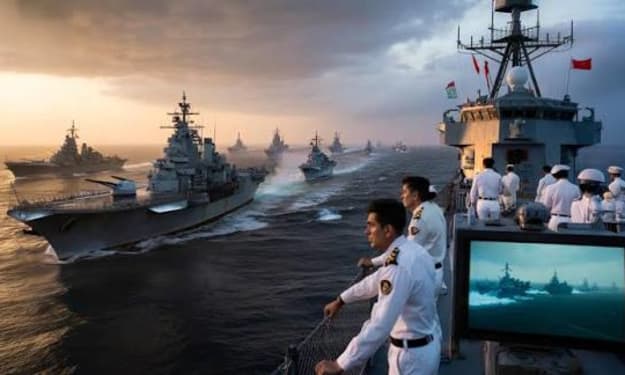
India is closely monitoring the rapid expansion of its biggest regional rival’s naval forces, as new reports indicate that China intends to acquire up to 50 additional warships in the coming years. The ambitious plan would significantly enhance Beijing’s maritime power and reshape the strategic balance across the Indo-Pacific, a region critical to global trade and security. For New Delhi, the development raises urgent questions about deterrence, regional influence, and the future of naval competition in Asia. Defense analysts say the scale of China’s proposed expansion underscores its determination to project power far beyond its coastline and challenge established maritime actors, including India. A Major Expansion of Naval Power China already operates the world’s largest navy by number of vessels, with a fleet that includes aircraft carriers, destroyers, frigates, submarines, and amphibious assault ships. The reported plan to add 50 new warships would further strengthen the People’s Liberation Army Navy, allowing it to conduct sustained operations in the South China Sea, the Indian Ocean, and beyond. According to military experts, the new ships are expected to include advanced destroyers, multi-role frigates, and possibly additional aircraft carriers and submarines. These platforms would be equipped with long-range missiles, modern radar systems, and enhanced anti-submarine warfare capabilities, making them formidable assets in any potential conflict scenario. The expansion is part of a broader modernization drive aimed at transforming China’s navy into a “world-class force” capable of defending overseas interests, securing maritime trade routes, and supporting Beijing’s geopolitical ambitions. India’s Strategic Concerns For India, China’s naval buildup is not an abstract development but a direct strategic challenge. New Delhi has long viewed the Indian Ocean as its primary sphere of influence. However, China’s growing presence in the region—through port investments, naval patrols, and joint exercises—has steadily increased pressure on India’s maritime dominance. Indian defense officials privately acknowledge that a fleet expansion of this magnitude could tilt the balance of power in contested waters. The concern is not only about numbers but about the sophistication and reach of Chinese naval forces. “China is no longer a coastal navy,” said one Indian security analyst. “It is becoming a blue-water navy with the ability to operate far from home, including in areas India considers strategically vital.” Regional Implications China’s plan to expand its fleet comes amid heightened tensions across the Indo-Pacific. Disputes in the South China Sea, concerns over Taiwan, and growing rivalry between major powers have turned the region into one of the most militarized maritime zones in the world. Neighboring countries such as Japan, Vietnam, and the Philippines are also watching developments closely. Many have increased their own defense spending in response to China’s naval growth, leading to fears of an accelerating arms race at sea. For India, the implications extend beyond direct confrontation. A stronger Chinese navy could affect freedom of navigation, trade routes, and regional partnerships. India’s role within strategic groupings such as the Quad—alongside the United States, Japan, and Australia—has already taken on greater importance as a counterbalance to Beijing’s influence. India’s Response India has been investing steadily in its own naval modernization. The Indian Navy is expanding its fleet with new destroyers, submarines, and domestically built aircraft carriers. Indigenous shipbuilding programs aim to reduce dependence on foreign suppliers while improving technological self-reliance. However, defense planners admit that matching China ship-for-ship is unrealistic. Instead, India is focusing on asymmetric capabilities such as submarines, maritime surveillance, and partnerships with friendly navies to maintain strategic equilibrium. New Delhi is also strengthening ties with regional partners to ensure that the Indian Ocean does not become dominated by any single power. Joint exercises and intelligence-sharing agreements have increased in recent years, reflecting a shift toward collective security. Economic and Political Dimensions China’s naval expansion is backed by its vast industrial capacity and defense budget, which far outstrips that of most regional competitors. Shipyards are producing advanced vessels at a pace unmatched globally, giving Beijing a sustained advantage in fleet growth. Politically, the program sends a strong signal of China’s ambitions as a maritime power. It reinforces President Xi Jinping’s vision of a strong military capable of safeguarding China’s global interests and supporting its rise as a major world power. Looking Ahead As China moves forward with its plan to acquire 50 new warships, India faces a complex strategic environment marked by competition, uncertainty, and shifting alliances. While open conflict remains unlikely, the expanding naval capabilities of China will continue to shape India’s defense planning and regional diplomacy. For now, New Delhi is watching closely, aware that the balance of power in Asian waters is evolving rapidly. The coming decade will likely determine whether the Indo-Pacific becomes a zone of cooperation or a stage for intensified naval rivalry, with India and China at its center.
By Fiaz Ahmed 4 days ago in The Swamp



Comments
There are no comments for this story
Be the first to respond and start the conversation.