
U.S. Military Moves Into Place for Possible Strikes in Iran
Formal / News Style American forces reposition across the Middle East amid rising tensions with Tehran U.S. military buildup signals readiness while diplomacy continues 🔹 Neutral & Informative Carrier strike groups, fighter jets, and missile systems deployed near Iran Washington emphasizes deterrence as negotiations show limited progress 🔹 Impactful U.S. prepares for action as Iran strengthens defenses in response

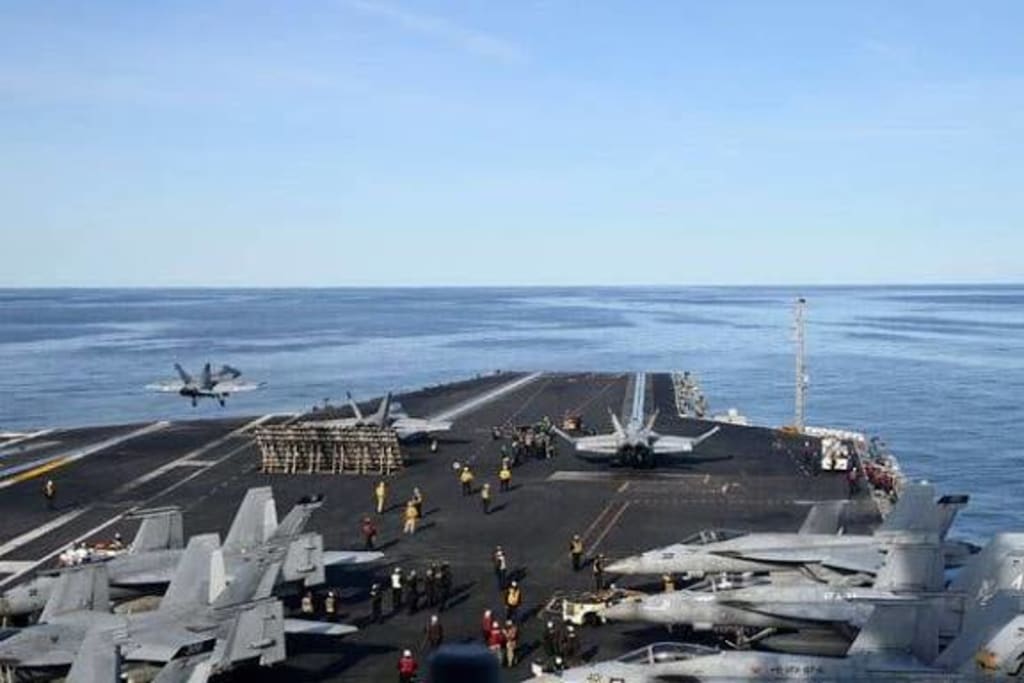
Tensions in the Middle East escalate as American forces position for potential action
The United States military has significantly repositioned forces across the Middle East, including naval strike groups, combat aircraft, and support assets, in what officials describe as preparation for possible operations against Iran. While President Donald Trump has not yet ordered a strike, the buildup marks one of the most substantial U.S. deployments in the region in decades, signaling both readiness for military action and continued pressure on Tehran amid stalled diplomacy.
The Times of India +1
Massive Force Mobilization
Over recent weeks, the United States has moved multiple carrier strike groups, jets, bombers, and missile defense systems into positions advantageous for rapid offensive or defensive operations. The USS Gerald R. Ford and USS Abraham Lincoln carrier strike groups are now operating within the broader Middle East theater, backed by destroyers, cruisers, and support vessels equipped with advanced weapons systems.
Fighter aircraft, including F‑22 Raptors, F‑35 stealth fighters, and F‑16 multirole jets, have been deployed to bases in Jordan, the Gulf states, and nearby regions. Surveillance aircraft, such as the E‑3 Sentry AWACS and U‑2 reconnaissance platforms, are also repositioned to enhance situational awareness over Iranian airspace and maritime approaches.
The military buildup is one of the largest in the Middle East in recent memory, drawing comparisons to deployments during earlier conflicts in the region. More than 150 U.S. military cargo aircraft have delivered ammunition and systems to the theatre, while fighter squadrons have taken positions that would support both air superiority and strike missions.
www.israelhayom.com
Possible Targets and Strategic Aims
Analysts say that any potential strikes on Iran would likely focus on a combination of nuclear infrastructure, missile sites, air defenses, and naval facilities. Military planners are also reportedly considering targeting aspects of Iran’s conventional military capabilities to blunt its ability to retaliate.
The National
Some assessments suggest that U.S. operations could be sustained for several weeks if directed, resembling a broader campaign rather than a single, limited strike. Such a campaign would involve not only air and naval strikes but also specialized missions aimed at suppressing Iranian air defenses to enable further operations.
While U.S. officials have publicly emphasized a preference for diplomacy, the scale of the deployments underscores Washington’s readiness to pursue military options should negotiations falter. Iranian officials, in turn, have fortified key military and nuclear sites, reflecting their own anticipation of conflict.
Diplomatic Backdrop
The military buildup is taking place alongside ongoing diplomatic efforts. Indirect negotiations between U.S. and Iranian representatives continue in Geneva and elsewhere, aiming to reach a framework that could ease tensions over Iran’s nuclear program. Despite some “guiding principles” being acknowledged by negotiators, concrete progress remains elusive, and Tehran has been resistant to key U.S. demands.
President Trump has made public remarks suggesting that he sees value in a change of leadership in Tehran, though he has framed diplomacy as the preferred route. “A change in power in Iran would be the best thing that could happen,” he said recently.
Regional Risks and Responses
The positioning of U.S. forces has prompted reactions from regional governments and global observers. Iran temporarily closed the Strait of Hormuz for live‑fire drills—a strategic waterway through which a significant portion of global oil exports transit—raising concerns about escalation and economic ripple effects.
Allied partners in the region, including Gulf Arab states and NATO members, are monitoring developments closely. While some nations have supported increased U.S. deterrence posture, others emphasize caution to avoid a wider conflagration.
The Decision Point Ahead
Despite the buildup, the administration has not formally ordered kinetic military action. Officials describe the deployments as “credible deterrence” and “force preparation,” ensuring that a broad range of options are ready if diplomatic efforts fail and national security interests are directly threatened.
RadioFreeEurope/RadioLiberty
Military analysts note that a decision to strike Iran carries significant risks, including potential retaliation against U.S. forces or regional allies, escalation into broader conflict, and unpredictable impacts on global energy markets. As tensions remain high, the window for resolving the crisis peacefully may narrow, but diplomacy continues to run in parallel with military readiness.
For now, the U.S. military remains poised: aircraft, ships, and strike systems are in place, ready to act if directed, while Iran strengthens its defenses and prepares its own responses. The coming days and weeks could prove critical in determining whether the situation moves toward confrontation or de‑escalation.
About the Creator
Fiaz Ahmed
I am Fiaz Ahmed. I am a passionate writer. I love covering trending topics and breaking news. With a sharp eye for what’s happening around the world, and crafts timely and engaging stories that keep readers informed and updated.
Keep reading
More stories from Fiaz Ahmed and writers in The Swamp and other communities.
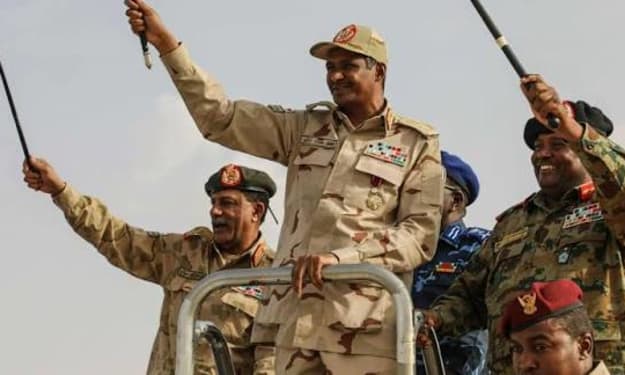
Drone Strikes in Sudan’s Kordofan Region Take a Toll on Civilians and Aid Operations
Drone strikes in Sudan’s Kordofan region have intensified in recent weeks, leaving a mounting toll on civilians and complicating already fragile humanitarian operations. Local authorities, aid workers, and independent observers report that the use of unmanned aerial weapons in populated areas has disrupted everyday life, displaced families, and hindered efforts to deliver food, medical supplies, and basic services. Surge in Drone Activity Residents and humanitarian agencies say that drone strikes—attributed to military forces and allied armed groups operating in Kordofan—have become more frequent and seemingly less discriminating in their targets. The strikes have hit villages, marketplaces, and roads used by civilians, leading to significant loss of life and property. A spokesperson for a local community group described the mood in affected areas as one of fear and uncertainty. “People no longer feel safe even in their homes,” the spokesperson said. “We hear the hum of drones overhead, and every strike threatens a civilian area.” Doctors and nurses at clinics in the region report treating increasing numbers of patients with injuries consistent with drone munitions, including shrapnel wounds, blast trauma, and burns. Hospitals operating with limited supplies are overwhelmed, forcing staff to ration care. Impact on Humanitarian Operations The drone strikes have severely disrupted humanitarian aid delivery. Convoys carrying food, water, and medical supplies have been forced to reroute or halt operations due to safety concerns. Aid groups operating in the region, including both Sudanese and international organizations, warn that the ongoing strikes are making it increasingly difficult to reach populations in need. A senior aid official working in Kordofan said that the presence of active drone operations has made it nearly impossible to negotiate safe corridors. “When drones are present, vehicles and personnel are at risk,” the official said. “We cannot justify sending teams into areas where we have no guarantee of protection.” The strikes have also driven displacement, compounding an already fragile situation. Families fleeing danger have sought shelter in makeshift camps, where overcrowding, poor sanitation, and a lack of services pose additional health risks. Civilian Casualties While accurate figures remain difficult to verify, local sources and humanitarian monitors estimate that dozens of civilians have been killed or injured in recent strikes. Among the victims are children and elderly residents who were not involved in any armed activity. One survivor recounted how a drone strike hit a small market, killing relatives and neighbors who had gathered to buy basic supplies. “We were just trying to get food for our family,” the survivor said. “Then the explosion came. Everything changed in an instant.” Human rights organizations have documented cases where drone strikes appear to have hit areas well outside active conflict zones, raising concerns about the standards used to select targets and the safeguards in place to protect civilians. International and Regional Response The escalation in drone strikes has drawn condemnation from human rights groups and diplomatic representatives. Calls for restraint and accountability have intensified, with some observers urging increased monitoring and reporting mechanisms to document potential violations of international humanitarian law. However, external pressure has so far had limited impact on the conduct of military actors in the Kordofan region. Analysts note that the use of drones, including both surveillance and armed systems, has become a tactical preference for forces seeking to project power without exposing personnel. Neighboring countries and regional organizations have expressed concern that instability in Sudan could have spillover effects, including increased refugee flows and cross-border tensions. Efforts to broker ceasefires or limited truces have repeatedly stalled, in part due to mistrust between combatants. Humanitarian Challenges Aid groups stress that the consequences of continued drone strikes extend beyond immediate casualties. Supply shortages, economic disruption, and psychological trauma are creating layers of long-term hardship. Children in affected areas face interrupted schooling, food insecurity, and increased vulnerability to disease. A field coordinator for an international relief agency said that adapting to the changing security environment has required constant adjustments. “We are trying to innovate, adjust routes, and pre‑position supplies where possible,” the coordinator said. “But the unpredictability of drone strikes makes it extremely hard to plan effectively.” Looking Ahead As fighting and drone use continue, humanitarian needs are expected to grow. Observers warn that without a reduction in hostilities and meaningful diplomatic engagement, the conflict in Kordofan will continue to exact a heavy toll on civilians already struggling with poverty and displacement. Human rights advocates insist that all parties to the conflict must respect international law and protect non‑combatants. Aid agencies are appealing for renewed diplomatic efforts, greater protection for humanitarian workers, and expanded mechanisms to document and respond to abuses. The situation in Kordofan remains volatile, with no immediate end in sight to the drone strikes and their devastating impact on civilian life and relief operations. As the conflict unfolds, the toll on ordinary families and humanitarian responders alike continues to deepen.
By Fiaz Ahmed about 7 hours ago in The Swamp
Why Black History Matters in America?
The United States of America is celebrating their 250th anniversary in 2026. I'm proud to be an American and as someone who was born here, I wouldn't imagine myself living anywhere else. This is a country where opportunities are possible. Where anyone can be successful in anything they desire to do. Equality, community, and togetherness are the backbones of what America is and should be about. However, we have an administration who wants to erase and disregard those who have made positive, meaningful impacts in our country, specifically Black figures, such as Martin Luther King, Jr., Rosa Parks, and Maya Angelou. President Trump and his administration have been constantly complaining and fighting against what they call the "Woke agenda". They use this excuse as a distraction from other issues they refuse to address, such as the high cost of living, climate change, and inflation. That equality is dividing America, when in reality, it's bringing us together. Being woke is not tied to a specific political party. No matter where you stand on the political spectrum, you can still care about other people and their plights. Compassion and empathy for others isn't tied to a political party, either. We were taught as children to treat others the way we want to be treated and not judge others because they're different from us. Caring about others isn't a personal attack on your beliefs. It doesn't make you any less of a person. People who are easily offended over African American figures, past or present, or anything related to it, are grasping at straws. Current and future generations need to know who people like Harriet Tubman and Shirley Chisholm were, especially in the classroom. Black History is part of American History. It should be recognized, not hidden or forgotten. Besides, you can't shield children from everything, just because your feelings are easily hurt.
By Mark Wesley Pritchard 17 days ago in The Swamp
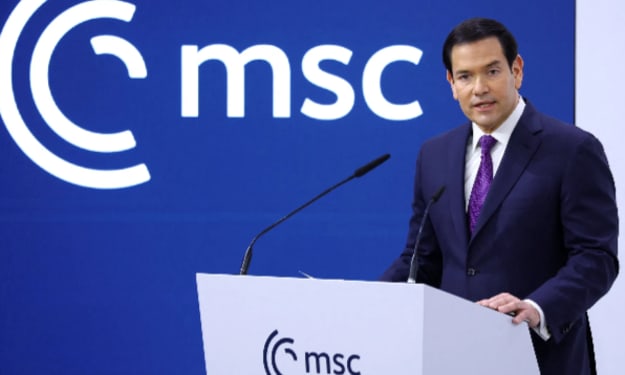
Rubio Delivers MAGA’s Foreign Policy Doctrine in Munich
When Marco Rubio stepped onto the international stage at the Munich Security Conference, his speech signaled more than a routine policy address. It was a declaration of what the “Make America Great Again” (MAGA) movement believes U.S. foreign policy should look like in a rapidly changing world.
By Sajida Sikandar4 days ago in The Swamp


Comments
There are no comments for this story
Be the first to respond and start the conversation.