
U.S. Navy MH-60s, Air Force F-16s Will Soon Fly With New C-UAS Missiles
Formal / News Style New counter-drone missiles set to enhance U.S. Navy and Air Force capabilities MH-60 helicopters and F-16 jets to deploy advanced C-UAS systems against UAV threats 🔹 Neutral & Informative U.S. forces integrate precision missiles to neutralize small, agile drones Counter-unmanned aerial system weapons to strengthen fleet and aerial defenses 🔹 Impactful New C-UAS missiles aim to redefine how U.S. aircraft tackle drone threats

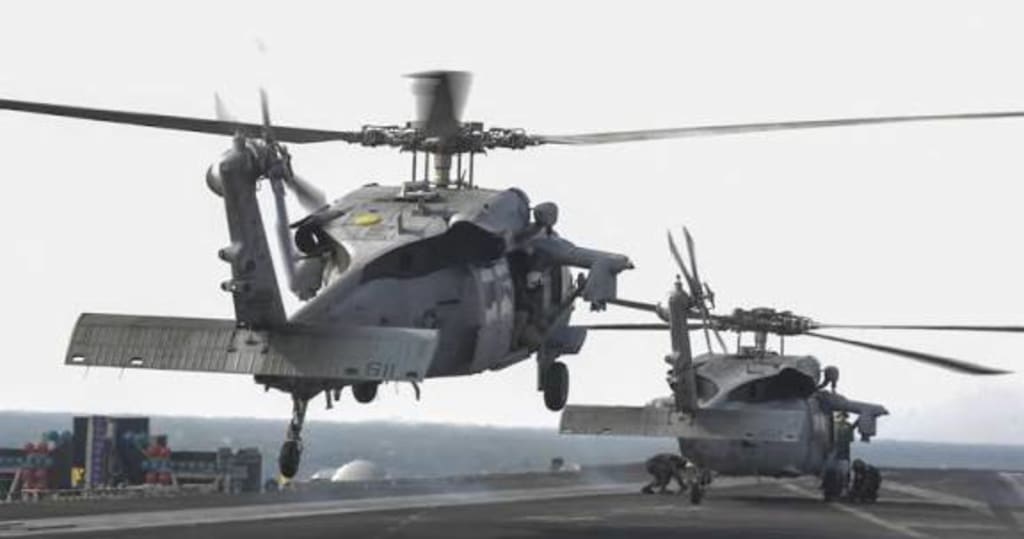
The United States is preparing to equip its Navy MH-60 helicopters and Air Force F-16 fighter jets with new counter-unmanned aerial system (C-UAS) missiles. The move reflects growing concern over drone threats to military operations worldwide, from battlefield reconnaissance to potential attacks on high-value assets.
Defense officials describe the new missiles as lightweight, highly maneuverable, and capable of engaging small, low-signature drones at ranges suitable for both offensive and defensive operations. The integration of these systems marks a significant enhancement in the U.S. military’s ability to respond to rapidly evolving unmanned aerial threats.
Addressing the Drone Challenge
U.S. forces have faced an increasing number of drone encounters in multiple theaters, particularly in conflicts involving near-peer competitors and asymmetric actors. Small unmanned aerial vehicles (UAVs) can conduct surveillance, deliver ordnance, or jam communications, often with minimal risk to the operator.
“The proliferation of drones presents a unique challenge,” said a senior Pentagon official. “Traditional air-defense systems are not always optimized to detect and neutralize small, agile targets. These new C-UAS missiles give our pilots a precise and rapid-response option.”
Technical Capabilities
The new C-UAS missiles feature advanced guidance systems and sensors designed to track and engage drones at short to medium ranges. Unlike traditional air-to-air missiles, these systems are optimized for small radar cross-sections and low-speed targets.
Onboard avionics in MH-60 helicopters and F-16s are being upgraded to provide pilots with enhanced targeting data and automated engagement protocols. This integration allows crews to detect threats quickly and launch missiles with minimal delay, increasing the likelihood of neutralizing UAVs before they pose a danger to personnel or assets.
Operational Integration
The Navy plans to equip its MH-60 variants, including the MH-60R Seahawk and MH-60S Seahawk, with the C-UAS missiles for missions including fleet defense, convoy protection, and forward reconnaissance.
The Air Force is focusing on integrating the missiles onto F-16s to provide rapid response over operational theaters where drone swarms or single unmanned threats are likely. Training programs are being developed to familiarize pilots with the new systems, emphasizing detection, target prioritization, and engagement protocols.
Strategic Implications
The deployment of C-UAS missiles addresses a growing capability gap in both U.S. and allied forces. Analysts say that as drones become more ubiquitous and sophisticated, the ability to neutralize them quickly is critical to maintaining operational advantage.
“The integration of these systems sends a clear message to potential adversaries: U.S. forces are prepared to counter drone threats effectively,” said one defense analyst. “It enhances deterrence and reduces the risk that UAVs can disrupt or damage critical operations.”
The move is part of a broader push by the Department of Defense to modernize counter-drone capabilities across all branches, including ground-based systems, shipborne defenses, and airborne platforms. Coordination between the Navy, Air Force, and allied forces is expected to enhance interoperability in future operations.
Challenges and Considerations
While the C-UAS missiles offer enhanced protection, officials caution that they are not a standalone solution. Effective counter-drone operations require integration with radar systems, electronic warfare measures, and operational planning. Adversaries are likely to continue developing new UAV capabilities, including stealth, swarm tactics, and electronic countermeasures.
Logistical and training requirements also pose challenges. Equipping multiple aircraft types with new missiles requires coordination across maintenance units, supply chains, and pilot readiness programs.
Looking Ahead
The first deployments of the C-UAS missiles on MH-60 helicopters and F-16s are expected within the next year, with additional units phased in gradually. Officials emphasize that these systems will complement existing air-defense capabilities and provide crews with greater flexibility and survivability in modern operational environments.
By addressing the evolving drone threat, the U.S. military aims to ensure that its forces remain capable of defending assets, protecting personnel, and maintaining operational superiority in increasingly contested airspaces.
About the Creator
Fiaz Ahmed
I am Fiaz Ahmed. I am a passionate writer. I love covering trending topics and breaking news. With a sharp eye for what’s happening around the world, and crafts timely and engaging stories that keep readers informed and updated.
Keep reading
More stories from Fiaz Ahmed and writers in The Swamp and other communities.
France Shifts Into High Gear to Make Its Navy One of the First in Europe to Integrate Surface Drones with DANAE
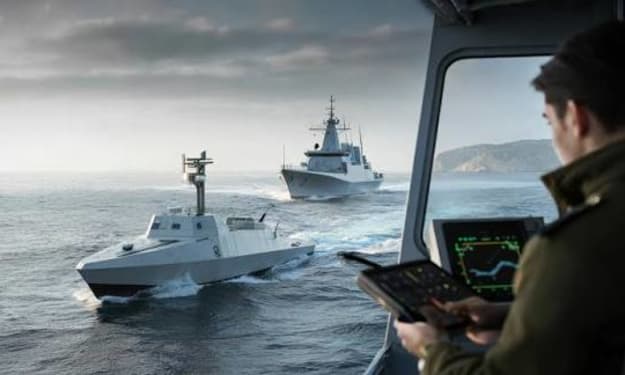
France is accelerating efforts to modernize its naval forces by integrating advanced unmanned surface vessels (USVs) under the DANAE (Dispositif d’Appui à la Neutralisation des Agressions par l’Eau) program. Defense officials say the initiative could position the French Navy as one of the first European navies capable of deploying networked surface drones for both reconnaissance and combat support. Strategic Motivation The push comes amid rising maritime challenges in Europe, from contested waters in the Mediterranean to the increasing presence of advanced naval technologies from peer competitors. France aims to maintain operational superiority while enhancing flexibility and safety for crewed vessels. By integrating USVs through DANAE, the navy intends to perform high-risk missions with reduced human exposure, leveraging automation, sensor networks, and real-time data sharing. A senior defense official explained, “The goal is to give our commanders a broader set of options at sea. USVs allow for persistent surveillance, rapid interdiction, and support for larger ships without putting sailors in harm’s way.” The DANAE Program DANAE is designed to link manned warships with multiple autonomous surface drones through a secure network. Each drone is equipped with advanced radar, sonar, and communication systems, enabling it to operate independently or in concert with other vessels. The program emphasizes modular payloads, allowing drones to be quickly reconfigured for reconnaissance, mine countermeasures, or electronic warfare. The French Navy has been conducting trials with prototype USVs since 2023, testing navigation algorithms, obstacle avoidance, and secure communications in both open-ocean and littoral environments. Early results suggest the drones can maintain operational efficiency even in complex maritime traffic and adverse weather conditions. Integration and Operational Impact Integration with DANAE enables real-time coordination between human operators and autonomous platforms. Ships can deploy drones ahead of a mission, gather intelligence, and relay data back to command centers, all while maintaining operational security. Analysts say this capability provides France with a tactical advantage, particularly in contested regions where situational awareness is critical. By fielding USVs, the French Navy can conduct riskier operations, such as mine-clearing or forward surveillance, without exposing crewed vessels to potential threats. The autonomous systems also reduce manpower requirements and operational fatigue, enabling sustained maritime presence with fewer resources. European Context France’s accelerated push is seen in the context of broader European naval modernization efforts. While several NATO countries are exploring USVs, France’s focus on integrating them through DANAE could make its navy a leader in operational deployment. Countries like the United Kingdom, Germany, and Italy have expressed interest in similar capabilities, but France’s trials and planned deployments suggest it may achieve operational readiness first. European defense analysts note that early adoption of USVs could influence regional naval strategy, as allies and competitors adjust to France’s enhanced situational awareness and force projection capabilities. The ability to deploy autonomous systems alongside traditional warships could serve as a template for future multinational operations. Challenges Ahead Despite progress, integrating USVs into active fleet operations is not without challenges. Technical issues, including cybersecurity, communication latency, and autonomous decision-making in dynamic combat scenarios, must be carefully addressed. The navy also faces logistical hurdles in maintaining and deploying drone fleets across diverse maritime theaters. Furthermore, legal and ethical considerations regarding autonomous systems in armed conflict remain a topic of discussion within European defense circles. France is coordinating with NATO and domestic authorities to ensure DANAE-compliant operations adhere to international law. Looking Ahead The French Navy aims to complete integration of DANAE-equipped USVs into its operational fleet by the late 2020s. Officials emphasize that the program is not meant to replace human sailors but to augment capabilities, increase safety, and enhance mission effectiveness. “The future of naval warfare will involve both humans and autonomous systems working in harmony,” said one naval strategist. “France is positioning itself at the forefront of this transformation in Europe.” As trials continue and the first operational drones enter service, France’s approach may set a benchmark for European navies seeking to combine traditional maritime strength with cutting-edge autonomous technology, ensuring readiness for the increasingly complex maritime environment of the 21st century.
By Fiaz Ahmed 2 days ago in The Swamp
Why Black History Matters in America?
The United States of America is celebrating their 250th anniversary in 2026. I'm proud to be an American and as someone who was born here, I wouldn't imagine myself living anywhere else. This is a country where opportunities are possible. Where anyone can be successful in anything they desire to do. Equality, community, and togetherness are the backbones of what America is and should be about. However, we have an administration who wants to erase and disregard those who have made positive, meaningful impacts in our country, specifically Black figures, such as Martin Luther King, Jr., Rosa Parks, and Maya Angelou. President Trump and his administration have been constantly complaining and fighting against what they call the "Woke agenda". They use this excuse as a distraction from other issues they refuse to address, such as the high cost of living, climate change, and inflation. That equality is dividing America, when in reality, it's bringing us together. Being woke is not tied to a specific political party. No matter where you stand on the political spectrum, you can still care about other people and their plights. Compassion and empathy for others isn't tied to a political party, either. We were taught as children to treat others the way we want to be treated and not judge others because they're different from us. Caring about others isn't a personal attack on your beliefs. It doesn't make you any less of a person. People who are easily offended over African American figures, past or present, or anything related to it, are grasping at straws. Current and future generations need to know who people like Harriet Tubman and Shirley Chisholm were, especially in the classroom. Black History is part of American History. It should be recognized, not hidden or forgotten. Besides, you can't shield children from everything, just because your feelings are easily hurt.
By Mark Wesley Pritchard 17 days ago in The Swamp


Comments
There are no comments for this story
Be the first to respond and start the conversation.