
US Defence Assessment Warns India: China’s Tactical Calm on LAC and Its Military Push Through Pakistan
Why Beijing’s Quiet Border Strategy and Pakistan Partnership Pose a Long-Term Challenge for New Delhi”

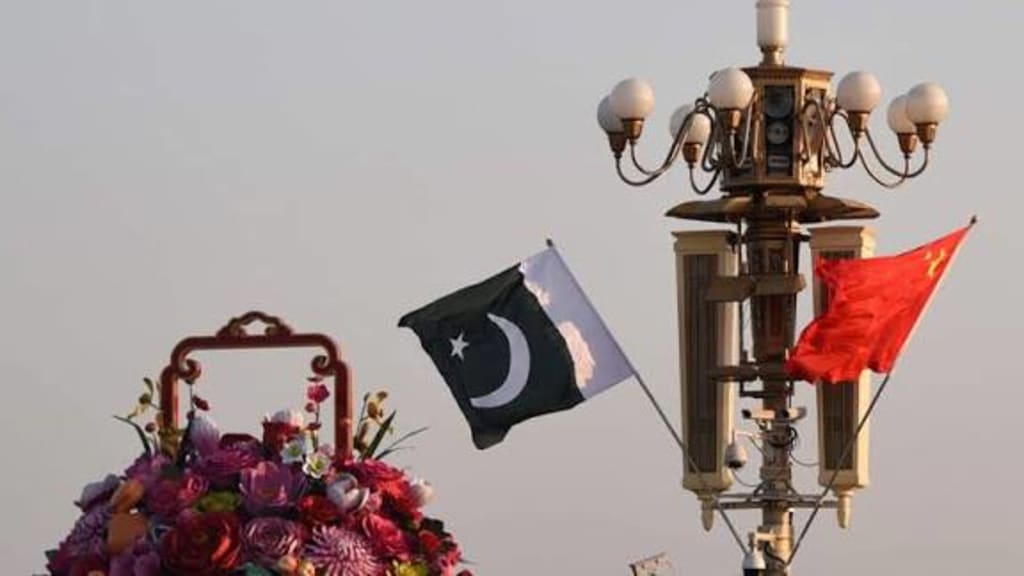
A recent US defence assessment has issued a strategic warning to India, highlighting China’s evolving military posture along the Line of Actual Control (LAC) and its deepening security cooperation with Pakistan. While Beijing appears outwardly calm along the disputed Himalayan border, analysts suggest this restraint is tactical rather than conciliatory, masking long-term military and geopolitical ambitions that could reshape South Asia’s security landscape.
Tactical Calm, Strategic Intent
Since the deadly clashes in eastern Ladakh in 2020, India and China have maintained an uneasy peace along the LAC. Disengagement talks, limited troop withdrawals, and diplomatic engagement have reduced the risk of immediate escalation. However, the US defence assessment argues that this calm should not be mistaken for de-escalation in intent.
According to the report, China has continued to strengthen its military infrastructure along the border—building roads, airstrips, logistics hubs, and surveillance systems. These developments enhance the People’s Liberation Army’s (PLA) ability to mobilize rapidly if tensions rise again. The absence of frequent clashes, therefore, may reflect Beijing’s preference for patience rather than compromise.
This approach allows China to avoid triggering international backlash while steadily improving its operational readiness against India.
The Pakistan Factor in China’s Strategy
One of the most concerning elements highlighted in the assessment is China’s growing military collaboration with Pakistan. Often described as an “all-weather strategic partnership,” the China–Pakistan relationship has expanded far beyond economic cooperation under the China-Pakistan Economic Corridor (CPEC).
The report suggests that China views Pakistan as a critical strategic partner in counterbalancing India. Joint military exercises, intelligence sharing, arms transfers, and defence technology cooperation have increased steadily. From fighter jets to missile systems and naval assets, China has played a key role in modernizing Pakistan’s armed forces.
This cooperation, US analysts warn, creates the potential for a two-front security challenge for India—one along the LAC with China and another along the Line of Control with Pakistan.
Encirclement Without Confrontation
China’s broader regional strategy appears to focus on influence without direct confrontation. By strengthening Pakistan militarily, Beijing can indirectly pressure India while maintaining plausible deniability. This approach fits China’s preference for “gray-zone” tactics—actions that fall below the threshold of open war but still alter the strategic balance.
The assessment notes that China’s naval presence in the Indian Ocean is also expanding, with ports, logistics facilities, and maritime partnerships extending from Gwadar in Pakistan to Sri Lanka and beyond. These developments increase China’s ability to project power near India’s maritime lifelines.
Implications for India’s Security Planning
For Indian defence planners, the US warning underscores the need for long-term strategic preparedness rather than short-term threat management. While diplomatic engagement with China remains important, the report suggests that India cannot rely solely on dialogue to secure its borders.
India has already responded by accelerating infrastructure development along the LAC, enhancing surveillance capabilities, and deepening defence partnerships with countries such as the United States, Japan, and Australia under the Quad framework. Military modernization, particularly in air power, cyber capabilities, and space assets, is increasingly seen as essential.
The assessment also emphasizes the importance of intelligence coordination and early-warning systems to counter potential coordinated actions involving China and Pakistan.
Regional and Global Context
The US defence assessment reflects broader concerns in Washington about China’s rising military influence across Asia. For the United States, India is viewed as a key strategic partner in maintaining a balance of power in the Indo-Pacific region.
At the same time, the report stops short of predicting imminent conflict. Instead, it frames the situation as a slow-moving strategic competition, where decisions made today will shape regional stability for decades.
A Warning, Not a Prediction
Crucially, the assessment is not a forecast of war but a warning against complacency. China’s calm along the LAC may offer temporary stability, but the underlying power dynamics continue to shift. Beijing’s methodical approach—combining border management, regional partnerships, and military modernization—signals a long-term strategy rather than a desire for immediate confrontation.
For India, the challenge lies in balancing diplomacy with deterrence, cooperation with preparedness, and regional leadership with internal resilience.
Conclusion
The US defence assessment serves as a reminder that in modern geopolitics, silence does not always signal peace. China’s tactical calm along the LAC, coupled with its growing military engagement with Pakistan, represents a complex and evolving challenge for India.
As South Asia navigates an increasingly multipolar world, India’s ability to anticipate, adapt, and respond to these shifting dynamics will be critical. The coming years may not be defined by open conflict, but by strategic patience, power projection, and the careful management of rival ambitions.
About the Creator
Fiaz Ahmed Brohi
I am a passionate writer with a love for exploring and creating content on trending topics. Always curious, always sharing stories that engage and inspire.
Keep reading
More stories from Fiaz Ahmed Brohi and writers in The Swamp and other communities.
India’s Space Agency Launches Its Heaviest Satellite, Marking a New Era of Technological Ambition
India has taken a significant leap forward in its space journey with the successful launch of its heaviest satellite to date, reinforcing the country’s growing stature as a major spacefaring nation. The mission, carried out by the Indian Space Research Organisation (ISRO), is being hailed as a milestone that combines technological precision, strategic vision, and national pride. The launch not only showcases India’s advanced engineering capabilities but also signals its readiness to handle complex, high-mass missions that were once dominated by a handful of global space powers. A Landmark Mission for ISRO The satellite, weighing several tonnes, was placed into orbit using one of ISRO’s most powerful launch vehicles. The mission demanded exceptional coordination, advanced propulsion systems, and meticulous planning, as heavier satellites require far greater thrust and precision to achieve stable orbit. ISRO scientists confirmed that the satellite was deployed successfully and all onboard systems were functioning as expected shortly after launch. Cheers erupted at mission control as years of research and preparation culminated in a flawless execution. Why This Satellite Matters This launch is not just about size—it is about capability. The heaviest satellite ever launched by India carries advanced payloads designed for high-speed communication, enhanced data transfer, and improved coverage across vast geographical areas. Such satellites play a crucial role in: Telecommunications and broadband connectivity Weather forecasting and climate monitoring Disaster management and emergency response Defense and strategic communications With this satellite, India strengthens its ability to deliver reliable services to millions of people, including those in remote and underserved regions. A Boost for India’s Space Ambitions Over the past decade, India has steadily expanded its space program—from low-cost satellite launches to interplanetary missions. This heavy satellite launch signals a shift toward high-capacity, high-impact missions, placing ISRO in direct competition with leading global space agencies. Experts note that handling heavier satellites opens doors to future projects, including: Large space stations Advanced deep-space missions Commercial satellite launches for international clients India’s ability to launch such payloads domestically also reduces dependence on foreign launch providers, enhancing strategic autonomy. Engineering Challenges Overcome Launching a heavy satellite is no easy task. Engineers had to address challenges such as increased fuel requirements, structural stress on the launch vehicle, and precise orbital insertion. ISRO upgraded key components of its launch system, including propulsion stages, navigation systems, and real-time monitoring tools. Extensive ground testing ensured the rocket could withstand the enormous forces involved during liftoff and ascent. The success of the mission reflects ISRO’s emphasis on incremental innovation—refining existing technology while pushing boundaries step by step. Impact on India’s Commercial Space Sector The launch also benefits India’s rapidly growing private space industry. With proven heavy-lift capability, India becomes more attractive as a launch destination for global satellite operators seeking cost-effective and reliable services. In recent years, ISRO has increasingly collaborated with private companies, allowing startups to participate in manufacturing, testing, and mission support. This ecosystem approach is expected to generate jobs, attract investment, and position India as a key player in the global space economy. National Pride and Global Recognition For many Indians, the launch represents more than a technical achievement—it is a moment of collective pride. Social media platforms were flooded with congratulatory messages, while political leaders praised ISRO scientists for their dedication and perseverance. International observers have also taken note, recognizing the mission as proof of India’s maturity in space technology. Analysts say such achievements enhance India’s diplomatic influence and soft power, particularly among developing nations seeking affordable space solutions. What Comes Next? ISRO has ambitious plans ahead, including human spaceflight missions, advanced lunar exploration, and next-generation launch vehicles. The successful deployment of its heaviest satellite provides valuable experience that will feed into these future endeavors. Scientists emphasize that this mission is not an endpoint but a stepping stone toward even more complex projects that will shape India’s space trajectory for decades to come. A Giant Leap Forward With the launch of its heaviest satellite, India has once again demonstrated that innovation, discipline, and vision can overcome limitations of scale and budget. The mission stands as a testament to ISRO’s philosophy of doing more with less—while aiming higher every time. As the satellite begins its operational life in orbit, it carries not just technology, but the aspirations of a nation reaching confidently for the stars.
By Fiaz Ahmed Brohi2 months ago in The Swamp
Why Black History Matters in America?
The United States of America is celebrating their 250th anniversary in 2026. I'm proud to be an American and as someone who was born here, I wouldn't imagine myself living anywhere else. This is a country where opportunities are possible. Where anyone can be successful in anything they desire to do. Equality, community, and togetherness are the backbones of what America is and should be about. However, we have an administration who wants to erase and disregard those who have made positive, meaningful impacts in our country, specifically Black figures, such as Martin Luther King, Jr., Rosa Parks, and Maya Angelou. President Trump and his administration have been constantly complaining and fighting against what they call the "Woke agenda". They use this excuse as a distraction from other issues they refuse to address, such as the high cost of living, climate change, and inflation. That equality is dividing America, when in reality, it's bringing us together. Being woke is not tied to a specific political party. No matter where you stand on the political spectrum, you can still care about other people and their plights. Compassion and empathy for others isn't tied to a political party, either. We were taught as children to treat others the way we want to be treated and not judge others because they're different from us. Caring about others isn't a personal attack on your beliefs. It doesn't make you any less of a person. People who are easily offended over African American figures, past or present, or anything related to it, are grasping at straws. Current and future generations need to know who people like Harriet Tubman and Shirley Chisholm were, especially in the classroom. Black History is part of American History. It should be recognized, not hidden or forgotten. Besides, you can't shield children from everything, just because your feelings are easily hurt.
By Mark Wesley Pritchard 19 days ago in The Swamp
Security: The U.S. Air Force Can’t Ever Build New F-22 Raptor Stealth Fighters
The United States Air Force operates one of the most advanced fighter jets ever built: the F-22 Raptor. Designed during the Cold War to dominate enemy aircraft and evade radar, the F-22 remains unmatched in speed, stealth, and maneuverability. Yet despite its proven superiority, the U.S. Air Force can no longer build new F-22s—and may never be able to again. The reason lies in a combination of cost, politics, and lost industrial capability. A program frozen in time The F-22 program was officially ended in 2011 after only 187 operational aircraft were produced. Originally, the Pentagon planned to buy more than 700 Raptors, but the collapse of the Soviet Union and shifting defense priorities reduced the perceived need for such a specialized air-to-air fighter. At the same time, costs ballooned. Each aircraft ended up costing more than $150 million, making it one of the most expensive fighters in history. Congress decided to shut down production permanently, redirecting funds toward the newer F-35 program and other defense needs. What made this decision irreversible was not just stopping assembly—but dismantling the entire production line. The lost manufacturing ecosystem The F-22 was built by Lockheed Martin with contributions from hundreds of suppliers across the United States. Specialized tools, custom machinery, and unique software systems were created solely for this aircraft. When production ended, much of that equipment was destroyed or repurposed. Some suppliers went out of business; others shifted to different programs. Even more important, the workforce dispersed. Engineers and technicians with deep knowledge of the Raptor’s stealth coatings, titanium airframe, and avionics systems retired or moved to other industries. Rebuilding that expertise today would take years and billions of dollars. Pentagon studies later concluded that restarting F-22 production would cost well over $50 billion and still take a decade or more. For that price, the Air Force could instead develop newer, more advanced platforms. Classified technology and outdated systems Another obstacle is the aircraft’s classified design. The F-22 uses stealth materials and avionics developed in the 1990s and early 2000s. Some components rely on obsolete microchips and software no longer manufactured. Updating the jet to modern standards would require a major redesign, essentially creating a new aircraft under the old name. Security restrictions also complicate matters. Because much of the F-22’s technology remains highly classified, even modernizing its systems requires special clearance and isolated facilities, making production far more complex than restarting a civilian aircraft line. Strategic shift to next-generation fighters Rather than reviving the F-22, the Air Force has chosen to focus on future platforms such as the Next Generation Air Dominance (NGAD) program. These aircraft are expected to include artificial intelligence, drone teaming, and improved stealth optimized for modern threats like Chinese and Russian air defenses. The F-22 remains in service and continues to receive upgrades to radar, weapons, and communications. However, its limited fleet size means every loss—whether through accidents or wear—reduces overall capability. Why it still matters The inability to build more F-22s highlights a critical vulnerability in U.S. defense planning: once a highly specialized production line is shut down, it may be impossible to restart. In an era of rising tensions with major powers, this has raised concerns about whether future aircraft programs should be kept alive longer to preserve industrial readiness. For now, the Raptor remains a symbol of unmatched air dominance—and of a strategic decision that cannot be undone. The U.S. Air Force may fly the F-22 for decades to come, but the era of building new Raptors is over for good. In the history of military aviation, few aircraft have been so advanced—and so permanently out of reach.
By Fiaz Ahmed 5 days ago in The Swamp
The Cave Part 6
If you have ever heard a tale about yourself that you cannot remember and doubtless think is made up, you will know how I felt when Tharkin related all that the eagle had seen of me before my memories were scattered. Of far distances and traveling companions that I did not recall, camping out under the stars and making our way to the mountains with deliberate purpose. The great bird had lost contact with my party once we entered the forests, and the seven other members were not seen again by him or his brethren since.
By Jamye Sharp5 days ago in Chapters


Comments
There are no comments for this story
Be the first to respond and start the conversation.