
US Trade Deficit Swells in December as Imports Surge
Year-end spike in consumer goods and industrial supplies widens gap, highlighting shifting global trade dynamics
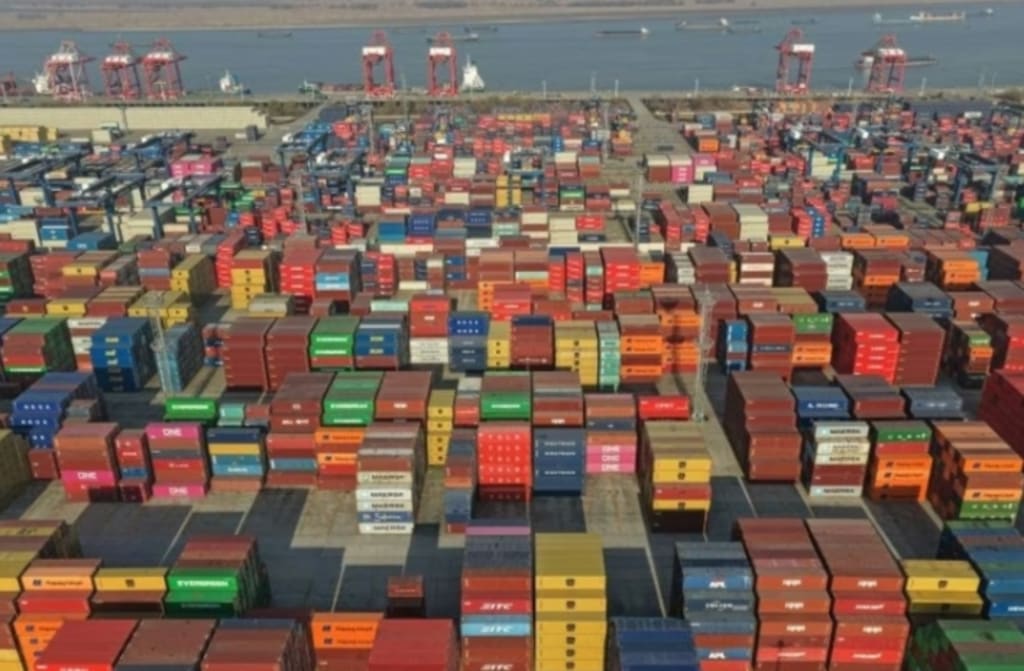
The U.S. trade deficit widened sharply in December, as a late-year surge in imports outpaced export growth and pushed the gap between what America buys from the world and what it sells to new monthly highs.
According to data released by the U.S. Census Bureau and the Bureau of Economic Analysis, imports climbed significantly in the final month of the year, reflecting strong domestic demand, inventory restocking, and increased purchases of consumer goods and industrial materials.
The swelling deficit underscores the continued strength of U.S. consumer spending — but also raises questions about manufacturing competitiveness and the broader balance of global trade.
Imports Drive the Widening Gap
The December increase was primarily driven by a jump in goods imports. Consumer products such as electronics, apparel, and household items saw notable growth, likely fueled by holiday demand and year-end retail activity.
Industrial supplies, including petroleum products and raw materials, also contributed to the rise.
When imports rise faster than exports, the trade deficit expands. In simple terms, the U.S. bought more from the rest of the world than it sold abroad.
Economists note that while a larger trade deficit can sometimes signal economic imbalance, it can also reflect robust consumer confidence and business investment.
In December’s case, the import surge appears closely tied to sustained domestic demand.
Exports Show Modest Growth
U.S. exports did increase during the month, but not at the same pace as imports. Gains in services — such as travel and financial services — were partially offset by slower growth in goods shipments.
Global economic uncertainty and uneven growth among major trading partners may have limited export momentum.
The strength of the U.S. dollar also plays a role. A stronger dollar makes American goods more expensive overseas, potentially dampening export demand while making imports more affordable for U.S. consumers and businesses.
Impact on Fourth-Quarter GDP
Trade plays a key role in calculating Gross Domestic Product (GDP). When imports exceed exports, the trade deficit subtracts from overall economic growth in GDP calculations.
The December widening could therefore weigh on fourth-quarter growth estimates.
However, economists caution against interpreting the trade deficit in isolation. If import growth reflects strong consumer spending or business investment — both positive economic indicators — the broader economic picture may remain solid despite the larger gap.
In fact, rising imports of capital goods can signal business expansion, which supports longer-term productivity gains.
The Role of Inventory Restocking
Another factor behind December’s import surge may be inventory management. Retailers and manufacturers often adjust stock levels toward the end of the year, particularly after supply chain disruptions in prior years.
With global shipping routes stabilizing and freight costs moderating compared to pandemic-era highs, businesses may have taken advantage of smoother logistics conditions to replenish inventories.
Major ports such as the Port of Los Angeles reported steady cargo volumes late in the year, reflecting continued inbound container traffic.
While supply chain bottlenecks have eased significantly from their peak, global trade flows remain sensitive to geopolitical developments and shipping constraints.
Structural Trade Dynamics
The U.S. has run persistent trade deficits for decades, reflecting its status as one of the world’s largest consumer markets.
American households’ purchasing power, combined with global supply networks, makes the U.S. a major destination for foreign-made goods.
At the same time, the country remains a global leader in services exports, including technology, finance, education, and entertainment.
The trade balance often shifts month to month due to energy prices, currency fluctuations, and seasonal trends.
December’s widening fits within a broader pattern of trade volatility influenced by both domestic demand and global economic conditions.
Policy and Political Implications
Trade deficits frequently become political talking points, particularly during election cycles or debates over industrial policy.
Some policymakers argue that a persistent deficit signals a need to strengthen domestic manufacturing and reduce reliance on foreign supply chains.
Others contend that trade deficits are a natural byproduct of a strong economy and global capital flows.
Efforts to reshoring manufacturing, incentivizing domestic production, and strengthening supply chain resilience have gained momentum in recent years.
Yet global trade remains deeply interconnected, making rapid structural shifts complex and gradual.
Currency and Interest Rate Factors
Currency movements are closely tied to trade balances. A strong dollar, often supported by higher U.S. interest rates, can widen the trade deficit by making imports cheaper and exports less competitive.
The Federal Reserve has maintained a cautious stance on monetary policy amid ongoing inflation concerns. Higher rates tend to attract foreign capital, strengthening the dollar.
This dynamic can contribute to trade imbalances, even when domestic demand remains healthy.
Global Economic Context
December’s trade data also reflects global economic crosscurrents. While the U.S. economy has shown resilience, growth in parts of Europe and Asia has been uneven.
Slower expansion in key trading partners can limit export opportunities for U.S. producers.
At the same time, improving energy markets and stabilizing supply chains have supported global trade flows compared to pandemic disruptions.
Trade remains both a driver and a reflection of global economic health.
What to Watch Next
Looking ahead, economists will monitor several key indicators:
Consumer spending trends
Manufacturing output data
Currency movements
Global growth forecasts
If U.S. consumer demand remains strong, imports could continue at elevated levels. Conversely, any slowdown in spending or tightening financial conditions could narrow the trade gap.
Additionally, changes in trade policy or new tariffs could reshape import patterns.
For now, December’s surge underscores the complex relationship between domestic demand and global commerce.
A Sign of Strength or Strain?
The widening trade deficit presents a nuanced picture. On one hand, it highlights strong consumer appetite and business activity. On the other, it underscores reliance on foreign production and exposure to global market fluctuations.
In economic terms, trade balances are neither inherently good nor bad — they are indicators of broader dynamics.
December’s data suggests that the U.S. economy closed the year with robust demand, even if that demand translated into higher imports.
As policymakers and markets assess the numbers, one conclusion is clear: in an interconnected global economy, shifts in trade flows can ripple quickly across growth forecasts, currency markets, and political debates.
Whether the trade deficit narrows or widens in the coming months will depend on the delicate balance between domestic strength and global conditions.
About the Creator
Why Black History Matters in America?
The United States of America is celebrating their 250th anniversary in 2026. I'm proud to be an American and as someone who was born here, I wouldn't imagine myself living anywhere else. This is a country where opportunities are possible. Where anyone can be successful in anything they desire to do. Equality, community, and togetherness are the backbones of what America is and should be about. However, we have an administration who wants to erase and disregard those who have made positive, meaningful impacts in our country, specifically Black figures, such as Martin Luther King, Jr., Rosa Parks, and Maya Angelou. President Trump and his administration have been constantly complaining and fighting against what they call the "Woke agenda". They use this excuse as a distraction from other issues they refuse to address, such as the high cost of living, climate change, and inflation. That equality is dividing America, when in reality, it's bringing us together. Being woke is not tied to a specific political party. No matter where you stand on the political spectrum, you can still care about other people and their plights. Compassion and empathy for others isn't tied to a political party, either. We were taught as children to treat others the way we want to be treated and not judge others because they're different from us. Caring about others isn't a personal attack on your beliefs. It doesn't make you any less of a person. People who are easily offended over African American figures, past or present, or anything related to it, are grasping at straws. Current and future generations need to know who people like Harriet Tubman and Shirley Chisholm were, especially in the classroom. Black History is part of American History. It should be recognized, not hidden or forgotten. Besides, you can't shield children from everything, just because your feelings are easily hurt.
By Mark Wesley Pritchard 19 days ago in The Swamp
North Korea’s First Nuclear-Powered Missile Submarine Is Revealed
North Korea has unveiled its first nuclear-powered missile submarine, a development that marks a significant milestone in the country’s strategic military capabilities and raises concerns among regional and global security analysts. The announcement, accompanied by state media imagery, highlights Pyongyang’s continued focus on expanding its naval and nuclear deterrence capabilities, despite international sanctions and diplomatic pressures. The Unveiling State-run North Korean media released images of the submarine during a formal ceremony attended by senior military officials. The vessel, reportedly capable of carrying ballistic missiles, represents the country’s first foray into nuclear-powered submarine technology. Analysts note that the move signals both technical advancement and a strategic intent to enhance second-strike nuclear capability. The submarine appears to be significantly larger than the country’s existing diesel-electric submarine fleet and is believed to be capable of extended underwater operations. This development could allow North Korea to maintain a continuous at-sea nuclear deterrent, reducing the vulnerability of its strategic assets to preemptive strikes. Technical and Strategic Significance While specific technical details remain scarce, defense analysts suggest that the vessel is designed to operate silently and for long periods underwater, using a nuclear propulsion system to power both its engines and onboard systems. The integration of ballistic missile capability could potentially allow the submarine to launch nuclear missiles from protected, concealed positions, thereby strengthening North Korea’s deterrent posture. “This is a game-changer in terms of regional security,” said an East Asia military analyst. “A nuclear-powered submarine with ballistic missile capability significantly increases Pyongyang’s ability to project power and complicates defense planning for neighboring countries and the United States.” North Korea has historically relied on a combination of land-based missile systems and conventional submarines for its naval strategy. The introduction of a nuclear-powered platform represents a shift toward modernized, survivable deterrence. Experts note that the move may also reflect North Korea’s desire to emulate capabilities possessed by other nuclear states, including the U.S., Russia, and China. Regional and Global Reactions The unveiling of the submarine has drawn immediate attention from South Korea, Japan, and the United States, all of whom monitor North Korean military developments closely. South Korea’s Ministry of National Defense stated that it is analyzing satellite imagery and open-source intelligence to assess the capabilities of the new vessel. Japan’s government expressed concern over the potential threat to maritime security in the region. U.S. officials noted that the development underscores the ongoing challenges of denuclearization talks and highlights the need for robust deterrence strategies. Analysts suggest that the submarine could complicate existing defense frameworks in the Indo-Pacific, forcing allies to consider enhanced anti-submarine warfare capabilities and maritime surveillance. Implications for Nuclear Deterrence The introduction of a nuclear-powered missile submarine has significant implications for North Korea’s nuclear posture. Submarines provide a survivable second-strike capability, allowing a country to maintain the ability to retaliate even after a first-strike attack. This strategic advantage is critical for maintaining deterrence and signaling to adversaries that any attack could provoke a devastating response. Experts also warn that the development could accelerate an arms race in the region, prompting neighboring countries to invest more heavily in submarine detection and missile defense systems. Additionally, the revelation may influence diplomatic negotiations, with North Korea likely leveraging its enhanced capabilities to extract concessions in talks with the United States and regional partners. Technical Challenges and Future Prospects While the unveiling is a major step, technical experts caution that the vessel may still face challenges in operational deployment. Nuclear propulsion requires advanced engineering, maintenance infrastructure, and trained personnel, areas where North Korea has limited publicly verified expertise. Analysts will be monitoring whether the country can sustain long-term operations and integrate the submarine effectively into its naval strategy. The development also raises questions about the country’s missile technology, including the range, accuracy, and survivability of submarine-launched ballistic missiles. Successful integration of these systems could significantly alter the strategic calculus in Northeast Asia. Looking Ahead The North Korean announcement is expected to influence both regional defense planning and global diplomatic efforts. While Pyongyang has consistently pursued advanced military capabilities, the addition of a nuclear-powered missile submarine represents a tangible escalation in its strategic capabilities. As tensions in the region persist, countries including South Korea, Japan, and the United States are likely to increase monitoring and prepare contingency plans. Analysts warn that the unveiling could set a precedent for further technological advancements in North Korea’s naval and nuclear programs, reshaping security dynamics in the Indo-Pacific. The world now faces a new chapter in the North Korean military narrative, with a vessel that could fundamentally change the nature of deterrence and escalation in the region.
By Fiaz Ahmed 3 days ago in The Swamp
Goodbye, Mr. Duvall
It is turning out to be an interesting year. I was in the middle of teaching a class when a pop-up appeared on the screen announcing the death of Mr. Robert Seldon Duvall (yes, that was his full name). I was in the middle of a discussion on the obsession we have with winning when it comes to sports (the Winter Olympics was a theme), and I felt as though things were coming full circle. We had already lost Gene Hackman last year, and along with that titan, it feels though one particular golden age has closed off to be replaced by...?
By Kendall Defoe 4 days ago in Geeks


Comments
There are no comments for this story
Be the first to respond and start the conversation.