
Vatican Says It Will Not Participate in Trump’s ‘Board of Peace’
A decision rooted in diplomacy, neutrality, and the Church’s vision of peacemaking

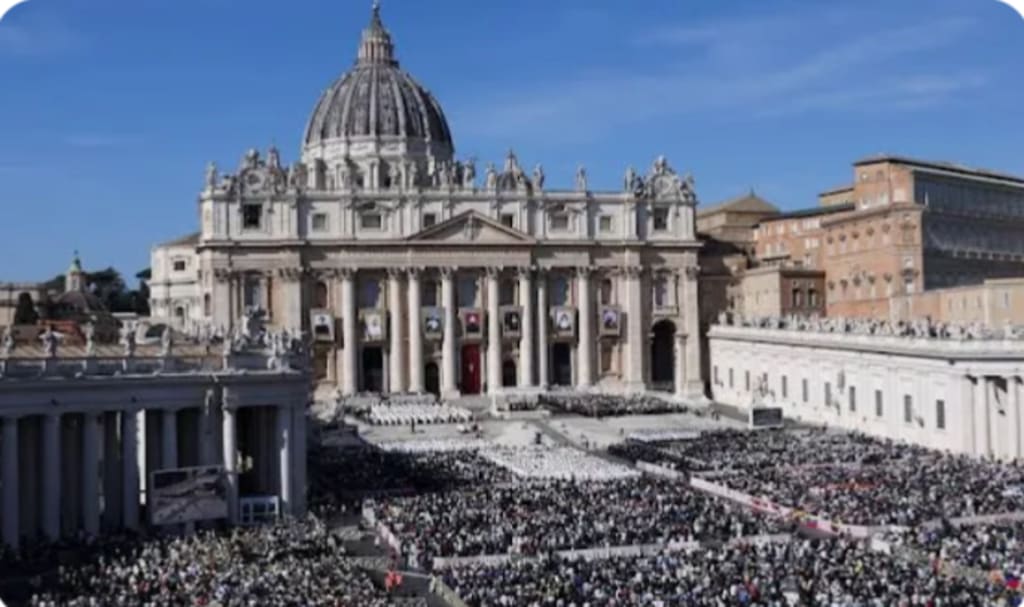
The Holy See has made its position clear: it will not take part in former U.S. President Donald Trump’s newly announced initiative known as the “Board of Peace.” The decision, quietly confirmed by Vatican officials, has sparked discussion across diplomatic and religious circles about the limits of political partnerships and the role of faith institutions in global conflict resolution.
At first glance, the refusal may appear surprising. The Vatican has long been active in peace diplomacy, mediating conflicts and promoting dialogue across continents. But in this case, officials emphasized that the Church must remain independent from political projects that could compromise its neutrality or moral authority.
What Is Trump’s ‘Board of Peace’?
Trump’s proposed “Board of Peace” was introduced as a panel of influential figures meant to advise on international conflict resolution and promote global stability. While details about the board’s structure and authority remain vague, Trump framed it as a bold initiative designed to bring together religious leaders, diplomats, and political figures under a single peace-focused banner.
Supporters described it as an innovative attempt to harness moral leadership for political ends. Critics, however, quickly questioned whether such a board would be symbolic rather than substantive — and whether it might become a platform for political messaging rather than genuine diplomacy.
It was within this uncertainty that speculation arose over whether the Vatican, one of the world’s most respected moral voices, would participate.
Why the Vatican Declined
According to Vatican sources, the Holy See’s refusal was not an attack on the idea of peace itself, but rather on the political framing of the initiative.
The Vatican has a long tradition of maintaining distance from partisan political projects. Its diplomatic role is built on neutrality, allowing it to act as a mediator between nations in conflict. By joining a board created and branded by a political figure, Vatican officials feared they could be perceived as endorsing a specific political agenda.
For the Church, peace is not a campaign slogan — it is a moral mission.
Officials stressed that the Vatican already engages in peacemaking through established diplomatic channels, interfaith dialogue, and humanitarian efforts. Joining a newly formed political body could undermine decades of careful positioning as an impartial actor.
A History of Independent Diplomacy
The Holy See operates one of the oldest diplomatic networks in the world, with relations with more than 180 countries. Its representatives, known as apostolic nuncios, serve as both religious and diplomatic envoys, working quietly behind the scenes in conflict zones and fragile states.
From mediating between Cuba and the United States to supporting peace talks in Colombia and Africa, the Vatican has consistently emphasized dialogue over alignment.
Participation in Trump’s “Board of Peace” risked blurring that distinction.
Vatican officials reportedly viewed the initiative as too closely tied to one individual’s political brand. Even if the goal of peace aligned with Catholic teaching, the method did not fit with the Church’s institutional approach.
Political Context Matters
Trump remains a deeply polarizing figure, both in the United States and abroad. Any partnership involving him inevitably draws political interpretation. For the Vatican, whose credibility depends on being seen as above political rivalries, this posed a serious concern.
The Church has worked with leaders of many ideologies over the years, but it does so through formal diplomatic relationships, not through personal or informal boards initiated by political personalities.
By declining the invitation, the Vatican signaled that it prefers to pursue peace through multilateral institutions such as the United Nations and through its own established diplomatic mechanisms rather than ad hoc political panels.
Mixed Reactions Worldwide
The decision has drawn mixed responses.
Some observers praised the Vatican’s stance as principled and consistent with its tradition of neutrality. They argue that peace efforts must be rooted in moral credibility, not political branding. From this perspective, the refusal protects the Church from becoming entangled in ideological battles.
Others criticized the move as a missed opportunity. They believe that any platform dedicated to peace should be welcomed, regardless of its origins. In a world facing wars in multiple regions, they argue that cooperation — even with controversial figures — could be valuable.
Still, Vatican officials appear firm in their view that peace must be pursued without compromising independence.
Faith vs. Politics: A Delicate Line
This episode highlights a broader tension between religion and politics. Religious institutions often advocate peace, justice, and reconciliation, but they must decide how closely to align with political leaders who claim to share those goals.
For the Vatican, the risk lies in being seen as legitimizing a political project that may not align fully with its teachings on human rights, migration, or social justice. The Church’s global mission requires it to speak to all sides, not just one.
By staying outside Trump’s “Board of Peace,” the Vatican preserves its ability to criticize and cooperate freely with governments across the political spectrum.
What This Means Going Forward
The refusal does not mean the Vatican is withdrawing from global peace efforts. On the contrary, it continues to host interfaith summits, issue diplomatic statements, and encourage negotiations in conflict zones.
What it does mean is that the Church is drawing a clear boundary: peace initiatives must come through recognized international frameworks or neutral religious cooperation, not politically branded projects.
This approach reinforces the Vatican’s identity as a moral authority rather than a political actor.
A Statement Without Words
In diplomacy, silence can speak as loudly as action. By declining to join the “Board of Peace,” the Holy See made a quiet but powerful statement about how it views its role in the world.
Peace, in the Vatican’s understanding, is not something to be governed by a board — it is something to be cultivated through dialogue, humility, and consistent moral witness.
As conflicts continue to rage globally, the Church’s choice underscores an enduring belief: that true peacemaking must remain independent of political ambition.
In refusing Trump’s invitation, the Vatican reaffirmed its commitment to being a bridge between nations rather than a partner in political projects — a reminder that in a divided world, neutrality can itself be a form of courage.
About the Creator
Sajida Sikandar
Hi, I’m Sajida Sikandar, a passionate blogger with 3 years of experience in crafting engaging and insightful content. Join me as I share my thoughts, stories, and ideas on a variety of topics that matter to you.
Keep reading
More stories from Sajida Sikandar and writers in The Swamp and other communities.
Has Bangladesh’s New PM Named Student Leaders to His Cabinet?
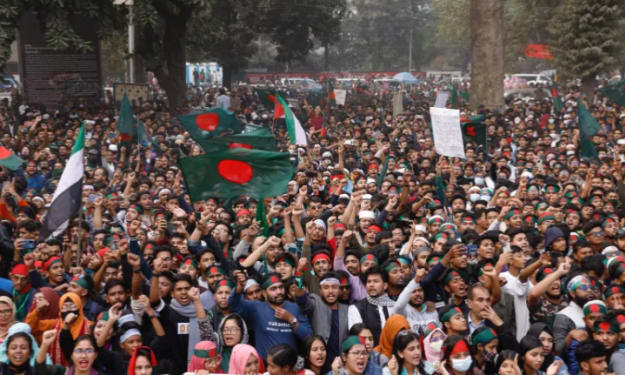
Bangladesh is witnessing a rare political transformation — one where voices from student protests are now echoing inside the nation’s highest decision-making chambers. Since the swearing-in of the country’s new prime minister, many citizens and observers have been asking the same question: Has Bangladesh’s new PM actually named student leaders to his cabinet?
By Sajida Sikandarabout 14 hours ago in The Swamp
Why Black History Matters in America?
The United States of America is celebrating their 250th anniversary in 2026. I'm proud to be an American and as someone who was born here, I wouldn't imagine myself living anywhere else. This is a country where opportunities are possible. Where anyone can be successful in anything they desire to do. Equality, community, and togetherness are the backbones of what America is and should be about. However, we have an administration who wants to erase and disregard those who have made positive, meaningful impacts in our country, specifically Black figures, such as Martin Luther King, Jr., Rosa Parks, and Maya Angelou. President Trump and his administration have been constantly complaining and fighting against what they call the "Woke agenda". They use this excuse as a distraction from other issues they refuse to address, such as the high cost of living, climate change, and inflation. That equality is dividing America, when in reality, it's bringing us together. Being woke is not tied to a specific political party. No matter where you stand on the political spectrum, you can still care about other people and their plights. Compassion and empathy for others isn't tied to a political party, either. We were taught as children to treat others the way we want to be treated and not judge others because they're different from us. Caring about others isn't a personal attack on your beliefs. It doesn't make you any less of a person. People who are easily offended over African American figures, past or present, or anything related to it, are grasping at straws. Current and future generations need to know who people like Harriet Tubman and Shirley Chisholm were, especially in the classroom. Black History is part of American History. It should be recognized, not hidden or forgotten. Besides, you can't shield children from everything, just because your feelings are easily hurt.
By Mark Wesley Pritchard 18 days ago in The Swamp
The broken system of empty promises after gun violence
Each time there is a school shooting, gang or juvenile-related murder in America, the responses are always the same, but nothing changes. Local leaders, clergy, state, and federal officials all say, "This has to stop." They hold meetings, candlelight prayer vigils and have marches, but the shootings continue.
By Cheryl E Prestonabout 23 hours ago in The Swamp
At My Wits’ End
Life is about taking out the trash and calling it trash because you have every reason to. It wasn't meant to be linear, they say. But the times you tried to make it straight led to problems, and you didn’t have the tools to put any of it to use. You don't put your right shoes on the right feet; you put the left shoes on the left feet. The grey hardened slab will trip you up anyway.
By Caitlin Charltonabout 9 hours ago in Psyche



Comments
There are no comments for this story
Be the first to respond and start the conversation.