
What’s Behind the Somalia–Saudi Arabia Military Deal?
Formal / News Style New cooperation aims to strengthen Somalia’s forces while advancing Saudi strategic interests in the Horn of Africa Military partnership highlights regional security, counterterrorism, and geopolitical considerations 🔹 Neutral & Informative Training, equipment, and intelligence sharing mark the latest step in Somalia–Saudi Arabia defense ties The agreement could reshape security dynamics amid ongoing insurgent threats and regional rivalries 🔹 Impactful Strategic alliance seeks to bolster Somalia’s defenses while extending Saudi influence in East Africa

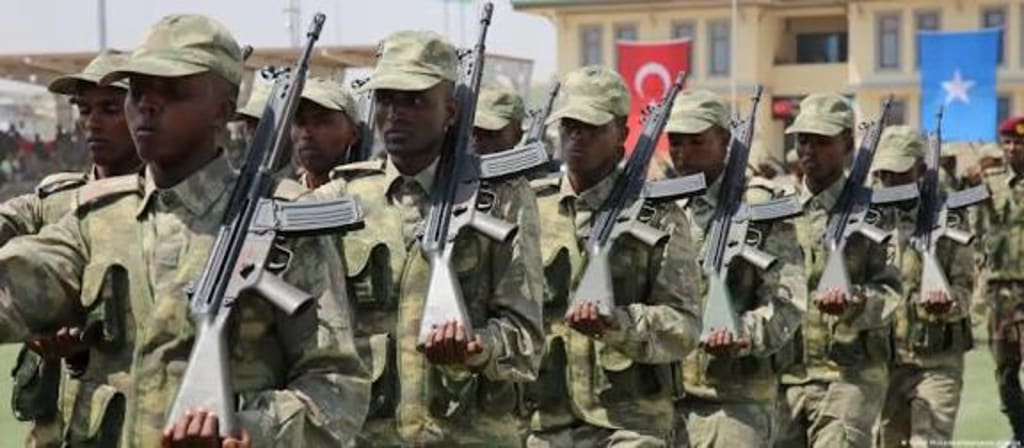
Somalia and Saudi Arabia have signed a new military cooperation agreement, raising questions about the strategic motivations behind the deal and its potential impact on regional security. Officials describe the agreement as a framework for training, arms support, and joint operations, but analysts suggest it may also serve broader geopolitical objectives.
Strengthening Somalia’s Security Apparatus
Somalia continues to face internal security challenges, including threats from the extremist group Al-Shabaab. The agreement with Saudi Arabia aims to bolster Somalia’s military capabilities through specialized training, logistical support, and intelligence sharing. Somali officials emphasize that the partnership will enhance their ability to combat terrorism, secure borders, and stabilize contested regions.
“Saudi support provides much-needed resources and expertise,” said a Somali defense official. “It strengthens our forces and helps protect our citizens from ongoing security threats.”
Saudi Arabia’s Strategic Interests
For Saudi Arabia, the agreement represents an opportunity to extend influence in the Horn of Africa, a region that sits along key maritime routes in the Red Sea and the Gulf of Aden. Analysts note that Riyadh has increasingly sought partnerships across East Africa to counter perceived threats from rival regional actors and to protect its economic and strategic interests.
Saudi Arabia’s involvement in Somalia aligns with its broader foreign policy goals, including countering extremist networks, securing maritime trade routes, and fostering alliances with states that can project stability in critical regions. The deal may also serve as a counterbalance to the growing influence of other external powers in Somalia, including Turkey and Qatar, both of which have established military and economic ties in the region.
Regional and International Implications
The military cooperation agreement has drawn attention from neighboring countries and international observers. Some analysts warn that it could shift regional balances, particularly if Saudi Arabia provides advanced equipment or deploys military advisors. Others highlight the potential for Somalia to leverage external support to enhance domestic stability, which could reduce humanitarian and security pressures in the Horn of Africa.
International partners, including the United Nations and the African Union, have called for transparency in the deployment of foreign assistance to Somalia, emphasizing that aid should focus on strengthening legitimate state institutions while respecting Somali sovereignty.
Tactical and Operational Details
While many aspects of the deal remain confidential, reports indicate that it covers:
Training programs for Somali troops in counterterrorism and urban operations.
Provision of non-lethal and potentially lethal equipment, including communication and surveillance systems.
Joint exercises to improve interoperability and strategic coordination.
Officials have been careful to frame the agreement as defensive in nature, aimed at enhancing Somalia’s self-reliance in combating insurgency rather than projecting force abroad. However, some observers note that any foreign military involvement carries inherent risks of escalation or regional tension if not carefully managed.
Challenges and Risks
The Somalia–Saudi Arabia agreement faces several challenges. Security conditions in Somalia remain volatile, with ongoing insurgent activity, clan-based conflicts, and political instability complicating the implementation of training and equipment programs. Logistics, coordination between the Somali armed forces and Saudi advisors, and monitoring the proper use of provided assets are also potential hurdles.
Additionally, rival regional powers may view the deal with suspicion, potentially heightening competition for influence in the Horn of Africa. Analysts stress that Saudi Arabia and Somalia will need to balance strategic interests with diplomatic sensitivity to avoid unintended tensions with neighboring countries.
Looking Ahead
The military cooperation deal between Somalia and Saudi Arabia is poised to reshape aspects of security dynamics in East Africa. While it promises to strengthen Somalia’s ability to address internal threats, it also reflects broader geopolitical maneuvering as external powers vie for influence in the region.
The effectiveness of the agreement will depend on how well both sides implement training, manage resources, and navigate the delicate balance of regional politics. Observers will be watching closely to see whether the deal contributes to lasting stability in Somalia or becomes another layer in the complex web of Horn of Africa geopolitics.
About the Creator
Fiaz Ahmed
I am Fiaz Ahmed. I am a passionate writer. I love covering trending topics and breaking news. With a sharp eye for what’s happening around the world, and crafts timely and engaging stories that keep readers informed and updated.
Keep reading
More stories from Fiaz Ahmed and writers in The Swamp and other communities.
U.S. Navy MH-60s, Air Force F-16s Will Soon Fly With New C-UAS Missiles
The United States is preparing to equip its Navy MH-60 helicopters and Air Force F-16 fighter jets with new counter-unmanned aerial system (C-UAS) missiles. The move reflects growing concern over drone threats to military operations worldwide, from battlefield reconnaissance to potential attacks on high-value assets. Defense officials describe the new missiles as lightweight, highly maneuverable, and capable of engaging small, low-signature drones at ranges suitable for both offensive and defensive operations. The integration of these systems marks a significant enhancement in the U.S. military’s ability to respond to rapidly evolving unmanned aerial threats. Addressing the Drone Challenge U.S. forces have faced an increasing number of drone encounters in multiple theaters, particularly in conflicts involving near-peer competitors and asymmetric actors. Small unmanned aerial vehicles (UAVs) can conduct surveillance, deliver ordnance, or jam communications, often with minimal risk to the operator. “The proliferation of drones presents a unique challenge,” said a senior Pentagon official. “Traditional air-defense systems are not always optimized to detect and neutralize small, agile targets. These new C-UAS missiles give our pilots a precise and rapid-response option.” Technical Capabilities The new C-UAS missiles feature advanced guidance systems and sensors designed to track and engage drones at short to medium ranges. Unlike traditional air-to-air missiles, these systems are optimized for small radar cross-sections and low-speed targets. Onboard avionics in MH-60 helicopters and F-16s are being upgraded to provide pilots with enhanced targeting data and automated engagement protocols. This integration allows crews to detect threats quickly and launch missiles with minimal delay, increasing the likelihood of neutralizing UAVs before they pose a danger to personnel or assets. Operational Integration The Navy plans to equip its MH-60 variants, including the MH-60R Seahawk and MH-60S Seahawk, with the C-UAS missiles for missions including fleet defense, convoy protection, and forward reconnaissance. The Air Force is focusing on integrating the missiles onto F-16s to provide rapid response over operational theaters where drone swarms or single unmanned threats are likely. Training programs are being developed to familiarize pilots with the new systems, emphasizing detection, target prioritization, and engagement protocols. Strategic Implications The deployment of C-UAS missiles addresses a growing capability gap in both U.S. and allied forces. Analysts say that as drones become more ubiquitous and sophisticated, the ability to neutralize them quickly is critical to maintaining operational advantage. “The integration of these systems sends a clear message to potential adversaries: U.S. forces are prepared to counter drone threats effectively,” said one defense analyst. “It enhances deterrence and reduces the risk that UAVs can disrupt or damage critical operations.” The move is part of a broader push by the Department of Defense to modernize counter-drone capabilities across all branches, including ground-based systems, shipborne defenses, and airborne platforms. Coordination between the Navy, Air Force, and allied forces is expected to enhance interoperability in future operations. Challenges and Considerations While the C-UAS missiles offer enhanced protection, officials caution that they are not a standalone solution. Effective counter-drone operations require integration with radar systems, electronic warfare measures, and operational planning. Adversaries are likely to continue developing new UAV capabilities, including stealth, swarm tactics, and electronic countermeasures. Logistical and training requirements also pose challenges. Equipping multiple aircraft types with new missiles requires coordination across maintenance units, supply chains, and pilot readiness programs. Looking Ahead The first deployments of the C-UAS missiles on MH-60 helicopters and F-16s are expected within the next year, with additional units phased in gradually. Officials emphasize that these systems will complement existing air-defense capabilities and provide crews with greater flexibility and survivability in modern operational environments. By addressing the evolving drone threat, the U.S. military aims to ensure that its forces remain capable of defending assets, protecting personnel, and maintaining operational superiority in increasingly contested airspaces.
By Fiaz Ahmed a day ago in The Swamp
Why Black History Matters in America?
The United States of America is celebrating their 250th anniversary in 2026. I'm proud to be an American and as someone who was born here, I wouldn't imagine myself living anywhere else. This is a country where opportunities are possible. Where anyone can be successful in anything they desire to do. Equality, community, and togetherness are the backbones of what America is and should be about. However, we have an administration who wants to erase and disregard those who have made positive, meaningful impacts in our country, specifically Black figures, such as Martin Luther King, Jr., Rosa Parks, and Maya Angelou. President Trump and his administration have been constantly complaining and fighting against what they call the "Woke agenda". They use this excuse as a distraction from other issues they refuse to address, such as the high cost of living, climate change, and inflation. That equality is dividing America, when in reality, it's bringing us together. Being woke is not tied to a specific political party. No matter where you stand on the political spectrum, you can still care about other people and their plights. Compassion and empathy for others isn't tied to a political party, either. We were taught as children to treat others the way we want to be treated and not judge others because they're different from us. Caring about others isn't a personal attack on your beliefs. It doesn't make you any less of a person. People who are easily offended over African American figures, past or present, or anything related to it, are grasping at straws. Current and future generations need to know who people like Harriet Tubman and Shirley Chisholm were, especially in the classroom. Black History is part of American History. It should be recognized, not hidden or forgotten. Besides, you can't shield children from everything, just because your feelings are easily hurt.
By Mark Wesley Pritchard 16 days ago in The Swamp
Cloudflare Guidance Above Expectations
the digital age, where cyber threats loom large and web performance can make or break a business, Cloudflare has emerged as a game‑changer. What began as a solution for faster load times has evolved into a comprehensive platform for web security, performance optimization, and network reliability. Importantly, Cloudflare’s guidance—its documentation, developer tools, and customer support—regularly exceeds expectations, empowering businesses of all sizes to operate confidently in an increasingly hostile online environment.
By Ayesha Lashari7 days ago in The Swamp


Comments
There are no comments for this story
Be the first to respond and start the conversation.