
Japan Pet Food Market Size and Forecast, 2026–2034
Premiumization, Pet Humanization, and Health-Focused Nutrition Reshape a Mature Yet Dynamic Market

Introduction
Japan’s pet food industry is entering a decisive decade of transformation. While the country faces well-known demographic challenges such as population aging, shrinking households, and limited urban living spaces, the emotional bond between people and their pets has never been stronger. This shift is changing how Japanese consumers think about pet care, especially nutrition.
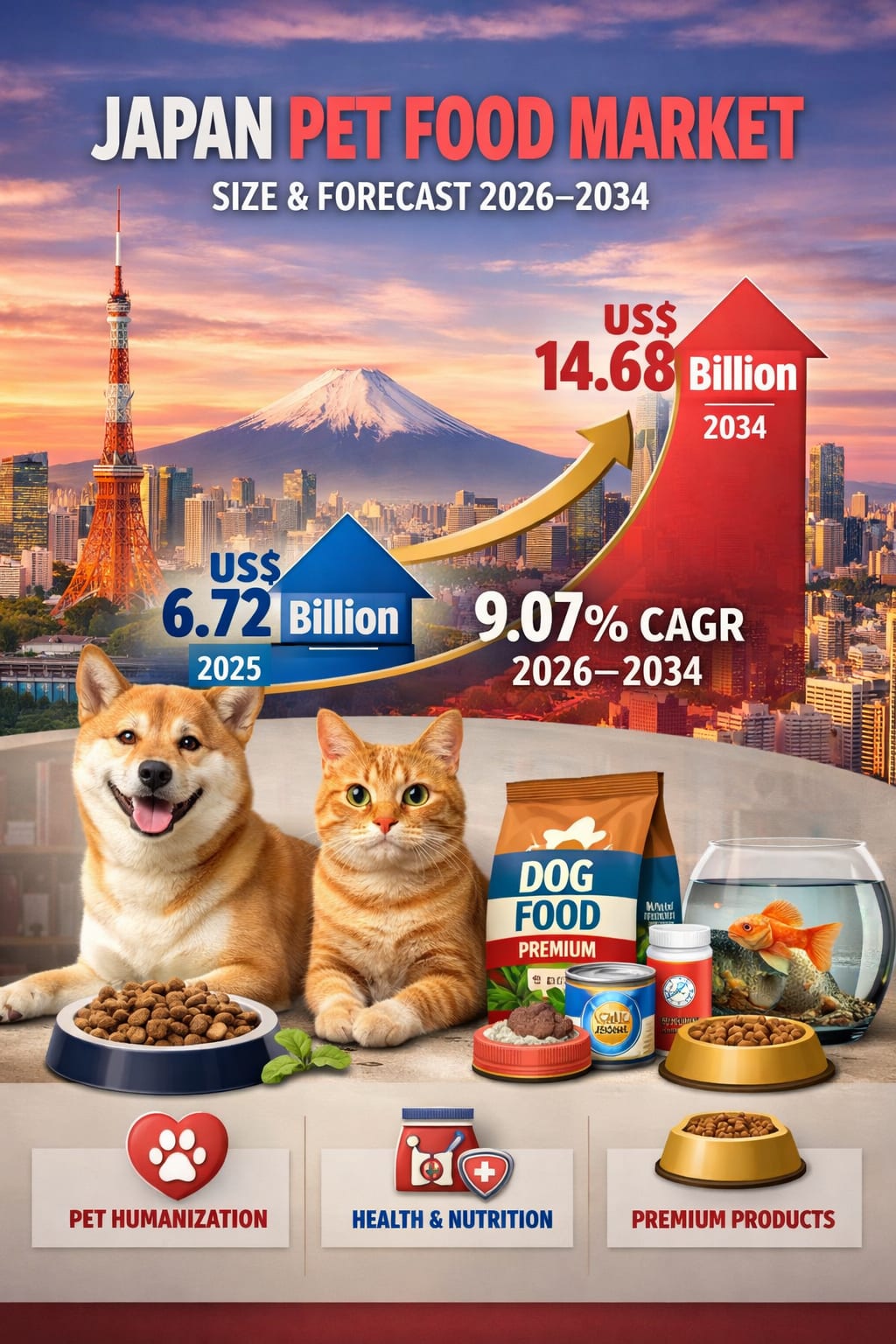
According to Renub Research, the Japan Pet Food Market is estimated to grow from US$ 6.72 billion in 2025 to US$ 14.68 billion by 2034, registering a strong compound annual growth rate (CAGR) of 9.07% during the period 2026–2034. This impressive expansion is being fueled not by sheer volume growth in pet ownership, but by premiumization, health awareness, and the rising trend of pet humanization.
Pets in Japan are increasingly treated as family members. Owners are more willing to invest in higher-quality, functional, and specialized diets that support longevity, comfort, and disease prevention. This evolution is reshaping product development, distribution strategies, and competitive dynamics across the industry.
Japan Pet Food Market Outlook
Pet food refers to commercially prepared food products formulated to meet the nutritional needs of domesticated animals such as dogs and cats. These products are designed to deliver balanced nutrition through proteins, fats, carbohydrates, vitamins, and minerals, supporting pets’ growth, energy, and overall health. Pet food is available in many forms, including dry kibble, wet or canned food, semi-moist food, treats, and specialized diets for specific life stages, breeds, or medical conditions such as obesity, allergies, or kidney disease.
In Japan, pet food has become deeply intertwined with lifestyle and demographic trends. The rise of single-person households, delayed marriages, and an aging population has increased emotional reliance on companion animals. For many households, pets are not just animals but companions that provide comfort, routine, and emotional stability. This has led to greater willingness to spend on premium, functional, and age-specific pet food.
Space constraints in Japanese cities also play a role. Smaller living areas encourage ownership of small dog breeds and cats, which in turn drives demand for portion-controlled, easy-to-store, and indoor-pet-focused food products. At the same time, growing awareness of health, longevity, and preventive care continues to support steady demand for specialized and nutritionally enhanced pet food offerings.
Growth Drivers in the Japan Pet Food Market
Increasing Humanization of Pets
One of the strongest forces shaping the Japanese pet food market is the growing humanization of pets. Dogs and cats are increasingly viewed as family members rather than just animals. Social trends such as the rise in single-person households, later marriages, and an aging population have strengthened emotional bonds between people and their pets.
As a result, consumers are far more attentive to ingredient quality, safety standards, brand reputation, and nutritional value. Many pet owners now look for products that resemble human food trends, such as natural ingredients, limited additives, and transparent labeling. Premium and super-premium products are no longer niche offerings; they are becoming mainstream choices for urban pet owners.
Recent data shows that in 2023, around 397,000 dogs and 369,000 cats were newly welcomed into families in Japan. Although overall pet numbers are not expanding rapidly, spending per pet is increasing, which directly supports market value growth.
Rising Demand for Health-Focused and Functional Pet Food
Health and wellness trends are no longer limited to humans in Japan—they are rapidly extending to pets. Pet owners are increasingly aware that nutrition plays a critical role in longevity, mobility, digestion, weight management, skin health, and kidney function.
This has driven strong growth in functional and therapeutic pet foods, especially those designed for senior pets or animals with specific health conditions. Products endorsed by veterinarians or backed by scientific research enjoy higher trust among Japanese consumers.
The aging pet population further reinforces this trend. As dogs and cats live longer, demand rises for age-specific and condition-specific diets that support quality of life. This shift reflects a broader move away from basic feeding toward preventive and proactive pet healthcare through nutrition.
In January 2025, for example, Hill’s Pet Nutrition introduced new products in its Prescription Diet range, including low-fat dog food and stress-management formulas for cats, highlighting the industry’s focus on medical and functional nutrition.
Premiumization and Convenience-Driven Product Innovation
Premiumization is one of the defining characteristics of Japan’s pet food market. Urban lifestyles, smaller households, and busy schedules are pushing demand for convenient, ready-to-serve, and portion-controlled products. Single-serve packs, wet food pouches, and carefully portioned meals are gaining popularity.
At the same time, consumers are trading up from mass-market products to premium and super-premium offerings that emphasize quality, safety, sourcing, and nutritional benefits. Japanese consumers are willing to pay more for brands they trust, especially those that align with high domestic standards for quality and reliability.
E-commerce, subscription services, and home delivery are also improving accessibility and convenience. In November 2023, Unicharm strengthened its home care operations in Japan with the opening of a new Peparlet factory in Shizuoka, reflecting continued investment in domestic production and innovation.
Challenges in the Japan Pet Food Market
Declining Pet Population and Demographic Shifts
Despite strong value growth, the Japanese pet food market faces a structural challenge: the gradual decline in the overall pet population. Japan’s shrinking population, low birth rate, and aging society mean fewer new pet adoptions over time. In addition, strict housing rules and limited living space in urban areas discourage pet ownership.
While spending per pet is rising, the declining number of pets limits volume growth potential. This forces manufacturers to focus on premiumization, innovation, and value-added products rather than relying on unit sales growth alone. Niche segments such as senior pet nutrition, functional diets, and wellness-oriented products are becoming increasingly important to sustain momentum.
High Competition and Strict Quality Expectations
Japan’s pet food market is highly competitive, with strong domestic players and global brands competing for consumer trust. At the same time, Japanese consumers have exceptionally high expectations for product safety, ingredient transparency, and quality control.
Strict regulations and the risk of reputational damage from product recalls increase operational costs for manufacturers. Even in a premium-oriented market, consumers remain price-sensitive, requiring companies to carefully balance cost, quality, and brand positioning.
Japan Dogs Pet Food Market
Dog food remains the largest segment in Japan’s pet food industry, driven by the popularity of small and toy dog breeds such as toy poodles, chihuahuas, and dachshunds. Japanese dog owners are highly attentive to nutrition, safety, and longevity, which supports strong demand for premium, functional, and breed-specific products.
The aging dog population plays a major role in shaping this segment. Senior dog foods formulated for joint health, digestion, and weight management are seeing increasing demand. Convenience-oriented packaging, including portion-controlled packs and easy-serve formats, also fits well with urban lifestyles.
There is also rising interest in natural ingredients, reduced additives, and transparent labeling, reflecting broader consumer trends in Japan. Even though the overall dog population is not growing rapidly, higher spending per dog continues to support steady market expansion.
Japan Cats Pet Food Market
The cat food segment in Japan is growing faster than the dog segment, largely due to urbanization and lifestyle preferences. Cats are often considered easier to care for and better suited to apartment living, making them an attractive choice for city dwellers.
Japanese consumers are particularly sensitive to taste, texture, and palatability in cat food. This has encouraged continuous innovation in flavors, formats, and recipes. Wet cat food, in particular, enjoys strong demand because of its perceived benefits for hydration, digestibility, and overall health.
With rising cat adoption and increasing spending per pet, the cat food segment is one of the key growth engines of the overall Japanese pet food market.
Japan Dry Dog Food Market
Dry dog food remains a cornerstone of the Japanese market due to its convenience, longer shelf life, and cost efficiency. Kibble products are widely used and often fortified with essential nutrients to support balanced daily nutrition.
Demand is shifting toward high-quality dry dog food with added benefits such as dental care, joint support, and digestive health. Smaller kibble sizes designed for small dog breeds are especially popular in Japan.
Manufacturers are also responding to concerns about obesity and food intolerance by introducing grain-free, hypoallergenic, and lower-calorie formulations. Despite growing interest in wet and fresh food, dry dog food continues to hold a strong position thanks to its practicality and nutritional reliability.
Japan Wet Cat Food Market
Wet cat food is one of the fastest-growing segments in Japan’s pet food industry. Consumers associate wet food with better taste, higher moisture content, and easier digestion, making it especially appealing for picky eaters and senior cats.
Single-serve cans and pouches dominate this segment, as they align with consumer preferences for freshness and portion control. Premium wet food products with high meat or fish content and minimal additives are particularly popular.
As awareness of feline health issues such as urinary and kidney problems increases, wet cat food is gaining further traction as part of preventive and supportive nutrition strategies.
Japan Fish Food Market
Japan’s long-standing tradition of keeping ornamental fish, such as koi, goldfish, and tropical fish, supports a stable fish food market. Fish are often chosen as pets because they require less space and maintenance, making them suitable for urban households.
Demand is strong for specialized fish food that enhances color, supports growth, boosts immunity, and helps maintain water quality. High-quality pellets and flakes are especially popular for koi and other high-value ornamental species.
Although smaller in size compared to dog and cat food segments, the fish food market remains steady and resilient.
Japan Pet Food Store-Based Retailing Market
Store-based retailing remains the leading distribution channel for pet food in Japan. Supermarkets, specialty pet stores, and home centers offer wide product selections and trusted brands. Many consumers prefer to see products in person, read labels, and seek advice from store staff before purchasing.
Specialty pet stores play a particularly important role in promoting premium and functional pet food. Private-label and store brands are also gaining traction by offering competitive pricing without compromising on quality.
While e-commerce is growing, physical retail continues to maintain a strong and influential presence in the Japanese market.
Japan Pet Food Veterinary Clinics Market
Veterinary clinics represent a high-value niche distribution channel, mainly focused on prescription and therapeutic pet foods. These products are designed to manage conditions such as kidney disease, obesity, allergies, and digestive disorders.
Pet owners place strong trust in veterinary recommendations, especially as pets age and develop health issues. Although sales volumes in this channel are smaller, profit margins are high, and this segment plays a crucial role in advancing functional and medical nutrition.
Market Segmentation
By Product Type:
Dog Food
Dog Treats and Mixers
Dry Dog Food
Wet Dog Food
Cat Food
Cat Treats and Mixers
Dry Cat Food
Wet Cat Food
Others
Bird Food
Fish Food
Small Mammal/Reptile Food
By Distribution Channel:
Store-Based Retailing
E-Commerce
Veterinary Clinics
By Cities:
Tokyo, Osaka, Aichi, Kanagawa, Saitama, Hyogo, Chiba, Hokkaido, Fukuoka, Shizuoka
Company Analysis (5 Viewpoints Each):
Overviews
Key Person
Recent Developments
SWOT Analysis
Revenue Analysis
Key Companies Covered:
Mars Incorporated, Gex Corporation, Royal Canin, Hill’s Pet Nutrition, Unicharm, INABA-PETFOOD Co. Ltd.
Final Thoughts
The Japan pet food market is a powerful example of how value-driven growth can thrive even in a mature and demographically constrained economy. With Renub Research projecting the market to rise from US$ 6.72 billion in 2025 to US$ 14.68 billion by 2034 at a CAGR of 9.07%, the industry’s future clearly lies in premiumization, functional nutrition, and deeper emotional connections between pets and owners.
As pets continue to be treated as family members, spending on quality, health-focused, and specialized food will only increase. Companies that invest in innovation, trust, transparency, and science-backed nutrition will be best positioned to succeed in Japan’s evolving pet care landscape.
About the Creator
Sakshi Sharma
Content Writer with 7+ years of experience crafting SEO-driven blogs, web copy & research reports. Skilled in creating engaging, audience-focused content across diverse industries.
Keep reading
More stories from Sakshi Sharma and writers in Trader and other communities.
Europe Sulphur Recovery Technologies Market Analysis & Forecast 2026–2034
Introduction Europe’s industrial landscape is undergoing a quiet but crucial transformation. As governments tighten environmental regulations and industries move toward cleaner, more sustainable operations, technologies that once worked behind the scenes are now stepping into the spotlight. One such area is sulphur recovery technologies—a critical set of processes used to remove and recycle sulphur from oil, gas, and industrial streams.
By Sakshi Sharmaabout 23 hours ago in Trader
AI Stock Research: Tools, Strategies, and Market Insights
Introduction The rise of AI stock research is transforming how investors approach the market. Traditional stock analysis often relies on manually reviewing financial reports, tracking market trends, and interpreting news—tasks that are time-consuming and prone to human error. AI, however, can analyze massive datasets in seconds, detect patterns, and generate actionable insights, giving investors a distinct edge in today’s fast-paced markets.
By Hammad Nawaz6 days ago in Trader




Comments
There are no comments for this story
Be the first to respond and start the conversation.