
United States Full Service Restaurants Market Size & Growth Outlook 2025–2033
How Experiential Dining, Technology, and Menu Innovation Are Reshaping America’s Restaurant Landscape

Introduction: A New Golden Era for Full Service Dining
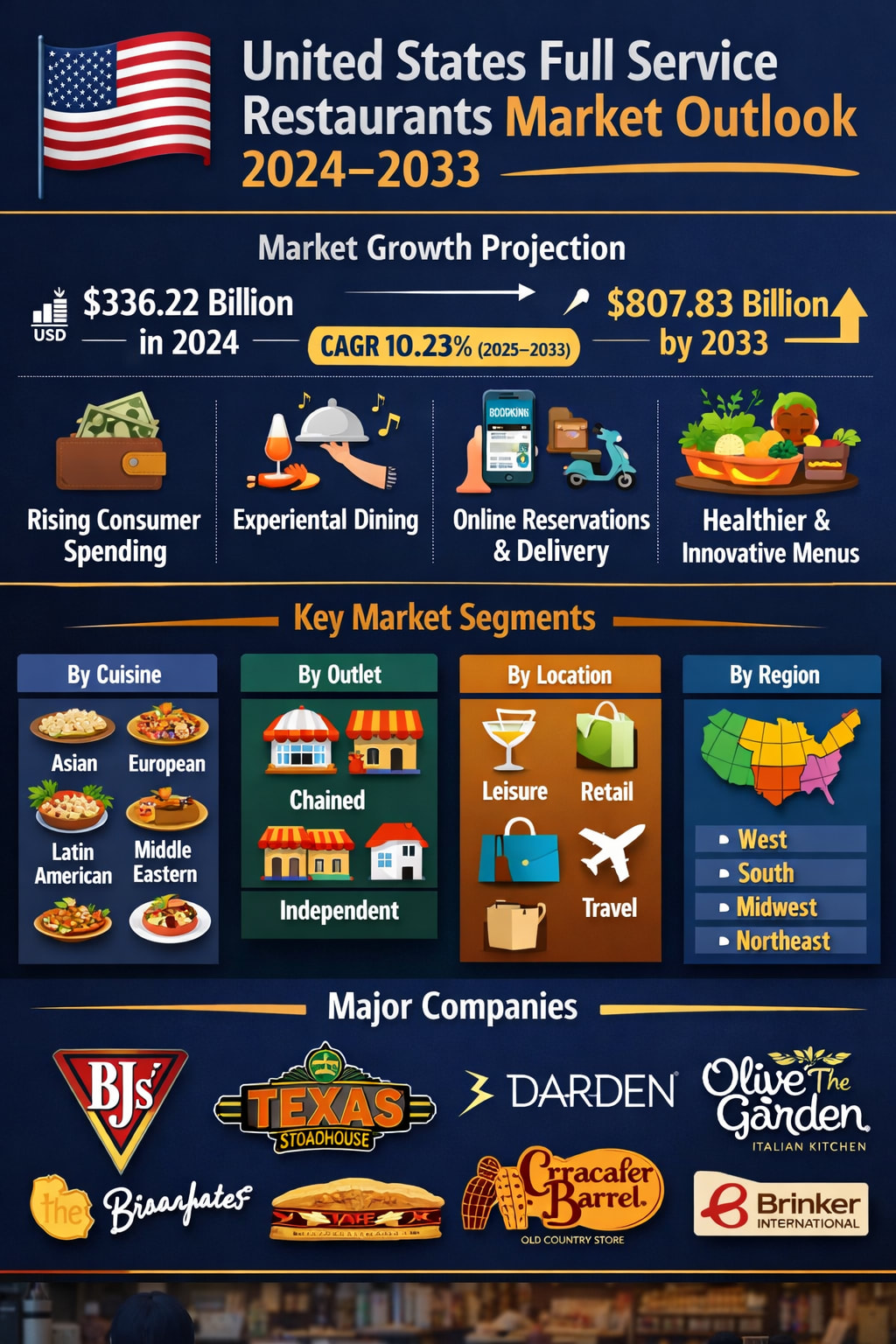
The United States Full Service Restaurants (FSR) sector is entering a transformative growth phase, fueled by changing consumer lifestyles, rising demand for experiential dining, and rapid adoption of digital technologies across the hospitality industry. According to Renub Research, the U.S. Full Service Restaurants market is expected to expand dramatically from USD 336.22 billion in 2024 to USD 807.83 billion by 2033, registering a robust CAGR of 10.23% from 2025 to 2033.
This impressive growth trajectory reflects more than just an increase in people eating out. It signals a deeper shift in how Americans view dining—as an experience, a social ritual, and a lifestyle choice rather than merely a necessity. From upscale European bistros and innovative Asian fusion restaurants to family-friendly chain outlets and destination dining venues, the full service restaurant industry is redefining what it means to eat out in the modern United States.
United States Full Service Restaurants Market Outlook
Full service restaurants are establishments that provide table service, a wide range of menu options, and a strong focus on customer experience. They typically include casual dining, fine dining, and themed restaurants, all characterized by wait staff, plated meals, and an environment designed for longer, more relaxed dining occasions.
In the U.S., FSRs play a central role in social and cultural life. They are popular venues for family gatherings, business meetings, celebrations, and casual social outings. The country’s diverse population and multicultural influences have helped create one of the most dynamic restaurant landscapes in the world, where regional American cuisines coexist with global flavors from Asia, Europe, Latin America, and the Middle East.
The sector has also benefited from the integration of technology. Digital reservations, contactless payments, loyalty apps, and online ordering systems have significantly improved convenience and customer engagement. With higher disposable incomes and a growing appreciation for food culture, Americans continue to spend more on dining experiences, positioning the FSR market for sustained long-term growth.
Key Growth Drivers of the U.S. Full Service Restaurants Market
Rising Consumer Spending and a Strong Dining Culture
One of the most important growth engines for the FSR market is rising consumer spending on leisure and lifestyle experiences. Dining out is no longer viewed as an occasional luxury but as a regular part of urban and suburban life. Millennials and Gen Z, in particular, prioritize experiences, ambiance, and social value when choosing where to eat.
Food tourism, date-night dining, and family dining experiences are all gaining popularity, reinforcing demand for full service restaurants. This trend is supported by broader economic indicators. In March 2025, the U.S. Bureau of Economic Analysis reported that personal income rose by USD 194.7 billion (0.8%) in February, while disposable personal income increased by USD 191.6 billion (0.9%). Personal consumption expenditures also grew, highlighting consumers’ willingness to spend more on services, including dining out.
Growth of Delivery and Online Reservation Platforms
Technology has become a powerful enabler for the full service restaurant industry. Platforms such as DoorDash, Uber Eats, and OpenTable have extended the reach of restaurants beyond their physical locations, allowing them to serve customers at home while also optimizing in-restaurant dining through better reservation and table management systems.
In February 2025, Paytronix introduced Paytronix Catering, an addition to its online ordering solution that allows restaurants to manage catering orders while integrating them into loyalty programs. By bridging third-party and first-party ordering, such innovations help restaurants increase revenue, improve customer retention, and gain better insights into consumer behavior.
These digital tools not only enhance convenience but also support operational efficiency, marketing personalization, and data-driven decision-making—key factors in a highly competitive market.
Menu Innovation and the Shift Toward Healthier Options
Consumer preferences are evolving rapidly, with growing demand for healthier, sustainable, and ethically sourced food. Full service restaurants are responding by introducing plant-based dishes, gluten-free options, and menus that emphasize locally sourced ingredients.
This shift aligns closely with broader health and wellness trends in the U.S. Restaurants that successfully adapt to these preferences often benefit from stronger brand loyalty and a more diverse customer base. Menu innovation has become a strategic necessity, not just a creative choice, and it continues to play a major role in expanding the market.
Challenges Facing the U.S. Full Service Restaurants Market
Labor Shortages and Rising Wage Costs
Despite strong demand, the industry faces persistent staffing challenges. Labor shortages that intensified after the pandemic, combined with rising minimum wages, have significantly increased operating costs. Many restaurants struggle to attract and retain skilled chefs, servers, and kitchen staff.
These shortages can affect service quality, increase wait times, and ultimately impact customer satisfaction. For operators, balancing fair wages with profitability remains one of the most pressing issues in the current market environment.
High Operating Expenses and Inflationary Pressures
Full service restaurants are also dealing with rising costs for raw materials, rent, utilities, and insurance. Supply chain disruptions and inflationary pressures have squeezed profit margins across the sector. At the same time, restaurants must be cautious about raising menu prices too aggressively, as price-sensitive consumers may reduce spending.
Managing these financial pressures while maintaining quality and customer experience will be critical for long-term sustainability.
Segment Insights: A Diverse and Dynamic Market
United States Asian Cuisine Full Service Restaurants Market
Asian cuisine has become one of the most popular segments in the U.S. full service restaurant space. From traditional Chinese and Japanese restaurants to modern Thai, Korean, and pan-Asian fusion concepts, this segment benefits from both authenticity and innovation.
The growing popularity of sushi bars, ramen houses, and Korean BBQ restaurants—often offering interactive and experiential dining—has strengthened demand. The use of fresh ingredients, seafood, and vegetable-rich dishes also appeals to health-conscious consumers, further supporting growth in this segment.
United States European Cuisine Full Service Restaurants Market
European cuisine continues to hold a strong position in the U.S. FSR market, especially in the premium and fine dining categories. French bistros, Italian trattorias, and Spanish tapas bars are widely associated with quality, tradition, and refined dining experiences.
These restaurants often emphasize high-quality ingredients, elegant presentation, and curated wine pairings, making them popular choices for special occasions and upscale dining. As Americans increasingly seek memorable dining experiences, European cuisine FSRs remain well-positioned in the higher-value segment of the market.
United States Chained Outlets Full Service Restaurants Market
Chained full service restaurants such as Olive Garden, Red Lobster, Applebee’s, and others dominate a significant share of the market due to their scale, brand recognition, and operational efficiency. Their standardized menus, strong supply chains, and nationwide marketing campaigns provide consistency and reliability for consumers.
These chains also benefit from loyalty programs, mobile apps, and integrated online ordering systems, which help drive repeat visits and customer engagement. During economic downturns, chained FSRs often outperform independent outlets because of their financial resilience and pricing flexibility.
Location-Based Insights
United States Full Service Restaurants Market in Leisure Locations
Experiential dining is a major growth theme in the FSR industry. Restaurants that combine food with entertainment—such as live music, themed décor, or in-house activities—are attracting groups, families, and tourists looking for more than just a meal.
These leisure-focused FSRs are especially popular in urban centers and tourist destinations. Strategic partnerships, event hosting, and themed experiences provide additional revenue streams and strengthen brand positioning.
United States Retail Full Service Restaurants Market
FSRs located in or near shopping malls and retail centers benefit from high foot traffic and a built-in customer base. As retail spaces increasingly evolve into lifestyle destinations, full service restaurants serve as anchor tenants that enhance overall visitor experience.
These restaurants often leverage seasonal promotions, shopping tie-ins, and holiday specials to boost traffic and average spending, making retail locations an important growth avenue for the sector.
Regional Performance Across the United States
West United States Full Service Restaurants Market
The Western U.S., particularly states like California, Washington, and Oregon, is a hotspot for FSR growth. The region’s multicultural population, openness to food innovation, and leadership in plant-based and organic trends make it fertile ground for new restaurant concepts.
Strong tourism, tech-savvy consumers, and a high concentration of affluent diners further support demand for upscale and health-focused dining experiences. Sustainability and eco-friendly practices are also more widely adopted in this region, influencing both operations and marketing strategies.
South United States Full Service Restaurants Market
Southern states such as Texas, Florida, and Georgia boast rich culinary traditions, including BBQ, Cajun, Creole, and soul food. Full service restaurants in these markets emphasize hospitality, comfort, and community, which resonate strongly with both locals and tourists.
Rapid population growth, relatively lower operating costs, and strong tourism flows make the South an attractive region for expansion. Local festivals, seasonal events, and cultural celebrations also help drive consistent traffic and customer loyalty.
Midwest United States Full Service Restaurants Market
The Midwest is characterized by a strong suburban and family-oriented dining culture. Restaurants in this region often focus on value, generous portions, and a welcoming atmosphere. While urban centers like Chicago have vibrant fine dining scenes, much of the region’s growth comes from stable, repeat customer bases.
Although the Midwest may adopt new culinary trends more gradually, its economic stability and loyal customer base support steady, long-term growth.
Market Segmentation Overview
By Cuisine:
Asia
European
Latin American
Middle Eastern
North American
Other FSR Cuisines
By Outlet:
Chained Outlets
Independent Outlet
By Location:
Leisure
Lodging
Retail
Standalone
Travel
By Region:
West
South
Midwest
Northeast
Competitive Landscape and Company Analysis
The U.S. Full Service Restaurants market is highly competitive, with major players focusing on brand expansion, menu innovation, digital transformation, and operational efficiency. Each company is typically analyzed across four key viewpoints: Overview, Key Persons, Recent Developments & Strategies, and Financial Insights.
Key companies operating in the market include:
BJ’s Restaurants Inc.
Texas Roadhouse Inc.
Bloomin’ Brands Inc.
Darden Restaurants Inc.
Brinker International Inc.
Cracker Barrel Old Country Store Inc.
The Cheesecake Factory Restaurants Inc.
DFO LLC
Dine Brands Global Inc.
These players continue to invest in technology, new store formats, and menu diversification to strengthen their market positions and capture emerging consumer trends.
Final Thoughts: A Market Built on Experience, Innovation, and Growth
The United States Full Service Restaurants market is clearly on a powerful growth trajectory, driven by evolving consumer preferences, rising disposable incomes, and the increasing importance of dining as a social and lifestyle experience. With the market expected to grow from USD 336.22 billion in 2024 to USD 807.83 billion by 2033, the sector presents significant opportunities for operators, investors, and brands that can adapt to changing tastes and operational challenges.
While labor shortages and cost pressures remain real concerns, the long-term outlook remains highly positive. Restaurants that successfully blend great food, memorable experiences, and smart use of technology will be best positioned to thrive in the next decade of American dining.
About the Creator
Keep reading
More stories from shibansh kumar and writers in Trader and other communities.
Asia Luxury Goods Market Size, Trends & Forecast 2025–2033
Asia Luxury Goods Market Outlook The Asia Luxury Goods Market is entering a decisive growth phase, reflecting deep structural shifts in consumer behavior, wealth creation, and digital commerce across the region. According to Renub Research, the market is expected to expand from USD 135.25 billion in 2024 to USD 192.17 billion by 2033, registering a CAGR of 3.98% during the forecast period. This steady rise is being powered by increasing disposable incomes, growing brand consciousness, and the rapid expansion of the middle-class population in countries such as China, India, and Japan.
By shibansh kumarabout 23 hours ago in Trader
Understanding Stock Buybacks: What Investors Need to Know
Introduction Technical analysis is a method used by traders to evaluate stocks, currencies, and other financial instruments based on price movements, volume, and historical data. Unlike fundamental analysis, which focuses on a company’s financial health, technical analysis emphasizes patterns and trends to predict future price behavior.
By Hammad Nawaza day ago in Trader
What Happens To Your Brain When You Stop Multitasking
Digital technology is the culprit that is causing us to doom scroll when tired, disengaged and unmotivated with the content that motivated you to log onto your device to consume in the first place. That is only the beginning. In the modern workplace (and even when filing cabinets were around, I confirmed this with my adopted parents to get my facts right); reading files while you are supposed to be present to the caller on the other end of the phone line is another classic example of multitasking that causes your brain (although adaptable and intelligent) to lose focus and concentration.
By Justine Crowley3 days ago in Psyche



Comments
There are no comments for this story
Be the first to respond and start the conversation.