Fiaz Ahmed
Bio
I am Fiaz Ahmed. I am a passionate writer. I love covering trending topics and breaking news. With a sharp eye for what’s happening around the world, and crafts timely and engaging stories that keep readers informed and updated.
Stories (1146)
Filter by community
Dracula Review: A Gothic Tale Reimagined for Modern Audiences. AI-Generated.
When Bram Stoker first penned Dracula in 1897, he created more than just a horror novel; he forged the template for vampire mythology that continues to captivate audiences over a century later. From films to television series, Dracula has been reimagined countless times, but the latest adaptation seeks to balance the original gothic charm with a modern sensibility. The result? A bold and intriguing rethinking of one of literature’s most iconic figures, but also a reminder of why the classic still holds its own. Plot Overview The latest iteration of Dracula comes from the creative minds behind Sherlock, Steven Moffat and Mark Gatiss. This version of the legendary vampire is structured around a three-part miniseries, each episode running an hour and a half. Set in 1897, the story follows the infamous Count Dracula (played by Claes Bang) as he plots to leave Transylvania and invade England. However, this time, the focus is not just on Dracula’s evil machinations but also on the female characters, particularly Sister Agatha (Dolly Wells), a resourceful nun who sets herself up as Dracula’s nemesis. The show begins with the well-known origin story of Dracula’s rise, with an intriguing twist. Dracula, a master of manipulation and seduction, is depicted as more than just a bloodsucker. He is a figure of intellect and strategic genius, using his supernatural powers not only for killing but also for self-preservation. Unlike many previous iterations, Moffat and Gatiss present him as both a force of pure evil and an embodiment of society’s fears and desires. Performance and Casting Claes Bang’s portrayal of Count Dracula is, without a doubt, one of the most compelling parts of this adaptation. He exudes charisma and menace with equal precision, imbuing Dracula with a complexity that pushes the character beyond the typical portrayal of a mere villain. His performance conveys a layered personality—a being both ancient and alluring, calculating and dangerously charming. However, the true standout in this series is Dolly Wells as Sister Agatha. What could have easily been a traditional ‘final girl’ role is instead given a much-needed update, with Agatha being both a formidable antagonist and a surprisingly complex character. The dynamic between her and Dracula provides some of the most interesting moments of the show, as the tension between good and evil is explored with nuance. Her wit, strength, and resolve make her an excellent foil to Dracula's unyielding malevolence. The rest of the supporting cast, including a range of characters in Dracula's path of destruction, holds their own but often fall short when compared to the central performances. Nonetheless, they serve to further the plot, providing Dracula with the means and obstacles he needs for his wicked schemes. Cinematic Visuals and Atmosphere One of the greatest strengths of Dracula lies in its visual aesthetic. The show embraces the gothic nature of the story, using intricate, atmospheric settings that heighten the tension and eeriness of the tale. From the dark, towering walls of Dracula’s Transylvanian castle to the Victorian mansions of London, every set is meticulously designed to evoke the mood of the original novel while enhancing the story’s modern twist. The show’s cinematography is rich with deep shadows and hauntingly beautiful shots that emphasize the themes of isolation, corruption, and the supernatural. A standout scene occurs in the first episode, where Dracula’s entrance into a new world is marked by a stormy, foreboding atmosphere, complete with creeping fog and the faint sound of organ music. These visuals help to immerse the viewer into the world of Dracula, reinforcing the timeless nature of his terrifying presence. Themes and Modern Twists While Moffat and Gatiss retain much of the original plot from Stoker’s novel, they infuse it with modern sensibilities, exploring themes like gender, power, and societal expectations. One of the most interesting aspects of the series is its approach to the character of Dracula, who is depicted not merely as a bloodthirsty monster but as a reflection of humanity’s darker impulses. The show cleverly examines how Dracula uses his powers not only to manipulate people but to expose the darker aspects of human nature. Furthermore, the role of women in the story is redefined. In previous adaptations, female characters often served as helpless victims, but here, they are imbued with agency and complexity. Agatha’s character is one of empowerment, and her resistance against Dracula is portrayed not as a mere battle of good versus evil, but as a confrontation of intellect, resilience, and willpower. The narrative also plays with the passage of time, reflecting on Dracula’s ability to adapt and survive throughout history. While the show sticks to its Victorian roots for much of the series, it takes some bold steps in reimagining the traditional narrative structure, keeping the audience on edge with unexpected developments and time-jumps that lead to both thrills and intrigue. Pacing and Structure While Dracula starts strong with an exciting and fast-paced first episode, the pacing slows down significantly in the second and third episodes. The middle episode tends to meander, losing some of the immediate tension established at the outset. The final episode also takes a rather ambitious narrative leap, which will leave some viewers either satisfied or perplexed by the unexpected twists. This structure may frustrate those expecting a more traditional, linear storytelling approach. Despite its somewhat uneven pacing, the miniseries remains an engaging and bold reinterpretation of the classic gothic tale. Moffat and Gatiss take risks, and though not all of them fully succeed, their vision is clear, fresh, and audacious in its attempt to modernize a centuries-old story. Final Thoughts Ultimately, the Dracula miniseries is a captivating reimagining that both honors and challenges the source material. With strong performances, particularly from Claes Bang and Dolly Wells, a gorgeous visual style, and thought-provoking themes, it offers a fresh perspective on an age-old story. While the pacing may falter at times, the show’s ambition and atmosphere make it an exhilarating ride for fans of both classic horror and modern reboots. This adaptation of Dracula is a thrilling exploration of power, fear, and human nature, cementing its place as a worthy entry in the long line of Dracula adaptations. For those willing to embrace a new take on an iconic character, this version is certainly worth the watch.
By Fiaz Ahmed 16 days ago in Geeks
Low Honey Harvest Expected as North Island Beekeepers Grapple With Storm Effects. AI-Generated.
Beekeepers across New Zealand’s North Island are bracing for one of the weakest honey harvests in years as the lingering impacts of severe storms continue to disrupt flowering cycles, damage hives, and strain an industry already under pressure from rising costs and environmental challenges. Unseasonal rainfall, strong winds, and repeated flooding events over recent months have left many apiarists facing reduced nectar flows and delayed hive recovery. Regions that normally provide abundant manuka and clover blooms have seen flowering patterns thrown off balance, cutting into the peak production period that beekeepers rely on for much of their annual income. “This season has been incredibly difficult,” said one commercial beekeeper operating in Hawke’s Bay. “We lost access to several sites because roads were washed out, and even where hives survived, the bees haven’t had consistent weather to forage properly.” Storm Damage and Disrupted Bloom Cycles The North Island experienced a series of intense storms that damaged farmland, forests, and coastal areas. For beekeepers, the consequences go beyond physical destruction of equipment. Flooding saturated soils and uprooted vegetation, while prolonged cloud cover reduced sunlight necessary for plants to produce nectar. Botanists and agricultural scientists say flowering plants are highly sensitive to weather patterns. When storms arrive during crucial blooming windows, nectar production can drop sharply. “Bees need stable conditions to collect nectar,” explained an environmental researcher at a New Zealand agricultural institute. “If rain washes pollen away or temperatures stay too low, flowers simply don’t provide enough resources.” In areas such as Northland and Waikato, beekeepers report hive productivity down by as much as 30 to 40 percent compared with average seasons. Some smaller operators fear they may not harvest enough honey to cover operational expenses. Economic Pressure on the Industry The beekeeping sector has already been grappling with challenges including fluctuating manuka honey prices, increased biosecurity requirements, and rising fuel and transport costs. A low harvest year adds further strain to businesses that rely heavily on exports. Manuka honey remains one of New Zealand’s most valuable agricultural exports, with international demand particularly strong in Asian and European markets. However, reduced supply could push prices higher, potentially benefiting some producers while limiting access for smaller exporters. “For large companies, there may be ways to absorb the losses,” said an industry representative. “But for family-run operations, this could be a make-or-break season.” Some beekeepers are considering scaling back hive numbers or shifting locations next year to avoid areas more vulnerable to extreme weather. Others are exploring diversification into pollination services for crops such as kiwifruit and apples to offset lost honey revenue. Impact on Bee Health Beyond production losses, bee health has also suffered. Wet conditions increase the risk of fungal diseases inside hives, while weakened colonies are more susceptible to pests such as varroa mites. Veterinary experts warn that stressed bees may struggle to survive winter if they enter the colder months with insufficient food reserves. Beekeepers are now spending more on supplemental feeding using sugar syrup and protein patties to keep colonies alive. “We’re not just losing honey,” one apiarist said. “We’re spending more to keep the bees healthy, and that cuts into any profit we might make.” Climate Change and Long-Term Risks Scientists link the increasing frequency and intensity of storms to broader climate change trends. Warmer oceans and shifting weather patterns are making extreme rainfall events more common in New Zealand, raising concerns about the long-term stability of industries dependent on predictable seasons. Agricultural economists argue that beekeeping is particularly vulnerable because it depends on both plant health and insect behavior, two systems sensitive to environmental stress. “This season may be a warning sign,” said a climate policy analyst. “If storms continue at this pace, the industry will need stronger adaptation strategies, such as moving hives more frequently or planting storm-resistant forage crops.” Government agencies are monitoring the situation closely. Some regional councils are assessing whether emergency assistance or recovery grants may be needed for affected farmers and beekeepers. Community and Environmental Role Beekeepers play a critical role in pollination, supporting food production far beyond honey. Crops such as berries, avocados, and squash rely heavily on bees, and reduced hive numbers could affect yields next year. Local farming communities have already reported lower pollination activity in some storm-hit districts, raising concerns about knock-on effects for the wider agricultural economy. Environmental groups stress that protecting bee populations is essential not only for economic reasons but for biodiversity. Native plants depend on healthy pollinator networks to regenerate after disasters. “Bees are part of the recovery process,” said a conservation spokesperson. “When storms damage ecosystems, pollinators help bring them back to life.” Looking Ahead Despite the grim outlook, many beekeepers remain cautiously hopeful. Weather forecasts suggest more stable conditions in the coming months, which could allow late-season flowering to provide some relief. However, expectations remain low compared with previous years. Industry leaders are urging collaboration between scientists, policymakers, and producers to build resilience against future storms. Ideas include expanding research into climate-resistant plants, improving hive design, and developing early-warning systems for extreme weather.
By Fiaz Ahmed 16 days ago in Earth
Google Set to Double AI Spending to $185 Billion After Strong Earnings. AI-Generated.
Google’s parent company, Alphabet, is preparing to dramatically expand its investment in artificial intelligence, announcing plans to nearly double its annual spending on AI infrastructure and research to an estimated $185 billion following a quarter of stronger-than-expected earnings. The move signals one of the most aggressive commitments yet by a major technology firm to dominate the rapidly evolving AI landscape. The decision comes after Alphabet reported robust growth in advertising revenue and cloud services, reassuring investors that its core businesses remain resilient despite economic uncertainty and intense competition from rivals such as Microsoft, Amazon, and OpenAI-backed platforms. A Strategic Pivot Toward AI Executives described the spending increase as a long-term strategic bet rather than a short-term response to market pressure. Chief Executive Sundar Pichai said AI is now “central to every product and service Google offers,” from search and advertising to cloud computing and consumer devices. “Artificial intelligence is redefining how people interact with information,” Pichai said during an earnings call. “Our responsibility is to lead that transformation responsibly and at scale.” The planned investment will focus primarily on data centers, advanced computing chips, and the expansion of Google’s proprietary AI models, including Gemini. Analysts believe this level of spending reflects the enormous computational power required to train next-generation systems capable of reasoning, image generation, and advanced language processing. Financial Strength Enables Expansion Alphabet’s latest earnings report showed revenue growth driven by a rebound in digital advertising and continued expansion of Google Cloud. Cloud revenue rose sharply, with AI-powered services becoming a key selling point for enterprise customers seeking automation and analytics tools. Operating profits also exceeded expectations, providing the company with the financial flexibility to fund massive capital projects without sacrificing shareholder returns. Alphabet has already announced plans for stock buybacks while maintaining its aggressive investment schedule. “This is the luxury of being Google,” said one technology analyst at a U.S.-based investment firm. “They can spend on AI at a scale few companies in the world can match, and they can afford to wait for the payoff.” Competition Intensifies Google’s move comes as competition in artificial intelligence grows fiercer. Microsoft has poured tens of billions into OpenAI and integrated its models into Office software, cloud services, and search. Amazon is expanding its own AI offerings through its cloud division, while Meta is investing heavily in open-source models and immersive technologies. The fear of losing relevance in search — Google’s most profitable business — has accelerated its AI transformation. Chat-based assistants and generative tools threaten to reshape how users find information online, potentially undermining traditional search advertising models. In response, Google has rolled out AI-powered search summaries and creative tools for advertisers, hoping to maintain its dominance while adapting to new user behaviors. Infrastructure and Energy Challenges Such massive spending raises practical challenges. Building and operating data centers requires enormous amounts of electricity and water for cooling, placing pressure on energy grids and environmental commitments. Alphabet has pledged to make its operations carbon-free by 2030, a goal that may be tested by its AI expansion. To address this, Google is investing in renewable energy partnerships and more efficient chip designs. Its custom-built Tensor Processing Units (TPUs) are intended to reduce energy consumption while delivering higher performance for AI workloads. Still, critics warn that the environmental footprint of AI could become a major political and regulatory issue as governments scrutinize big tech’s role in climate change and infrastructure usage. Workforce and Research Impact Internally, the spending surge is expected to reshape Google’s workforce. Engineers, data scientists, and product designers will increasingly focus on AI integration across the company’s services. At the same time, some traditional roles may be automated or phased out as AI tools handle tasks such as customer support, content moderation, and coding assistance. Google’s research division, DeepMind, is set to receive a significant share of the funding. The unit has already produced breakthroughs in protein folding and medical research, and executives see future applications in healthcare, climate science, and education. “We are not just building tools for profit,” said one senior researcher. “We’re trying to solve problems that were impossible before.” Investor Reaction Markets initially reacted positively to the earnings report and the ambitious AI strategy, viewing it as a sign of confidence rather than recklessness. Alphabet’s stock rose following the announcement, with investors encouraged by management’s clear vision for long-term growth. However, some analysts cautioned that returns on AI investments remain uncertain. While demand for generative AI services is growing, monetization models are still evolving. Advertising, subscriptions, and enterprise contracts must generate enough revenue to justify the unprecedented spending levels. “There is no guarantee that every dollar spent on AI will translate into profit,” said a senior financial strategist. “But not investing would be even riskier.” Regulatory and Ethical Questions As Google expands its AI capabilities, it also faces increasing scrutiny from regulators concerned about privacy, misinformation, and market dominance. Governments in Europe and the United States are developing frameworks to regulate AI development, which could shape how the company deploys its new technologies. Google has pledged to follow ethical guidelines and ensure transparency in how its systems are trained and used. Yet critics argue that the pace of innovation often outstrips oversight. Looking Ahead With plans to spend nearly $185 billion, Google is making a clear statement: artificial intelligence is not a side project but the future of the company. The next few years will determine whether this massive investment strengthens its leadership or exposes it to new risks. For now, strong earnings have given Alphabet the confidence to accelerate its vision. As AI becomes woven into everyday life, Google’s gamble may shape not only its own future but the direction of the global technology industry.
By Fiaz Ahmed 16 days ago in Longevity
5th February: Kashmir Day – Why Do We Celebrate It?. AI-Generated.
Every year on 5th February, people across Pakistan and in many parts of the world observe Kashmir Solidarity Day to express support for the people of Jammu and Kashmir and their right to self-determination. The day serves as a reminder of a long-standing dispute that began in 1947 and continues to shape South Asian politics, regional stability, and the lives of millions of Kashmiris. Kashmir Day is marked by public rallies, seminars, media discussions, and moments of silence. Government offices, schools, and organizations participate in activities meant to highlight the struggles of Kashmiris and keep international attention focused on the unresolved issue. Historical Background The Kashmir conflict traces its roots to the partition of British India in 1947, when the princely state of Jammu and Kashmir became a disputed territory between India and Pakistan. Since then, the region has witnessed wars, ceasefire agreements, and decades of tension. The United Nations passed several resolutions calling for a plebiscite so that the people of Kashmir could decide their political future, but that vote has never taken place. For Pakistan, Kashmir Day is not merely symbolic. It reflects a political and moral stance that the issue remains unresolved and that the voices of Kashmiris must be heard internationally. The observance of the day was formally initiated in 1990, when the Pakistani government declared it a national day of solidarity with the people of Kashmir. Purpose of Kashmir Day The central purpose of Kashmir Solidarity Day is to show unity with Kashmiris who have lived under prolonged conflict and political uncertainty. Supporters of the day argue that it is meant to highlight alleged human rights violations, restrictions on freedom, and the heavy military presence in the region. Through speeches, conferences, and cultural programs, the day seeks to remind the global community that Kashmir remains one of the longest-running unresolved disputes in the world. It also aims to counter what many see as fading international attention to the issue. Political and Diplomatic Significance Kashmir Day has strong political meaning. Leaders use the occasion to reaffirm their country’s official position on Kashmir and to call for international mediation. Statements are often issued urging the United Nations and human rights organizations to play a more active role in resolving the conflict peacefully. For Pakistan, Kashmir is linked to national identity and regional security. Observing this day is a way of reinforcing that the issue is not forgotten and remains a priority in foreign policy discussions. Diplomats and political figures frequently address global audiences on this date, emphasizing dialogue and peaceful resolution. At the same time, India views Kashmir as an internal matter and strongly rejects internationalization of the issue. This contrast in narratives reflects why the day remains politically sensitive and emotionally charged. Social and Cultural Impact Beyond politics, Kashmir Day has become part of social and cultural expression. In schools and universities, students participate in debates, essay competitions, and art exhibitions focused on peace and justice. Human chains, candlelight vigils, and prayer gatherings are organized to symbolize unity with Kashmiris. The media plays a key role by broadcasting documentaries and talk shows that explore the history of the conflict and the humanitarian challenges faced by the population. Social media campaigns also gain momentum, with hashtags and online events spreading awareness to younger generations. For many families with roots in Kashmir, the day carries personal meaning. It represents memory, loss, and hope for a future free from conflict. Their stories often humanize a dispute that is otherwise dominated by political language. Criticism and Debate Not everyone views Kashmir Day in the same way. Critics argue that symbolic observances do little to change realities on the ground and that the day is sometimes used for political messaging rather than genuine advocacy. Others believe it risks deepening divisions instead of encouraging dialogue. There is also debate about whether international attention on a single day can lead to meaningful progress. Some activists suggest that long-term engagement and humanitarian efforts would be more effective than annual demonstrations. Still, supporters maintain that silence would be worse. They believe that Kashmir Day keeps the issue alive in public consciousness and reminds policymakers that millions of people remain affected by the dispute. A Call for Peaceful Resolution In recent years, the tone of Kashmir Day has increasingly emphasized peace and diplomacy. Many speakers stress the importance of dialogue between India and Pakistan and the need to avoid escalation in a nuclear-armed region. Religious leaders often include prayers for peace, justice, and reconciliation. The younger generation is also reshaping how the day is observed, focusing on human rights, international law, and conflict resolution rather than confrontation. This shift reflects a broader desire to see Kashmir discussed in terms of people’s welfare rather than only territorial claims. Conclusion Kashmir Solidarity Day on 5th February is observed to express support for the people of Kashmir and to keep attention on an unresolved conflict that has shaped South Asia for over seven decades. It combines political messaging, cultural expression, and humanitarian concern. Whether seen as a symbol of solidarity or a tool of diplomacy, the day continues to reflect deep emotions and historical realities. For its supporters, it is not just about politics—it is about reminding the world that behind the headlines are millions of lives still waiting for peace, dignity, and a lasting solution. Ultimately, the significance of Kashmir Day lies in its message: that the issue remains unfinished, and that dialogue, justice, and respect for human rights are essential for a stable future in the region.
By Fiaz Ahmed 16 days ago in The Swamp
Jess Cartner-Morley on Fashion: Lift Your Winter Look With a Pop of White. AI-Generated.
Winter wardrobes are traditionally built on a foundation of dark neutrals — black coats, grey knits, navy trousers and brown boots. Practical, dependable and flattering, these shades dominate cold-weather dressing for good reason. Yet every year, fashion offers a quiet rebellion against the gloom: the return of white as a winter statement. This season, a carefully chosen pop of white is emerging as the simplest way to refresh tired outfits and inject optimism into months otherwise defined by layers and darkness. White in winter has long been treated with suspicion. It is seen as impractical, unforgiving and dangerously close to summer territory. But designers and street-style tastemakers are reframing it as a power move: crisp, confident and surprisingly versatile. A flash of white — whether in footwear, knitwear or accessories — works like visual punctuation, lifting an outfit from safe to striking. The key is restraint. This is not about replacing your winter palette with head-to-toe ivory, but about introducing contrast. Think of white as light in a dim room. A white scarf against a charcoal coat, a pale jumper under a black blazer, or creamy trousers paired with a camel knit all create balance. The effect is fresh without being flashy. One of the strongest trends this season is white footwear. A pair of off-white trainers or ankle boots instantly modernises heavy winter layers. Against dark jeans or wool trousers, they feel deliberate rather than delicate. Fashion insiders are choosing chunky soles and textured leather that make white feel robust enough for winter streets. It is no longer about keeping shoes pristine; a little wear adds character and removes the fear factor. White knitwear is another quiet hero. A soft jumper or cardigan in milky tones brings warmth visually as well as physically. It pairs effortlessly with black, brown, grey and even denim, acting as a neutral rather than a statement. The appeal lies in its ability to frame the face, offering brightness during months when skin tones can look dulled by cold and fatigue. Accessories provide the easiest entry point for the white revival. Gloves, beanies, scarves and bags in pale shades work as accents rather than commitments. A white leather tote against a dark coat feels intentional and stylish, while a fluffy scarf adds both texture and contrast. These small details allow experimentation without the pressure of maintaining an entire light outfit. What makes this trend especially relevant now is its emotional undertone. Fashion often reflects mood, and after years of uncertainty and heaviness, there is a collective appetite for lightness. White suggests clarity, calm and renewal — a psychological counterweight to winter’s darkness. It offers a form of quiet rebellion against seasonal gloom. There is also a practical side to this shift. Modern fabrics make white more wearable than before. Machine-washable knits, stain-resistant coatings and thicker weaves mean that pale clothing no longer requires museum-level care. Designers are producing winter whites in wool blends and structured tailoring rather than flimsy summer cottons, grounding the colour firmly in cold-weather reality. Styling white successfully in winter depends on texture. Mixing fabrics keeps pale shades from looking flat or clinical. A white wool coat with leather boots, or a cream jumper layered under a tweed jacket, adds depth. Contrast is not just about colour but about material. Rough with smooth, soft with structured — these combinations create visual interest and prevent white from feeling too precious. There is also something quietly powerful about wearing white when everyone else defaults to black. It signals confidence and a willingness to stand out without shouting. The look is neither trend-driven nor theatrical; it is understated and modern. This is not the icy glamour of red-carpet couture but everyday elegance. Importantly, winter white is democratic. It works across age groups and personal styles. Minimalists can use it to sharpen silhouettes, while maximalists can use it to break up busy layers. Whether your wardrobe leans classic, sporty or experimental, white slips in easily. The trick is to treat it as punctuation, not prose. One or two pieces are enough. A white jumper under a dark coat. A pale boot with black jeans. A scarf that frames the face. These choices require little effort but produce visible change. As temperatures drop and days grow shorter, clothing becomes about comfort and survival. But fashion still has the power to lift mood. A pop of white is not just a styling decision; it is an emotional one. It says winter can be bright, that heaviness can be balanced, and that even the darkest months can carry moments of light. In a season built on layers and shadows, white becomes the spark — small, deliberate and quietly transformative.
By Fiaz Ahmed 16 days ago in Longevity
Chevron Signs Initial Deal to Explore Syrian Waters. AI-Generated.
Chevron has signed a preliminary agreement to explore offshore energy resources in Syrian territorial waters, marking one of the first major steps by a Western energy company toward re-engagement with Syria’s hydrocarbon sector after more than a decade of war and international isolation. The move signals cautious optimism among global energy firms seeking new reserves in the eastern Mediterranean, while also raising political and legal questions surrounding sanctions and regional stability. According to officials familiar with the negotiations, the agreement is an initial framework deal that allows Chevron to conduct seismic surveys and technical assessments rather than immediate drilling. The arrangement is expected to involve cooperation with Syria’s state-owned General Petroleum Corporation and oversight from regional partners who have sought to revive Syria’s energy infrastructure. Chevron declined to comment in detail but said in a brief statement that the company “continually evaluates opportunities worldwide in line with international regulations and local laws.” A Strategic Energy Play Syria’s offshore waters in the Mediterranean are believed to hold untapped natural gas reserves similar to fields discovered off the coasts of Israel, Cyprus, and Egypt over the past decade. While Syria’s onshore oil fields were heavily damaged or seized during the civil war, offshore exploration has remained largely untouched due to security risks and sanctions imposed by the United States and the European Union. Energy analysts say Chevron’s decision reflects a growing appetite among international companies to expand operations in politically sensitive regions as competition for natural gas intensifies, especially after Europe reduced its dependence on Russian energy supplies. “The eastern Mediterranean is one of the last frontier basins with significant unexplored potential,” said a regional energy consultant based in Beirut. “Chevron wants to secure an early position before the area becomes crowded.” Legal and Sanctions Concerns The deal is expected to face scrutiny from Western governments, particularly the United States, which maintains strict sanctions on Syria under the Caesar Act. These sanctions restrict financial transactions and business operations that could benefit the Syrian government. Sources familiar with the agreement said Chevron obtained legal assurances that its activities would remain limited to non-commercial exploration and technical studies at this stage. Any move toward production would require additional approvals from U.S. regulators and potentially a special license from the Treasury Department. Human rights groups criticized the announcement, warning that energy revenues could strengthen the Syrian government without meaningful political reform. “Allowing multinational companies to re-enter Syria’s energy sector risks legitimizing a regime that has not addressed accountability for war crimes,” said a spokesperson for an international advocacy organization. Regional Implications The deal could shift regional dynamics in the eastern Mediterranean, where energy exploration has become deeply intertwined with geopolitics. Turkey, Israel, Lebanon, and Cyprus have competing maritime claims and energy interests in the area. Syria has long remained outside these energy forums due to its conflict and diplomatic isolation. If exploration proceeds, Syria could seek to join regional gas initiatives, potentially altering alliances and infrastructure plans. Neighboring countries are already watching closely, concerned about how offshore development might affect maritime boundaries and pipeline routes. “Any drilling activity in Syrian waters will require coordination with neighbors to avoid disputes,” said a European diplomat stationed in the region. “This is not just an energy issue; it is a political one.” Economic Hopes in Damascus For Syria, the agreement represents a rare opportunity to revive a sector that once generated billions of dollars annually before the war. Syria’s oil and gas industry has suffered from damaged facilities, skilled labor shortages, and years of sanctions. Officials in Damascus have publicly stated that offshore gas could become a cornerstone of post-war reconstruction, providing electricity, export revenue, and jobs. The government has previously signed exploration contracts with Russian and Iranian companies, but progress has been slow due to technical challenges and funding constraints. Chevron’s involvement brings advanced technology and experience that smaller state-owned firms lack. Analysts say even limited exploration could help map Syria’s offshore potential and attract additional investment if political conditions improve. “This is as much about information as it is about extraction,” said the Beirut-based consultant. “Once data exists, interest will follow.” Risks and Security Challenges Despite the promise, major risks remain. Syrian coastal waters are close to military zones and heavily monitored by foreign navies. Insurance costs for offshore operations remain high, and any escalation in regional conflict could disrupt exploration plans. There are also concerns about environmental protection. Syria lacks strong regulatory frameworks for offshore drilling, and environmental groups warn that accidents could devastate fisheries and tourism along the Mediterranean coast. “Without transparency and oversight, the environmental risks are enormous,” said a marine conservation expert. “The Mediterranean is already under severe ecological stress.” A Test Case for Re-Engagement Chevron’s initial deal is widely seen as a test case for how far Western companies can go in re-entering Syria’s economy without violating sanctions or provoking political backlash. If successful, it could pave the way for broader energy cooperation and signal a gradual normalization of economic ties. However, observers caution that any expansion will depend on political developments, including peace negotiations and international pressure for reforms. “This agreement doesn’t mean Syria is open for business,” said the European diplomat. “It means companies are testing the water—literally and diplomatically.” As Chevron prepares to begin surveys in Syrian waters, the project highlights the tension between global energy demand and unresolved political conflict. Whether the venture leads to commercial production or stalls under legal and political obstacles will shape the future of Syria’s offshore ambitions and its place in the Mediterranean energy landscape.
By Fiaz Ahmed 16 days ago in The Swamp
Bank of England Expected to Hold Interest Rates. AI-Generated.
The Bank of England is widely expected to keep its benchmark interest rate unchanged at its upcoming policy meeting, as policymakers weigh stubborn inflation pressures against signs of slowing economic growth and fragile household finances. Financial markets and economists anticipate that the central bank will maintain the current base rate while signaling caution over the timing of any future cuts. After a series of aggressive rate increases over the past two years to combat inflation, the Monetary Policy Committee (MPC) now faces a more complex challenge: inflation has cooled from its peak but remains above the Bank’s 2 percent target, while economic momentum has weakened and consumer confidence remains subdued. Inflation Still a Concern Recent data show that UK inflation has eased compared with last year’s highs, largely due to falling energy prices and easing supply chain disruptions. However, core inflation — which strips out volatile food and fuel costs — remains elevated, driven in part by rising wages and persistent service-sector price pressures. Officials have repeatedly stressed that it is too early to declare victory over inflation. Governor Andrew Bailey has warned that cutting rates prematurely could reignite price growth and undermine the Bank’s credibility. “We must be sure that inflation is on a sustainable path back to target,” Bailey said in a recent speech, adding that the Bank would remain “data dependent” in its decisions. Economic Growth Under Pressure At the same time, the UK economy is showing signs of strain. Growth has been weak, and several sectors, including manufacturing and construction, have reported declining output. High borrowing costs have hit businesses and households, particularly those with variable-rate mortgages or loans due for refinancing. Retail sales have been uneven, and consumer spending remains cautious as families grapple with higher food, housing, and utility costs. Analysts warn that keeping rates too high for too long could push the economy into a deeper slowdown. “The Bank is stuck between a rock and a hard place,” said an economist at a London-based investment firm. “Inflation is not fully under control, but growth is clearly fragile. Holding rates steady is the safest option for now.” Markets Expect a Pause Financial markets have largely priced in a rate hold, with traders expecting the Bank to keep the base rate unchanged while offering limited guidance on when cuts might begin. Some investors anticipate the first reduction later this year if inflation continues to fall and wage growth moderates. However, there is little consensus within the MPC itself. In previous meetings, members have been split between those advocating for tighter policy to ensure inflation is crushed and others arguing that the peak has already been reached. Minutes from the last meeting showed growing concern about the impact of high rates on employment and business investment. While unemployment remains relatively low, job vacancies have declined and some firms have begun reducing hiring plans. Impact on Households For millions of UK households, the decision is deeply personal. Mortgage holders have already faced sharp increases in monthly payments over the past year. A continued pause would provide some stability but little immediate relief. “I was hoping for a cut by now,” said Sarah Mitchell, a homeowner in Manchester who recently renewed her mortgage at a much higher rate. “Everything else is more expensive too. We’re just trying to get by.” Renters have also been affected, as landlords pass on higher borrowing costs through increased rents. Housing charities warn that prolonged high interest rates could worsen affordability and homelessness issues. Government Pressure and Political Context The Bank of England’s decision comes amid political pressure as the government seeks to boost economic confidence ahead of key policy announcements and elections. While the central bank is formally independent, its actions have major political consequences. Chancellor Jeremy Hunt has said he supports the Bank’s cautious approach but acknowledged the strain on households. “We want inflation down, but we also want growth to return,” he said recently. “Those two goals must be balanced carefully.” Opposition figures have accused the government of mismanaging the economy and leaving the Bank with few good options. They argue that tighter fiscal policy combined with high interest rates has deepened the cost-of-living crisis. Global Factors at Play The Bank’s decision also reflects global trends. Central banks in the United States and Europe are similarly debating when to begin easing policy after historic tightening cycles. Any move by the Federal Reserve or the European Central Bank could influence the pound and affect the Bank of England’s strategy. Energy markets, geopolitical tensions, and currency fluctuations remain key risks. A spike in oil or gas prices could quickly feed back into inflation and force the Bank to reconsider its stance. Looking Ahead While a hold appears almost certain, attention will focus on the Bank’s statement and projections for clues about future policy. Investors and households alike want to know whether this pause marks the peak of rates or merely a temporary break. Most economists believe that meaningful rate cuts are unlikely until inflation shows consistent improvement and wage growth cools further. Until then, the Bank is expected to maintain a cautious tone. “The message will likely be: we’re not raising rates, but we’re not cutting yet either,” said the London-based economist. “It’s a waiting game.” As the UK navigates a delicate economic recovery, the Bank of England’s decision underscores the difficult balance between fighting inflation and protecting growth. For now, stability appears to be the priority — even as uncertainty remains over what comes next.
By Fiaz Ahmed 16 days ago in The Swamp
Professors Are Being Watched: ‘We’ve Never Seen This Much Surveillance’. AI-Generated.
University professors across several countries are reporting an unprecedented rise in monitoring of their teaching, research, and public speech, raising concerns about academic freedom and the future of open inquiry. From recorded lectures and classroom informants to digital tracking and social media scrutiny, faculty members say the level of surveillance they now face is unlike anything seen in modern higher education. Civil liberties groups warn that the trend reflects a broader climate of political polarization, national security anxiety, and ideological conflict that is reshaping universities into contested spaces where professors are increasingly treated as potential risks rather than independent scholars. “We’ve never seen this much surveillance of faculty,” said a senior researcher at an academic freedom watchdog organization. “What used to be isolated incidents are now becoming systematic.” Monitoring Inside the Classroom In several recent cases, students have recorded lectures without professors’ knowledge and submitted clips to outside advocacy groups or government agencies, accusing instructors of political bias or inappropriate speech. Some professors say administrators have quietly installed additional classroom recording systems or requested access to lecture content in advance. At a large public university in the United States, a history professor described receiving an email from administrators informing him that his lectures would be reviewed after complaints from anonymous sources. “It felt like I was being interrogated rather than evaluated,” he said. “My course is about political movements. That alone seems to make it suspicious now.” Universities defend some monitoring as part of quality control or compliance with harassment and discrimination policies. But faculty unions argue that the line between oversight and surveillance is being crossed. Digital Surveillance and Social Media Scrutiny Beyond the classroom, professors say their online lives are increasingly under watch. Academic tweets, blog posts, and even private comments in virtual classrooms have been flagged and forwarded to employers or politicians. In one case, a professor specializing in Middle Eastern politics faced an internal investigation after screenshots of a social media post criticizing a foreign government were circulated by a political group. Although no formal wrongdoing was found, the professor said the experience was chilling. “You start thinking twice before speaking,” she said. “That’s the point of surveillance—it creates fear.” Cybersecurity experts note that universities now use software that can track email communications, monitor internal messaging platforms, and analyze lecture recordings for “compliance risks.” While such tools were initially designed for data protection and campus safety, they are increasingly applied to content and behavior. Political Pressure and National Security Concerns Governments in several countries have expanded scrutiny of academic institutions in the name of national security. Laws requiring disclosure of foreign research funding, collaborations, and travel have grown stricter, particularly for scientists and political scholars working on China, Russia, the Middle East, and emerging technologies. In some regions, faculty members must report contacts with overseas colleagues or face penalties. Critics argue these measures blur the line between legitimate security concerns and ideological policing. “Universities are becoming extensions of the security state,” said a legal scholar who studies higher education policy. “That fundamentally changes what universities are supposed to be.” The pressure is not limited to authoritarian countries. Democratic nations have also seen increased political involvement in curriculum decisions and research agendas, especially on topics such as race, gender, war, and foreign policy. Impact on Teaching and Research Many professors report self-censorship as a result of constant scrutiny. Sensitive topics are avoided, controversial authors removed from syllabi, and classroom debates tightly controlled to prevent misunderstandings. A sociology professor said she now records every lecture herself for legal protection. “I need proof of what I actually said,” she explained. “It’s defensive teaching.” Graduate students and junior faculty are especially vulnerable. Without tenure protections, they risk losing jobs or funding if accused of violating vague conduct rules. Some universities have also introduced anonymous reporting systems that allow students or staff to flag instructors for “concerning behavior.” While intended to promote inclusion, faculty groups warn these systems can be weaponized for political or personal grievances. Universities Defend Policies University administrators insist that surveillance measures are not meant to suppress ideas but to ensure safety and accountability. Many point to rising threats, online harassment, and campus tensions as reasons for stronger monitoring systems. “We are responsible for protecting students and staff,” said a university spokesperson. “That includes responding to complaints and maintaining respectful learning environments.” However, transparency remains a key concern. Faculty members often do not know when they are being monitored, how data is used, or who has access to recordings and reports. A Global Trend International academic organizations say the problem is growing worldwide. In Europe, new laws regulating “political neutrality” in classrooms have raised alarms. In parts of Asia and the Middle East, surveillance of professors has long been common, but digital tools have made it far more pervasive. “What’s new is the scale and technology,” said an official from a global education group. “Surveillance used to be physical. Now it’s constant and invisible.” The Future of Academic Freedom Legal challenges are beginning to emerge. Faculty unions and civil rights groups are pushing for clearer boundaries between legitimate oversight and intrusive monitoring. Some courts have ruled that academic speech deserves strong protection, but enforcement remains uneven. For many professors, the fear is not just disciplinary action but the erosion of trust between teachers and students. “The classroom should be a place of curiosity and disagreement,” one professor said. “If everyone is watching everyone else, that disappears.” As universities balance safety, politics, and technology, the question remains whether higher education can preserve its core mission: fostering independent thought in an age of constant observation. The answer may determine not only the future of academia, but the health of democratic debate itself.
By Fiaz Ahmed 16 days ago in Education
Turkish Shipbuilder to Launch ARES Naval in Saudi Arabia With Two Shipyards, CEO Says. AI-Generated.
Start writing...A leading Turkish defense shipbuilder is preparing to expand its footprint in the Middle East by launching a new company, ARES Naval, in Saudi Arabia, with plans to construct and operate two shipyards in the Kingdom. The move reflects growing defense and industrial cooperation between Turkey and Saudi Arabia and highlights Riyadh’s push to localize military manufacturing under its Vision 2030 economic diversification strategy.
By Fiaz Ahmed 16 days ago in The Swamp
Microsoft Brings Back Executive Hayete Gallot to Lead Cybersecurity as Charlie Bell Takes New Role. AI-Generated.
Microsoft has announced a major leadership reshuffle within its security division, bringing back veteran executive Hayete Gallot to oversee the company’s global cybersecurity operations while long-time cloud executive Charlie Bell transitions into a newly created strategic role focused on artificial intelligence infrastructure and reliability. The move comes as Microsoft faces mounting pressure to strengthen its security posture following a series of high-profile cyberattacks that exposed vulnerabilities across cloud platforms, government systems, and enterprise networks. By reinstating Gallot, who previously served as chief of staff to CEO Satya Nadella and held senior roles in business operations, the company signals a renewed focus on governance, accountability, and execution within its security organization. In an internal memo shared with employees on Monday, Nadella said the leadership changes are designed to “accelerate progress in cybersecurity and ensure that security remains foundational to everything we build.” A Return at a Critical Moment Gallot’s return marks one of the most significant personnel decisions in Microsoft’s security strategy in recent years. She will take on the title of Chief Security Officer for the company’s commercial and enterprise divisions, overseeing product security, incident response, and customer protection initiatives. Gallot previously spent nearly 16 years at Microsoft before leaving in 2022 to pursue other professional opportunities. During her earlier tenure, she was known for streamlining operations and improving coordination across business units. “Hayete brings deep institutional knowledge and a reputation for disciplined execution,” Nadella wrote. “Her leadership will help us move faster and with greater clarity in strengthening our security culture.” Her appointment follows a turbulent period for Microsoft’s cybersecurity reputation. Over the past year, several U.S. government agencies and major corporations disclosed breaches tied to vulnerabilities in Microsoft’s cloud and email systems. Investigations revealed lapses in identity management and delayed patching of known flaws, prompting criticism from lawmakers and cybersecurity experts. Charlie Bell’s New Mission Charlie Bell, who joined Microsoft from Amazon Web Services in 2021, will step away from his role overseeing security engineering to lead a new organization focused on AI platform resilience and infrastructure reliability. The new group will be tasked with ensuring that Microsoft’s rapidly expanding artificial intelligence services—such as Azure OpenAI and Copilot—are built on systems designed to withstand cyber threats, outages, and misuse. Bell has been a central figure in Microsoft’s push to modernize its internal engineering culture, introducing practices borrowed from cloud-scale operations at AWS. Under his leadership, Microsoft consolidated several security teams and launched initiatives to reduce technical debt. In his new role, Bell will report directly to Nadella and work closely with Azure leadership to embed security and reliability standards into Microsoft’s AI services from the ground up. “AI is becoming core to every product we ship,” Bell said in a brief statement. “This new organization will ensure our infrastructure can support that growth safely and responsibly.” Pressure From Regulators and Customers The leadership changes follow months of scrutiny from U.S. regulators and enterprise customers who rely heavily on Microsoft products for sensitive operations. A federal cybersecurity review earlier this year concluded that Microsoft had failed to meet some internal security benchmarks and called for stronger governance and transparency. Several government agencies temporarily restricted the use of certain Microsoft services until vulnerabilities were addressed. Although Microsoft has since rolled out multiple security updates and monitoring tools, trust remains fragile. Industry analysts say Gallot’s appointment reflects an effort to restore confidence. “Microsoft needed a leader who could impose discipline and accountability across a sprawling organization,” said David Chen, a cybersecurity analyst at a Washington-based research firm. “Gallot is known as an operator who can cut through bureaucracy and make changes stick.” Internal Reorganization As part of the restructuring, Microsoft will merge several previously separate security units under Gallot’s leadership, including product security engineering, threat intelligence, and compliance operations. The goal is to reduce fragmentation and speed up response times during cyber incidents. Employees familiar with the changes say the company is also revising performance metrics to place greater emphasis on security outcomes rather than feature development alone. “Security can no longer be a side priority,” said one Microsoft engineer who requested anonymity. “This signals that leadership wants security to be treated as a core business function, not just an engineering task.” A Broader Industry Trend Microsoft’s move mirrors a wider trend in the technology sector, where companies are elevating cybersecurity to the executive level in response to rising threats. From ransomware attacks on hospitals to espionage campaigns targeting governments, the stakes have never been higher. The rapid adoption of AI tools has added new layers of complexity. Experts warn that AI systems themselves can become targets for manipulation or misuse, making infrastructure security a strategic priority. “Whoever controls AI infrastructure controls enormous economic and political power,” said Chen. “Microsoft understands that failure here would be catastrophic.” Looking Ahead Gallot’s immediate priorities include accelerating Microsoft’s Secure Future Initiative, a company-wide program launched earlier this year to improve code quality, reduce vulnerabilities, and expand threat detection capabilities. She will also oversee expanded partnerships with government agencies and private-sector cybersecurity firms. For customers, the reshuffle is being presented as a sign of renewed commitment. “We are doubling down on security as a fundamental principle,” Nadella said. “This is not a one-time fix but a long-term transformation.” Whether the changes will be enough to repair Microsoft’s image remains uncertain. But by reinstating a trusted executive and redefining leadership roles, the company is making clear that cybersecurity now sits at the center of its strategy—alongside cloud computing and artificial intelligence. In an era where digital infrastructure underpins nearly every aspect of society, Microsoft’s latest leadership move underscores a growing recognition across the tech industry: security is no longer just a technical challenge, but a defining test of corporate responsibility and credibility.
By Fiaz Ahmed 16 days ago in Geeks
Norway Could Join in Building Royal Navy Type 26 Frigates. AI-Generated.
Norway is in advanced discussions with the United Kingdom over potential participation in the construction of the Royal Navy’s next-generation Type 26 frigates, a move that could deepen defense cooperation between the two NATO allies and reshape Europe’s naval industrial landscape. Officials in Oslo and London have confirmed exploratory talks focused on industrial collaboration, technology sharing, and the possibility of Norwegian shipyards contributing directly to the production of future Type 26 vessels. While no formal agreement has yet been signed, defense analysts say the talks signal Norway’s growing interest in aligning its naval modernization program with British-led designs. The Type 26 Global Combat Ship, developed by BAE Systems, is the Royal Navy’s primary anti-submarine warfare frigate and a cornerstone of Britain’s future surface fleet. The vessel is designed for high-end warfare in the North Atlantic and Arctic regions—areas of increasing strategic importance for Norway as tensions with Russia continue to rise. Strategic Motivation Norway’s navy currently operates a fleet of Fridtjof Nansen-class frigates, several of which are approaching mid-life upgrades. With rising threats in the High North and increased Russian submarine activity in the Barents Sea, Norwegian defense planners are seeking more capable platforms with advanced sonar, weapons systems, and interoperability with NATO partners. The Type 26 has attracted interest from several allied nations due to its quiet propulsion system, modular mission bays, and adaptability for Arctic conditions. Canada and Australia have already adopted variants of the design for their own naval programs. “Norway sees clear advantages in joining an existing platform rather than starting from scratch,” said a European defense industry official familiar with the talks. “It reduces development risk, speeds up delivery, and strengthens integration with allied fleets.” Industrial Cooperation Under the proposed framework, Norwegian shipbuilders could be involved in manufacturing major components such as hull sections, propulsion modules, or electronic systems. Final assembly could take place either in the UK or Norway, depending on cost and political considerations. Kongsberg Defence & Aerospace, Norway’s largest defense company, is expected to play a central role if the deal moves forward. The company already supplies missile systems and maritime sensors to several NATO navies and could integrate its Naval Strike Missile and combat management systems into a Norwegian Type 26 variant. British officials have emphasized that any partnership would preserve the Royal Navy’s construction timeline while expanding export opportunities for the Type 26 platform. “This is about building a shared industrial base across allied countries,” a UK defense source said. “We’re looking at a model where partners contribute to production while benefiting from common training, logistics, and upgrades.” Political and Economic Factors For Norway, participation in the Type 26 program offers both military and economic incentives. Shipbuilding contracts could generate jobs in coastal regions and reinforce Norway’s maritime engineering sector. The government has also signaled that domestic industrial involvement is a key requirement in any major defense procurement. At the same time, the project would likely require parliamentary approval and careful budget planning. Norway already faces rising defense costs linked to air force modernization, submarine acquisitions, and expanded NATO commitments. Opposition lawmakers have raised concerns about long-term costs and dependency on foreign suppliers. Some argue Norway should prioritize domestic ship designs rather than joining multinational programs. However, supporters say the benefits outweigh the risks. “Interoperability is essential,” said Ingrid Halvorsen, a defense policy analyst in Oslo. “If Norwegian and British ships use the same systems, they can operate seamlessly in joint patrols, particularly in the North Atlantic and Arctic waters.” Arctic Security and NATO Integration The potential deal comes as NATO increases its focus on Arctic security. Melting sea ice has opened new maritime routes, and Russia has expanded its military infrastructure along its northern coastline. Norway, which shares a border with Russia, has become a frontline state in NATO’s northern strategy. Type 26 frigates are optimized for submarine hunting and long-endurance patrols, making them well suited for monitoring underwater activity in the Arctic and North Sea. Joint production could also lead to shared training programs and maintenance facilities between the UK and Norway. Military planners believe a combined fleet of Type 26 vessels across allied navies would enhance deterrence and simplify logistics during multinational operations. Challenges Ahead Despite the strategic appeal, several hurdles remain. Final cost estimates have not been released, and the timeline for production remains uncertain. Britain’s own Type 26 program has experienced delays in the past, raising questions about whether shipyards can accommodate additional orders without affecting Royal Navy delivery schedules. There are also political sensitivities. Any agreement must balance national sovereignty with alliance cooperation, and negotiations will need to address intellectual property rights, export controls, and long-term support arrangements. Defense unions in the UK have welcomed the prospect of expanded production but warn that domestic jobs must remain protected. Looking Forward If an agreement is reached, Norway could become the next nation to join the growing family of Type 26 operators, alongside the UK, Australia, and Canada. Such a move would mark one of the most significant defense-industrial partnerships between Oslo and London in decades. Officials on both sides stress that discussions are still in the preliminary phase, but optimism is growing. “This could be a blueprint for future European naval cooperation,” one NATO official said. “Shared platforms, shared threats, and shared responsibility.” As security tensions rise across northern Europe, the prospect of Norway helping to build Britain’s most advanced frigates underscores a broader shift toward collective defense solutions—where shipyards, like navies, increasingly operate across borders in the face of common challenges.
By Fiaz Ahmed 16 days ago in The Swamp
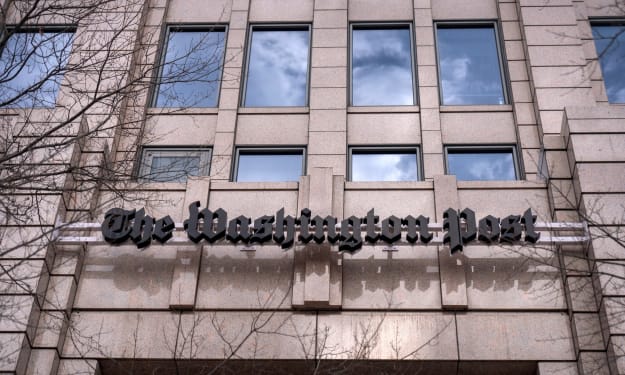
Washington Post Fires One-Third of Staff, Including All Its Middle East Journalists. AI-Generated.
The Washington Post has laid off roughly one-third of its newsroom staff in a sweeping round of job cuts that includes the dismissal of its entire Middle East reporting team, a move that has sent shockwaves through the global journalism community and raised serious concerns about the future of international coverage at one of America’s most influential newspapers. The layoffs, confirmed by company executives on Tuesday, come as part of a broader restructuring effort aimed at stabilizing the paper’s finances amid declining digital subscriptions, falling advertising revenue, and rising operational costs. While the Post described the cuts as “necessary for long-term sustainability,” critics argue the decision reflects a troubling retreat from in-depth foreign reporting at a time of heightened global conflict. Among those affected were veteran correspondents based in Jerusalem, Beirut, and Cairo, as well as editors and producers who supported coverage across the Middle East. Several journalists said they were informed with little notice and offered severance packages that varied by tenure. “This is devastating not only for the people who lost their jobs but for readers who depend on rigorous reporting from one of the world’s most complex regions,” said one former correspondent, who requested anonymity due to ongoing negotiations with the company. Financial Pressures and Strategic Shift In a memo to staff, Washington Post publisher Will Lewis cited financial challenges facing the newspaper industry and the need to “refocus resources on core priorities.” “Our responsibility is to ensure the Post remains a strong and viable institution for the future,” Lewis wrote. “These decisions were not made lightly, but they are necessary to adapt to changing audience habits and economic realities.” The Post has struggled in recent years to maintain the rapid subscriber growth it enjoyed during the Trump presidency, when political coverage drove record digital engagement. As interest in U.S. politics has cooled and competition from free online news sources has intensified, the paper’s revenue has reportedly declined significantly. Insiders say management has chosen to concentrate more heavily on domestic politics, investigations, and opinion content while relying increasingly on wire services and partnerships for international news. Media analysts warn that this strategy risks eroding the Post’s reputation as a global news leader. “Cutting an entire regional bureau is not just a cost-saving measure—it’s a statement about priorities,” said Margaret Collins, a professor of journalism at Columbia University. “The Middle East is central to U.S. foreign policy, global security, and humanitarian issues. Removing dedicated coverage weakens public understanding.” Impact on Middle East Coverage The elimination of the Middle East desk comes amid ongoing wars in Gaza and Ukraine, rising tensions between Iran and Israel, and continued instability in Syria, Yemen, and Lebanon. Journalists who specialized in the region say their work required years of cultural knowledge, language skills, and trusted local networks that cannot easily be replaced. “Parachute reporting doesn’t work in the Middle East,” said a former Post editor. “You need people on the ground who understand the politics, history, and communities. Without that, coverage becomes shallow and reactive.” Several international press organizations condemned the move, calling it a setback for accountability journalism. The Committee to Protect Journalists said in a statement that “reducing foreign correspondents at a time of global crisis undermines the public’s right to accurate and independent information.” Staff Reaction and Morale Within the newsroom, the layoffs have fueled anxiety and anger among remaining employees. Union representatives said the cuts disproportionately affected foreign correspondents and junior reporters while leaving management largely untouched. “The burden of financial mistakes is being placed squarely on journalists who do the work,” said a spokesperson for the Post’s union. “This will weaken coverage and harm trust with readers.” Employees also expressed concern about workload increases and burnout as fewer reporters are expected to produce more content across multiple beats. “This isn’t just about losing colleagues,” one staff writer said. “It’s about losing institutional knowledge. People who spent decades building sources and expertise are suddenly gone.” A Broader Industry Trend The Washington Post is not alone in shrinking its foreign bureaus. Major news organizations across the United States and Europe have scaled back international reporting over the past decade due to high costs and shrinking profit margins. Maintaining overseas offices requires security arrangements, translators, travel budgets, and legal support—expenses many outlets can no longer sustain. However, critics argue that the trend creates a dangerous information gap. “When major papers pull out of regions like the Middle East, coverage increasingly comes from social media or partisan sources,” said Collins. “That leaves audiences vulnerable to misinformation and propaganda.” The layoffs also raise questions about the role of billionaire ownership in shaping newsroom priorities. The Washington Post is owned by Amazon founder Jeff Bezos, who purchased the paper in 2013 and invested heavily in digital expansion during its early turnaround years. While Bezos has not commented publicly on the latest cuts, some staff members have questioned whether financial discipline has overtaken journalistic mission. What Comes Next Management says the newspaper will continue to cover the Middle East through freelance reporters and partnerships with international outlets. Yet former staff warn that this approach cannot replace a dedicated bureau with institutional continuity. Readers have already begun to voice concerns on social media, with many saying they subscribed specifically for the Post’s international reporting. “This was one of the last American papers with serious foreign coverage,” one subscriber wrote. “Now it feels like another retreat inward.” The layoffs mark a turning point for the Post, long regarded as a standard-bearer for investigative and global journalism. While executives insist the paper will remain committed to international news, the absence of a permanent Middle East team suggests a narrower vision of its future role. For journalists who lost their jobs, the decision represents more than a financial setback. “We believed in the mission of informing the public about a region that shapes world events,” said a former correspondent. “Now that mission feels compromised.” As newsrooms continue to struggle with economic realities, the question remains whether leading institutions can balance survival with their responsibility to provide deep, independent coverage of the world beyond their borders.
By Fiaz Ahmed 16 days ago in The Swamp