Fiaz Ahmed
Bio
I am Fiaz Ahmed. I am a passionate writer. I love covering trending topics and breaking news. With a sharp eye for what’s happening around the world, and crafts timely and engaging stories that keep readers informed and updated.
Stories (1126)
Filter by community
Rare Fungus Spotted for First Time in 50 Years. AI-Generated.
Scientists have confirmed the discovery of a rare fungus species that had not been seen in the wild for more than half a century, marking a major breakthrough in biodiversity research and conservation science. The fungus, believed to have vanished due to habitat loss and environmental changes, was found during a routine ecological survey in a remote forest region. Researchers described the find as “extraordinary,” noting that many species disappear quietly without ever being rediscovered. The reappearance of this fungus offers new hope for conservation efforts and raises important questions about what other organisms may still survive undetected. A Surprise Discovery The fungus was identified by a team of mycologists conducting a long-term study of forest ecosystems. While collecting soil and plant samples, researchers noticed unusual fruiting bodies growing on decaying tree bark. Laboratory analysis later confirmed it was the same species last recorded in the early 1970s. “It was completely unexpected,” said one of the lead scientists involved in the study. “We assumed this species was either extinct or extremely close to it. Finding it again shows how little we still know about fungal diversity.” The fungus is known for its distinctive pale coloring and fragile structure, which makes it difficult to detect. It only appears under very specific environmental conditions, including high humidity, stable temperatures, and the presence of certain tree species. Why It Disappeared Experts believe the fungus vanished from records due to deforestation, climate shifts, and pollution. Fungi are especially sensitive to changes in moisture and soil chemistry. Even small alterations in forest environments can disrupt their life cycles. In the decades following its last sighting, large areas of woodland were cleared for agriculture and development. The loss of old-growth trees removed the fungus’s natural habitat, making survival difficult. Climate change may have played a role as well. Warmer temperatures and unpredictable rainfall patterns likely reduced the narrow window in which the fungus could grow and reproduce. Importance to the Ecosystem Although small and easily overlooked, fungi play a critical role in ecosystems. They break down organic matter, recycle nutrients, and form symbiotic relationships with plants. This rare species is believed to help decompose specific types of hardwood, contributing to soil health and forest regeneration. “This fungus is part of a hidden network that supports entire ecosystems,” explained a forest ecologist. “Its return suggests the environment may be recovering in subtle ways.” Scientists are now studying the fungus’s genetic makeup to understand how it survived for so long undetected. Some believe it may have adapted to new conditions or retreated into isolated microhabitats. Conservation Implications The rediscovery highlights the importance of protecting remaining natural forests. Conservation groups argue that this finding proves even heavily impacted environments can still shelter rare life forms. Following the discovery, local authorities announced plans to limit logging and increase monitoring in the area. The site where the fungus was found will likely be designated a protected research zone. Environmental organizations welcomed the news but warned that protection must be long-term. “One rediscovery does not mean the species is safe,” said a conservation spokesperson. “It means we have been given a second chance.” A Growing Trend of Rediscoveries The fungus is not the only species to reappear after decades of absence. In recent years, scientists have rediscovered rare frogs, birds, and insects once thought extinct. Improved technology, satellite mapping, and DNA analysis have made it easier to identify species in hard-to-reach locations. However, experts caution that such success stories are rare compared to the number of species quietly disappearing each year. “Rediscoveries make headlines, but extinction happens every day without notice,” said a biodiversity researcher. “This is why protecting habitats is so urgent.” Public Interest and Scientific Curiosity News of the fungus’s return has sparked excitement among scientists and nature enthusiasts alike. Social media images of the tiny organism have circulated widely, drawing attention to fungi as an often-ignored part of biodiversity. Schools and universities are already discussing the discovery in biology classes as an example of resilience and the importance of field research. For scientists, the fungus offers a valuable opportunity to study long-term survival under environmental stress. Understanding how it endured decades of change could help researchers predict which species are most likely to survive future climate challenges. What Happens Next Researchers will continue to monitor the area over the coming months to see if more specimens appear. They plan to map its distribution and analyze soil and tree conditions to understand why it survived there. Strict guidelines have been issued to prevent tourists or collectors from disturbing the site. Scientists stress that human interference could easily destroy the fragile population. “This fungus survived half a century in silence,” said one researcher. “Our responsibility now is to make sure it does not disappear again.” A Symbol of Hope The rediscovery of the rare fungus serves as a powerful reminder that nature still holds secrets, even in a world shaped by human activity. It also underscores the need for patience, protection, and respect for ecosystems that operate beyond human notice. While many environmental stories focus on loss, this one offers a rare moment of hope. A species once thought gone has quietly returned, proving that life can persist even under the most challenging conditions. For scientists and conservationists, it is not just a scientific achievement—it is a call to safeguard what remains before more wonders vanish unseen.
By Fiaz Ahmed 19 days ago in Longevity
Why I Keep Blockading Food Distribution Centres. AI-Generated.
To many people, the idea of blocking food distribution centers sounds cruel and irresponsible. These facilities supply groceries to thousands of families, charities, and local markets. Disrupting them risks harming the very communities already struggling with inflation, unemployment, and food insecurity. Yet for some protesters, these actions are seen as a desperate attempt to be heard in a system they believe no longer listens. The decision to block such sites does not come lightly. It grows out of frustration, anger, and a belief that traditional protest has failed. For years, activists have marched, petitioned, and written to officials about rising food prices, corporate control of agriculture, and unequal access to basic necessities. Many feel ignored. “When you block traffic, people complain but forget,” one protester explained. “When you block food supply, suddenly everyone pays attention.” This logic reflects a deeper belief: that disruption is the only language powerful institutions understand. A Protest of Desperation Those who justify these actions often describe them as moral protests rather than criminal ones. They argue that food distribution centers symbolize a system that prioritizes profit over people. Large corporations dominate supply chains, while small farmers and low-income consumers struggle to survive. For these activists, the blockade is meant to expose contradictions: warehouses filled with food exist alongside families who cannot afford meals. They claim their actions force uncomfortable conversations about inequality and corporate responsibility. However, this reasoning clashes sharply with public opinion. Many citizens see the protests as punishing ordinary people instead of policymakers. Food bank volunteers and truck drivers are often caught in the middle, unable to do their jobs and sometimes facing verbal abuse or threats. The Human Cost Critics argue that such protests cross a moral line. Food distribution is not just another industry; it is part of society’s lifeline. Any disruption can have immediate consequences for hospitals, shelters, and vulnerable populations. Health workers warn that delays in food delivery can affect elderly residents, children, and patients who depend on regular supplies. Even a short interruption can ripple through the system, causing shortages that take days to fix. “These actions hurt the wrong people,” said one community organizer. “They don’t hurt politicians. They hurt families.” This tension between intention and impact is at the heart of the controversy. Protesters may aim to challenge injustice, but the method risks creating new harm. Protest Versus Public Trust Another consequence is the erosion of public support. Movements rely on sympathy and shared values. When tactics appear extreme, public trust collapses. Instead of discussing the underlying issues—corporate power, food access, or government policy—the focus shifts to disruption and legality. Law enforcement has increasingly treated blockades as serious offenses, citing risks to public safety and essential services. Arrests and fines have followed. Courts in several countries have ruled that blocking food supply infrastructure crosses from civil disobedience into endangerment of public welfare. This legal response reflects a growing belief that some forms of protest must have limits, especially when they interfere with survival needs. A Crisis of Communication At its core, the issue reveals a breakdown in communication between citizens and institutions. Protesters feel unheard. Authorities see disorder. Both sides harden their positions. Sociologists note that extreme protest methods often emerge when people believe peaceful channels are ineffective. History shows similar patterns in labor movements and civil rights struggles. Yet history also shows that movements succeed when they build alliances, not when they isolate themselves from the public. The challenge is how to protest power without harming the powerless. Searching for Alternatives Some activists are now questioning their own strategies. They argue that targeting food systems risks undermining the very justice they seek. Instead, they call for boycotts, mass strikes, or legal challenges that pressure corporations and governments directly. Others emphasize community-based action—supporting food banks, helping farmers, and creating local supply networks—rather than disrupting existing ones. “If the goal is food justice,” one former protester said, “then we should be feeding people, not stopping food.” A Moral Reckoning The debate over blockading food distribution centers forces a difficult moral reckoning. Is disruption justified if it draws attention to injustice? Or does it become wrong when it threatens basic human needs? There is no easy answer. What is clear is that society must confront the issues driving such protests: rising inequality, fragile supply chains, and growing mistrust in institutions. Protest is a powerful tool, but it also carries responsibility. When the line between resistance and harm blurs, movements risk losing their purpose. The question is not only why people block food centers, but whether such actions truly bring us closer to the justice they claim to seek—or push us further apart.
By Fiaz Ahmed 19 days ago in Journal
Why Do the Northern Lights Keep Appearing?. AI-Generated.
In recent months, the Northern Lights — also known as the aurora borealis — have been appearing more frequently and in places where they are rarely seen. From northern Europe and Canada to parts of the United States and even lower latitudes, skies have been glowing with vivid curtains of green, pink, and purple light. Scientists say this surge in aurora activity is not random. It is closely tied to changes in the Sun and Earth’s magnetic environment. The growing visibility of the Northern Lights has fascinated skywatchers while raising questions about what is happening in space above our planet. What Are the Northern Lights? The Northern Lights occur when charged particles from the Sun collide with gases in Earth’s atmosphere. These particles are carried toward Earth by solar wind and guided by the planet’s magnetic field toward the polar regions. When they strike oxygen and nitrogen molecules high in the atmosphere, energy is released in the form of light. Different gases produce different colors. Oxygen creates green and red light, while nitrogen produces blue and purple hues. The shimmering patterns are shaped by Earth’s magnetic field lines and the movement of solar particles. Under normal conditions, auroras are mostly visible near the Arctic Circle. But during periods of intense solar activity, they can be seen much farther south. The Role of the Sun’s Activity Cycle The primary reason the Northern Lights have been appearing more often is the Sun’s natural 11-year solar cycle. The Sun goes through periods of low and high activity, known as solar minimum and solar maximum. During solar maximum, the Sun produces more sunspots, solar flares, and coronal mass ejections (CMEs). Currently, the Sun is approaching or entering a phase of heightened activity. This means it is releasing stronger bursts of charged particles into space more frequently. When these particles reach Earth, they interact with the magnetosphere and intensify auroral displays. Scientists say this cycle explains why auroras have become brighter and more common over the past year. Solar Storms and Geomagnetic Disturbances Large solar eruptions, especially coronal mass ejections, can cause powerful geomagnetic storms when they strike Earth’s magnetic field. These storms compress and disturb the magnetosphere, allowing more solar particles to penetrate the atmosphere. During such events, auroras can spread across much wider areas than usual. This is why people in regions like the northern United States, the UK, Germany, and even parts of southern Europe have reported seeing the lights recently. While these storms are visually stunning, they can also disrupt satellites, radio communications, and power grids if they become strong enough. Why They Seem More Frequent Now There are several reasons people feel the Northern Lights are appearing more often: Increased solar activity – The Sun is entering a more active phase of its cycle. Better monitoring technology – Satellites now track solar storms more accurately and alert the public when auroras are likely. Social media exposure – Stunning images shared online make auroras feel more frequent and widespread. Clearer skies in some regions – Reduced air pollution in certain areas has made night skies more visible. Together, these factors have created the impression of constant aurora events. Are the Northern Lights Dangerous? For most people on Earth’s surface, auroras are harmless. They occur high above the ground, usually more than 100 kilometers above the surface. However, strong solar storms associated with intense auroras can affect modern technology. Airlines sometimes reroute flights away from polar regions during major solar events to avoid radiation exposure and communication disruptions. Power companies also take precautions to protect electrical grids from geomagnetic interference. Scientists stress that while solar storms can be disruptive, they are a natural part of space weather and are carefully monitored. What This Means for the Future Experts predict that auroral activity will remain strong for the next few years as the Sun continues through its active phase. This means more opportunities for people outside polar regions to witness the Northern Lights. Astronomers and space agencies are using this period to study how solar activity affects Earth’s atmosphere and technology. Understanding these interactions is becoming increasingly important as humanity relies more heavily on satellites, GPS systems, and global communications networks. Some researchers also see this as a reminder of how closely Earth is connected to space. The glowing skies are not just beautiful displays — they are visible evidence of powerful forces shaping our planet from 150 million kilometers away. A Rare Gift of Nature For many, the repeated appearance of the Northern Lights has been a rare gift. Communities that never expected to see auroras have gathered at night to watch the skies in awe. The phenomenon has sparked renewed interest in astronomy and space science among the public. Despite modern explanations, the Northern Lights still carry a sense of mystery. Ancient cultures believed they were spirits, gods, or messages from the heavens. Today, science has revealed their true origin, but the emotional impact remains the same. As long as the Sun continues its cycles of activity, the Northern Lights will keep returning — reminding humanity that even in an age of technology, nature still has the power to surprise and inspire.
By Fiaz Ahmed 19 days ago in Longevity
The Most Powerful Woman in Football – Meet the Game’s First Female Super Agent. AI-Generated.
For decades, football’s most influential figures have been club owners, managers, and male player agents operating behind the scenes. But today, a new face of power has emerged in the sport: the world’s first widely recognized female super agent, reshaping the business of football and challenging one of the game’s most male-dominated industries. Her rise marks a turning point not only for women in sports management but also for how football’s global business is conducted. Breaking Into a Closed World When she first entered football representation, the industry was dominated by established male agents with decades of connections. Negotiations took place in boardrooms where women were rarely seen. Early in her career, she faced skepticism from club executives who doubted her knowledge of contracts and tactics. “People assumed I was there to assist someone else,” she once said in an interview. “They didn’t expect me to lead negotiations.” Instead of retreating, she learned every detail of football law, transfer regulations, and financial structures. She built relationships not through bravado but through preparation and precision. Within a few years, she began representing promising young players overlooked by major agencies. Building a Global Client List Her reputation grew when she successfully negotiated high-value transfers for several international stars. These deals included record-breaking contracts, image rights agreements, and sponsorship packages with multinational brands. Unlike traditional agents who focus solely on transfer fees, she positioned herself as a full-career strategist. Her agency offers legal support, mental health services, financial planning, and media training to players. “She doesn’t just negotiate contracts,” said one player she represents. “She plans your entire career.” Her client list now includes elite footballers across Europe, South America, and Africa. Several play in top leagues such as the Premier League, La Liga, Serie A, and the Bundesliga. Changing the Culture of Representation What sets her apart is not only her success but her approach. She has introduced a more transparent style of negotiation, focusing on long-term stability rather than short-term profit. In an industry often criticized for secrecy and aggressive tactics, she insists on ethical standards and player welfare. “Footballers are not just assets,” she has said. “They are human beings with futures beyond the pitch.” This philosophy has attracted players who want more control over their careers and fewer exploitative arrangements. Influence Beyond Transfers Her influence now reaches beyond contracts. She advises clubs on youth development policies and serves as an informal consultant to federations seeking to modernize their management structures. She is also a vocal advocate for women in football leadership. Through mentorship programs, she helps young women enter sports law, management, and representation. Her success has already inspired a new generation of female agents and executives who see her as proof that power in football no longer belongs exclusively to men. Resistance and Challenges Despite her achievements, resistance remains. Some critics argue that football’s power structures are slow to accept change. She has faced online harassment and sexist criticism, particularly when representing high-profile male players. “There are still rooms where I have to prove myself twice,” she admitted. “But results speak louder than prejudice.” She has also had to navigate conflicts with powerful figures who prefer the traditional system of influence. Yet each successful deal strengthens her position, making it harder to dismiss her authority. A New Definition of Power In football, power has long been measured in money and influence. Today, her power is defined by trust. Players trust her with careers worth millions. Clubs trust her professionalism. Sponsors trust her brand vision. Her agency now ranks among the most profitable in the sport, managing contracts worth hundreds of millions of dollars. Industry analysts say her rise reflects a broader shift in football’s business culture toward professionalism, diversity, and accountability. Impact on Women’s Football She has also used her platform to promote women’s football, helping female players secure better contracts and sponsorships. Several of her clients compete in top women’s leagues and international tournaments. By representing both men and women, she has created a bridge between two worlds of football that rarely intersect at the business level. This dual focus has helped normalize the idea that women can lead major negotiations in a sport traditionally ruled by men. The Road Ahead Looking forward, she plans to expand her agency into Asia and North America and invest in youth academies that prioritize education alongside football training. Her long-term vision is to redefine what it means to be an agent: not a deal-maker alone, but a guardian of players’ futures. “Football is changing,” she said recently. “And those who don’t change with it will be left behind.” A Symbol of Transformation The rise of football’s first female super agent is more than a personal success story. It is a signal that power in football is evolving. Talent, intelligence, and integrity now compete with tradition and old networks. In a game watched by billions, her presence behind the scenes represents a quiet revolution. She is not only negotiating contracts — she is rewriting the rules of influence. And as football continues to globalize and modernize, her story proves that the most powerful figures in the sport no longer look the same as they once did.
By Fiaz Ahmed 19 days ago in Unbalanced
It’s Not Just About Surviving”: The Ukrainian Frontline City Where Life Goes On Under Cover. AI-Generated.
In a city scarred by constant shelling and the distant echo of artillery, life continues in quiet and determined ways. Along Ukraine’s eastern frontline, residents of a battered urban center have learned how to adapt to war — not only to survive, but to preserve a sense of normalcy beneath the shadow of destruction. The city, located just kilometers from active fighting, has become a symbol of civilian resilience. Buildings stand pockmarked by shrapnel, streets are half-empty, and windows are covered with plywood instead of glass. Yet beneath the ground, in basements and makeshift shelters, everyday routines persist: children study, shopkeepers open small stalls, and families gather for meals. A City Forced Underground With air raid sirens sounding almost daily, much of life has shifted below street level. Schools operate in underground classrooms, grocery stores function from reinforced cellars, and even fitness centers and cafés have been relocated into basements. “We learned that survival alone is not enough,” said Olena, a former teacher who now runs a small learning center in a shelter. “Children need education. People need work. We need to feel human.” Electricity cuts and water shortages are common, but local volunteers and municipal workers repair what they can between attacks. Sandbags protect entrances to public buildings, and metal plates shield fragile infrastructure. Daily Life in the Shadow of War Residents describe a strange balance between fear and routine. In the mornings, some commute to essential jobs — hospitals, aid centers, and public utilities. In the afternoons, families queue for bread and supplies delivered by humanitarian groups. At night, curfews and darkness return. Candlelight replaces streetlamps, and radio updates become the city’s connection to the outside world. Despite the danger, many refuse to leave. Elderly citizens remain because their entire lives are rooted there. Others stay to protect homes or care for relatives who cannot travel. “My parents are buried here. This is my city,” said Viktor, a former factory worker. “If I leave, who will keep it alive?” Cultural Resistance Even culture has found a way to survive. Underground concerts, poetry readings, and small exhibitions take place in reinforced spaces. Musicians perform quietly, knowing the sound of music contrasts with the sound of war. One volunteer-run theater group stages short plays about daily life during conflict. Their goal is not entertainment but emotional survival. “Art helps us breathe,” said one performer. “It reminds us that we are more than targets.” Libraries distribute books and provide charging stations. Psychologists hold group sessions for children traumatized by explosions and displacement. Economic Struggles The local economy has nearly collapsed. Factories stand idle, and most businesses closed months ago. What remains are tiny enterprises: bakeries, repair shops, and street vendors selling vegetables and canned food. International aid and government subsidies keep many families afloat, but resources are stretched thin. Fuel shortages and rising prices force residents to ration everything from food to heating. Some young people earn money online or work remotely for companies in safer parts of Ukraine or abroad, using unstable internet connections powered by generators. Psychological Toll While resilience is visible, exhaustion runs deep. Mental health workers report rising anxiety, depression, and trauma symptoms among civilians. Children flinch at loud noises; adults struggle with sleep. “Living like this is not natural,” said a local doctor. “The human mind was not built for constant danger.” Yet the same professionals note that community support has become stronger. Neighbors share food, offer shelter, and check on one another after attacks. This social bond has become the city’s strongest defense. The Role of Volunteers Volunteers play a critical role in keeping the city alive. They deliver medicine, evacuate the wounded, and help rebuild damaged homes. Many are locals who refused to flee. Aid trucks arrive regularly with blankets, generators, and food. But reaching the city is risky, as roads are often targeted. Still, convoys continue. “If we stop, the city dies,” said one volunteer coordinator. “We cannot allow that.” A Message to the World Residents want the world to understand that war is not just about soldiers and battlefields. It is about ordinary people trying to live under extraordinary conditions. “This is not only survival,” Olena said. “This is resistance. We choose life every day.” Despite uncertainty about the future, citizens believe their endurance sends a powerful message: even under cover of war, humanity persists. The frontline city stands as proof that while bombs may destroy buildings, they cannot easily erase identity, culture, or hope. Beneath concrete and steel, life continues — fragile, determined, and deeply human.
By Fiaz Ahmed 19 days ago in The Swamp
US, UK, EU, Australia and More to Meet to Discuss Critical Minerals Alliance. AI-Generated.
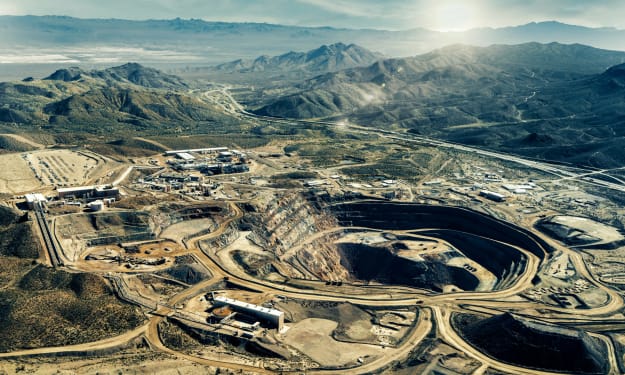
Senior officials from the United States, United Kingdom, European Union, Australia, and several allied nations are preparing to meet this week to discuss the creation of a new Critical Minerals Alliance, aimed at securing global supply chains for materials essential to modern technology and national security. The talks come amid growing concerns over dependence on a limited number of countries for minerals such as lithium, cobalt, nickel, rare earth elements, and graphite — resources that are vital for electric vehicles, renewable energy systems, semiconductors, and military equipment. Diplomats familiar with the meeting said the goal is to develop a coordinated strategy that ensures stable access to these materials while reducing exposure to geopolitical risks. Why Critical Minerals Matter Critical minerals form the backbone of the clean energy transition and advanced manufacturing. Lithium is used in batteries for electric cars and mobile devices, while rare earth elements are necessary for wind turbines, defense radar systems, and smartphones. Cobalt and nickel are key components in high-performance batteries and aerospace equipment. Over the past decade, global demand for these minerals has surged as governments push for greener energy and digital transformation. However, supply remains highly concentrated. China currently dominates processing and refining of many rare earth elements, while several African and South American nations control large portions of mining output. Western governments worry that political tensions or export restrictions could disrupt access to these materials, creating economic and security vulnerabilities. “Critical minerals are no longer just an economic issue,” one European official said. “They are a strategic priority.” Goals of the Alliance According to draft proposals, the alliance would focus on three main objectives: Diversifying supply chains by encouraging mining and processing projects in allied countries. Sharing technology and investment to reduce costs and speed up development of new facilities. Establishing environmental and labor standards for mineral extraction and processing. Officials also plan to discuss joint financing mechanisms for projects in developing countries that are rich in mineral resources but lack infrastructure. The initiative would build on existing frameworks such as the Minerals Security Partnership launched earlier by the United States and its partners, but aims to deepen cooperation and formalize long-term commitments. Australia’s Strategic Role Australia is expected to play a central role in the discussions due to its vast reserves of lithium, rare earths, and other key minerals. The country has already signed bilateral agreements with both the US and EU to support mineral supply chains. Australian officials say cooperation with allies will help ensure that mining projects are not only profitable but also sustainable and transparent. “We have the resources, but we need coordinated investment and processing capacity,” an Australian trade representative said. Economic and Industrial Impact The alliance could reshape global trade in critical minerals by encouraging more domestic and allied production rather than reliance on a single dominant supplier. Analysts say this may lead to higher short-term costs but greater long-term stability. Industries such as electric vehicle manufacturing, renewable energy, and electronics are closely watching the talks. Companies fear that supply disruptions could slow production and raise prices for consumers. At the same time, governments hope that the alliance will stimulate job creation through new mining, refining, and recycling projects in member countries. Environmental and Social Concerns While the push for new mining operations is seen as necessary, environmental groups have raised concerns about ecological damage and community displacement. Mining can pollute water supplies and damage fragile ecosystems if not properly regulated. Alliance members are expected to emphasize responsible sourcing and transparency. Proposals include strict environmental guidelines and requirements for local community consultation before projects are approved. Human rights organizations have also urged participating countries to avoid exploitative labor practices, particularly in regions where mining has historically involved unsafe working conditions. Global Competition and China’s Response China is not expected to take part in the meeting, but its dominance in mineral processing makes it a central factor in the alliance’s strategy. Officials say the effort is not designed to exclude any one country but to reduce overdependence. Chinese analysts have criticized similar initiatives in the past as attempts to weaken China’s position in global supply chains. Beijing has previously signaled it could respond to restrictions by adjusting export policies for certain minerals. This has raised concerns about potential retaliation and further fragmentation of global trade networks. A Turning Point in Resource Diplomacy Experts say the meeting marks a turning point in how nations view raw materials. Instead of leaving mineral supply entirely to markets, governments are increasingly treating it as a matter of national security and diplomacy. “This is resource diplomacy for the 21st century,” said an international energy analyst. “Who controls critical minerals will shape the future of clean energy and technology.” The discussions will also address recycling and reuse of minerals from old batteries and electronics, which could reduce the need for new mining over time. What Comes Next The meeting is expected to result in a joint statement outlining shared principles and next steps, including the creation of working groups and investment funds. While no binding treaty is likely at this stage, officials describe the talks as laying the foundation for long-term cooperation. If successful, the Critical Minerals Alliance could become a cornerstone of global efforts to secure the materials needed for a low-carbon and technologically advanced future. As competition for resources intensifies, the outcome of these talks may determine how resilient and sustainable global supply chains will be in the years ahead.
By Fiaz Ahmed 19 days ago in The Swamp
Calls Grow in Iran for Independent Inquiry into Protest Death Toll. AI-Generated.
Pressure mounts on Tehran as families, reformists and rights groups demand transparency over disputed casualty figures As nationwide protests in Iran enter their third month, calls for an independent inquiry into the death toll of demonstrators killed during a bloody crackdown are gaining momentum inside the country and abroad. The issue has become one of the most contentious political flashpoints since the unrest began in late December, with official figures diverging sharply from independent estimates and activists demanding clarity and accountability. �
By Fiaz Ahmed 19 days ago in The Swamp
What to Know About the Strait of Hormuz as Iran Plans Military Drill Amid US Tensions. AI-Generated.
As tensions between Iran and the United States continue to rise, one of the world’s most strategically important waterways — the Strait of Hormuz — has become a central focus of international attention. Iran has announced a two-day live-fire naval exercise in the strait, heightening concerns about potential confrontation and disruptions to global energy markets.
By Fiaz Ahmed 19 days ago in The Swamp
Russia Struggles to Shake Reliance on Foreign Technology Imports. AI-Generated.
Russia continues to face significant challenges in reducing its dependence on foreign technology imports despite years of government efforts to promote domestic production and technological self-sufficiency. Western sanctions, supply chain disruptions, and limited access to advanced components have exposed structural weaknesses in Russia’s tech sector, highlighting the difficulty of replacing imported systems with locally produced alternatives. Since the introduction of broad international sanctions following the conflict in Ukraine, Russia has accelerated its push for “technological sovereignty.” Officials have repeatedly stated that the country must rely on homegrown solutions in areas such as semiconductors, telecommunications, industrial software, and electronics manufacturing. However, experts say progress has been uneven and costly. A Legacy of Dependence For decades, Russia’s technology industry has relied heavily on imported hardware and software, particularly from the United States, Europe, and East Asia. Key industries—including aviation, energy, telecommunications, and defense manufacturing—were built using foreign microchips, machinery, and operating systems. When sanctions restricted access to these technologies, companies were forced to search for alternatives almost overnight. Many turned to suppliers in China and other non-Western markets, but these substitutes often lacked the same performance or compatibility with existing systems. “Russia’s problem is not only sanctions,” said one Moscow-based technology analyst. “It is that its high-tech manufacturing base was never designed to be fully independent.” Semiconductor Shortages One of the most serious challenges has been access to advanced semiconductors. Modern chips are essential for everything from smartphones and medical equipment to military systems and artificial intelligence. Russia’s domestic chip industry remains years behind global leaders in Taiwan, South Korea, and the United States. While Russia can produce older-generation chips for basic uses, it struggles to manufacture high-performance processors at scale. As a result, industries dependent on cutting-edge computing power face delays and rising costs. Government programs have invested billions of rubles into chip development projects, but experts warn that building a competitive semiconductor ecosystem requires decades of infrastructure, skilled labor, and international cooperation. Software and Digital Services Software has been another major area of concern. Following the departure of major Western companies, Russian businesses lost access to widely used operating systems, cybersecurity tools, and enterprise software platforms. In response, authorities encouraged the adoption of Russian-made software solutions. While some local companies have developed alternatives, businesses report technical limitations and compatibility issues. Migrating large systems from foreign to domestic software has proven complex and expensive. Banks, hospitals, and transport networks have been particularly affected, as their operations depend on reliable and secure digital infrastructure. “Replacing software is not like replacing a light bulb,” said an IT consultant working with Russian firms. “It requires retraining staff, redesigning systems, and accepting lower performance in some cases.” Economic Impact Russia’s dependence on imported technology has had a visible economic cost. Manufacturing delays, rising production expenses, and reduced innovation have slowed growth in several sectors. Industries such as aviation and automotive manufacturing have struggled to maintain production levels due to shortages of electronic components. Some factories have been forced to suspend operations or redesign products using simpler technology. Small and medium-sized enterprises face the greatest pressure, as they lack the financial resources to invest in alternative suppliers or custom-built systems. Government Strategy and Limits The Russian government has launched multiple initiatives to boost domestic innovation, including tax incentives, subsidies for tech startups, and national development programs focused on microelectronics and artificial intelligence. Officials argue that long-term independence is achievable and that current difficulties are temporary. They point to growing partnerships with Asian suppliers and increased funding for local research institutions. However, critics say that true technological independence is unrealistic in a globalized economy. Modern technology depends on international supply chains that no single country can fully replace. “Even the most advanced nations rely on imported components,” said a European technology researcher. “Russia’s attempt to isolate itself technologically will likely result in slower development and reduced competitiveness.” Talent and Brain Drain Another challenge has been the loss of skilled professionals. Thousands of engineers and IT specialists left Russia following political and economic uncertainty, weakening the country’s innovation capacity. Although universities continue to train new graduates, rebuilding a skilled workforce takes time. Industry leaders warn that without attracting global talent and cooperation, domestic technology programs may struggle to reach international standards. A Long Road Ahead Despite the obstacles, Russia continues to pursue its goal of reducing reliance on foreign technology. New production facilities are under construction, and state contracts increasingly favor domestic suppliers. Yet analysts agree that the transition will be slow and difficult. Access to advanced tools, global research networks, and foreign investment remains limited. For now, Russia remains heavily dependent on imported technology—either directly or through alternative trade routes. The effort to replace foreign systems has exposed the complexity of modern technological ecosystems and the risks of isolation in a highly interconnected world. Whether Russia can achieve meaningful technological independence will depend not only on funding and policy, but on its ability to rebuild trust, innovation, and international cooperation in the years ahead.
By Fiaz Ahmed 19 days ago in The Swamp
Politicians Agree to Stop Using Social Media Site. AI-Generated.
In a rare show of unity, a group of senior politicians from multiple parties have agreed to stop using a popular social media platform following growing concerns over misinformation, data security, and foreign influence. The decision marks a significant shift in how political leaders communicate with the public in the digital age and reflects rising global anxiety about the power and impact of social media on democratic institutions. The agreement was announced after weeks of internal discussions and security briefings. Lawmakers said the move was not intended to restrict free speech but to protect national interests and promote responsible communication. Several officials confirmed that government departments and party offices would also reduce their presence on the platform in the coming weeks. Security and Misinformation Concerns Officials cited national security risks as one of the main reasons for their decision. Intelligence agencies reportedly warned that the platform could be vulnerable to data breaches and manipulation by foreign actors. According to government sources, there were fears that private communications, location data, and user behavior could be accessed or exploited in ways that threaten public safety. Misinformation was another key concern. Politicians argued that false or misleading content spreads rapidly on social media and often reaches millions before it can be corrected. This, they said, has damaged public trust and fueled political polarization. “We cannot continue to rely on platforms that reward outrage and disinformation,” one senior lawmaker said. “Political communication must be transparent, factual, and secure.” The decision follows several high-profile incidents in which fake news stories and manipulated videos circulated widely online during election campaigns and international crises. A Coordinated Political Move Unlike previous individual boycotts, this decision is notable because it involves members from both government and opposition parties. Analysts describe it as a coordinated effort to set an example for responsible digital behavior. Political leaders will now rely more heavily on official government websites, press briefings, and traditional media channels such as television and newspapers to communicate policies and announcements. Some have also said they will use encrypted and verified platforms designed specifically for official communication. A joint statement released by participating politicians emphasized that the move is temporary and will be reviewed regularly. It also called on social media companies to improve their transparency, moderation policies, and data protection standards. “We believe technology should serve democracy, not weaken it,” the statement said. Reaction from the Public and Media Public reaction has been mixed. Some citizens welcomed the decision, saying social media has become toxic and harmful to political discourse. Others criticized the move as outdated and disconnected from modern communication habits. “Young people get their news from social media,” said a university student in the capital. “If politicians leave these platforms, they risk losing touch with a whole generation.” Media organizations largely supported the decision, arguing that it could encourage more thoughtful and in-depth political discussion. Journalists noted that social media often reduces complex issues to short, emotional messages that lack context. Press freedom groups, however, warned that politicians must still remain accessible and accountable to the public. They stressed that abandoning one platform should not mean limiting public engagement. Impact on Elections and Campaigning The decision could significantly change how future election campaigns are run. Social media has become a central tool for fundraising, advertising, and voter outreach. Without it, political parties may return to more traditional methods such as rallies, door-to-door canvassing, and televised debates. Campaign strategists say this shift could reduce the influence of viral content and online manipulation but may also increase campaign costs. “Social media was cheap and fast,” said one political consultant. “Without it, campaigns will need to invest more in grassroots organization and mainstream media.” Some experts believe this change could benefit democracy by slowing down the news cycle and encouraging voters to focus on verified information rather than emotional reactions. Pressure on Technology Companies The politicians’ decision has placed new pressure on social media companies to reform their practices. Several firms issued statements defending their platforms and promising to improve security and content moderation. One company spokesperson said, “We are committed to working with governments to address concerns while protecting freedom of expression.” Technology analysts predict that if more governments adopt similar policies, social media companies may be forced to redesign how political content is handled. A Broader Global Trend This development is part of a wider international trend. Several countries have already restricted the use of certain platforms on government devices due to cybersecurity risks. Others are considering stricter regulations on political advertising and data collection. Experts say the move reflects growing awareness that digital platforms can shape political behavior and public opinion in powerful ways. “The digital world is no longer neutral,” said a political science professor. “Governments are beginning to realize they must set boundaries.” Looking Ahead While the agreement does not ban social media outright, it sends a strong message about the responsibilities of political leaders in the information age. Whether the decision will last depends on public reaction and on how social media companies respond to the concerns raised. For now, the move represents a turning point in political communication—one that highlights the tension between technological innovation and democratic accountability. As societies continue to grapple with misinformation and digital security, the question remains: can politics exist without social media, or will new platforms emerge to fill the gap? Only time will tell.
By Fiaz Ahmed 19 days ago in The Swamp
Pentagon Defends Restrictions on Media Outlets. AI-Generated.
The United States Department of Defense has defended its recent decision to impose restrictions on certain media outlets, saying the measures are necessary to protect national security and ensure accurate reporting during sensitive military operations. The move has sparked debate among journalists, civil rights groups, and lawmakers, raising concerns about press freedom and government transparency. Pentagon officials explained that the restrictions were not intended to silence criticism or limit independent journalism but to prevent the spread of classified or misleading information that could endanger troops and compromise ongoing missions. According to defense spokespeople, some reporting in recent weeks had included details about troop movements, operational planning, and military infrastructure that could be exploited by hostile actors. National Security Concerns The Pentagon stated that modern conflicts are no longer limited to physical battlefields. Information warfare has become a central part of global security challenges, with adversaries using media reports, social networks, and leaked data to gain strategic advantages. “We are not restricting the press,” a senior Defense Department official said. “We are ensuring that sensitive operational details are not published in ways that could put American service members at risk.” Officials emphasized that accredited journalists still have access to briefings, press conferences, and public military facilities. However, some outlets now face limitations on embedding with military units or attending certain classified briefings. The Pentagon insists these decisions are based on security assessments rather than political pressure or content criticism. Reaction from Media Organizations Several major media organizations and journalist unions have criticized the Pentagon’s actions, arguing that the restrictions threaten the principles of a free and independent press. Press advocacy groups say the government must not use national security as a blanket justification to control narratives or discourage investigative reporting. They fear that tighter rules could set a precedent for future limitations on journalists covering defense and foreign policy. “This raises serious questions about transparency,” said a representative of a U.S. press freedom organization. “Journalists play a critical role in holding powerful institutions accountable. Restrictions must be narrowly defined and clearly justified.” Some reporters have said that the new measures make it more difficult to verify information independently and could lead to greater reliance on official statements rather than on-the-ground reporting. Legal and Constitutional Debate The controversy has reignited debate over the balance between the First Amendment and national security responsibilities. Legal experts note that while the Constitution protects freedom of the press, it also allows the government to impose limits in cases where lives and military operations may be endangered. Historically, the U.S. government has restricted certain information during wartime or sensitive operations, including during World War II and the War on Terror. However, critics argue that today’s restrictions appear broader and less clearly defined. Civil liberties groups have called for clearer guidelines explaining exactly what information is considered restricted and how long the rules will remain in effect. Without transparency, they warn, trust between the military and the press could erode. Global Implications The Pentagon’s decision is also being closely watched internationally. The United States has long promoted press freedom as a democratic value and criticized authoritarian governments for censoring journalists. Some foreign observers argue that restrictions on American media could weaken U.S. moral authority on human rights and freedom of expression. International journalist associations have urged the Pentagon to review its policies and engage in dialogue with news organizations to prevent misunderstandings and protect professional reporting standards. Meanwhile, adversarial nations have pointed to the controversy as evidence that even democratic governments struggle with balancing security and transparency. Pentagon’s Defense of the Policy In response to criticism, Pentagon officials reiterated that the restrictions are temporary and targeted. They stressed that the measures apply only to specific circumstances involving classified or highly sensitive operations. “Our goal is not to block coverage but to ensure that coverage does not unintentionally assist hostile forces,” the Pentagon said in a written statement. Officials also noted that the military has worked closely with journalists for decades and values their role in informing the public. They pointed out that thousands of reporters continue to cover defense matters without interference. The Pentagon has promised to review the policy regularly and adjust it as security conditions change. Impact on Journalism For journalists covering defense and national security, the situation presents new challenges. Reporters must navigate stricter rules while still fulfilling their responsibility to inform the public accurately and independently. Some fear that reduced access will limit their ability to verify official claims and uncover mistakes or abuses. Others believe that cooperation between the military and the press can continue if clear boundaries are established. Media experts say the outcome will depend largely on how the restrictions are enforced and whether dialogue continues between defense officials and journalists. The Road Ahead As debate continues, lawmakers have begun asking for briefings on the policy to determine whether it aligns with constitutional protections and democratic values. Congressional oversight could play a key role in shaping how the restrictions evolve. The issue highlights a broader tension in modern democracies: how to protect national security in an age of instant information while preserving freedom of expression and accountability. Whether the Pentagon’s decision will be remembered as a necessary security measure or as an overreach against press freedom remains to be seen. What is certain is that the controversy has opened a critical conversation about the future relationship between the military and the media in an era of global conflict and misinformation.
By Fiaz Ahmed 19 days ago in The Swamp
Iran Army Chief Warns US, Israel Against Attack; Says Forces on High Alert. AI-Generated.
Iran’s top military leader has issued a stark warning to the United States and Israel, saying any aggressive action could trigger serious consequences and emphasizing that Tehran’s armed forces remain on high alert amid rising tensions in the Middle East. The statement underscores a growing standoff between Iran and Western powers, particularly as U.S. military deployments in the Gulf build up and diplomatic efforts lag.
By Fiaz Ahmed 20 days ago in The Swamp