Fiaz Ahmed
Bio
I am Fiaz Ahmed. I am a passionate writer. I love covering trending topics and breaking news. With a sharp eye for what’s happening around the world, and crafts timely and engaging stories that keep readers informed and updated.
Stories (1056)
Filter by community
I Watched Stand By Me With Rob Reiner. Both the Film and the Man Changed My Life. AI-Generated.
Some movies entertain you for two hours and quietly fade into memory. Others sit with you for years, reshaping how you see yourself, friendship, and even adulthood. Stand By Me belongs firmly to the second category. Watching it was already a deeply personal experience—but watching it with Rob Reiner, the man who directed it, turned a beloved coming-of-age film into a life-altering moment. Released in 1986 and based on Stephen King’s novella The Body, Stand By Me tells the story of four boys who set out on a journey to find the body of a missing child. On the surface, it’s a simple adventure. Beneath that, it’s a profound meditation on childhood, loss, courage, and the painful certainty that nothing stays the same forever. I had seen Stand By Me before, but this time was different. Sitting in the same room as Rob Reiner, listening to him speak about the film not as a product but as a piece of his own life, reframed everything I thought I knew about storytelling. A Film About Childhood — And the Moment It Ends What makes Stand By Me timeless is its honesty. It doesn’t romanticize childhood; it respects it. The boys—Gordie, Chris, Teddy, and Vern—are funny, frightened, brave, and deeply wounded in ways they don’t yet understand. They swear, they laugh, they argue, and they cling to one another because, instinctively, they know this moment of togetherness won’t last. As an adult, watching the film again hit harder than it ever did before. The quiet narration, the long walks along railroad tracks, and the silences between jokes suddenly felt heavier. The movie isn’t really about finding a body—it’s about realizing that innocence doesn’t disappear all at once. It slips away quietly, often without permission. Rob Reiner spoke about how deliberate that tone was. He didn’t want spectacle. He wanted truth. And that truth—about friendships that fade, about the loneliness of growing up—lands with devastating precision. Rob Reiner: A Director Who Leads With Empathy What struck me most about Reiner wasn’t his technical mastery, impressive as it is, but his emotional intelligence. He spoke about working with child actors not as tools, but as people. He listened to them. He protected them. He understood that vulnerability on screen requires safety off it. Reiner shared how Stand By Me was deeply personal for him. Like Gordie, he had experienced loss. Like Chris, he understood how society can decide who you are before you’ve had the chance to become anything else. The film wasn’t just directed—it was felt. That realization changed how I see creativity. Great art, I learned, doesn’t come from showing off skill. It comes from showing up honestly. Why the Film Still Matters Today Decades later, Stand By Me continues to resonate because its themes are universal. Childhood friendships feel permanent, but adulthood teaches us otherwise. People who once knew everything about us drift into memory. And the grief of that—unspoken and rarely acknowledged—stays with us. In a world dominated by fast content and instant gratification, Stand By Me asks us to slow down. To sit with silence. To remember the people who shaped us before life pulled us apart. Rob Reiner reminded us that the final line of the film—“I never had any friends later on like the ones I had when I was twelve. Jesus, does anyone?”—wasn’t meant to be nostalgic. It was meant to be honest. And honesty, he believes, is the most radical thing a storyteller can offer. How It Changed Me Watching Stand By Me with Rob Reiner didn’t just deepen my appreciation for the film—it changed how I approach my own life. It reminded me to value friendships while they exist. To speak my truth before silence replaces opportunity. And to understand that growth often comes with loss, but that loss doesn’t erase meaning. Both the film and the man behind it taught me the same lesson: stories matter because people matter. And when told with care, they have the power to change someone—not loudly, but forever.
By Fiaz Ahmed 2 months ago in Geeks
Australia Was Seen as a World Leader in Gun Control — Bondi Has Exposed a More Complicated Reality. AI-Generated.
For decades, Australia has been held up as a global success story in gun control. After the 1996 Port Arthur massacre, the country enacted sweeping firearm reforms that dramatically reduced gun violence and mass shootings. International leaders, researchers, and activists frequently cited Australia as proof that strict gun laws save lives. However, the tragic Bondi attack has shaken this long-held perception, revealing that Australia’s relationship with violence and public safety is far more complex than many believed. The Bondi incident, which unfolded in one of Sydney’s most iconic public spaces, was not a mass shooting in the traditional sense. Yet its impact was profound. The attack reignited national and global conversations about security, mental health, policing, and the limits of gun control laws in preventing all forms of violence. While firearms were not the primary weapon involved, the tragedy challenged the assumption that strict gun laws alone are enough to guarantee public safety. Australia’s gun reforms remain among the strictest in the world. Semi-automatic weapons were banned, buyback schemes removed hundreds of thousands of firearms from circulation, and licensing requirements became rigorous. These measures undeniably reduced gun-related deaths and mass shootings. But Bondi highlighted a critical truth: violence adapts. When access to guns is restricted, other forms of harm can still emerge if deeper societal issues remain unaddressed. One of the most pressing questions raised after Bondi is whether Australia has become overly reliant on its gun control narrative. While the laws are effective in reducing firearm violence, they do not eliminate the risks posed by individuals experiencing severe mental health crises, radicalization, or social alienation. Experts argue that focusing exclusively on gun legislation can create blind spots in broader prevention strategies. Mental health services have come under intense scrutiny following the attack. Australia, like many developed nations, faces challenges in providing timely and comprehensive mental health care. Long waiting lists, underfunded services, and gaps in early intervention mean that vulnerable individuals can slip through the cracks. Bondi exposed how failures in mental health systems can have devastating consequences, regardless of gun access. Policing and public safety strategies are also being reassessed. Australia’s police forces are generally well-trained, but Bondi raised concerns about response times, preparedness for unpredictable threats, and the balance between public openness and security. In a country that values freedom of movement and relaxed public spaces, increasing security without creating fear or over-policing is a delicate challenge. Another uncomfortable reality exposed by Bondi is the role of complacency. Australia’s success in preventing gun violence may have fostered a sense of immunity — the belief that “it can’t happen here.” This mindset can delay necessary reforms in areas such as threat assessment, public awareness, and emergency response training. Bondi served as a painful reminder that no society is entirely insulated from violence. Internationally, the incident has prompted more nuanced discussions about Australia’s gun control model. While it remains a strong example of effective firearm regulation, Bondi shows that gun laws are only one part of a larger safety ecosystem. Countries looking to replicate Australia’s approach must also invest in mental health care, social support systems, community policing, and early warning mechanisms. Public reaction in Australia has been complex. Many citizens continue to strongly support existing gun laws, viewing them as essential and non-negotiable. At the same time, there is growing recognition that additional measures are needed. Calls for better mental health funding, improved data sharing between agencies, and more proactive intervention strategies have grown louder. Importantly, Bondi has also sparked conversations about how tragedies are discussed. Community leaders and families of victims have urged restraint, warning against politicizing grief or using fear to push extreme narratives. This measured response reflects a broader Australian value: confronting hard truths without abandoning compassion or reason. In the end, Bondi does not invalidate Australia’s reputation as a leader in gun control — but it does complicate it. The country’s laws have saved lives and prevented countless tragedies, yet they are not a cure-all. Violence is shaped by human behavior, social conditions, and systemic failures that extend beyond firearms. Australia now stands at a crossroads. The challenge is not to dismantle successful gun laws, but to build upon them with a more holistic approach to public safety. Bondi has shown that true security requires vigilance, investment, and humility — an acknowledgment that even the best systems must continue to evolve.
By Fiaz Ahmed 2 months ago in The Swamp
Moscow’s Narrative Wobbles as Ukraine Takes Back Kupiansk. AI-Generated.
For months, the Kremlin has worked hard to present an image of control and momentum in its war against Ukraine. State media has consistently portrayed Russian forces as resilient and advancing, while downplaying setbacks or reframing them as tactical withdrawals. However, Ukraine’s recapture of Kupiansk, a strategically vital city in the Kharkiv region, has once again shaken Moscow’s carefully crafted narrative and exposed cracks in Russia’s wartime messaging.
By Fiaz Ahmed 2 months ago in Journal
EU Plan to Use Seized Russian Assets to Aid Ukraine Hinges on Malta Providing €170 Million in Guarantees. AI-Generated.
The European Union’s ambitious plan to channel seized Russian assets into aid for Ukraine has hit a critical juncture: Malta is being asked to provide €170 million in guarantees to enable the scheme. The proposal, part of a broader EU initiative to support Kyiv amid the ongoing conflict with Russia, underscores the complex interplay of finance, law, and geopolitics as European nations seek to turn frozen Russian assets into tangible support for Ukraine.
By Fiaz Ahmed 2 months ago in The Swamp
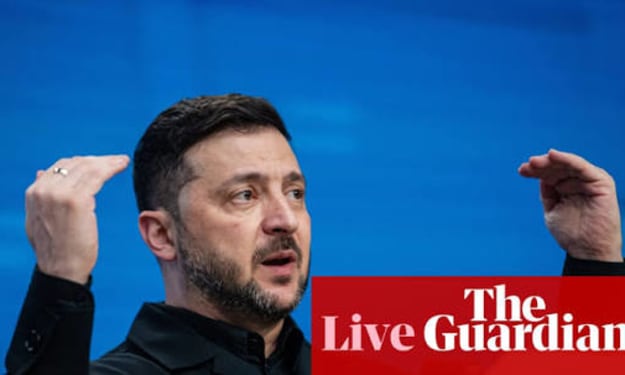
Ukraine May Need to Cut Drone Production if No Deal on Frozen Russian Assets, Says Zelenskyy . AI-Generated.
Ukraine’s President Volodymyr Zelenskyy has issued a stark warning that the country may have to reduce its drone production if European nations fail to reach an agreement on utilizing frozen Russian assets. The announcement comes as part of ongoing discussions among EU leaders about the strategic and financial implications of Russia’s war in Ukraine, which has now entered its second year.
By Fiaz Ahmed 2 months ago in The Swamp
Diplomatic tensions ease as Nigeria apologises for Burkina Faso military flight incident". AI-Generated.
Nigeria has issued a formal apology to Burkina Faso after an incident involving a military flight resulted in the detention of 11 Nigerian servicemen. The development has highlighted the delicate nature of regional military cooperation in West Africa, where cross-border operations against extremist groups are often necessary but fraught with logistical and political challenges.
By Fiaz Ahmed 2 months ago in Journal
Briton Who Fought in Ukraine Jailed for 13 Years by Russia . AI-Generated.
In a high-profile case that has drawn international attention, a British national who fought alongside Ukrainian forces has been sentenced to 13 years in prison by a Russian court. The verdict comes amid heightened tensions between Moscow and Western countries over the ongoing conflict in Ukraine, and it underscores Russia’s aggressive approach toward foreign fighters participating in the war.
By Fiaz Ahmed 2 months ago in The Swamp
Saudi Arabia Deports 24,000 Pakistani Beggars After Warning to Islamabad. AI-Generated.
In a sweeping move that has caught international attention, Saudi Arabia recently deported approximately 24,000 Pakistani nationals accused of begging on its streets. The decision, authorities say, follows repeated warnings issued to Islamabad over the growing number of Pakistani citizens involved in street solicitation in the kingdom. This large-scale deportation has sparked discussions about migrant labor policies, socio-economic challenges in Pakistan, and the treatment of expatriates in Gulf countries.
By Fiaz Ahmed 2 months ago in Journal
Zelensky Gives Stark Warning as EU Leaders Start Crunch Talks on Russia's Frozen Assets. AI-Generated.
As Europe grapples with the economic fallout from Russia’s ongoing invasion of Ukraine, Ukrainian President Volodymyr Zelensky has issued a stark warning ahead of critical discussions among European Union leaders on Russia’s frozen assets. The talks, set to shape the future of sanctions enforcement and post-war reconstruction funding, carry significant political and financial implications for both Ukraine and the EU.
By Fiaz Ahmed 2 months ago in Journal
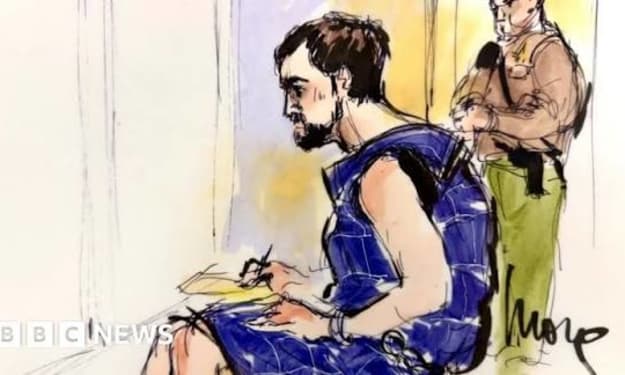
Rob Reiner’s Family Breaks Silence as Son Nick Faces Judge on Murder Charges. AI-Generated.
The entertainment world and the wider public were left stunned when news broke that Nick Reiner, son of legendary Hollywood director and actor Rob Reiner, had been charged with first-degree murder in connection with the deaths of his parents. As the legal process begins and Nick appears before a judge, the Reiner family has finally broken its silence, sharing a brief but emotional statement that reveals the depth of their grief.
By Fiaz Ahmed 2 months ago in Geeks
Saudi Arabia and India Agree on Mutual Short-Stay Visa Exemption. AI-Generated.
In a significant development that deepens ties between two of Asia’s most influential nations, Saudi Arabia and India have agreed on a mutual short-stay visa exemption for their citizens. This landmark agreement removes visa requirements for short visits—boosting tourism, business travel, cultural exchange, and people-to-people ties between the two countries. It represents not only a diplomatic success but also a major step in reshaping economic and social linkages across the Middle East and South Asia.
By Fiaz Ahmed 2 months ago in The Swamp
“NATO Spending Pledge Is Trump’s Biggest Foreign Policy Success,” Rutte Tells BBC. AI-Generated.
In a wide-ranging interview with the BBC, Dutch Prime Minister Mark Rutte described the NATO spending pledge—signed under former U.S. President Donald Trump—as one of the most significant foreign policy achievements in recent history. Rutte’s comments have reignited debates over Trump’s legacy in international relations, particularly within the North Atlantic Treaty Organization (NATO), where burden-sharing and collective defence commitments have long been contentious.
By Fiaz Ahmed 2 months ago in The Swamp