Muhammad Hassan
Bio
Muhammad Hassan | Content writer with 2 years of experience crafting engaging articles on world news, current affairs, and trending topics. I simplify complex stories to keep readers informed and connected.
Stories (467)
Filter by community
Hamas Armed Wing Confirms Death of Abu Obeida and Other Senior Leaders. AI-Generated.
The armed wing of Hamas has officially confirmed the death of Abu Obeida, one of its most prominent senior figures, along with several other high-ranking commanders. The announcement, released through the group’s official communication channels, marks a significant development in the ongoing conflict and represents one of the most serious blows to Hamas’s leadership structure in recent years. Abu Obeida, widely known as the masked spokesperson of the Izz ad-Din al-Qassam Brigades, had become a symbolic and strategic figure within the organization. His public statements, often delivered during periods of intense conflict, made him one of the most recognizable faces of Hamas’ military wing. The confirmation of his death has sent shockwaves across the region, signaling a potentially transformative moment in the dynamics of the ongoing war. Confirmation and Circumstances According to statements released by Hamas, Abu Obeida and several other senior commanders were killed during recent Israeli military operations targeting key command centers. While specific details regarding the location and timing of the incident were not fully disclosed, the group acknowledged that the losses were the result of intensified airstrikes and intelligence-led operations. Israeli officials have not publicly commented on the individual deaths but have reiterated that their military campaign aims to dismantle Hamas’ leadership, infrastructure, and operational capabilities. Analysts say the confirmation by Hamas itself suggests the impact of the strikes was significant, as the group typically avoids acknowledging leadership losses unless unavoidable. Who Was Abu Obeida? Abu Obeida served for years as the public face of the Qassam Brigades, delivering statements during conflicts and conveying messages intended to rally supporters and intimidate opponents. Known for his carefully scripted appearances and masked identity, he became a symbol of the group’s military resistance narrative. Though little was publicly known about his personal life, his role in shaping Hamas’ messaging and morale made him one of the most influential figures within the organization. His death represents not only a symbolic loss but also a strategic one, as leadership continuity is crucial for maintaining command and coordination within militant networks. Impact on Hamas’ Structure and Operations The deaths of multiple senior leaders are expected to create significant disruption within Hamas’ command structure. Experts suggest that while the group has historically shown resilience and an ability to replace leaders, the loss of experienced figures may temporarily weaken its operational efficiency and decision-making capacity. Military analysts note that leadership decapitation can have mixed outcomes. In the short term, it may disrupt planning, communication, and morale. In the long term, however, militant organizations often adapt by promoting new leaders or decentralizing their operations. Whether Hamas can recover quickly from this blow remains uncertain. Regional and International Reactions News of the confirmed deaths has drawn widespread international attention. Regional governments, global observers, and humanitarian organizations are closely monitoring the situation, concerned about potential escalation in violence and its impact on civilians. Calls for de-escalation have intensified, with international bodies urging all sides to protect civilian lives and pursue diplomatic pathways. At the same time, the developments have deepened fears of prolonged instability in the region, particularly as retaliatory actions remain a possibility. A Turning Point in the Conflict For many observers, the confirmation of Abu Obeida’s death marks a critical turning point in the current phase of the conflict. It underscores the intensity of ongoing military operations and highlights the high stakes involved for all parties. While some view the development as a strategic victory against militant leadership, others warn that it could fuel further cycles of violence. History suggests that such moments often lead to shifts in strategy rather than immediate resolution. Looking Ahead As the situation continues to evolve, attention now turns to how Hamas will reorganize its leadership and how the broader conflict will unfold in the coming weeks. The loss of senior figures may reshape internal dynamics, influence future negotiations, and alter the trajectory of the conflict. For the region, the confirmation of these deaths is a stark reminder of the human cost of prolonged warfare. Amid political calculations and military strategies, civilians continue to bear the heaviest burden. The international community faces renewed pressure to push for dialogue, restraint, and pathways toward lasting peace.
By Muhammad Hassanabout a month ago in Humans
Kim Jong Un Appears at New Year Celebrations with Daughter, Signaling a Carefully Crafted Image of Leadership. AI-Generated.
North Korean leader Kim Jong Un marked the beginning of the New Year by attending a major celebration accompanied by his young daughter, an appearance that has once again drawn global attention to the symbolism surrounding the country’s leadership and its future. The event, held in Pyongyang, featured grand performances, patriotic displays, and carefully curated imagery aimed at reinforcing national unity and loyalty to the ruling Kim family.
By Muhammad Hassanabout a month ago in The Swamp
Yemen: Separatists Allow Saudi-Backed Forces in Seized Areas. AI-Generated.
Yemen, a country long marred by conflict and humanitarian crises, has witnessed a new development that could reshape the fragile balance of power in its southern regions. Separatist forces, primarily part of the Southern Transitional Council (STC), have reportedly allowed Saudi-backed Yemeni government forces to enter areas previously seized by the separatists. While this move appears to be a step toward easing tensions, analysts caution that the situation remains volatile, with long-standing political, tribal, and regional rivalries threatening to undermine stability.
By Muhammad Hassanabout a month ago in Earth
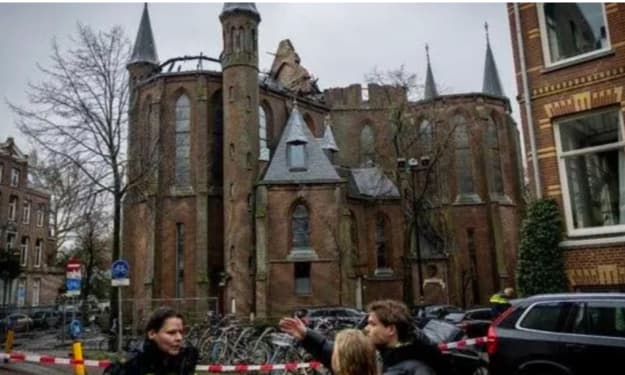
A Monumental Church in Amsterdam Ravaged by Flames on New Year’s Day: Fire Destroys Centuries of History. AI-Generated.
Amsterdam, a city known for its rich history, picturesque canals, and stunning architecture, faced a heartbreaking tragedy on New Year’s Day as one of its most iconic churches was ravaged by flames. The fire, which broke out in the early hours of January 1, 2026, destroyed centuries of history, art, and cultural heritage, leaving both locals and global observers in disbelief.
By Muhammad Hassanabout a month ago in Earth
Niagara Falls Has Frozen Over: A Breathtaking Icy Wonderland Captivates the World. AI-Generated.
Niagara Falls, one of the world’s most iconic natural wonders, has transformed into a stunning winter spectacle as freezing temperatures turn parts of the mighty waterfalls into a frozen dreamscape. Images and videos of the falls encased in ice have gone viral across social media, leaving millions in awe of nature’s rare and powerful display. While Niagara Falls never completely freezes due to the sheer force and volume of water, the current icy conditions have created a surreal and breathtaking scene that looks straight out of a fairytale.
By Muhammad Hassanabout a month ago in Earth
Zelensky Urges Trump to Help Broker Talks With Putin Amid Ongoing War. AI-Generated.
Ukrainian President Volodymyr Zelensky has publicly called on former United States President Donald Trump to help facilitate a high-level meeting with Russian President Vladimir Putin, signaling Kyiv’s continued effort to explore every possible diplomatic channel to end the devastating war. The appeal comes at a time when the conflict between Russia and Ukraine has entered another prolonged and uncertain phase, marked by battlefield fatigue, global economic strain, and growing pressure for a political solution.
By Muhammad Hassanabout a month ago in The Swamp
Russia-Ukraine War: Key Events on Day 1,406. AI-Generated.
The Russia-Ukraine war, which erupted in February 2022, has entered its 1,406th day, continuing to dominate global headlines. The conflict has shaped geopolitical dynamics, regional security, and international aid efforts while leaving millions of civilians in crisis.
By Muhammad Hassan2 months ago in Earth
Israel to Bar 37 Aid Groups as UK and EU Warn of Severe Impact in Gaza. AI-Generated.
Israel’s recent decision to bar 37 international aid organisations from operating in Gaza has raised alarms across the globe. The United Kingdom, the European Union, and multiple other countries have warned that this move could severely disrupt humanitarian efforts, leaving civilians in Gaza at greater risk. The ban, set to take effect in January 2026, comes amid new Israeli regulations requiring NGOs to meet strict transparency and security standards. According to Israeli authorities, the affected organisations failed to provide detailed information about their Palestinian staff and operations — a step the government says is necessary to ensure security. However, humanitarian groups and international critics argue that these requirements are excessive and arbitrary. They warn that halting operations of these NGOs could worsen an already dire humanitarian situation in Gaza. Why Israel Says the Ban Is Necessary Israeli officials insist that the new rules are a matter of national security. NGOs operating in Gaza must disclose detailed staff information and prove compliance with rigorous vetting processes. Authorities claim that failing to meet these standards threatens security and undermines oversight of aid operations. The 37 organisations affected include globally recognised NGOs such as Médecins Sans Frontières (Doctors Without Borders), Oxfam, World Vision International, CARE International, and the Norwegian Refugee Council. These groups provide essential services like healthcare, food, shelter, and water sanitation — services critical to millions of Gazans. Israeli authorities have stated that humanitarian assistance will continue through approved channels, including UN agencies and vetted partners. They argue that the barred groups account for a relatively small percentage of overall aid entering Gaza. Humanitarian Concerns and International Backlash The decision has drawn sharp criticism from the UK, EU, and other Western nations, who warn that removing these organisations will obstruct life-saving aid. EU humanitarian chief Hadja Lahbib emphasized that international humanitarian law demands assistance reach civilians, especially in conflict zones. The United Nations rights chief called the ban “arbitrary” and urged Israel to reconsider, saying the suspension will make “an already intolerable situation even worse.” Several foreign ministers, including from the UK, Canada, France, and Japan, echoed these concerns, highlighting the urgent need for food, medical care, and shelter in Gaza. The Risk for Civilians Gaza’s humanitarian situation remains fragile and precarious. Even before the ban, many hospitals operated at limited capacity, food and water supplies were insufficient, and winter storms destroyed temporary shelters. By removing 37 major aid organisations, critics say Israel risks creating dangerous gaps in essential services. Many local Gazans rely on these NGOs for survival, and UN agencies alone may struggle to fill the void. Without continued support, the region faces the potential for increased malnutrition, medical crises, and deteriorating living conditions. Data Protection and Safety Issues A major concern cited by several NGOs is the safety of their Palestinian staff. Sharing detailed personal data with the Israeli government could put employees at risk, especially in a politically sensitive environment. Doctors Without Borders and other organisations have publicly stated that they take staff safety seriously and rigorously screen employees to ensure no connections to militant groups. They continue negotiations to clarify misunderstandings and find ways to continue operations safely. What the International Community Is Doing Western governments, UN agencies, and civil society organisations are pressing Israel to allow predictable and unhindered humanitarian access. They stress that aid delivery should remain independent of political disputes and focused solely on protecting civilians. At the same time, Israel maintains that transparency and security compliance are essential to preventing misuse of aid and maintaining safety in conflict zones. This tension highlights the complexity of delivering humanitarian assistance in politically charged areas. Looking Ahead As the ban takes effect, Gaza’s humanitarian landscape faces new challenges. How international actors, aid organisations, and Israel respond in the coming months could determine whether relief efforts succeed or falter. The situation serves as a stark reminder of how political decisions directly affect the lives of civilians, and the importance of maintaining access to humanitarian aid in conflict zones. In 2026, the world will be watching closely as Gaza navigates these unprecedented restrictions, and whether diplomatic pressure can prevent a worsening crisis.
By Muhammad Hassan2 months ago in The Swamp
10 Conflicts to Watch in 2026. AI-Generated.
As global power shifts and geopolitical tensions rise, the year 2026 is shaping up to be a turning point for international relations. From long-running territorial disputes to emerging flashpoints driven by climate, politics, and technology, the world is entering a period of heightened uncertainty. Below are 10 major conflicts to watch in 2026, each with the potential to reshape regional stability and global politics. 1. Russia–Ukraine War: A Prolonged Struggle Despite years of fighting, the Russia–Ukraine conflict shows no clear end. As 2026 approaches, the war continues to reshape European security, global energy markets, and NATO’s role. Whether through escalation, stalemate, or fragile negotiations, the outcome will have lasting consequences for Europe and beyond. 2. Israel–Palestine Conflict The long-standing conflict between Israel and Palestine remains one of the most volatile in the world. Periodic escalations, humanitarian crises in Gaza, and regional involvement keep tensions high. In 2026, diplomatic efforts may intensify, but deep-rooted political and territorial disagreements continue to challenge peace. 3. Taiwan–China Tensions Taiwan sits at the center of growing geopolitical rivalry between China and the United States. Beijing’s insistence on reunification and increasing military pressure around the island raise fears of confrontation. Any escalation would have global economic consequences, particularly for the semiconductor industry. 4. South China Sea Disputes Several nations — including China, the Philippines, Vietnam, and Malaysia — claim parts of the South China Sea. With increased military patrols and strategic competition, 2026 could see rising tensions affecting global trade routes and regional stability. 5. Iran and the Middle East Power Struggle Iran’s regional influence, nuclear ambitions, and strained relations with Western nations continue to shape Middle Eastern geopolitics. Proxy conflicts in Syria, Yemen, and Iraq remain active, while tensions with Israel and Gulf states could escalate into broader confrontation. 6. North Korea and the Korean Peninsula North Korea’s ongoing missile tests and nuclear ambitions remain a serious concern. Diplomatic engagement has stalled, and the Korean Peninsula remains one of the world’s most militarized regions. In 2026, regional security will depend heavily on diplomacy involving South Korea, the U.S., China, and Japan. 7. Sudan’s Internal Conflict Sudan’s ongoing power struggle between rival military factions has triggered a devastating humanitarian crisis. As violence continues into 2026, international mediation efforts will be critical to prevent further regional instability across North and East Africa. 8. Sahel Region Instability Countries like Mali, Niger, and Burkina Faso face growing insecurity driven by militant groups, political instability, and climate stress. The Sahel’s fragile governments and shifting alliances make it one of the most unpredictable regions heading into 2026. 9. Armenia–Azerbaijan Tensions Despite ceasefire agreements, tensions between Armenia and Azerbaijan remain high following conflicts over Nagorno-Karabakh. Border incidents and political uncertainty keep the risk of renewed fighting alive, with implications for regional energy routes and diplomacy. 10. Venezuela’s Political and Economic Crisis Venezuela’s prolonged economic collapse and political standoff continue to fuel regional migration and instability. As elections and international negotiations evolve, 2026 may prove decisive in determining whether the country moves toward recovery or deeper crisis. Conclusion: A World at a Crossroads The conflicts shaping 2026 reflect a world navigating power shifts, climate stress, and unresolved historical tensions. While diplomacy remains the preferred path forward, rising nationalism and competition threaten global stability. Understanding these conflicts is essential for anticipating how international relations, economies, and humanitarian conditions may evolve in the years ahead. As the world becomes more interconnected, the consequences of regional conflicts increasingly ripple across borders — making global awareness more important than ever.
By Muhammad Hassan2 months ago in The Swamp
11 Architecture Projects Set to Shape the World in 2026. AI-Generated.
The year 2026 is shaping up to be a defining moment for global architecture. Around the world, visionary architects, governments, and designers are preparing to unveil landmark projects that blend technology, sustainability, culture, and identity. From futuristic museums and transportation hubs to iconic skyscrapers and civic spaces, these developments are not just buildings — they are statements about how humanity envisions the future. Here are 11 architecture projects set to shape the world in 2026, redefining skylines and the way people interact with their environments. 1. Melbourne Metro Tunnel – Australia One of the most transformative infrastructure projects in Australian history, the Melbourne Metro Tunnel will revolutionize urban mobility. Featuring five new underground stations, the project combines advanced engineering with public art and natural light. More than a transport system, it is designed as a civic space that reconnects the city and reduces congestion for millions of commuters. 2. Lucas Museum of Narrative Art – Los Angeles, USA Founded by filmmaker George Lucas, this long-awaited museum celebrates storytelling through art, film, illustration, and digital media. Designed by MAD Architects, the organic, futuristic structure rises from Exposition Park like a spacecraft. When it opens in 2026, the museum will become a global hub for visual storytelling and cultural expression. 3. Guggenheim Abu Dhabi – United Arab Emirates Set on Saadiyat Island, the Guggenheim Abu Dhabi is poised to become one of the world’s most significant cultural institutions. Designed by Frank Gehry, the museum will showcase modern and contemporary art from across the globe. Its massive scale and sculptural design reflect the UAE’s ambition to position itself as a global cultural capital. 4. Tour F – Abidjan, Ivory Coast Africa’s future skyline gets a bold new symbol with Tour F, the tallest tower on the continent upon completion. Rising in the heart of Abidjan, the building represents economic confidence and modern African identity. Its design merges contemporary aesthetics with regional influences, signaling Africa’s growing architectural voice on the world stage. 5. Shanghai Grand Opera House – China Designed by Snøhetta, the Shanghai Grand Opera House blends architecture and landscape into one flowing structure. Located along the Huangpu River, the building’s terraced form invites the public to walk, gather, and experience performance beyond traditional theater walls. It stands as a cultural anchor for one of the world’s most dynamic cities. 6. Suzhou Museum of Contemporary Art – China This innovative museum by Bjarke Ingels Group (BIG) reimagines traditional Chinese garden design in a contemporary form. The structure consists of interconnected pavilions arranged around water features, creating a calm and immersive experience. It reflects a growing trend toward architecture that respects heritage while embracing modern creativity. 7. Yidan Center – Shenzhen, China Designed by Zaha Hadid Architects, the Yidan Center will serve as a global hub for education, research, and innovation. With its fluid geometry and forward-thinking design, the building mirrors Shenzhen’s reputation as China’s technology capital and reinforces the role of architecture in shaping knowledge economies. 8. British Museum Western Range Redevelopment – United Kingdom The British Museum’s largest renovation in decades aims to modernize its galleries while preserving historical character. Led by architect Lina Ghotmeh, the project focuses on accessibility, sustainability, and storytelling—creating a museum experience that reflects today’s global audiences and cultural conversations. 9. The Crafts College – Herning, Denmark Blending craftsmanship with contemporary design, this project celebrates education and community. Built using durable, sustainable materials, the Crafts College emphasizes learning through making. It stands as a model for how architecture can support skill development and social cohesion. 10. Sagrada Família Completion – Barcelona, Spain After more than 140 years of construction, Antoni Gaudí’s masterpiece is expected to reach its symbolic completion in 2026. The final towers will redefine Barcelona’s skyline and fulfill one of architecture’s most extraordinary long-term visions — blending faith, geometry, and imagination. 11. Melbourne Metro Stations – Civic Architecture Redefined Beyond transportation, Melbourne’s new underground stations are designed as public landmarks. Natural light, open plazas, and artistic installations transform daily commuting into an architectural experience, proving that infrastructure can also inspire. Final Thoughts These eleven projects reflect more than architectural ambition — they reveal how cities are evolving to meet the challenges of culture, sustainability, and community in the 21st century. As 2026 approaches, these landmarks will not only reshape skylines but redefine how people live, connect, and experience the world around them.
By Muhammad Hassan2 months ago in The Swamp
Xi Jinping Vows to Reunify China and Taiwan in New Year’s Eve Speech. AI-Generated.
As the world rang in 2026, Chinese President Xi Jinping used his New Year’s Eve address to deliver a message that caught the attention of governments, analysts, and citizens around the globe. Beyond celebrating China’s economic achievements and technological progress, Xi’s speech emphasized one of Beijing’s most sensitive and politically charged topics: the reunification of Taiwan with mainland China. In his address, broadcast live across multiple platforms, Xi reaffirmed China’s long-standing position that Taiwan is an inseparable part of its territory. While the speech didn’t contain direct threats of military action, it made clear that reunification is considered an “unstoppable trend” — a priority that Xi framed as both a historical and cultural mission. A Strong Statement on Reunification Xi Jinping stressed that the bond between people on both sides of the Taiwan Strait is one of “blood and kinship.” For him, reunification is not just political but also a matter of national pride and historical justice. He connected this goal to China’s broader vision of national rejuvenation, portraying Taiwan’s eventual return as part of the country’s destiny. The timing of this declaration is significant. Coming on the eve of a new year and a new Five-Year Plan (2026–2030), it underscores that Taiwan remains central to China’s strategic priorities. Analysts note that this speech, while firm in language, reflects a consistent policy approach rather than a sudden escalation. Military Drills and Regional Tensions The speech followed China’s completion of large-scale military exercises near Taiwan, dubbed “Justice Mission 2025.” These drills included aircraft, naval vessels, and simulated blockades, widely interpreted as a warning to foreign powers and “separatist forces.” Taiwan, for its part, has maintained a stance of peace and stability while simultaneously strengthening its defense capabilities. The U.S. and Japan have closely monitored these developments, concerned that continued military pressure could heighten the risk of miscalculation. This combination of political rhetoric and military demonstrations represents Beijing’s dual strategy: signaling strength while reinforcing territorial claims without triggering direct conflict. International Reactions Xi’s remarks quickly drew global attention. Western governments emphasized the importance of peace and stability in the Taiwan Strait while reaffirming support for Taiwan’s democratic institutions. U.S. policymakers face a delicate balancing act: deterring any unilateral moves on Taiwan while avoiding direct confrontation with China. Neighboring countries in the Indo-Pacific, including Japan, South Korea, and ASEAN nations, have also expressed concern. Taiwan sits at the heart of critical trade routes, so any conflict could disrupt regional economies and global supply chains. Even nations with strong economic ties to China have stressed the need for diplomatic solutions and dialogue. Taiwan’s Perspective Taiwan’s leadership responded by reiterating its commitment to democracy and self-determination. President Lai Ching-te emphasized that Taiwan seeks peaceful relations with China but will not yield to coercion. Strengthening defense capabilities and international partnerships remains central to Taiwan’s strategy. The island’s vibrant democratic system — including independent institutions, free elections, and a strong civil society — contrasts sharply with mainland China’s one-party governance, highlighting why the reunification question remains complex and sensitive. Domestic Messaging in China Within China, Xi framed reunification as part of a broader narrative of national pride and achievement. The speech referenced historic anniversaries, economic milestones, and technological breakthroughs, presenting reunification as a continuation of the country’s progress. By connecting Taiwan to China’s national identity and historical mission, Xi aims to foster unity and reinforce the legitimacy of the government’s strategic goals. The speech also signals to domestic audiences that the leadership remains focused on long-term objectives, even as global attention zooms in on regional security issues. Looking Ahead in 2026 As the new year begins, the Taiwan issue remains one of the most sensitive geopolitical topics in the world. Xi Jinping’s New Year’s Eve message made clear that China’s position is resolute: reunification is inevitable. How this rhetoric translates into action will depend on a complex mix of factors, including Taiwan’s policies, international diplomacy, and global geopolitical shifts. For now, Beijing’s message is clear, and 2026 is likely to be another year of close international attention on the Taiwan Strait. Xi’s speech reminds the world that while new years bring fresh beginnings, some geopolitical challenges persist — and cross-strait relations are at the forefront of both China’s domestic agenda and the international diplomatic spotlight.
By Muhammad Hassan2 months ago in The Swamp
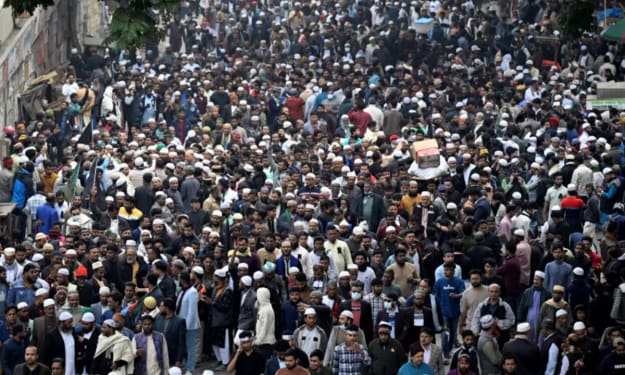
Bangladesh Mourns Khaleda Zia in State Funeral With Massive Crowds. AI-Generated.
Bangladesh came together in a historic display of grief on December 31, 2025, as the nation bid farewell to Begum Khaleda Zia, the country’s first female prime minister. A state funeral drew massive crowds in Dhaka, with hundreds of thousands — possibly over a million — citizens coming together to honor a leader whose life shaped the destiny of Bangladesh. A Sea of Mourners in Dhaka Even before dawn, streets leading to the National Parliament building were filled with people. Supporters carried Bangladesh Nationalist Party (BNP) banners, national flags, and placards expressing love for their “mother of the nation.” From rural towns to provincial districts, people traveled long distances to participate in the farewell procession. The government declared a three-day national mourning period and a public holiday to allow citizens to pay their respects. Security forces, including over 10,000 police and military personnel, were deployed to maintain order during the unprecedented gathering. Funeral Prayers and National Tribute The funeral prayers (Namaz-e-Janaza) were held at the South Plaza of the Jatiya Sangsad Bhaban (National Parliament Building) in the early afternoon. Dignitaries from across South Asia, including India, Pakistan, Nepal, Bhutan, and Sri Lanka, attended. India’s External Affairs Minister S. Jaishankar presented a letter of condolence from Prime Minister Narendra Modi. Khaleda Zia was laid to rest beside her husband, former President Ziaur Rahman, who was assassinated in 1981. Military honor guards stood in silent tribute as family, party leaders, and foreign diplomats offered their final respects. Remembering Khaleda Zia: Triumphs and Controversies Khaleda Zia’s political career was marked by resilience, determination, and controversy. Born in 1945, she entered politics following her husband’s assassination and became Bangladesh’s first female prime minister, serving three terms over more than a decade. She was a prominent figure in the fight against authoritarian rule during the late 1980s and early 1990s, credited with helping restore parliamentary democracy. Yet her political journey was not without challenges. Legal battles, corruption charges, and periods of house arrest marked her later years, which her supporters decried as politically motivated. Her rivalry with Sheikh Hasina, leader of the Awami League, defined Bangladeshi politics for decades. Dubbed the “Battle of the Begums,” this rivalry often polarized the electorate, reflecting broader ideological divides in the country. The Emotional Farewell Wednesday’s funeral brought together people from all walks of life, reflecting the deep emotional connection many Bangladeshis felt toward Khaleda Zia. For supporters, she symbolized the struggle for democracy and women’s empowerment. Placards calling her “Maa” (mother) were common, a sign of affection and reverence. Sharmina Siraj, a mourner from outside Dhaka, told reporters, “Her programs for girls’ education and women’s empowerment changed our community. It’s hard to imagine such leadership again.” Political Implications Moving Forward With national elections approaching in February 2026, Khaleda Zia’s death adds a layer of uncertainty to the political landscape. Her son, Tarique Rahman, now acting head of the BNP, is likely to play a central role in rallying party support. The massive turnout at the funeral could signal renewed momentum for the party as it prepares for the upcoming elections. A Nation United in Grief While Khaleda Zia’s legacy remains complex, her state funeral served as a powerful reminder of her impact on Bangladesh’s history. Millions came together to mourn, celebrate, and reflect on a life that inspired devotion, debate, and determination. The event was not just a farewell; it was a nationwide tribute to a leader who broke barriers, navigated political turmoil, and left a lasting mark on the country. Whether remembered for her achievements or controversies, Khaleda Zia’s influence on Bangladesh’s political landscape will continue to resonate for years to come. Tags for Vocal Media: Bangladesh, Khaleda Zia, Politics, State Funeral, BNP, Dhaka, South Asia, Women in Politics, Leadership, National Mourning
By Muhammad Hassan2 months ago in The Swamp