Zahid Hussain
Stories (101)
Filter by community
Elena Rybakina Triumphs at Australian Open, Defeating No. 1 Aryna Sabalenka for Her Second Grand Slam Title. AI-Generated.
Elena Rybakina has once again etched her name into tennis history by claiming her second Grand Slam title, defeating the world No. 1 Aryna Sabalenka in a thrilling final at the Australian Open 2026. The Kazakh star, known for her powerful serve and relentless baseline play, overcame a fierce challenge from Sabalenka to lift the trophy and announce her arrival as one of the sport’s elite players. The Final Showdown: Rybakina vs Sabalenka The championship match was a high-octane clash that captivated tennis fans worldwide. Sabalenka, renowned for her aggressive game and dominating presence on court, seemed poised to continue her winning streak. However, Rybakina’s tactical brilliance, composure under pressure, and incredible serve accuracy allowed her to seize key points at crucial moments. The final scoreline, 6-4, 3-6, 7-5, reflected the intensity of the encounter. Rybakina broke Sabalenka’s serve multiple times, while maintaining her own unbroken serves at pivotal moments. Her ability to stay calm in tense rallies proved decisive, earning her both the championship and widespread acclaim. Elena Rybakina’s Rise to Stardom Rybakina’s journey to this second Grand Slam has been remarkable. Born in Russia but representing Kazakhstan, she made her Grand Slam breakthrough in Wimbledon 2022, where she won her first major title. Since then, she has consistently improved her ranking and performance, establishing herself as a formidable opponent on all surfaces. Her style of play blends power, precision, and mental toughness. Analysts highlight her ability to deliver aces under pressure and her adaptability against different opponents as key factors behind her success. Overcoming the Top Seed Defeating the world No. 1 is never easy, and Rybakina’s win over Sabalenka underlines her growing dominance in women’s tennis. Throughout the match: She showcased strategic shot placement to exploit weaknesses in Sabalenka’s baseline game. Her serve velocity consistently exceeded 110 mph, making return games extremely challenging. Rybakina displayed unwavering focus, bouncing back even after dropping the second set. This victory cements her status as a top-tier contender, signaling that she is a player capable of winning multiple Grand Slam titles in the coming years. Fan Reactions and Global Impact Fans across the globe celebrated Rybakina’s triumph. Social media erupted with messages praising her resilience, skill, and sportsmanship. Tennis commentators noted the match as one of the most thrilling finals in recent Australian Open history, emphasizing the intense rivalry between these two modern powerhouses. This victory also has broader implications for Kazakhstan’s presence in global tennis. Rybakina’s success inspires young athletes in her country, highlighting the potential for emerging tennis nations to compete at the highest levels. What’s Next for Rybakina Following her Australian Open win, Rybakina will focus on upcoming WTA tournaments and Grand Slam events, including the French Open and Wimbledon. Her performance in these competitions will determine if she can sustain her momentum and challenge for the No. 1 ranking. Analysts expect her to continue refining her game, particularly her net play and backhand consistency, which could make her virtually unstoppable against top-tier opponents. Conclusion: A New Era in Women’s Tennis Elena Rybakina’s Australian Open victory is more than a personal achievement; it represents the rise of a new generation in women’s tennis. By defeating a top-ranked player like Aryna Sabalenka, Rybakina has proven that determination, skill, and mental resilience are the keys to tennis glory. With her second Grand Slam title now secured, the tennis world eagerly anticipates what this rising star will achieve next, making her one of the most exciting figures to watch in global sports.
By Zahid Hussain2 days ago in The Swamp
DeepSeek Was a Warning Shot. China Is Building Its Next Surprise.. AI-Generated.
In early 2025, the Chinese AI startup DeepSeek stunned the world. Its open‑source large language model — released publicly at lightning speed — rivaled top Western AI systems and even shook global markets. That moment wasn’t just an isolated shock: it was a warning shot that China’s AI strategy is maturing faster and more strategically than many in the West expected. � The Washington Post +1 But experts and insiders now say DeepSeek was merely the beginning. China appears to be quietly building the next wave of technological advances — bigger, broader, and tightly interwoven with its economic and military strategies. The question now isn’t whether China can catch up in AI — many analysts believe it will — but how far its ambitions will extend and what surprises are coming next. � The Washington Post +1 DeepSeek: More Than a Tech Startup DeepSeek’s story itself is significant: Released in January 2025, DeepSeek’s R1 model rapidly gained massive user adoption and sparked industry comparisons with Western leaders like OpenAI’s ChatGPT. � Wikipedia It became one of the most downloaded AI apps, and its early versions reportedly matched or approached performance parity with major Western models, even at lower compute cost. � Wikipedia Its influence was significant enough to affect stock prices, including major chipmakers, as markets adjusted to the narrative that China could disrupt Western AI dominance. � Reddit DeepSeek’s initial breakthrough was widely covered as a technical surprise, but deeper analysis shows it was also the product of long‑term government planning, strategic funding, and coordinated integration of AI into both civilian and state systems. � The Washington Post Broader Integration: From Industry to Military Where DeepSeek matters-most is not only in consumer AI usage or economic analysis — it’s in how the technology is being integrated into China’s broader industrial and strategic ecosystem. AI Across State‑Owned Enterprises State‑owned enterprises (SOEs) in sectors like energy, chemicals, and power are now actively deploying DeepSeek’s AI models to optimize operations, from reservoir analysis to industrial processes, data services, and customer support. This reflects how AI is being rolled out at scale across major parts of the Chinese economy. � chinadaily.com.cn Military Uses and “Intelligentization” China’s People’s Liberation Army (PLA) has incorporated DeepSeek into non‑combat military roles—for example supporting medical operations and personnel management in military hospitals — while laying groundwork for future combat applications. � fdd.org Experts say using AI in these controlled scenarios allows China to test and refine AI integration before moving into more sensitive military decision‑making or battlefield support systems. � business-standard.com Military analysts warn that such developments build a foundation for future autonomous systems — including surveillance networks, decision support tools, and eventually combat AI — which could significantly shift future conflict dynamics. This military‑civil fusion strategy is key to Beijing’s approach: where civilian innovation directly informs, supports, and accelerates military capability. The U.S. Response: Concern, Controls, and Paradox DeepSeek’s rise has triggered concern within the U.S. government, with some lawmakers labeling the technology a “profound national security threat.” They argue DeepSeek has allegedly used techniques to accelerate its development and may align with state interests. � Forbes At the same time, the U.S. has struggled to limit China’s access to high‑end AI chips — even as it tries to restrict export of certain advanced GPU hardware. Recently, China conditionally approved DeepSeek’s purchases of Nvidia’s powerful H200 AI chips, signaling a complex and evolving high‑tech trade environment. � Reuters Meanwhile, Nvidia has been pulled into political debate itself, with U.S. lawmakers alleging the company’s past technical assistance helped DeepSeek reduce GPU training time — a claim Nvidia disputes, saying China could develop its own chip capabilities and that Western tech cooperation should not automatically be framed as aiding military use. � Reuters +1 This contradictory environment — yes to controlled chip exports, no to military risk — illustrates the geopolitical tension at the heart of the AI race. International Pushback and Security Concerns DeepSeek’s global reach has not been universally welcome. Several countries have taken steps to restrict its use: The Czech Republic banned DeepSeek from government systems over cybersecurity concerns, citing risks of unauthorized data access. � euronews South Korea restricted DeepSeek on government devices due to data management questions. � The Economic Times Other nations, including Italy and Australia, have raised similar concerns about data privacy and state influence. � euronews These actions reflect broader anxieties about how Chinese AI platforms — especially those with ties to state policies — might handle sensitive information and how they fit into global digital infrastructure. What’s Next: From Algorithms to Autonomous Systems If DeepSeek was only a warning, the next surprise from China may lie in embodied AI — intelligence infused into physical systems such as autonomous robots, drones, and logistics vehicles. Experts point out that China is targeting embodied AI as a strategic priority in its national development plans, including its current Five‑Year Plan, as a means to boost productivity and innovation in both civilian applications and defense systems. � The Washington Post Chinese firms such as Agibot, UBTech, Unitree Robotics, and others are emerging as leaders in hardware‑integrated AI, bringing sophisticated algorithmic reasoning off the screen and into the real world. This thrust toward embodied AI could have transformative impact in areas like: Autonomous logistics and manufacturing AI‑driven robotics for construction and services Drone swarms and autonomous tactical systems Advanced sensing, navigation, and decision support in real environments The integration of DeepSeek‑style reasoning into autonomous machines would create a new layer of technological competition — one that would be far more than software rivalry, reshaping economic productivity and defense capabilities alike. Challenges and Unknowns It’s not all smooth sailing for China’s AI ambitions. DeepSeek itself has faced criticism over quality, safety, and security vulnerabilities, and some independent analyses have suggested accuracy and reliability issues relative to Western models. � Fortune Moreover, global concerns about censorship, data access, and ethical standards continue to shape how Chinese AI technologies are received internationally. Still, these challenges haven’t halted progress — they’ve underscored the need for robust standards, governance, and international coordination around powerful AI systems. Conclusion: A Strategic Turning Point DeepSeek’s meteoric rise was more than just another tech news flash — it was a strategic signal that China is accelerating its AI ambitions on multiple fronts. Combined with military integration, industrial deployment, global reactions, and hardware diplomacy, DeepSeek reflects a larger, coordinated effort by Beijing to compete at scale in the defining technology of this century. � The Washington Post As China pushes forward — and possibly shifts toward embodied AI and autonomous systems next — the global community faces critical questions about competition, cooperation, technological governance, and security in an era where artificial intelligence is reshaping both economic power and geopolitical balance.
By Zahid Hussain2 days ago in The Swamp
“Keep on Dreaming”: Could Europe Really Defend Itself Without the U.S.?. AI-Generated.
Europe’s leaders have been talking for years about strategic autonomy — the idea that the continent could one day defend itself without relying on the United States. But recent comments from NATO’s Secretary‑General have underscored how far that goal still is from reality. � The Guardian +1 “If anyone thinks Europe can defend itself without the U.S., keep on dreaming,” NATO chief Mark Rutte told lawmakers, bluntly dismissing the notion that Europe is currently capable of going it alone. � European Interest This stark assessment has triggered a major debate across European capitals: Can Europe truly protect its territory and interests without American military support — and what would it take if Washington steps back? Why the U.S. Still Matters for European Security Since the end of World War II, American military power has been the backbone of European defence. The U.S. provides capabilities that European countries, even collectively, struggle to replicate: Nuclear deterrence: NATO’s nuclear umbrella — with U.S. weapons and strategy at its core — remains a primary deterrent against existential threats like Russia. � European Interest Intelligence, surveillance, and reconnaissance (ISR): U.S. satellites, sensors, and data systems currently give NATO a broad, real‑time picture of threats — something Europe lacks independently. � CEPA Strategic airlift and logistics: Long‑range transport aircraft and aerial refuelling tankers allow forces to move rapidly and sustain operations — areas where U.S. capabilities still dwarf European lift capacity. � Brookings Command and control systems: Integrated battle management and space assets that coordinate multi‑domain operations remain dominated by U.S. technology. � CEPA Without these “enablers,” even a large European force would struggle to operate cohesively against a high‑end military threat. � Defense News What Experts Say: The Military Gap Reports by defence analysts paint a clear picture of the scale of the challenge: Troop readiness: Europe’s combined armed forces total around 1.5 million personnel, but many nations lack the readiness levels, logistics, and long‑range capabilities needed for high‑intensity operations. � Brookings Equipment shortfalls: To fill gaps left by a hypothetical U.S. withdrawal, Europe would need about 50 new brigades and massive investments in tanks, artillery, aircraft, and ammunition — a level of force modernisation far beyond current budgets. � bruegel.org Strategic investment: Analysts estimate Europe would need to spend hundreds of billions more and increase defence budgets to around 3–4% of GDP to begin replacing U.S. capabilities — far above the current norm of about 1.5–2%. � Start Insight These gaps aren’t just about numbers — European militaries were largely designed to operate with U.S. support, not replace it. � Brookings The Cost of Autonomy: Financial and Industrial Hurdles Building a truly independent defence posture would be enormously expensive and politically contentious: Huge Investment Needed Europe could need €1 trillion or more over the next few decades to stand on its own feet, according to estimates from international security institutes. � Strategic Culture Foundation Raising Defence Spending Most European states commit around 2% of GDP to defence, a NATO target. But analysts say that level isn’t enough for genuine autonomy — many argue it would have to rise “well beyond” that, potentially 3–4% or more. � Start Insight Industrial Fragmentation European defence industries are fragmented. Different weapon systems, procurement processes, and national priorities make joint development, production, and interoperability difficult. � The Guardian Long Time Horizon Even with political will and funding, experts say it could take a decade or more for Europe to build the technologies and capabilities it would need to defend itself independently. � Defense News Political and Strategic Obstacles Even if the money were available, political factors complicate defence autonomy: Lack of Unified Strategy European countries still disagree over key defence priorities, threat perceptions, and how to structure a collective force. There is no single defence doctrine shared across the continent. � The Guardian National Rivalries Countries often prefer national procurement, industrial jobs, and bilateral arrangements rather than pooling sovereignty in a European army. � The Guardian Debate Over Nuclear Deterrence Europe’s only nuclear powers, France and the UK, maintain independent arsenals — but they function differently from NATO’s broader deterrent and are not designed to replace U.S. tactical nuclear capabilities. � Defense News Signs of Change: Moves Toward Strategic Autonomy Despite the challenges, Europe is making incremental progress: The EU has launched defence initiatives aimed at boosting joint capability and readiness, including proposals to mobilise hundreds of billions in investment and accelerate collaborative armaments development. � europarl.europa.eu Some European leaders, especially in France, argue for a stronger “European pillar” within NATO — not a replacement for the alliance, but a force that could operate autonomously when necessary. � The Guardian Nations such as Germany and the UK have increased defence spending and announced long‑term upgrades to their militaries. Still, experts caution that even these advances fall short of full independence and — for now — mainly serve to strengthen NATO rather than supplant the U.S. role. � chathamhouse.org Could Europe Deter Major Threats Without the U.S.? In theory, a military alliance of European states could defend against limited threats or regional instability. But against a large, well‑equipped adversary like Russia — or in high‑intensity collective defence — Europe lacks: Integrated strategic airpower and missile defence Space‑based ISR and cybersecurity assets Heavy logistical lift and rapid force projection A unified command structure with shared doctrine and supply chains � Brookings Without these, any European effort would rely on improvisation, higher casualties, slower response times and logistical bottlenecks — a “bloodier” conflict, analysts warn. � Defense News Conclusion: Realism vs. Aspirations The idea of a fully independent European defence has long been an aspiration for some leaders and strategic thinkers. But as NATO’s Secretary‑General bluntly put it: Europe today cannot defend itself without the United States. � European Interest That doesn’t mean Europe is doomed to permanent dependency — far from it. Many countries are investing more, coordinating better, and debating structural reforms that could lay the foundations for greater autonomy in the future. Yet the financial cost, political obstacles, capability gaps, and time required mean that real independence — if it ever comes — is still decades away. For now, the transatlantic alliance remains the cornerstone of European security, and even the most ardent proponents of autonomy acknowledge that achieving true military self‑sufficiency is a massive, long‑term project — not something Europe can simply “dream” into reality overnight.
By Zahid Hussain2 days ago in The Swamp
When Hope and Horror Collide: Gaza Under Fire as a Ceasefire Inches Forward. AI-Generated.
A Ceasefire Shadowed by Bloodshed In Gaza, hope rarely arrives alone. It usually comes carrying grief. As international mediators speak in careful language about ceasefire progress, families in Gaza bury their dead. On a day when the world expected calm to grow stronger, Israeli airstrikes killed at least 30 Palestinians, including children. The timing was brutal, the symbolism unavoidable. While talks moved forward on paper, violence surged on the ground. For the people of Gaza, this contradiction is not new. Ceasefires have come and gone before, often collapsing under the weight of mistrust, retaliation, and unresolved injustice. Yet each announcement still sparks a fragile optimism — a belief that maybe this time, the bombs will stop. This time, they didn’t. A Deadly Day in Gaza The strikes hit multiple locations across the Gaza Strip. Residential buildings, a police station, and areas sheltering displaced families were among the targets. Hospitals quickly filled with the wounded, while doctors struggled with limited supplies, overcrowded wards, and exhausted staff. Among the dead were women and children — names added to a growing list that has become tragically long. For many families, there was no warning, no time to escape, and no safe place left to run. Parents searched hospital corridors for their children. Survivors described explosions that tore through sleeping neighborhoods. Tents meant for refuge became sites of mourning. Each casualty represented not just a number, but a life interrupted: a student who would never return to school, a child whose favorite toy lay buried under rubble, a parent whose role as protector ended in helplessness. The Ceasefire That Exists — and Doesn’t Officially, a ceasefire has been in place. Unofficially, Gaza has remained under constant threat. Ceasefires in this conflict are rarely absolute. They are fragile understandings, often broken by accusations from both sides. Israel claims it strikes in response to security threats. Palestinian groups accuse Israel of violating truces with disproportionate force. This creates a deadly loop: one side claims defense, the other calls it aggression, and civilians pay the price. For Gaza’s residents, the term “ceasefire” has lost much of its meaning. It does not guarantee safety. It does not ensure electricity, clean water, or medical access. And it certainly does not promise that children will sleep through the night without fear. Children Caught in a War They Did Not Choose Perhaps the most devastating aspect of this latest violence is the loss of young lives. Children in Gaza are born into siege, raised under drones, and educated amid ruins. Many have never experienced a day without the sound of aircraft overhead. Psychologists warn of widespread trauma, anxiety, and emotional numbness among Gaza’s youth. When children are killed during ceasefire talks, it sends a painful message: even moments of supposed peace are unsafe. For parents, the fear is constant. Do you send your child outside to play? Do you let them sleep near a window? Do you hope, or do you prepare for the worst? In Gaza, parenting has become an act of courage. Rafah Crossing: A Gate of Survival One of the most discussed elements of the ceasefire negotiations is the reopening of the Rafah border crossing with Egypt. For Gaza, Rafah is more than a checkpoint — it is a lifeline. Its reopening would allow: Medical evacuations for critically ill patients Entry of humanitarian aid Movement for families trapped inside the strip Yet even this hopeful step remains uncertain. Past openings have been limited, temporary, and heavily controlled. Each delay costs lives, especially for patients needing urgent treatment unavailable inside Gaza. The strikes came just as optimism around Rafah was growing, raising questions about whether political progress can truly protect civilians. The International Response: Words Without Weight Global reactions followed a familiar pattern. Statements of concern. Calls for restraint. Renewed emphasis on negotiations. But for Gazans, words without action feel hollow. Human rights organizations continue to warn that repeated civilian casualties may violate international humanitarian law. Aid groups stress that Gaza’s healthcare system is near collapse. Journalists document destruction, yet accountability remains elusive. The international community’s inability to enforce lasting peace has bred deep cynicism. Many in Gaza believe the world sees their suffering but lacks the will to stop it. Israel’s Perspective: Security Above All Israel maintains that its military actions are necessary to protect its citizens. Officials argue that militant groups exploit ceasefires to regroup and that strikes target threats, not civilians. From Israel’s viewpoint, security concerns are immediate and non-negotiable. Rocket fire, tunnels, and armed groups remain central to its justification for military operations. However, critics argue that overwhelming force in densely populated areas inevitably leads to civilian deaths — regardless of intent. The line between security and collective punishment remains heavily contested. Life in Gaza: Survival as Routine Beyond headlines and death tolls, life in Gaza continues — not because it is easy, but because stopping is not an option. People queue for bread. Families ration water. Children attend makeshift schools. Fishermen risk their lives at sea. Doctors perform surgeries by generator light. Resilience has become a necessity, not a choice. Yet resilience should not be mistaken for acceptance. Beneath daily survival lies exhaustion, anger, and grief. Many Gazans feel trapped in a cycle they did nothing to create and cannot escape. The Psychological Toll of Endless Conflict Wars do not end when bombs stop falling — especially when they never truly stop. Mental health professionals report soaring cases of post-traumatic stress disorder, depression, and anxiety in Gaza. Children reenact airstrikes in their games. Adults struggle with survivor’s guilt. Each broken ceasefire deepens psychological wounds. Each loss reinforces a sense of abandonment. Peace, when it comes, will need to heal minds as much as rebuild homes. A Future Held Hostage The tragedy of Gaza is not only what is happening now, but what it steals from the future. Education is disrupted. Economic development is impossible under blockade. Dreams shrink to basic survival. A generation grows up knowing checkpoints better than playgrounds and sirens better than lullabies. Every child killed is not just a life lost, but a future erased. Can Peace Ever Be More Than a Pause? History suggests that ceasefires without justice are temporary. Without addressing root causes — occupation, blockade, security fears, political division — violence returns. True peace requires more than silence in the sky. It demands accountability, dignity, and equal value for all human lives. Until then, ceasefires will remain fragile pauses in an ongoing tragedy. Conclusion: Between Diplomacy and Destruction The latest Israeli strikes in Gaza, killing dozens including children, expose the painful reality behind diplomatic language. Ceasefires may inch forward, but peace remains distant. For Gaza’s civilians, the question is no longer when peace will come, but whether it ever will. Until the world moves beyond statements and toward solutions, hope in Gaza will continue to arrive hand-in-hand with grief — fragile, fleeting, and heartbreakingly incomplete.
By Zahid Hussain2 days ago in The Swamp
Ex-Google Engineer Convicted for Stealing AI Secrets for China-Linked Startup. AI-Generated.
In a landmark case that underscores the rising stakes of global competition in artificial intelligence, a federal jury in San Francisco has convicted a former Google engineer of economic espionage and theft of trade secrets in a case prosecutors say was intended to benefit China-linked technology ventures. � justice.gov The conviction marks one of the most serious U.S. legal actions involving economic espionage tied to cutting-edge AI technologies and highlights how intellectual property theft is increasingly seen not just as a corporate problem, but as a national security threat. � The Times of India +1 The Verdict and the Charges On January 30, 2026, a federal jury convicted Linwei Ding, also known as Leon Ding, a 38-year-old former software engineer at Google, on 14 federal counts—seven for economic espionage and seven for theft of trade secrets. � justice.gov The conviction came after an 11-day trial before U.S. District Judge Vince Chhabria in the Northern District of California. � It represents a rare and significant application of U.S. laws aimed at protecting advanced technological innovation from exploitation by foreign entities. Reuters Prosecutors showed that Ding accessed and stole thousands of pages of confidential Google documents between May 2022 and April 2023, uploading them to his personal Google Cloud account without authorization. � justice.gov According to U.S. authorities, the stolen materials included highly sensitive information about Google’s artificial intelligence infrastructure, including hardware and software used to train and operate large AI models. � justice.gov What Was Stolen: The Heart of AI Infrastructure The documents Ding stole weren’t generic files—they contained secret designs and technical specifications that give companies a competitive edge in the global race for AI supremacy. � fintool.com According to prosecutors: The stolen materials included architecture and designs for Google’s custom Tensor Processing Unit chips (TPUs)—specialized processors that accelerate AI workloads. � justice.gov They also covered Graphics Processing Unit (GPU) systems, which are essential for training complex machine learning models. � justice.gov The theft included proprietary cluster management software that orchestrates thousands of chips in Google’s AI supercomputers. � fintool.com “SmartNIC” network interface card technology—critical for high-speed data transfer within AI servers—was also part of the stolen data. � fintool.com These elements are widely considered the “crown jewels” of AI infrastructure—tools that help companies train, deploy, and scale powerful machine-learning systems. � fintool.com How the Theft Unfolded Evidence from the trial detailed a sophisticated plot that took place over almost a year: Ding began working at Google in May 2022, where he had access to confidential systems. � justice.gov While still employed, he uploaded stolen trade secrets to his personal Google Cloud account. � justice.gov Prosecutors presented evidence that Ding was secretly affiliated with two China-based technology companies, one of which he aspired to lead as chief technology officer. � justice.gov By early 2023, Ding had also founded his own AI and machine learning startup in China, positioning himself as CEO while still working at Google. � justice.gov In presentations to potential investors, Ding claimed he could build an AI supercomputer using stolen Google technology—a plan prosecutors described as both reckless and illegal. � justice.gov Just weeks before resigning from Google in December 2023, Ding downloaded the stolen materials to his personal computer—a last-minute attempt to retain control of the trade secrets before his departure. � justice.gov Alleged Motivations and Geopolitical Implications The prosecution painted Ding’s actions not as a quirk of bad judgment, but as part of a broader push by individuals and companies seeking to leverage American innovation in the global AI race. Court evidence included Ding’s effort to participate in a Chinese government-sponsored “talent plan,” which aims to attract foreign technology expertise to China and bolster its domestic innovation capabilities. � uk.news.yahoo.com In some investor materials, Ding even outlined plans to help China develop computing infrastructure on par with leading international standards—a statement prosecutors argued showed his intent to benefit not just commercial ventures, but national technological goals. � uk.news.yahoo.com U.S. Government Response: National Security and Economic Espionage Top U.S. officials framed the conviction as a powerful message about the seriousness with which the U.S. treats economic espionage and intellectual property theft—especially in sectors as strategically important as AI. According to the Department of Justice: “This conviction exposes a calculated breach of trust involving some of the most advanced AI technology in the world at a critical moment in AI development,” said an Assistant Attorney General for National Security. � justice.gov The DOJ highlighted that Ding “abused his privileged access” to aid foreign interests while employed at Google, putting U.S. technological leadership and competitiveness at risk. � justice.gov The FBI’s Counterintelligence and Espionage Division likewise said Ding’s actions represented a betrayal of both his employer and the United States. “He betrayed both America and Google,” FBI officials said in statements. � justice.gov Why This Case Matters: AI, Security, and Global Competition This conviction has multiple layers of significance: 1. First Major AI Espionage Verdict According to the DOJ, this is the first conviction in the United States involving economic espionage tied specifically to artificial intelligence technologies—signaling that U.S. law enforcement is treating AI trade secrets with the same seriousness as traditional defense technology. � justice.gov 2. National Security Concerns AI is widely seen as a cornerstone of future economic power and military capability. Protecting intellectual property in this domain isn’t just about corporate profit—it’s about safeguarding national competitiveness and security. 3. U.S.–China Tech Rivalry The case highlights the broader geopolitical competition between the U.S. and China over AI leadership, a rivalry that spans corporate strategy, government policy, and technology acquisition. Analysts have long warned that economic espionage could accelerate China’s technological advancements by giving it access to decades-worth of innovation without paying for research and development costs. � The Economic Times Potential Penalties and Next Steps Linwei Ding now faces significant legal exposure. He is scheduled for a status conference on February 3, 2026, as judges begin the process of determining his sentence. � justice.gov Because he was convicted on 14 counts—each carrying stiff penalties—Ding could face: Up to 15 years in prison for each economic espionage charge Up to 10 years in prison for each trade secret theft charge Those maximums, if imposed consecutively, could amount to decades behind bars, though actual sentencing will depend on multiple legal factors and federal guidelines. � justice.gov Industry Reactions and Corporate Security Google itself has said little beyond praising the verdict and reaffirming its support for law enforcement efforts to protect intellectual property. However, the case has prompted discussions across Silicon Valley about the need for enhanced internal security protocols, employee monitoring, and stricter controls on access to sensitive data. In an era where data flows easily and remote collaboration is common, companies face a growing challenge in safeguarding not just product code, but the architectural secrets behind AI breakthroughs. Conclusion: A Landmark Case in the AI Era The conviction of a former Google engineer for stealing AI trade secrets represents a pivotal moment in the intersection of technology, national security, and law. It underscores that as artificial intelligence becomes central to economic and military power, protecting the intellectual groundwork of innovation is not just a corporate concern—it is a matter of national interest. The verdict also serves as a warning to employees with access to sensitive technologies: violating trust and abusing privilege can carry severe consequences, both legally and ethically. With sentencing yet to come, Linwei Ding’s case is likely to be studied as a cautionary tale in the high-stakes world of AI competition.
By Zahid Hussain2 days ago in The Swamp
Supreme Court Will Hear Birthright Citizenship Case on April 1. AI-Generated.
A Case With Historic Stakes On April 1, 2026, the Supreme Court of the United States is scheduled to hear oral arguments in a case that could reshape one of the most fundamental rights in American law: birthright citizenship — the principle that virtually everyone born on U.S. soil automatically becomes a U.S. citizen. � SCOTUSblog The case — Trump v. Barbara — challenges the legality of an executive order issued by President Donald Trump on January 20, 2025, which sought to end automatic citizenship for children born in the United States to parents who are in the country without lawful status or only temporarily present. � SCOTUSblog +1 Birthright citizenship is rooted in the 14th Amendment to the Constitution, ratified in the aftermath of the Civil War to ensure that “all persons born or naturalized in the United States, and subject to the jurisdiction thereof, are citizens of the United States and of the state wherein they reside.” � SCOTUSblog This long-standing constitutional guarantee has been widely accepted for more than a century. Now, for the first time since its creation, the nation’s highest court will weigh directly on whether that guarantee can be limited through executive action — a legal and political battle with enormous consequences. Background: What Is Birthright Citizenship? Birthright citizenship, also known by the legal phrase jus soli (“right of the soil”), means that almost everyone born in the U.S. is a U.S. citizen at birth, regardless of their parents’ immigration status. This right has been central to U.S. law and identity for generations. The key constitutional foundation is the 14th Amendment’s Citizenship Clause, adopted in 1868 to ensure that formerly enslaved people and their descendants became and remained citizens. Subsequent Supreme Court precedent and legal interpretations established broad protection for birthright citizenship. � ACLU of Maine The Executive Order at Issue On January 20, 2025 — his first day in office in his second term — President Trump signed an executive order titled “Protecting the Meaning and Value of American Citizenship.” The order asserted that the Citizenship Clause of the 14th Amendment was never meant to confer automatic citizenship to children born in the United States solely by virtue of their birth if their parents were illegally present or in the country temporarily. � jurist.org Under the proposed policy: Children born in the U.S. to undocumented immigrants might not receive automatic citizenship. Children born to temporary visa holders without permanent residency could also be excluded. Only those born to U.S. citizens or lawful permanent residents would retain clear automatic citizenship. The administration argued this policy would protect the value of citizenship and discourage unauthorized immigration. � Washington Examiner Legal Challenges and Lower Court Rulings Almost immediately after the executive order was signed, civil rights groups and state plaintiffs filed lawsuits claiming it violated both the Constitution and longstanding Supreme Court precedent. � ACLU of Maine In Washington v. Trump, a federal judge granted a preliminary injunction barring enforcement of the order, and the Ninth Circuit Court of Appeals upheld that injunction. � Wikipedia Another major case, Barbara v. Trump — the class action now before the Supreme Court — was filed to challenge the order nationwide. In July 2025, a federal judge in New Hampshire issued a preliminary injunction blocking enforcement of the policy as it would apply to children born on or after February 20, 2025. � Wikipedia The Trump administration appealed, and in December 2025, the Supreme Court agreed to hear the consolidated case on its merits during the spring 2026 term. Oral arguments are set for April 1, and a ruling is expected by late June or early July when the Court wraps its term. � SCOTUSblog +1 What the Supreme Court Will Decide At the heart of Trump v. Barbara is a constitutional question: Does the 14th Amendment’s Citizenship Clause guarantee automatic citizenship to almost everyone born on U.S. soil, or can the president limit that right through executive action? � SCOTUSblog Broadly speaking: Challengers argue that the Citizenship Clause is clear and unambiguous — anyone born in the U.S., subject to its jurisdiction, is a citizen, and that this cannot be undone by executive order. � ACLU of Maine The Trump administration contends the Clause was originally intended to ensure citizenship for formerly enslaved people and their descendants, not to confer universal rights on children born to illegal or temporary visitors. � Washington Examiner If the Court upholds the executive order, it would be a watershed moment — limiting a constitutional right long accepted as settled law. If the Court strikes down the order, it would reaffirm more than a century of birthright citizenship doctrine. Historical and Legal Context Birthright citizenship has seldom been directly litigated at the Supreme Court — mostly because the right has been so widely accepted. However, several earlier cases provide relevant background, even if they did not squarely decide the issue: In Perkins v. Elg (1939), the Court upheld U.S. citizenship for a child born in the United States who later lived abroad, reaffirming birthright principles. � Wikipedia In Miller v. Albright (1998), the Court dealt with citizenship for children born abroad to one U.S. parent, but did not overturn jus soli. � Wikipedia Cases like Tuaua v. United States (2015) addressed derivative citizenship but did not diminish the core jus soli concept for birth on U.S. soil. � Wikipedia These precedents illustrate that, while courts have explored facets of citizenship law, the basic principle that birth on U.S. soil confers citizenship remains deeply rooted. Political and Social Implications The case’s impact extends far beyond constitutional theory. 1. Immigration Policy A decision limiting birthright citizenship could reshape U.S. immigration law, potentially affecting millions of children born in the United States each year to parents without lawful status — and altering patterns of migration and family rights. 2. Civil Rights and Equality Opponents of the executive order argue that taking away automatic citizenship contravenes core civil rights principles and undermines equality under the law. 3. National Identity Birthright citizenship has been a hallmark of U.S. identity and inclusion. Any change to that principle would reverberate across debates on national belonging, race, and citizenship. 4. Legal Precedent and Presidential Power The case also raises broader questions about presidential authority — whether a president can reinterpret or effectively override constitutional language through executive action. What to Expect on April 1 and Beyond The oral arguments on April 1 will be the first time the full Supreme Court hears direct debate over the constitutionality of the birthright citizenship order. The justices will likely explore: The historical intent of the 14th Amendment’s Citizenship Clause The role of precedent and how it applies today Limits on executive authority and separation of powers Following arguments, the Court will deliberate and is expected to issue a decision by late June or early July 2026 — typically at the end of its term. That opinion could have generational consequences for U.S. constitutional law and immigration policy. � SCOTUSblog Conclusion: A Momentous Constitutional Question The Supreme Court’s decision to hear the birthright citizenship case on April 1 marks a defining moment in American legal history. At stake is not only how we interpret one line of the Constitution, but how we define the nation’s commitment to equality, citizenship, and the rule of law. With arguments approaching and outcomes uncertain, millions are watching closely — aware that the Court’s ruling will echo for decades to come.
By Zahid Hussain2 days ago in The Swamp
Partial Government Shutdown Begins as Funding Lapses Despite Senate Deal. AI-Generated.
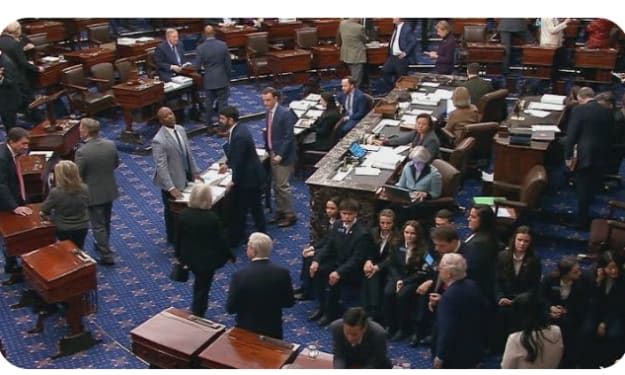
On [Date of shutdown], the United States government entered a partial shutdown after federal funding lapsed at midnight, despite a Senate deal that had been expected to keep operations running. The legislative impasse underscores deep political divisions in Washington and highlights the real-world consequences when lawmakers fail to agree on federal spending. The shutdown affects large parts of the federal government, leaving hundreds of thousands of federal employees furloughed or working without pay and disrupting services that millions of Americans rely on every day. How It Happened: A Failed Stopgap In recent days, congressional leaders in the Senate had appeared close to passing a continuing resolution (CR)—a short-term funding measure designed to keep the government open while longer-term appropriations negotiations continue. The deal, backed by some lawmakers on both sides, was intended to avert exactly this outcome. But in the end: Enough senators refused to support the measure Key policy disputes and political demands derailed the agreement The funding deadline passed without a new resolution With no approved budget and no continuing resolution in place, government funding legally expired, triggering the partial shutdown. What “Partial Shutdown” Means A partial shutdown differs from a full one in that: Some parts of the federal government remain funded and operational Others pause non-essential activities Critical and emergency services continue Which parts stay open depends on whether their funding was already appropriated or exempted by law. Who Is Affected First 1. Federal Employees Hundreds of thousands of federal workers are directly impacted: Many employees are furloughed (placed on temporary unpaid leave) Others are being asked to work with no guarantee of pay Essential personnel in areas like national security, air traffic control, and law enforcement typically continue working. 2. National Parks and Museums Popular national parks, historic sites, and museums have already: Closed gates Halted tours Suspended visitor services These closures affect tourism revenue and local economies in gateway communities. 3. Public Services Programs that rely on annual appropriations face delays or interruptions, including: Non-emergency grant programs Research funding Regulatory reviews and approvals What Continues to Operate Not all government functions stop during a partial shutdown. Services funded through mandatory spending streams remain active, including: Social Security benefits Medicare and Medicaid Unemployment insurance Veteran benefits Emergency responses, including disaster relief and national defense, also continue. Political Roots of the Impasse The breakdown reflects broader legislative gridlock: Deep divides between political factions over spending priorities Disagreements about policy riders tied to funding bills A highly partisan atmosphere in both chambers of Congress Even when a deal appears within reach, internal disagreements within party caucuses — and pressure from activist wings — can block compromise. Statements from Capitol Hill Senate Leadership: Lawmakers acknowledged failure to pass the CR before the deadline. Some expressed frustration, others blamed opposition forces within their own ranks. White House Reaction: The administration criticized Congress for the lapse in funding and called for renewed negotiations to reopen the government swiftly. House of Representatives: House leadership signaled plans to revisit the funding bill, but timing and strategy remain uncertain. Economic and Social Impact A government shutdown, even partial, has measurable effects: Market Signals Investors often react to shutdown news with: Stock market volatility Pressure on consumer confidence Re‐pricing of short-term treasury yields Federal Contractors Contractors may see: Delays in payments Halted work on government projects Cash flow disruptions Public Sentiment Polls frequently show public frustration with shutdowns, and this one may deepen skepticism about government efficacy. When Could It End? The shutdown will continue until Congress passes new funding legislation and the President signs it into law. Possible scenarios include: A revised continuing resolution Full appropriations bills Short-term band-aid fix to buy more time Each option depends on political leverage and negotiation progress. Why This Matters Beyond the political theater, shutdowns have real consequences: Financial hardship for workers and contractors Disruptions to public services Reduced operational capacity for agencies And the longer the impasse persists, the deeper the impact. Conclusion: A Strained System under Stress The initiation of a partial government shutdown — despite a Senate deal — spotlights the intense political divisions in Washington and the fragility of the budgeting process. While core services continue, many everyday federal functions are now in limbo, and the human cost is mounting for those on the frontlines of government operations. For citizens, taxpayers, and businesses alike, the shutdown is a stark reminder that the functioning of government is not guaranteed—it is negotiated.
By Zahid Hussain2 days ago in The Swamp
Labour Chooses Angeliki Stogia for the Gorton and Denton Byelection. AI-Generated.
On Friday, the Labour Party formally announced Angeliki Stogia as its candidate for the upcoming Gorton and Denton byelection—a seat that has become a key focal point in what many political observers are calling a bellwether contest for Labour’s strategy ahead of the next general election. Stogia’s selection comes at a moment of heightened political intensity. With public opinion polls fluctuating and national debates around the economy, public services, and leadership dominating headlines, the Gorton and Denton contest is far more than a local race. It offers a snapshot of how Labour hopes to re-energize its base, appeal to new voters, and sharpen its messaging in constituencies that were once considered Labour strongholds but have shown signs of electoral volatility. This article explores: Who Angeliki Stogia is Why Labour chose her The political dynamics in Gorton and Denton What this byelection could signal for the national political landscape Who Is Angeliki Stogia? A Profile Angeliki Stogia is a seasoned local politician with deep roots in Greater Manchester. She has served as a councillor in Manchester and is widely respected for her work on community issues, including housing, social services, and local economic development. Known for her accessible style and activist ethos, Stogia brings both grassroots experience and a profile that appeals to traditional Labour voters and progressive constituencies alike. Her background includes: Years of public service in local government Advocacy on issues like housing affordability and community investment A reputation for collaboration across local stakeholders What sets Stogia apart from some other candidates is her blend of local focus and broader political vision—something Labour strategists see as essential in a byelection where voter engagement and turnout will be decisive. Gorton and Denton: Why This Seat Matters The Gorton and Denton constituency holds particular significance for several reasons: 🔹 Historical Labour Strength Traditionally, this area has been a Labour stronghold, but like many such seats, it has shown signs of shifting electoral behavior in recent years—especially with the rise of third-party movements and localised discontent around national issues like public services and cost of living. 🔹 Byelection Dynamics Byelections are unpredictable. They often reflect short-term sentiments more than long-term party allegiance. For Labour, winning here would reinforce the narrative that it remains the dominant force in northern and urban seats—even in the face of national challenges. 🔹 Signal to National Electorate A strong performance by Stogia could signal that Labour’s message is resonating beyond traditional core voters, potentially indicating momentum ahead of the next general election. Why Labour Chose Angeliki Stogia Labour’s selection of Stogia was strategic. The party aimed to balance several priorities: 🔸 Local Credibility Stogia’s deep knowledge of community issues and long service in local governance means she can campaign with authentic understanding of residents’ needs—an advantage over outsiders perceived as “parachuted” in. 🔸 Progressive Yet Pragmatic Her policy approach blends traditional Labour priorities (public services, social justice) with pragmatic solutions for local concerns like housing, transport, and jobs. 🔸 Broad Appeal Stogia is seen as someone who can bridge generational and demographic divides—connecting with both lifelong Labour supporters and younger, more issue-driven voters. Labour insiders have suggested that her profile aligns with the party’s broader strategy of combining values-based politics with community-focused campaigning. Key Issues in the Byelection A byelection is not fought in a vacuum, and several issues are likely to shape voter sentiment in Gorton and Denton: 📌 Cost of Living Economic pressures remain a top concern. Many residents are feeling stretched by inflation, housing costs, and stagnant wages. 📌 Public Services Access to healthcare, education, and local council services are perennial priorities in the area. Stogia’s campaign promises to defend and strengthen these services resonate strongly with local voters. 📌 Local Development and Infrastructure Transport links, housing developments, and community centers are frequent talking points in town halls and campaign forums. 📌 National Political Climate While the byelection is local, national politics will inevitably influence voter behavior—particularly perceptions of the UK government’s performance on economic management and public welfare. Opposition Parties and the Competition Labour’s main competitors in the race are: ⚪ Conservative Party Seeking to retain relevance in a region where it has lost ground, the Conservatives will likely emphasise fiscal discipline, law and order, and economic stability—though their appeal in a historically Labour seat is uncertain. 🟡 Liberal Democrats / Greens Smaller parties may attract voters dissatisfied with both major parties, particularly on issues like climate action, civil liberties, and local environmental concerns. 🟥 Independent Candidates In some byelections, independents with strong local ties can attract protest votes—a factor Labour will monitor closely. The fragmentation of opposition votes could work in Labour’s favour, especially if Stogia consolidates support among progressive and centrist voters. What This Byelection Could Signal Nationally Byelections rarely determine government, but they can act as barometers of political sentiment. Analysts will be watching for: 🔹 Momentum for Labour A comfortable victory for Stogia could bolster the perception that Labour is on an upward trajectory nationally. 🔹 Shifts in Voter Behaviour Patterns of turnout and issue prioritisation could reveal how different demographic groups are engaging with contemporary politics. 🔹 Reflections on National Leadership Public response to the byelection might reflect broader attitudes toward party leaders, economic policies, and government performance. Political commentators have noted that if Labour wins convincingly—even in a traditional stronghold—it could feed narratives of electoral strength and organisational unity ahead of larger contests. Voices from the Ground Local residents and activists have offered varied perspectives: 📌 “We want someone who listens and acts on our issues,” says a community organizer. 📌 “This election feels like more than local politics—it feels like a statement about where we want the country to go,” says a young voter. 📌 “I’m voting for policies that improve daily life—not just slogans,” says a long-time Gorton resident. These voices underscore the blend of local concerns and national perceptions shaping the byelection environment. Challenges Ahead for Stogia Despite strong local roots, Stogia’s campaign faces challenges: 💥 Ensuring high turnout 💥 Countering national political narratives 💥 Addressing voter apathy 💥 Maintaining visibility across diverse neighbourhoods Labour’s campaign strategy includes targeted grassroots outreach, community forums, and multicultural engagement to maximise voter connection and turnout. Labour’s Strategy: Beyond the Byelection What happens in Gorton and Denton matters not just for the seat but for Labour’s broader approach: Reinforce core values while speaking to practical needs Demonstrate organisational strength and grassroots mobilisation Build credibility for national leadership ahead of future general elections If Stogia triumphs, it could reinforce Labour’s claim to be ready for government and sensitive to local priorities. Conclusion: A Contest With Meaning The selection of Angeliki Stogia for the Gorton and Denton byelection encapsulates many of the forces shaping UK politics today: community focus, generational change, and the balancing of local and national concerns. Her candidacy is not just a test of Labour’s electoral strategy—it is a moment of political signalling in a rapidly evolving landscape. As the campaign unfolds, all eyes will be on Gorton and Denton—not merely for the outcome of one seat, but for what it might reveal about voter priorities, party momentum, and the future direction of political life in the United Kingdom.
By Zahid Hussain2 days ago in The Swamp
Former Prince Andrew and the Epstein Fallout: What Newly Released DOJ Emails Reveal. AI-Generated.
A Scandal That Refuses to Fade Years after the death of Jeffrey Epstein, the scandal surrounding his crimes continues to reverberate through global institutions, elite social circles, and legal systems. Newly released emails from the United States Department of Justice have once again pulled former Prince Andrew into the spotlight. According to the documents, the Duke of York allegedly offered to help facilitate a financial pay-off to a member of Epstein’s staff—an action that, while not necessarily criminal, raises renewed questions about judgment, proximity to power, and the credibility of past denials. For a figure who has already retreated from public royal duties, these revelations deepen an already damaged reputation and underscore how the Epstein saga continues to expose uncomfortable truths about influence, privilege, and accountability. What the DOJ Emails Reveal The emails, released as part of a broader transparency effort by the U.S. Department of Justice, suggest that Prince Andrew discussed helping arrange a payment—reported to be around $60,000—to a former Epstein staff member. The purpose of the payment, according to the correspondence, was allegedly to prevent further disclosures to the media and to secure a legal release. Crucially, these communications appear to have occurred after Epstein’s 2008 conviction, contradicting Prince Andrew’s repeated public statements that he had severed ties with Epstein following that conviction. While the emails do not accuse Andrew of criminal conduct, they suggest a level of continued involvement that challenges his long-standing narrative of complete disengagement. Why Timing Matters Timing is central to understanding the significance of these disclosures. Prince Andrew has consistently maintained that he ended his relationship with Epstein years before Epstein’s second arrest and eventual death in 2019. However, the DOJ emails reportedly date from 2010–2011, a period when Epstein was already a convicted sex offender. This raises uncomfortable questions: Why was Andrew still in contact with Epstein during this period? Why would a senior royal figure offer assistance related to damage control? What does this say about the boundaries between personal loyalty and moral responsibility? Even without criminal liability, reputational damage can be severe—especially for someone tied to an institution built on public trust. The Broader Context of the Epstein Files These emails are part of a massive document release—millions of pages connected to investigations into Jeffrey Epstein and his associate Ghislaine Maxwell. The release was driven by public pressure and legislative action aimed at increasing transparency in cases involving powerful individuals. However, the sheer scale of the documents also complicates interpretation. Legal experts caution that: Not every mention of a name implies wrongdoing Some documents reflect unverified claims or internal discussions Redactions exist to protect victims’ identities Still, when patterns emerge—particularly involving repeated contact or assistance—they inevitably invite scrutiny. Prince Andrew’s Public Denials Under Strain Prince Andrew’s credibility has already been weakened by previous controversies, including a widely criticized television interview in which he attempted to explain his relationship with Epstein. That interview, seen by many as evasive and lacking empathy, marked a turning point in public opinion. The newly released emails make his past denials harder to sustain. While Andrew has not been charged with any crime and settled a civil lawsuit without admitting liability, the pattern that emerges is one of poor judgment at best and willful blindness at worst. For critics, the emails reinforce a perception that Andrew prioritized reputation management over moral clarity. The Question of Accountability One of the most troubling aspects of the Epstein scandal has always been the sense that power insulates people from consequences. Epstein himself avoided meaningful punishment for years, and many of his associates have faced public scrutiny without legal repercussions. The Prince Andrew case exemplifies this tension: Is accountability limited to criminal conviction? Or does public responsibility extend further for figures of influence? In democratic societies, reputational consequences often serve as the only form of accountability when legal thresholds are not met. For the British monarchy, which relies heavily on public goodwill, this distinction is especially important. Impact on the British Royal Family The British royal family has worked to distance itself from Prince Andrew in recent years. He has stepped back from public duties, lost military titles, and been largely excluded from official appearances. Yet each new revelation threatens to pull the monarchy back into controversy. Even when the institution itself is not implicated, association alone can erode trust—particularly among younger generations already skeptical of inherited privilege. The emails may not change Andrew’s formal status, but they complicate efforts by the royal family to move past the scandal quietly. Legal Reality vs. Moral Judgment It is essential to distinguish between legal guilt and moral responsibility. The DOJ emails do not allege that Prince Andrew participated in Epstein’s crimes. Nor do they establish that the proposed payment was illegal. However, moral judgment operates by a different standard. Offering assistance to a convicted sex offender in managing fallout—even indirectly—can be seen as ethically troubling, particularly for a public figure. This gap between legality and morality is where public trust often collapses. Why This Story Resonates Globally The continued attention to Prince Andrew’s connection to Epstein reflects a broader cultural reckoning with elite impunity. Across countries and institutions, the public is increasingly unwilling to accept explanations that rely on technical innocence alone. This story resonates because it touches on universal concerns: Who protects the vulnerable? Who protects the powerful? And who, if anyone, is truly held accountable? In that sense, the emails are less about one man and more about the systems that allow influence to blur ethical boundaries. What Happens Next? More Epstein-related documents are expected to be released in the coming months. While it is unclear whether future disclosures will further implicate Prince Andrew, the possibility alone ensures that scrutiny will continue. For Andrew, the path forward is narrow. Public silence may avoid immediate controversy, but unanswered questions rarely disappear. Transparency—however uncomfortable—may ultimately be the only way to draw a line under the past. Conclusion: A Legacy Still Unresolved The Epstein scandal is not a closed chapter, and Prince Andrew remains one of its most controversial figures. The newly released DOJ emails do not deliver a final verdict, but they add weight to longstanding doubts about his judgment and honesty. In an era where institutions are increasingly judged not just by legality but by ethics, the lesson is clear: proximity to wrongdoing, even without direct participation, carries lasting consequences. For Prince Andrew—and for the institutions around him—the shadow of Epstein is proving difficult to escape.
By Zahid Hussain2 days ago in The Swamp
Barring a Last-Minute Nuclear Deal, the U.S. and Russia Teeter on the Brink of a New Arms Race. AI-Generated.
A Dangerous Turning Point The world is standing at a familiar yet deeply unsettling crossroads. Relations between the United States and Russia—already strained by war, sanctions, and mutual distrust—are edging toward a new and potentially more volatile phase: a renewed nuclear arms race. With key arms control agreements either suspended, abandoned, or hollowed out, and with diplomatic channels narrowing, the possibility of restraint now hinges on a last-minute nuclear deal that many experts fear may never materialize. This moment is not merely about bilateral tensions. It is about the future of global stability, the credibility of nuclear deterrence, and whether the international system can still prevent a slide into unchecked militarization. If diplomacy fails, the consequences will extend far beyond Washington and Moscow. The Fragile Legacy of Arms Control For decades, nuclear arms control agreements served as guardrails against catastrophe. Treaties like SALT, START, INF, and New START helped cap arsenals, reduce stockpiles, and establish verification mechanisms that prevented miscalculation. These agreements were not built on trust alone; they were rooted in mutual fear of annihilation and the pragmatic understanding that limits benefited both sides. Even at the height of the Cold War, Washington and Moscow recognized that unchecked nuclear competition was unsustainable. Today, that legacy is unraveling. Why Arms Control Is Collapsing 1. The Breakdown of Trust The war in Ukraine has accelerated the erosion of trust between the U.S. and Russia. Moscow accuses Washington of using arms control as a tool of strategic containment, while the U.S. argues that Russia has repeatedly violated treaty obligations and used nuclear threats as political leverage. With trust shattered, arms control is no longer seen as a stabilizing framework but as a strategic vulnerability. 2. Suspension and Expiry of Treaties The INF Treaty is gone. New START, the last remaining major nuclear arms control agreement, is hanging by a thread. Inspection regimes have been suspended or rendered ineffective. Without binding limits, both sides are legally free to expand, modernize, and diversify their nuclear arsenals. 3. Domestic Political Pressures In both countries, hardline voices argue that restraint equals weakness. In the U.S., concerns about China’s growing nuclear capabilities fuel calls for expansion. In Russia, nuclear signaling has become a core element of strategic messaging. Arms control, once bipartisan and strategic, is now politically toxic. What a New Arms Race Would Look Like A modern nuclear arms race would differ significantly from the Cold War version. Beyond Warhead Numbers The competition is no longer just about how many warheads exist. It now includes: Hypersonic delivery systems Tactical nuclear weapons Low-yield warheads Nuclear-capable drones and submarines AI-assisted targeting systems This complexity increases the risk of misinterpretation and accidental escalation. Lowered Threshold for Use One of the most alarming trends is the normalization of tactical nuclear weapons. These smaller, battlefield-oriented weapons blur the line between conventional and nuclear warfare, making escalation more plausible. Once that line is crossed, history suggests it becomes nearly impossible to redraw. Why a Last-Minute Deal Still Matters Despite the grim outlook, diplomacy has not entirely collapsed. A last-minute nuclear agreement—even a limited one—could: Restore transparency and inspections Prevent rapid expansion of arsenals Reopen communication channels Signal restraint to other nuclear states Such a deal would not require trust, only mutual self-interest. Yet the political will required to reach even a narrow agreement is fading fast. The Role of Ukraine and NATO The war in Ukraine is inseparable from the nuclear equation. From Moscow’s perspective, NATO expansion and Western military support for Kyiv represent existential threats. From Washington’s view, Russian nuclear rhetoric is an attempt to deter legitimate defense assistance. This creates a feedback loop: More war → more nuclear signaling More nuclear signaling → higher global anxiety Higher anxiety → less diplomatic flexibility In this environment, arms control becomes collateral damage. China: The Silent Third Player Any future U.S.–Russia arms framework must contend with China, whose nuclear arsenal is expanding rapidly. Washington argues that bilateral arms control no longer reflects strategic reality without Beijing’s involvement. Russia counters that its arsenal is already constrained compared to combined Western capabilities. The result is paralysis: no one wants to move first. Meanwhile, China benefits from the stalemate, quietly modernizing without binding limits. Global Implications of a New Arms Race 1. Nuclear Proliferation Risks When major powers abandon restraint, smaller states take notice. Countries on the nuclear threshold may conclude that treaties offer little protection and that deterrence is the only security guarantee. 2. Economic Costs Nuclear modernization is extraordinarily expensive. Trillions of dollars could be diverted from: Healthcare Infrastructure Climate mitigation Education At a time of global economic uncertainty, this is a burden few societies can afford. 3. Erosion of International Norms The collapse of arms control undermines the idea that rules matter. Once nuclear restraint is abandoned, other international norms—from cyber warfare to space militarization—may follow. Public Complacency and the Nuclear Blind Spot Perhaps the most dangerous factor is public disengagement. Unlike the Cold War era, nuclear anxiety no longer dominates public consciousness. This complacency allows policymakers to: Expand arsenals quietly Lower rhetorical thresholds Normalize existential risks The absence of public pressure makes restraint politically optional. Is Deterrence Still Stable? Classical nuclear deterrence assumed rational actors, clear red lines, and reliable communication. Today, those assumptions are under strain. Multipolar nuclear dynamics Cyber interference AI-driven decision systems Shortened reaction times All increase the chance that deterrence could fail catastrophically. The Narrow Path Forward Avoiding a new arms race does not require friendship—only realism. Key steps could include: A temporary extension or freeze on warhead numbers Restoration of inspection mechanisms Crisis hotlines and military-to-military communication Separate arms control from broader political disputes None of these solve geopolitical conflict. But they reduce the odds of irreversible disaster. Conclusion: The Cost of Failure If no last-minute nuclear deal is reached, the world may enter a new era where nuclear restraint is optional and escalation is normalized. History shows that arms races do not make nations safer—they make accidents more likely and diplomacy harder. The question is no longer whether the U.S. and Russia distrust each other. That reality is already settled. The real question is whether they still recognize that some dangers transcend rivalry. Because once a new arms race fully begins, stopping it may be far harder than preventing it now.
By Zahid Hussain3 days ago in The Swamp
US Issues License for Oil Companies to Operate in Venezuela. AI-Generated.
The United States has taken a significant step toward reopening economic ties with Venezuela by issuing a new general license that allows American oil companies to operate in the South American nation’s long‑struggling petroleum sector. This move marks a notable easing of sanctions that previously restricted U.S. corporate involvement and underscores a dramatic shift in U.S.–Venezuela relations. � Reuters Under the authorization, issued by the U.S. Treasury Department’s Office of Foreign Assets Control (OFAC), U.S. firms are permitted to engage in a broad range of activities tied to Venezuelan crude — including purchasing, transporting, storing, refining, and selling Venezuelan‑origin oil. � Reuters What the New License Allows — and Limits The newly issued license expands on earlier, more limited authorizations. Instead of narrowly defined approvals for specific companies, the broad authorization permits any established U.S. entity to engage in downstream oil operations involving Venezuelan crude. This includes: Buying and selling Venezuelan‑origin crude in global markets Transporting and storing Venezuelan oil Refining Venezuelan crude in U.S. facilities or abroad However, the license does not extend to upstream oil production within Venezuela itself, meaning drilling or extraction remains restricted, and U.S. involvement in direct oil production remains tightly regulated. � finance.yahoo.com It also maintains numerous restrictions: transactions involving individuals or companies tied to China, Russia, Iran, North Korea, or Cuba remain prohibited. These conditions reflect Washington’s broader geopolitical stance, even as it seeks to channel more Venezuelan oil into U.S. and allied markets. � EL PAÍS English Why This Change Is Significant For decades, Venezuela — which holds some of the world’s largest proven oil reserves — suffered from a combination of political turmoil, mismanagement, and strict U.S. sanctions that stifled production and foreign investment. Under longstanding sanctions regimes, many international energy companies pulled back, and output dropped precipitously. � Reuters The latest U.S. action reflects a broader shift in policy following the U.S. capture of former Venezuelan President Nicolás Maduro and the installation of an interim government under Delcy Rodríguez. The change indicates Washington’s interest in revitalizing Venezuela’s oil sector while exerting influence over how oil revenues and operations are managed moving forward. � Reuters Venezuela’s Own Legal Reforms In parallel with the U.S. licensing move, Venezuela’s National Assembly passed sweeping reforms to its hydrocarbons law — ending decades of tight state control and monopolies in oil operations. The reforms allow private and foreign companies more autonomy and introduce new contractual and investment protections, including independent arbitration. � The Guardian The legislative changes represent one of the most dramatic shifts in more than 20 years of Venezuela’s oil policy, which historically centered on state dominance through PDVSA, the national petroleum company. In many areas governed by the new law, foreign firms can now negotiate contracts directly, potentially unlocking investment and technical expertise long absent from the sector. � AP News U.S.–Venezuela Oil Trade Begins to Restart Early indicators already show a tentative re‑engagement of U.S. firms with Venezuelan crude. For example, Citgo Petroleum — historically tied to Venezuela’s state oil company — purchased a Venezuelan crude cargo recently, the first such deal since 2019. The transaction signals a gradual normalization of U.S. access to Venezuelan energy resources. � Reuters Meanwhile, U.S. energy and trading giants like Vitol and Trafigura have also received licenses to load and export Venezuelan oil, a sign that the U.S. is seeking to cultivate new commercial frameworks for Venezuelan crude in global markets. � Reuters Political and Economic Backdrop This licensing decision comes amid broader efforts to restore diplomatic and economic engagement. In recent weeks, the U.S. announced plans to reopen commercial airspace and ease certain travel restrictions with Venezuela, further signaling a thaw in relations after years of sanctions and political standoffs. � wsj.com However, domestic reactions in both countries remain mixed. Some Venezuelans welcome the potential economic benefits of revitalized oil exports and foreign investment, while critics stress that deeper democratic and institutional reforms are necessary to ensure transparent governance and equitable growth. Analysts also warn that legal uncertainties and lingering political tensions could slow investment. � MercoPress Global Energy Market Implications If U.S. companies increase involvement in Venezuelan oil logistics and refining, it could have significant implications for global energy markets: Increased supply of heavy crude for U.S. Gulf Coast refineries Greater competition with producers in the Middle East and Africa Shifts in pricing dynamics for certain oil grades historically underserved in the U.S. The policy also plays into broader geopolitical competition, especially in regions where Russian and Chinese energy interests have previously filled the vacuum in Venezuela due to sanctions. By tightening restrictions on transactions with entities tied to those countries, the U.S. is shaping both commercial and strategic outcomes. � finance.yahoo.com Challenges and Uncertainties Ahead Despite the positive momentum, serious hurdles remain: Legal and Regulatory Risks Investors have pointed to uncertainties in Venezuelan legal frameworks and contract enforcement mechanisms as potential deterrents to long‑term capital commitments. The recent reforms are a step forward, but experts say further clarity and stability will be necessary to attract sustained foreign investment. � MercoPress Sanctions and Geopolitics While the U.S. has eased some restrictions, broader sanction regimes remain in place. Upstream operations are still constrained, and companies must navigate complex compliance requirements. Any changes in U.S. political leadership or policy priorities could also alter the regulatory landscape, raising investment risk. � EL PAÍS English Market Realities Venezuela’s oil infrastructure has suffered years of underinvestment, and production levels remain far below historical peaks. Rebuilding capacity will require heavy investment, technical know‑how, and time — even with legal and political frameworks improved. � Reuters Conclusion: A Strategic Opening in U.S.–Venezuela Energy Relations The issuance of a new license allowing U.S. oil companies to operate in Venezuela is a major development in energy and foreign policy. It reflects a broader shift toward engagement and economic integration after years of sanctions and strained relations. While the full impact will unfold over time, this step could signal the beginning of a new chapter in Venezuela’s oil sector and its ties with the United States — with potential benefits for markets, companies, and consumers alike.
By Zahid Hussain3 days ago in The Swamp
30 Days to Better Habits: A Simple Step-by-Step Guide for Forming Habits That Stick. AI-Generated.
Changing your life doesn’t always require a massive overhaul. Often, small, consistent habits are the secret to long-term success. Research shows that most people fail to stick to new habits not because they lack motivation, but because they underestimate the importance of structure, consistency, and incremental progress. This guide will help you build better habits in 30 days, using a simple, step-by-step framework that is practical, actionable, and sustainable. Why Habits Matter Habits shape who we are Our daily actions define our lives. Tiny decisions repeated consistently become patterns that shape our identity. Whether it’s drinking water regularly, exercising, or reading daily, habits are the building blocks of success. The science behind habits According to behavioral science, habits form through cue → routine → reward loops. By understanding this loop, you can replace destructive habits with productive ones. Key points: Cue: The trigger that starts the habit Routine: The action you perform Reward: The benefit your brain receives, reinforcing the habit By consciously designing these loops, you can hack your brain to stick to new routines. Step 1: Choose One Habit at a Time Trying to change too much at once leads to burnout. Focus on one habit for 30 days. Examples of beginner-friendly habits: Drinking 8 glasses of water daily Walking 10,000 steps a day Reading 10 pages every morning Journaling before bed Concentration on a single habit ensures higher success rates and reduces overwhelm. Step 2: Make It Easy to Start Human brains resist change, so start small. Instead of promising to run 5 miles daily, begin with 5 minutes of walking or jogging. Tips for simplicity: Break habits into micro-actions Place cues in plain sight (water bottle on desk, running shoes by bed) Remove friction that discourages starting Starting small reduces mental resistance and builds momentum. Step 3: Anchor Habits to Existing Routines Use habit stacking to make your new habit automatic. Pair it with something you already do. Examples: After brushing your teeth → floss After morning coffee → meditate 5 minutes After lunch → take a short walk This technique leverages existing neural pathways, making the new habit easier to remember and maintain. Step 4: Track Your Progress Tracking helps your brain visualize success. Even simple checkmarks on a calendar trigger a sense of achievement. Effective tracking strategies: Habit tracker apps (Habitica, Strides) Calendar check-ins Journaling daily reflections Seeing progress builds psychological reinforcement, making the habit more likely to stick. Step 5: Reward Yourself Habits stick when there’s a positive reward. The reward doesn’t need to be material — a small mental pat on the back works. Reward ideas: Celebrate completing a week without missing the habit Enjoy a small treat or leisure activity Share your success with a friend for accountability Positive reinforcement strengthens your habit loop, making the behavior automatic over time. Step 6: Embrace Consistency, Not Perfection Missing a day isn’t failure; inconsistency is natural. Focus on getting back on track immediately. Tips: Aim for “most days,” not perfection Forgive lapses and analyze what caused them Adjust routines to reduce friction Consistency matters more than intensity. Over time, repeated small actions compound into significant change. Step 7: Reflect Weekly Weekly reflection helps you identify obstacles and successes. Ask yourself: Did I follow my habit every day? What challenges did I face? How can I improve next week? Reflection reinforces self-awareness, allowing you to optimize habits and prevent stagnation. Step 8: Gradually Increase Complexity Once a habit is solid, increase its intensity. For example: Start with 5 push-ups daily → increase to 20 Read 10 pages → increase to 20 pages This gradual scaling prevents overwhelm while maximizing progress. Step 9: Build Accountability Tell someone about your habit. Accountability creates social pressure and motivation. Methods: Share progress with a friend or mentor Join habit-focused groups online Post updates on social media (if comfortable) External accountability amplifies your commitment and increases the likelihood of sticking to your habit. Step 10: Mind Your Environment Your environment influences behavior. Design your space to support good habits and hinder bad ones. Examples: Place fruits on the counter, hide junk food Keep workout clothes ready Remove distractions during focus time A habit-friendly environment makes positive behaviors automatic and reduces reliance on willpower. Common Pitfalls and How to Avoid Them Setting unrealistic goals → Break into smaller steps Neglecting rewards → Celebrate milestones Ignoring failures → Analyze and adjust Trying to change too much at once → Focus on one habit Lack of tracking → Keep a habit log Avoiding these pitfalls increases success rate dramatically. Why 30 Days Works Psychologists suggest that 30 days is enough to establish a new habit, though some may take longer. The key is continuous repetition, supported by reward and tracking mechanisms. After 30 days: Actions begin to feel automatic You experience visible progress Your identity shifts slightly (e.g., “I am a person who exercises daily”) Case Studies: Habits That Stuck 1. Sarah’s Morning Routine Sarah struggled to wake up early. She started with 5 minutes of stretching every morning after brushing her teeth. Within 30 days, her body and mind adapted, and she extended the routine to 30 minutes of yoga, feeling more energized daily. 2. Mark’s Reading Habit Mark wanted to read more. He began with 10 pages every night before bed. By tracking progress in an app and rewarding himself with a coffee after each week, he formed a sustainable reading habit, completing multiple books in 90 days. These examples show that small, incremental habits compound into lasting lifestyle changes. Conclusion: Your 30-Day Habit Challenge Forming lasting habits doesn’t require extraordinary willpower. By following this 10-step guide, you can build habits that stick: Choose one habit Make it easy to start Anchor to existing routines Track progress Reward yourself Focus on consistency Reflect weekly Gradually increase intensity Build accountability Optimize your environment Start today, follow this framework, and watch small actions transform your life. A single habit repeated for 30 days can become the foundation for a lifetime of positive change.
By Zahid Hussain3 days ago in The Swamp