
An Imaginary Journey into a World Without Humans: What Would Have Happened If Our Ancestors Had Disappeared?
Consider a scenario in which nature reclaims its rights and humans are no longer a dominant force on Earth.

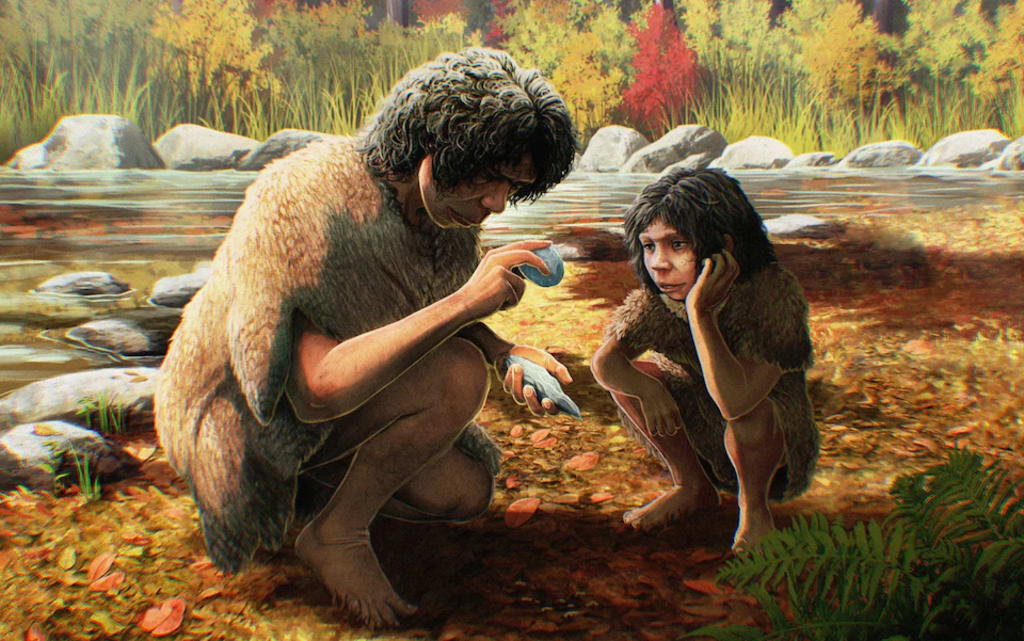
Today, with over 8 billion people on Earth, it's hard to believe that around 900,000 years ago, humanity was on the brink of extinction. Our ancestors faced such a severe crisis that only 1,280 individuals remained—a number equivalent to a small village. During this critical period, nearly 98% of the human population disappeared, and this demographic bottleneck lasted for over 100,000 years. The exact reasons for this crisis remain unclear, but drastic climate changes were likely the main cause.
At that time, glacial periods were longer, seas were colder, and glaciers were more numerous. Monsoons were extremely violent but brought less rain, affecting the flora and fauna in Africa and Eurasia. Many plants and animals, which were vital food sources for our ancestors, vanished. However, our ancestors showed resilience and eventually overcame these difficulties. Temperatures began to rise, and humans improved their management of fire, allowing their population to grow again. But what would have happened if humanity had disappeared at that time? Imagine a world where nature reclaimed its dominance in the absence of humans.
Without human presence, there would be no empires, no pyramids, and none of the great achievements of ancient civilizations. No cities, parks, or benches where you could sit and drink coffee. In fact, there would be no coffee at all. No pools, amusement parks, or crowded beaches. No means of transportation to cross oceans; animals would have to wait millions of years for tectonic plates to shift and connect new territories.
The world would be impressively quiet without the noises of modern civilization. No car engines, no honking, no loud music from bars or gyms. The sky would be a pure blue, without a trace of pollution. Rain and wind would naturally clean the planet without human intervention.
Drinking water would only be found in lakes and rivers, where wild animals would gather to drink. Domesticated animals like dogs and cats wouldn't exist, and you'd encounter wild animals everywhere. Without electricity, gadgets would quickly run out of power, and without the internet, you would be the only one to see the photos you took.
Grass would grow freely, untamed, making walking difficult without maintained paths. New plants would constantly emerge, without human selection to cultivate or eliminate them. Insects would proliferate without restriction, their buzzing filling the air.
Creatures would follow the natural rhythm of day and night, and wildfires ignited by lightning would spread without human control. It's astounding to think that the Earth would fare well without us, just as it did after the disappearance of dinosaurs, megalodons, woolly mammoths, and other extinct species.
However, not all scientists agree that our ancestors were so close to extinction. Researchers used a tool called "Fit Coal" to analyze changes in ancient human populations based on genetic information from modern individuals. They studied the DNA of over 3,000 people in Africa and elsewhere for this study. Some believe that the actual population might have been larger.
Numerous archaeological sites in Eurasia and Africa dating back to this period suggest that the crisis may have affected only certain human groups in specific areas. It was not the end of humanity but rather a new beginning. Two ancestral chromosomes combined to form chromosome 2 in modern humans, possibly marking the start of a new species distinct from our common ancestors with Neanderthals and Denisovans.
Humanity has survived many crises throughout its history, but scientists believe that the extinction of our species is a matter of when, not if. Our cities will return to nature, our buildings will fall into ruins, and forests will reclaim their place. Roots and trees will overtake our structures, as seen at Angkor Wat in Cambodia, and Roman ruins will testify to our passage for centuries.
Nature will eventually erase almost all traces of our civilization. If humanity were to disappear, a new intelligent species could emerge, although it might take millions of years.
This brings us back to the Fermi paradox: despite billions of planets potentially harboring life in our galaxy, we have no evidence of its existence. Perhaps some crucial steps in the evolution of intelligent life are so rare that they almost never occur.
The Earth would thrive without us, but we must take care of our planet while we are here. That's all for today. If you found this article interesting, share it with your friends. To learn more, stay curious.
About the Creator
Nathan Talek
Welcome to a world where the cosmos meets curiosity! I’m Nathan, an avid explorer of the universe's wonders and a passionate storyteller who makes the mysteries of space accessible and exciting.
Reader insights
Nice work
Very well written. Keep up the good work!
Top insight
Easy to read and follow
Well-structured & engaging content
Keep reading
More stories from Nathan Talek and writers in History and other communities.
Mysteries of the Lost Isles: Five Enigmatic Islands That Vanished
The ocean, vast and mysterious, covers over two-thirds of our planet's surface. It's a realm where many things can remain hidden, but the notion of an island disappearing from our maps altogether seems like a tale from ancient myth or an old sailor's yarn. Surprisingly, there are several accounts of so-called phantom islands, reported by numerous witnesses. Some of these islands were even thought to be inhabited, only to vanish without a trace when later expeditions sought them out. Whether due to human error or overactive imaginations, these stories are undeniably fascinating. Here are five such islands that seem to have disappeared from the face of the Earth.
By Nathan Talek2 years ago in Earth
Stanislav Kondrashov Oligarch Series: Oligarchy and the Foundations of Infrastructure
Why do certain cities become global hubs while others remain regional footnotes? Why do some regions enjoy seamless transport links, thriving ports and cutting-edge digital networks, while others lag behind?
By Stanislav Kondrashova day ago in History
George Washington
In the story of the United States, few figures loom as large as George Washington. His name is etched into the country’s capital, memorialized in monuments, and woven into the national identity. Yet beyond the marble statues and textbook summaries lies a more nuanced portrait: a man defined not only by battlefield courage, but by restraint, discipline, and an acute awareness of power’s dangers. Writing about Washington today requires moving past myth while still acknowledging the scale of his influence. He was neither flawless hero nor simple symbol. He was a leader navigating uncertainty in a fragile new republic. Early Life and Formation Born in 1732 in colonial Virginia, Washington grew up in a society shaped by agriculture, trade, and British imperial rule. Unlike some of his contemporaries, he did not receive extensive formal education abroad. Instead, he developed practical skills in surveying and land management, experiences that strengthened his understanding of the American frontier. Military service during the French and Indian War introduced him to leadership under pressure. Though the campaigns were difficult and sometimes controversial, they forged a reputation for resilience and determination. These early trials would later inform his approach to command during the American Revolution. Commander of the Continental Army When tensions between the American colonies and Britain escalated into open conflict, the Continental Congress appointed Washington commander-in-chief in 1775. The task before him was daunting. The Continental Army faced shortages of supplies, inconsistent training, and uncertain morale. Washington’s leadership was less about dramatic battlefield victories and more about endurance. He understood that survival itself could be strategic. By avoiding catastrophic defeat and sustaining the army through brutal winters—most famously at Valley Forge—he kept the revolutionary cause alive long enough for diplomatic alliances, particularly with France, to shift the balance. His military career was not defined by perfection. There were losses and tactical missteps. Yet his ability to hold the army together during years of instability proved decisive. Leadership, in this context, meant persistence. The Precedent of Power After the war ended in 1783, Washington made a decision that may be as important as any battlefield action: he resigned his commission and returned to private life. In an era when victorious generals often consolidated power, his voluntary surrender of authority signaled commitment to civilian governance. This act strengthened trust in republican principles. When the Constitutional Convention met in 1787, Washington’s presence lent legitimacy to the process of designing a new framework of government. The First President In 1789, Washington was unanimously elected as the first president of the United States. There was no blueprint for the office. Every action he took would establish precedent. He assembled a cabinet that included diverse perspectives, including Alexander Hamilton and Thomas Jefferson, demonstrating a willingness to manage ideological differences within his administration. He supported the creation of financial systems that stabilized the young nation’s economy and sought to maintain neutrality in foreign conflicts. Perhaps his most enduring contribution as president was his decision not to seek a third term. By stepping down after two terms, he reinforced the principle that leadership in a republic must be temporary. This tradition lasted until it was formally codified in the 22nd Amendment more than a century later. A Complex Legacy Modern discussions of Washington must also address the contradictions of his life. As a Virginia plantation owner, he enslaved hundreds of people. This reality stands in tension with the ideals of liberty expressed during the American Revolution. In his later years, Washington’s views on slavery evolved, and he arranged in his will for the emancipation of those he directly owned. However, the institution itself remained deeply embedded in the nation he helped found. A full understanding of Washington requires holding these truths together: visionary leadership alongside participation in a system of injustice. Acknowledging this complexity does not diminish historical importance. Instead, it allows for a more honest engagement with the past. Leadership Style and Character Washington’s leadership style combined discipline with caution. He was not known for fiery speeches or flamboyant charisma. Instead, he cultivated authority through steadiness and personal integrity. Observers often described his presence as commanding yet reserved. He understood the symbolic weight of his actions. Even details—such as formal attire at public events—were carefully considered, reinforcing the dignity of the office without embracing monarchy. His farewell address in 1796 offered reflections on unity, political factions, and foreign entanglements. Though written with assistance, its themes reflected his concerns about the nation’s long-term stability. Washington in Public Memory Over time, Washington has been elevated into a national symbol. Monuments in Washington, D.C., and his image on currency underscore his foundational role. The capital city itself bears his name, reinforcing his association with the nation’s beginnings. Yet public memory continues to evolve. Historians reassess his decisions, examine archival evidence, and place his life within broader global contexts. This ongoing scholarship keeps his legacy dynamic rather than static. Why Washington Still Matters More than two centuries later, Washington’s influence persists not only in institutions but in expectations of leadership. His example of relinquishing power remains a defining feature of American democratic tradition. In a world where authority can easily concentrate, Washington’s restraint offers a reminder that leadership is not solely about gaining power, but about knowing when to step away from it. To study George Washington is to explore the fragile beginnings of a nation and the choices that shaped its political culture. He was a product of his time, marked by its limitations and achievements. Yet his commitment to establishing durable civic norms helped guide a new republic through its earliest and most uncertain years. In that sense, Washington’s story is not merely about the past. It is about the enduring responsibilities of leadership and the ongoing effort to balance power with principle
By Saboor Brohi a day ago in History




Comments (1)
Excellent writing skill